For those who dream of exploring the cosmos, the barrier to entry often feels insurmountable. Between the intimidating price tags of professional-grade observatories and the sheer mechanical complexity of equatorial mounts, many aspiring astronomers find their interest dampened before they ever look through an eyepiece. However, hidden within the catalog of veteran telescope manufacturer Celestron lies a modest, tabletop titan: the Celestron FirstScope.
Currently priced at just $60 on Amazon—a figure that remarkably undercuts its performance during major sales events like Prime Day—this instrument proves that you don’t need a heavy-duty tripod or a complex computerized mount to enjoy the wonders of the night sky. In this comprehensive look, we explore why this compact Newtonian reflector remains a staple for beginners, families, and seasoned observers alike.
Main Facts: The Anatomy of the FirstScope
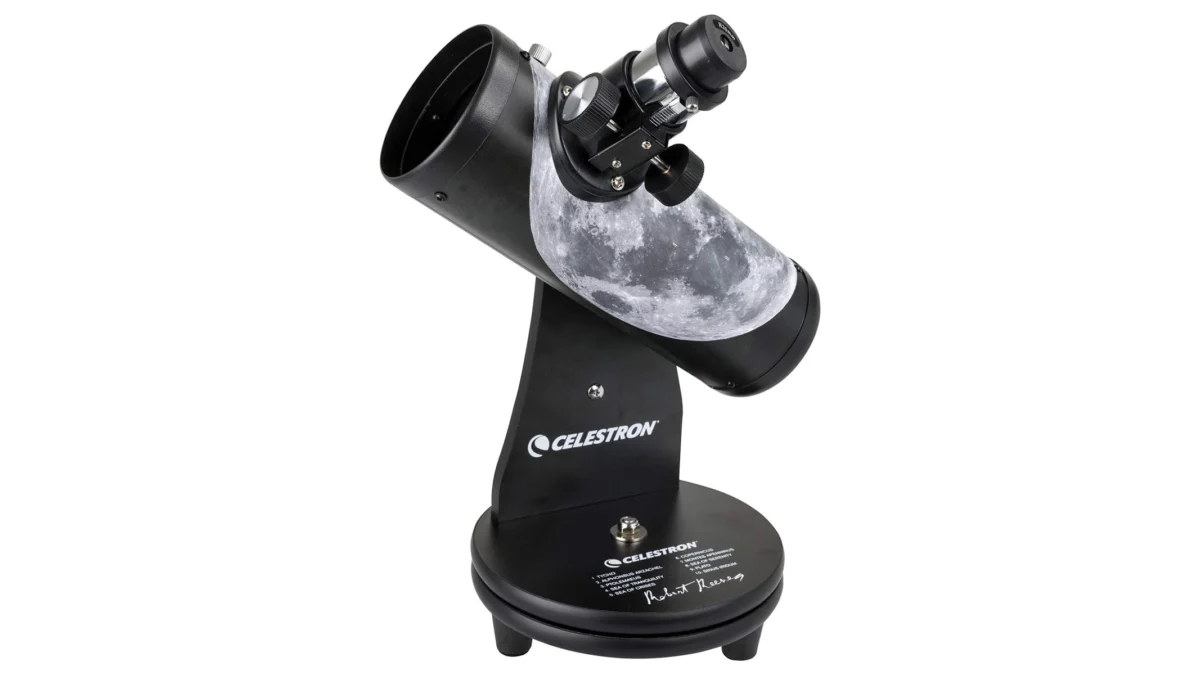
At its heart, the Celestron FirstScope is a 76mm (2.99-inch) Newtonian reflector telescope. Its design is stripped-back and intentional, prioritizing the "grab-and-go" philosophy that many modern, over-engineered telescopes lack.
Technical Specifications:
- Optical Design: Newtonian Reflector
- Aperture: 76mm (2.99 inches)
- Focal Length: 300mm
- Focal Ratio: f/3.95
- Mount Type: Alt-azimuth Dobsonian-style tabletop base
- Included Accessories: 20mm and 4mm eyepieces
Unlike bulky refractor telescopes that require precise leveling and cumbersome counterweights, the FirstScope utilizes a simple, intuitive Dobsonian-style mount. It sits perfectly on a patio table, a sturdy park bench, or even a flat wall. Once you unbox it, the learning curve is nearly non-existent. It is designed to be the antithesis of the "closet-stuffer"—a piece of equipment that is so easy to use that it actually gets used.
Chronology of a Classic
Since its launch in March 2009, the FirstScope has carved out a unique niche in the hobbyist market. While other manufacturers have pushed toward "smart" telescopes and app-controlled navigation, Celestron maintained the FirstScope as an educational tool, often marketed toward children and students.
- 2009: The Celestron FirstScope is introduced as a celebration of the International Year of Astronomy, aiming to bring the joy of the moon and planets to a wider audience at an accessible price point.
- 2015–2020: The telescope gains popularity as a "gateway" instrument. It becomes a permanent fixture in "best of" lists for beginners, praised for its portability and its ability to provide surprisingly sharp views of the Moon’s craters.
- 2023–2024: Despite the rise of digital technology, the demand for the FirstScope remains high. Its price remains stable, even dipping lower than previous Prime Day records, currently sitting at an attractive $60–$64 price point.
The longevity of this design serves as a testament to the adage: "The best telescope is the one you actually use." By keeping the design simple and the price low, Celestron has ensured that the FirstScope remains relevant in a rapidly changing technological landscape.
Supporting Data: Why It Outperforms Its Size
It is easy to look at the FirstScope’s 300mm focal length and dismiss it as a "toy." However, the optical quality delivered by this unit punches well above its weight class.
What You Can See
During expert testing, the FirstScope demonstrated remarkable capabilities for its aperture. Observers can expect:
- The Moon: Crystal-clear views of lunar craters, mountain ranges, and the "seas" (maria).
- Planetary Observations: Saturn’s rings and Jupiter’s Galilean moons are visible, providing a breathtaking "first light" experience for many children.
- Deep Sky Objects: While it is not a deep-space powerhouse, it is capable of resolving the Pleiades star cluster with stunning clarity, as well as several other bright nebulae and open clusters.
The Portability Factor
The "portability" of a telescope is usually an afterthought, but for the FirstScope, it is its primary selling point. Measuring only about 12 inches in length, the unit can be slung into a standard backpack. This opens up opportunities for "dark sky" excursions—users can cycle, hike, or drive away from urban light pollution to find a spot where the stars are truly visible, a task that would be impossible with larger, tripod-mounted telescopes.
Official Responses and Expert Consensus
Industry experts and astronomy enthusiasts consistently award the FirstScope high marks for its intended purpose. In various professional reviews, it has secured a four-star rating, with critics noting that while it lacks the sophisticated bells and whistles of a $1,000 rig, it offers an "unbeatable" cost-to-joy ratio.
The general consensus is that while the lack of a built-in finderscope is a minor drawback, the trade-off in price and simplicity makes it worth it. Users can easily purchase a cheap, clip-on finderscope separately if they find navigation to be a challenge. Furthermore, the ability to swap the included 20mm and 4mm eyepieces for higher-quality aftermarket glass allows the user to grow with the telescope, extending its utility long after the initial novelty wears off.
Implications: The Democratization of Astronomy
The significance of a $60, high-quality telescope cannot be overstated. By keeping the price point accessible, Celestron has effectively democratized astronomy.
Implications for Families and Education
For parents, the FirstScope is a powerful tool for STEM education. It moves the child away from a screen and toward the tangible, physical reality of our solar system. It turns a boring Tuesday night into an impromptu space mission. Because it requires no battery, no Wi-Fi, and no complex calibration, it is the rare piece of modern technology that is entirely "failure-proof."
Implications for the Casual Observer
For the casual stargazer, the FirstScope removes the "faff." Many people abandon astronomy because they are tired of dragging a heavy tripod across the lawn, leveling it, aligning the polar axis, and dealing with batteries that die in the cold. With the FirstScope, you simply set it on a surface, look through the eyepiece, and align it with the object you want to see. It is the ultimate tool for those who want to see the universe without making a career out of it.
Conclusion: Should You Buy It?
The Celestron FirstScope is not for the astrophotographer looking to capture long-exposure shots of distant galaxies, nor is it for the professional astronomer looking for high-resolution planetary detail. However, for the beginner, the child, or the person who simply wants a portable, reliable way to view the Moon and the brighter planets, it is an absolute steal.
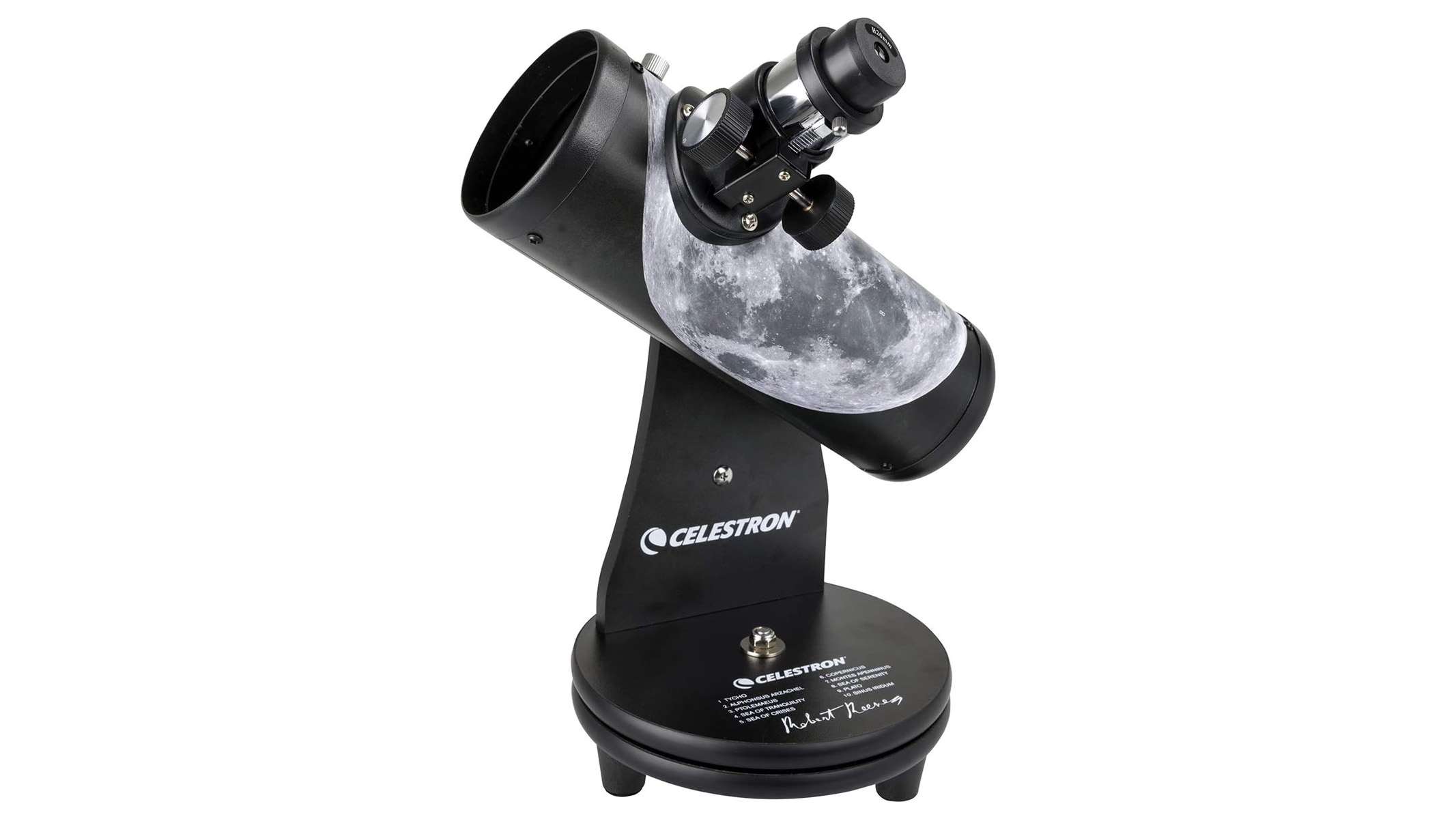
At its current price of $60, there is virtually no financial risk involved. It provides a gateway to a hobby that lasts a lifetime. Whether you are prepping for a night of moon-watching or waiting for the next planetary opposition, this small but mighty instrument is a reminder that the universe is vast, beautiful, and—thanks to clever engineering—very much within your reach.
Quick Buying Guide:
- Buy it if: You are a complete beginner, buying for a child, or need a "grab-and-go" telescope for quick sessions or travel.
- Don’t buy it if: You are looking for high-magnification deep-space photography or want to see faint, distant galaxies in high detail.
- Pro-tip: Consider investing in a higher-quality 6mm or 9mm eyepiece to replace the standard 4mm, which can sometimes be difficult for beginners to use due to its narrow eye relief.
With the current market fluctuations making it even cheaper than its historical low point, now is the ideal time to secure your own piece of the night sky. The stars are waiting; you just need the right tool to reach out and touch them.