By Satellite Today Staff | September 1, 2026
In a significant reinforcement of its position within the federal defense landscape, Redmond-based satellite communications firm Kymeta announced on Tuesday that it has secured a $20 million order from a branch of the U.S. Department of Defense (DoD). The contract, which calls for the deployment of 100 Osprey u8 multi-orbit satellite terminals, marks a pivotal milestone in the company’s 2026 fiscal growth and underscores the increasing military reliance on hybrid, multi-orbit connectivity solutions for mission-critical operations.
The Scope of the Agreement: Bridging GEO and LEO
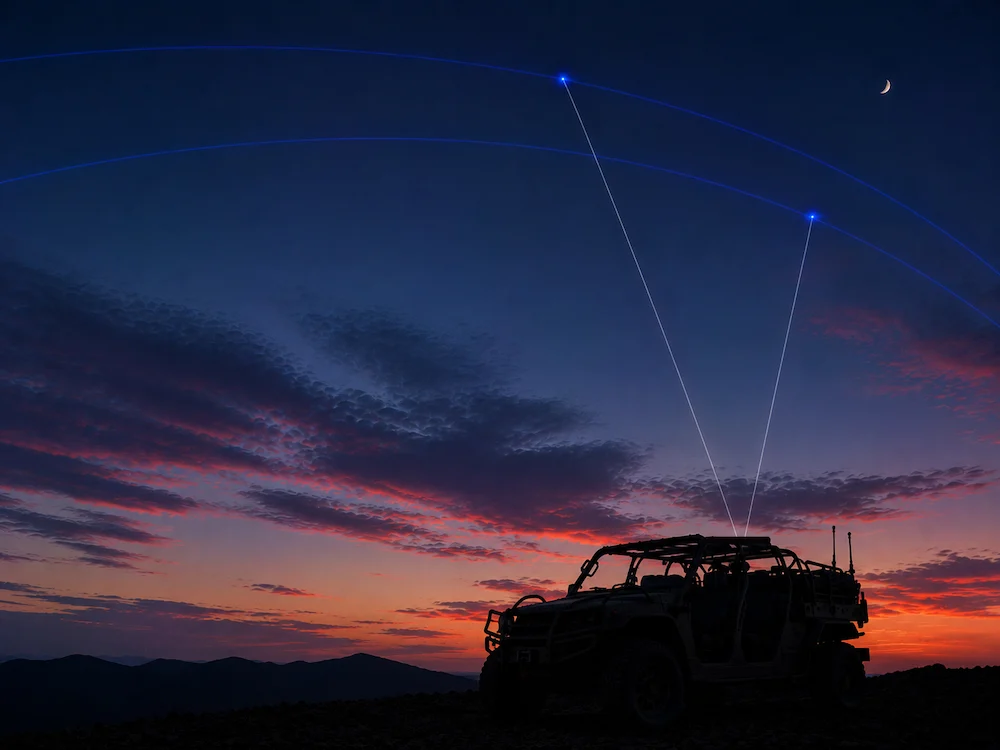
The $20 million procurement package extends beyond hardware acquisition. According to the official announcement, the agreement encompasses comprehensive multi-orbit connectivity services delivered via the Kymeta Broadband (KBB) network. This network is engineered to provide seamless, resilient data links by leveraging both Geostationary Orbit (GEO) and Low-Earth Orbit (LEO) satellite constellations.
The Osprey u8 terminal—the centerpiece of this order—is designed specifically for the rugged, high-stakes environments of the defense sector. These flat-panel antennas are built to maintain high-speed communication while on the move, a capability essential for modern tactical vehicles and mobile command units.
Notably, the hardware is equipped to handle the complexities of modern electronic warfare environments. The units delivered under this contract feature advanced switching capabilities, allowing operators to transition between transmission security (TRANSEC) and non-TRANSEC networks. This agility ensures that forces can maintain secure communications even when faced with sophisticated signal jamming or atmospheric interference.
A Chronology of Expanding Defense Partnerships
This latest infusion of capital brings Kymeta’s total revenue from this specific DoD branch to more than $30 million for the 2026 calendar year alone. While Kymeta has opted to maintain strict operational security by withholding the specific identity of the DoD branch—a standard practice for sensitive government contracts—the trajectory of their partnership reveals a deliberate, long-term integration strategy.
Early 2026: The Testing Phase
During the first quarter of 2026, Kymeta focused on validating the Osprey u8’s performance in theater-representative environments. This involved rigorous field testing to ensure that the terminals could survive the vibration, thermal, and electromagnetic stresses typical of frontline combat vehicles.
Q2 2026: Operational Readiness
By the second quarter, Kymeta began the initial rollout of its multi-orbit integration services. The focus during this period was on software-defined networking, allowing the terminals to prioritize bandwidth from LEO constellations for low-latency requirements, while reverting to GEO capacity for high-volume data transmissions.
September 2026: The Scaling Milestone
The current order of 100 units represents the scaling phase. By delivering these units, Kymeta has now signaled that its technology is no longer in a "pilot" status but is considered a mature, operational asset available to U.S. forces for immediate deployment.
Technical Specifications: The "Osprey" Advantage
The Osprey u8 is widely recognized in the industry for its "all-in-one" design, which eliminates the need for external cabling and bulky tracking hardware. By integrating the antenna, modem, and power supply into a single, low-profile package, Kymeta has lowered the barrier for rapid vehicle integration.
Key technical attributes that made this technology attractive to the DoD include:
- Beam-Steering Intelligence: The terminal uses electronically steered arrays (ESA) to track satellites instantaneously, ensuring a constant connection even during high-speed maneuvers or rapid changes in vehicle heading.
- Multi-Orbit Agility: The ability to move traffic between constellations is vital for survivability. If one satellite link is compromised, the terminal can autonomously search and acquire a new signal, minimizing downtime.
- TRANSEC Capability: By adhering to strict TRANSEC standards, the Osprey u8 minimizes the probability of intercept, protecting the metadata and location of the vehicle from adversarial signals intelligence (SIGINT) operations.
Official Responses and Strategic Outlook
The announcement was met with a sense of accomplishment at Kymeta’s headquarters. Manny Mora, the CEO of Kymeta, emphasized that the contract is more than just a financial windfall; it is a validation of the company’s long-term technical roadmap.
"This order is an affirmation from the military community that Kymeta can deliver on its promise to provide dependable connectivity for mission-critical operations," Mora stated in the press release. "With our partners across national security, we are continuing to build steady and solid momentum as a trusted and valued partner."
Industry analysts observe that this order is emblematic of a broader trend: the "Lethality through Connectivity" initiative within the U.S. military. As modern warfare becomes increasingly reliant on real-time sensor data, high-definition video, and AI-driven analytics, the demand for satellite bandwidth that is both mobile and resilient has reached an all-time high. Kymeta’s ability to provide a turnkey solution—hardware plus managed service—positions them as a "single point of contact" for defense procurement officers looking to simplify their supply chains.
Strategic Implications: The Future of Battlefield Comms
The integration of 100 Osprey u8 terminals into the DoD’s fleet has several far-reaching implications for the future of military telecommunications.
1. The Death of the "Static" Command Post
Historically, tactical command posts were tethered to fixed infrastructure or required time-consuming setup for satellite dishes. The Osprey u8 allows for "Comms-on-the-Move" (COTM), meaning command centers can remain mobile, reducing their signature and vulnerability to counter-battery fire.
2. The Multi-Orbit Mandate
The military has moved away from relying on a single satellite provider. By utilizing both LEO and GEO, the DoD creates a redundant architecture. If a LEO constellation is degraded by debris or cyber-attacks, the GEO link remains as a failsafe. Kymeta’s software-defined architecture is the "glue" that allows this hybrid approach to function without human intervention.
3. Supply Chain Hardening
The $30 million total spent this year suggests that the DoD is prioritizing domestic, commercially available off-the-shelf (COTS) technology. By purchasing from companies like Kymeta, the military avoids the excessive costs and slow update cycles of legacy, bespoke military hardware, instead benefiting from the rapid innovation cycles of the commercial space sector.
Conclusion: A New Standard for Tactical Satcom
As the year 2026 draws to a close, Kymeta’s success with the U.S. Department of Defense serves as a bellwether for the satellite industry. The transition from legacy, static satellite dishes to agile, multi-orbit flat panels is now accelerating.
With more than 100 units already deployed or in the process of delivery, the Osprey u8 has moved from an experimental project to a staple of the modern tactical vehicle. As the DoD continues to refine its requirements for high-bandwidth, low-latency connectivity in contested environments, Kymeta’s role as a trusted technology provider seems set to expand.
For the broader satellite industry, the lesson is clear: the path to securing long-term government contracts lies in providing scalable, reliable, and secure hardware that can adapt to the unpredictable nature of the modern battlefield. As Kymeta continues to fulfill this order, the defense community will be watching closely to see how this technology performs in the most demanding operational environments on Earth.