By Satellite Today Staff | Tuesday, September 1, 2026
In a move that signals a paradigm shift in the future of secure government communications, Canadian satellite operator Telesat and French photonics innovator Cailabs have announced a new strategic collaboration. The partnership is set to explore the integration of Cailabs’ advanced optical ground station (OGS) technology with Telesat’s Lightspeed low-Earth orbit (LEO) constellation. This initiative aims to address the growing demand for high-capacity, resilient, and sovereign data links for U.S. government and allied military missions.
Main Facts: A Convergence of Photonics and LEO Constellations
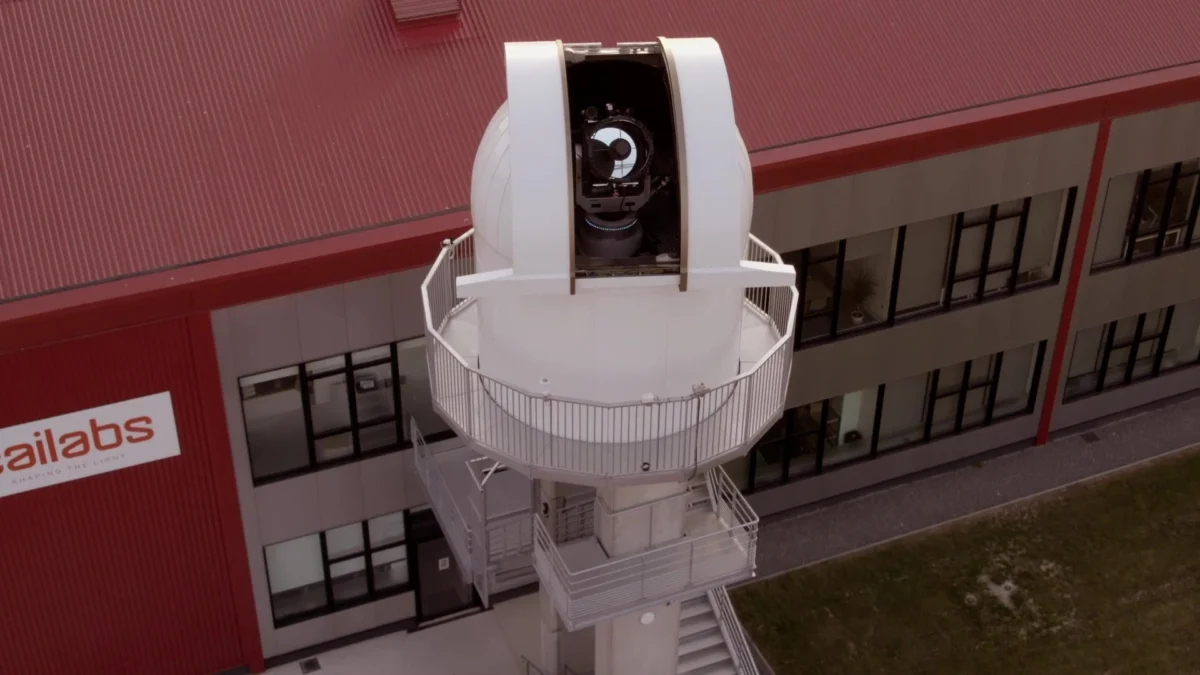
The core of this collaboration lies in the seamless marriage of two sophisticated technologies: the global, high-throughput capability of the Telesat Lightspeed constellation and the cutting-edge atmospheric turbulence-compensation capabilities of Cailabs’ TILBA-OGS product line.
As the demand for data in the defense sector reaches an all-time high, traditional Radio Frequency (RF) links are increasingly facing challenges related to bandwidth saturation, spectrum interference, and susceptibility to jamming. Optical—or laser—communications offer a distinct advantage: they provide significantly higher data rates, are inherently more difficult to intercept or jam, and do not require the complex frequency licensing associated with RF systems.
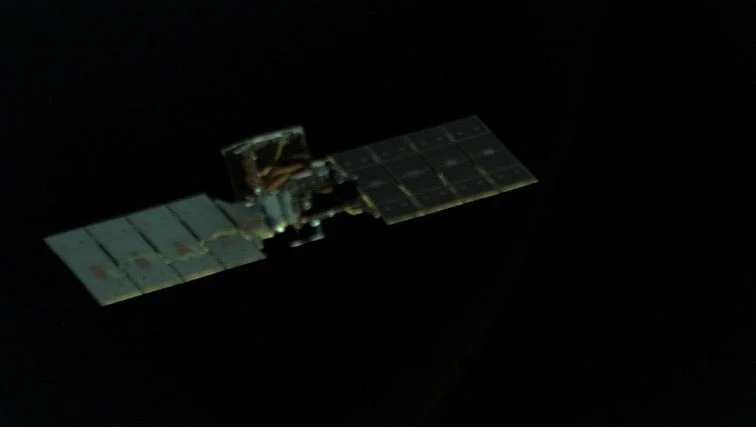
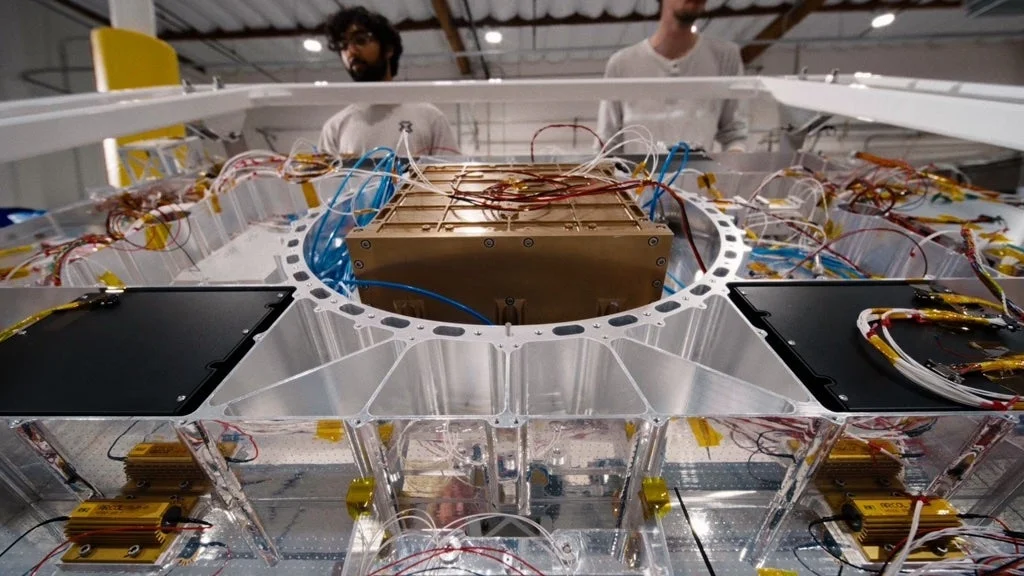
Under this new agreement, Telesat and Cailabs will conduct joint studies and technical demonstrations to validate the interoperability of the TILBA-OGS ground stations with the Tesat-built SCOT80 optical terminals currently utilized on the Telesat Lightspeed satellites. By confirming that these systems can communicate effectively, the partners aim to provide a turn-key solution for government agencies requiring secure, high-speed space data relay services.
Chronology: The Road to the Partnership
The announcement on September 1, 2026, is the culmination of years of technical validation and industry shifts.
- 2024: Telesat formally selected Tesat’s SCOT80 optical terminals for its Lightspeed constellation, setting a high standard for laser-based space communications. Around the same time, Cailabs began positioning itself as a leader in "multi-plane light conversion" (MPLC) technology, specifically designed to mitigate the signal distortion caused by Earth’s atmosphere.
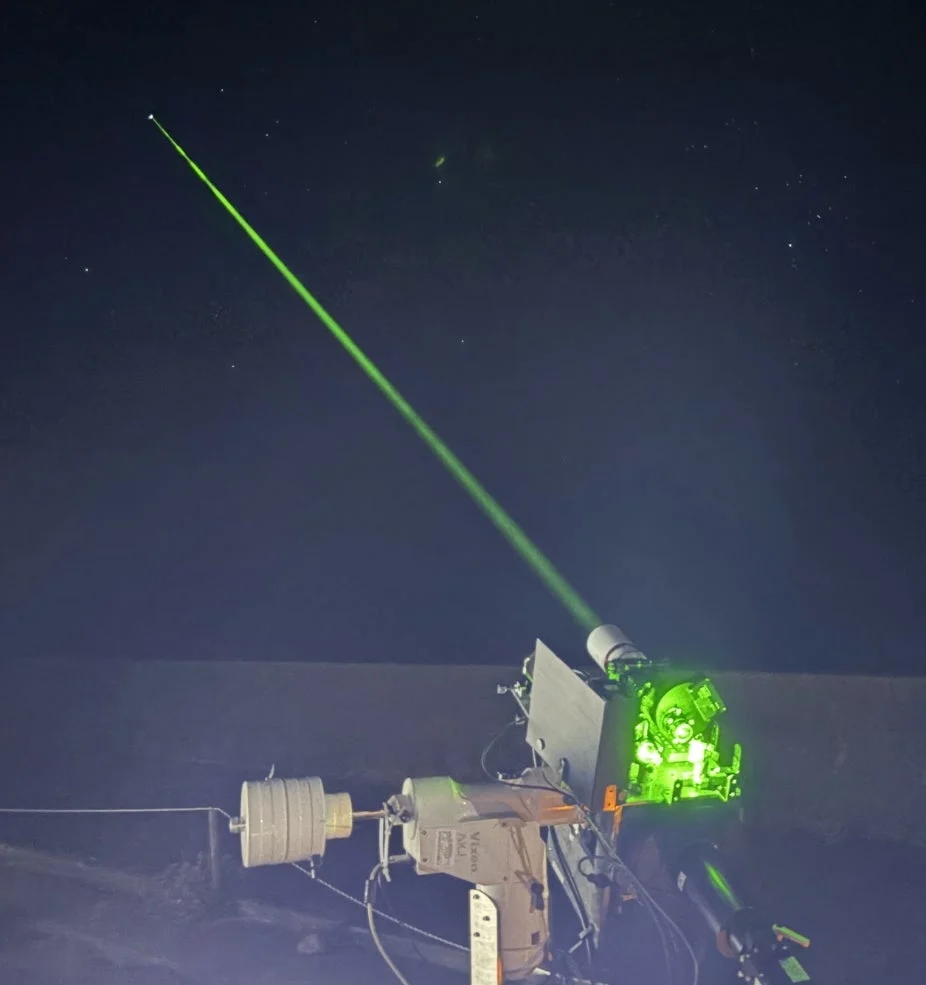
- 2025: Cailabs successfully demonstrated high-performance connectivity between its TILBA-OGS units and satellites utilizing Tesat terminals. These field tests proved that the French startup’s ground-based hardware could effectively "capture" laser beams sent from orbit, even under challenging atmospheric conditions.
- Q1–Q2 2026: Informal discussions between Telesat Government Solutions and Cailabs began to center on the U.S. government’s specific requirements for the "Proliferated Warfighter Space Architecture." Both companies recognized that a standardized, proven optical interface would be essential for winning defense contracts.
- September 2026: The formal strategic collaboration is signed, marking the beginning of a phase of joint integration testing and the pursuit of collaborative government tenders.
Supporting Data: Why Optical Matters
To understand the weight of this partnership, one must look at the constraints of current satellite communications. RF systems, while reliable, are physically limited by the Shannon-Hartley theorem regarding bandwidth. As the volume of imagery, sensor data, and reconnaissance information grows, the "bottleneck" at the ground station becomes a critical failure point.
The Physics of the TILBA-OGS Advantage
Cailabs’ proprietary MPLC technology is the "secret sauce" behind this partnership. Optical signals sent from LEO satellites to Earth are typically disrupted by atmospheric turbulence, which causes the laser beam to widen and "scintillate." This makes it incredibly difficult for standard optical detectors to lock onto the signal.
Cailabs’ TILBA-OGS stations employ advanced adaptive optics and MPLC to reshape the distorted light wavefront. In recent tests, this has allowed for:
- Increased Availability: Maintaining stable links even during suboptimal atmospheric conditions.
- Higher Throughput: Maximizing the bits-per-second delivered to the end-user.
- Transportability: Unlike traditional, massive concrete-anchored optical domes, Cailabs offers transportable units, allowing military units to deploy "optical ground stations" in remote or tactical theaters of operation.
When coupled with the Telesat Lightspeed constellation—which is designed for global coverage—the potential is a world-spanning fiber-optic-like network in space.
Official Responses: Aligning for Sovereign Connectivity
The leadership teams of both organizations emphasize that this is not merely a technical experiment, but a strategic alignment with the needs of the U.S. defense establishment.
"Government users need communications architectures that combine resilience, security and high capacity with the flexibility to operate across space and terrestrial networks," said Chuck Cynamon, President of Telesat Government Solutions. "We believe that combining Telesat Lightspeed with Cailabs’ mature optical ground capabilities creates the potential to offer differentiated solutions designed for the demanding, sovereign connectivity requirements of U.S. and Allied missions."
From the Cailabs perspective, the partnership represents a validation of their business model. By integrating with a Tier-1 satellite operator like Telesat, Cailabs transitions from a boutique technology provider to a foundational infrastructure supplier for global LEO networks. The synergy between the two companies provides a "closed-loop" solution, where the terminal in space and the receiver on the ground are designed to operate in perfect harmony, minimizing the risk of integration failure for defense contractors.
Implications: The Future of the "Space-to-Ground" Economy
The implications of this collaboration are broad and will likely affect several sectors of the aerospace and defense industry.
1. The Rise of the "Optical Backbone"
This partnership is a bellwether for the industry. As Telesat and Cailabs integrate, they are setting a de facto standard for optical interoperability. Other satellite operators will be forced to consider similar partnerships if they wish to remain competitive in the government space, where the preference is shifting rapidly toward interoperable, vendor-agnostic, or highly modular architectures.
2. Enhancing Sovereign Connectivity
For the U.S. government and its allies, the ability to maintain "sovereign connectivity" is paramount. By using optical links, these entities can bypass the vulnerability of terrestrial undersea cables and traditional RF links. The Telesat-Cailabs solution offers a secure, private pipeline for data, which is essential for intelligence, surveillance, and reconnaissance (ISR) applications.
3. Tactical Flexibility
The move toward "transportable" optical ground stations—a key feature of the Cailabs portfolio—changes the concept of operations for military commanders. Instead of waiting for data to be backhauled through a central, fixed hub, military units can potentially deploy their own ground stations near the front lines, receiving satellite data in near real-time. This reduces latency and keeps the decision-making loop tight.
4. Economic and Industrial Impact
For Cailabs, this partnership serves as a launchpad for further penetration into the North American market. For Telesat, it solidifies the value proposition of the Lightspeed constellation, moving it beyond a general-purpose broadband network into a specialized, high-security utility for the most demanding customers on the planet.
Conclusion: Looking Ahead
As the joint studies and demonstrations progress throughout the remainder of 2026 and into 2027, the industry will be watching closely. If these demonstrations are successful, we can expect to see a wave of defense contracts utilizing this combined architecture.
The Telesat-Cailabs collaboration is a clear indication that the "space-to-ground" segment is entering a new era of maturity. It is no longer enough to simply put satellites in orbit; the industry must now provide the seamless, hardened, and high-speed infrastructure that allows that data to reach the ground. By bridging the gap between space-based photonics and terrestrial ground stations, Telesat and Cailabs are effectively building the nervous system of future global defense operations.
As the world continues to digitize at an exponential rate, the reliance on such secure, high-capacity conduits will only increase. This partnership is not just a strategic win for the two companies; it is a critical step forward in the technological evolution of the modern, connected battlefield.