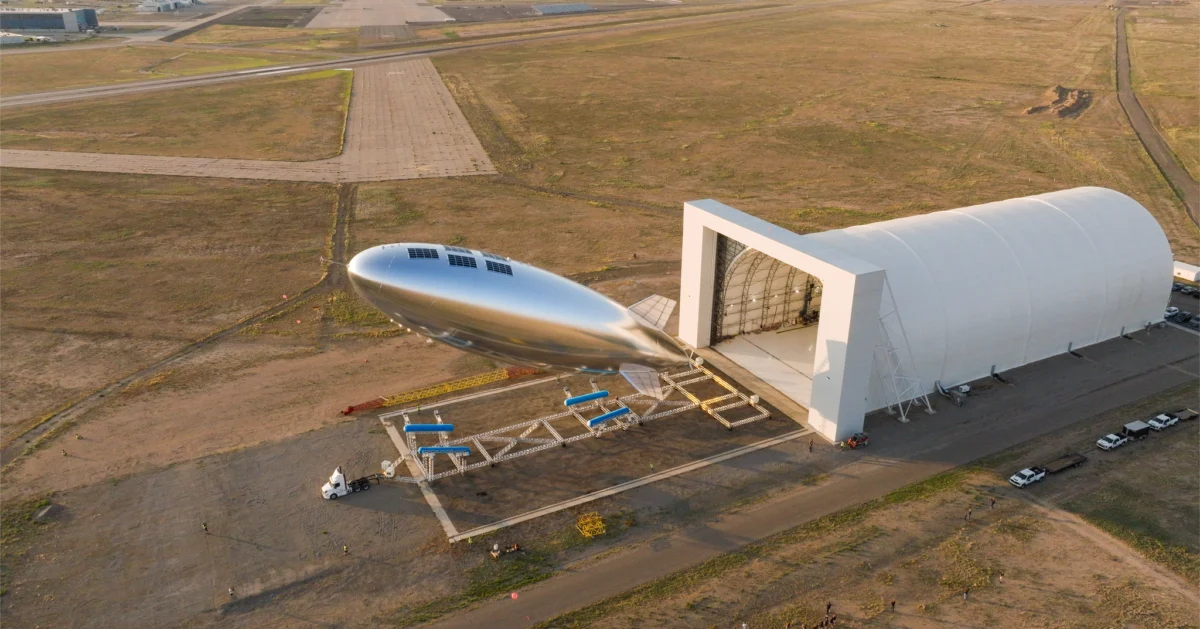
In a landmark achievement for aerospace engineering and telecommunications, U.S.-based Sceye has successfully completed a historic trans-Pacific mission with its Service Test 1 (ST1) platform. The High-Altitude Platform System (HAPS), a sophisticated, solar-powered airship, traversed over 15,000 kilometers from its launch site in New Mexico to Japanese airspace. This 13-day stratospheric journey represents more than a mere endurance record; it serves as a proof-of-concept for a revolutionary "cell tower in the sky" architecture that promises to bridge the global digital divide and redefine the future of telecommunications, edge computing, and disaster response.
The Mission: A Trans-Pacific Leap
The ST1 mission, which commenced on August 9, 2026, from New Mexico, was designed to test the operational viability of Sceye’s HAPS technology over extreme distances. Unlike traditional aviation, which relies on fuel-intensive engines, Sceye’s platform utilizes high-efficiency solar power and advanced battery systems to maintain its position in the stratosphere—roughly 20 kilometers above the Earth’s surface.
By operating at this altitude, the ST1 platform occupies a "sweet spot" in the atmosphere. It is low enough to provide high-capacity, low-latency connectivity to standard, unmodified mobile devices, yet high enough to offer a wide-area footprint that dwarfs the coverage of traditional ground-based cellular towers. Upon reaching Japan, the ST1 platform successfully integrated with SoftBank Corp.’s core network, effectively turning the airship into a floating hub for mobile broadband.
Chronology: From the High Desert to the Pacific Rim
The journey of the ST1 mission is a testament to the maturation of Sceye’s technology. The timeline of this milestone reflects a strategic progression from long-duration testing to international deployment:
- Pre-Mission Endurance: Building on the success of the "Endurance Program," which saw the SE2 platform travel 10,000 kilometers from New Mexico to the coast of Brazil, the engineering team spent months refining the ST1’s power management and communication suites.
- August 9, 2026 – The Launch: The ST1 platform ascended from its New Mexico facility at 7:00 AM MDT, beginning its trek across the Pacific Ocean.
- The Stratospheric Transit: Over the next 13 days, the platform navigated the stratosphere, surviving consecutive day-night cycles by utilizing solar energy harvested during the day and stored for nighttime operations. This ability to "persist" in a designated area is the hallmark of Sceye’s design, allowing it to mimic a geostationary satellite while remaining 1,800 times closer to the ground.
- Arrival and Demonstration: Upon entering Japanese airspace, the platform executed a series of live service tests. These included standard mobile broadband delivery, voice calls, high-speed data access, and video streaming. Notably, the mission also tested emergency alert protocols and direct drone-to-HAPS communication, essential for future 3D network architectures.
- The Ongoing Mission: As of the latest reports, the ST1 platform remains in the stratosphere, currently conducting its return flight toward the United States, further demonstrating its durability and long-haul navigation capabilities.
The Technology: SceyeCELL and the Stratospheric Infrastructure
At the heart of the ST1’s success is the SceyeCELL, an innovative antenna array dubbed a "cell tower in the sky." The technology is engineered to solve one of the most persistent problems in telecommunications: how to provide high-speed, reliable connectivity to remote or underserved regions without the massive capital expenditure of building thousands of terrestrial towers.
A single Sceye HAPS unit is designed to cover an area equivalent to approximately 500 ground-based cell towers. Because the unit is positioned in the stratosphere, it circumvents the line-of-sight obstructions—such as mountains, buildings, and dense forests—that typically plague ground-based infrastructure. During the Japan trial, this capability was put to the test, proving that even in a highly developed, mountainous, and disaster-prone geography, stratospheric signals can provide robust, uninterrupted service to standard consumer smartphones.
Furthermore, the ST1 demonstrated HAPS-based edge computing. By processing data closer to the user in the stratosphere, Sceye is helping to lay the groundwork for a future where Artificial Intelligence (AI) and the Internet of Things (IoT) can function with minimal latency, even in the most remote corners of the globe.
Strategic Partnership: Sceye and SoftBank
The mission was conducted in close partnership with SoftBank Corp., a global leader in telecommunications and IT. SoftBank’s 2025 investment in Sceye underscored a long-term strategic vision to create a seamless, three-dimensional communications network that integrates terrestrial, stratospheric, and orbital assets.
The synergy between the two companies is clear: Sceye provides the high-altitude platform and the aerial hardware, while SoftBank brings its vast telecommunications infrastructure and experience in global network integration. For SoftBank, the HAPS technology is a critical component of their vision to connect the "ground, sky, and space." By incorporating HAPS into their portfolio, SoftBank aims to offer persistent, resilient connectivity that is immune to ground-level disruptions, such as earthquakes, tsunamis, or cyber-attacks on terrestrial cables.
Implications for the Future: 6G and Beyond
The success of the ST1 mission has profound implications for the global digital economy. As the world transitions toward 6G and ubiquitous AI, the requirement for reliable, low-latency, and high-bandwidth connectivity will only increase.
Bridging the Digital Divide
For many developing nations and rural communities, the cost of fiber-optic cabling and ground tower deployment is prohibitive. Stratospheric infrastructure offers a "leapfrog" technology, allowing these regions to receive modern, high-speed internet without waiting decades for terrestrial infrastructure to reach them.
Disaster Resilience
Traditional networks are notoriously fragile during natural disasters. When power grids fail or fiber lines are severed, connectivity often vanishes when it is needed most. Sceye’s HAPS, being solar-powered and self-sustaining, can be deployed rapidly to provide emergency communication services, voice, and data to first responders and displaced populations, acting as a critical lifeline during crises.
The 3D Communications Network
The ability of the ST1 to communicate with drones while simultaneously serving terrestrial devices marks the beginning of a truly 3D communications environment. In the future, this network will support autonomous logistics, advanced weather monitoring, and real-time environmental analysis, all coordinated from the stratosphere.
Official Responses: A Defining Moment
The leadership teams at both Sceye and SoftBank have hailed the mission as a watershed moment in the history of aerospace.
Mikkel Vestergaard Frandsen, Founder and CEO of Sceye, emphasized the broader impact of the achievement: "This flight marks a defining moment for Sceye and for the commercial potential of HAPS. Flying from the US to Japan demonstrates the performance required to make the stratosphere a viable layer of infrastructure and realize the future of AI, edge computing, and 6G. Together with SoftBank, we are moving beyond proving the technology to demonstrating how Sceye can complement and extend existing networks and deliver persistent connectivity at scale."
Junichi Miyakawa, President & CEO of SoftBank Corp., echoed these sentiments, highlighting the strategic importance of the collaboration: "SoftBank aims to build next-generation communications infrastructure that seamlessly connects the ground, the sky, and space. The fact that Sceye’s HAPS reached Japan from the United States and successfully provided Japan’s first trial services from the stratosphere in Japan’s airspace marks an important step toward the commercialization of HAPS… Going forward, in collaboration with Sceye, we will continue to integrate a wide range of technologies, including communications and AI, to develop HAPS into a new form of social infrastructure."
Conclusion: The Horizon of the Stratosphere
As the ST1 platform continues its journey back to the United States, the aerospace industry is taking note. Sceye has effectively proven that the stratosphere is no longer just a transit zone for high-altitude balloons or military aircraft; it is a frontier for commercial infrastructure.
The partnership between Sceye and SoftBank has successfully moved HAPS from a theoretical concept to a functional, scalable reality. With the successful transmission of broadband to standard devices across the Pacific, the promise of universal, persistent connectivity is closer than ever. As the world prepares for the next generation of wireless standards and the inevitable rise of AI-driven infrastructure, the "cell tower in the sky" is poised to become an essential, ubiquitous feature of the global technological landscape.