In the vast, silent expanse between stars, ancient wanderers carry the history of distant solar systems. Among these cosmic visitors, the interstellar comet 3I/ATLAS has emerged as a landmark discovery. A little over a year since its initial detection, the comet has become the subject of an intense, unprecedented scientific investigation. By peering into the ionized tail of this celestial traveler, astronomers have uncovered a chemical signature that challenges our understanding of planetary formation and suggests that this visitor originated from the darkest, coldest reaches of an alien star system.
The Discovery: A Rare Cosmic Visitor
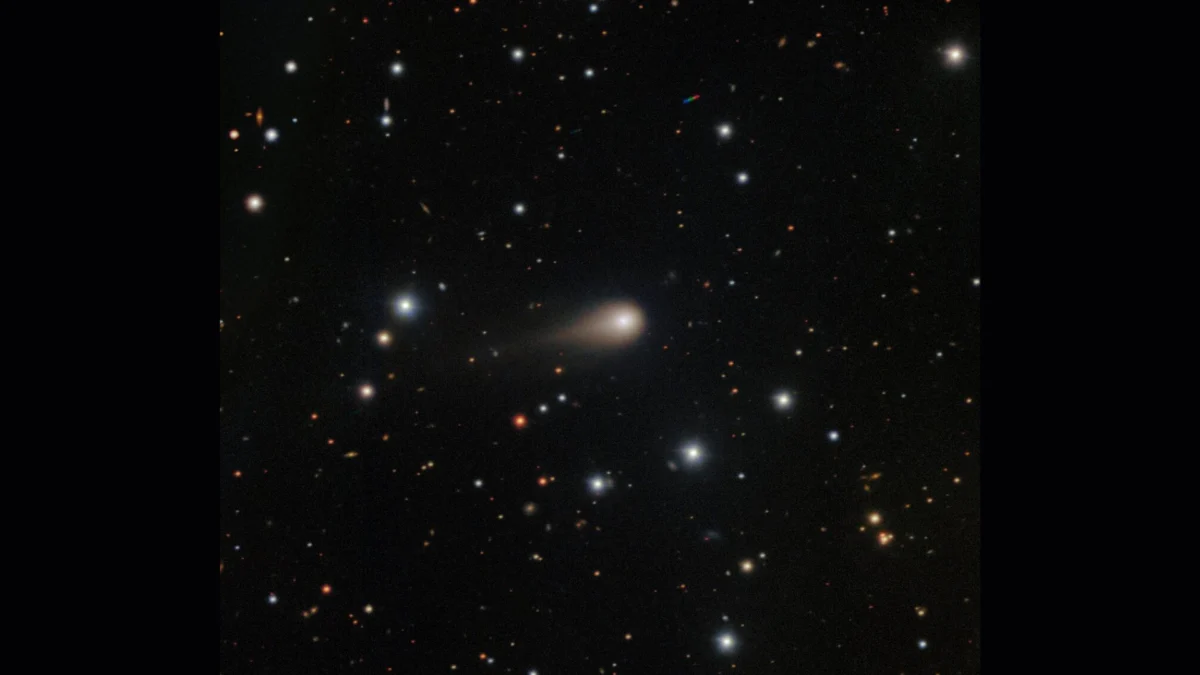
3I/ATLAS is only the third known interstellar object to transit our solar system, following in the footsteps of the enigmatic ‘Oumuamua and the active comet 2I/Borisov. Unlike its predecessors, which provided tantalizing but limited data, 3I/ATLAS has allowed for a level of observational precision previously thought impossible.
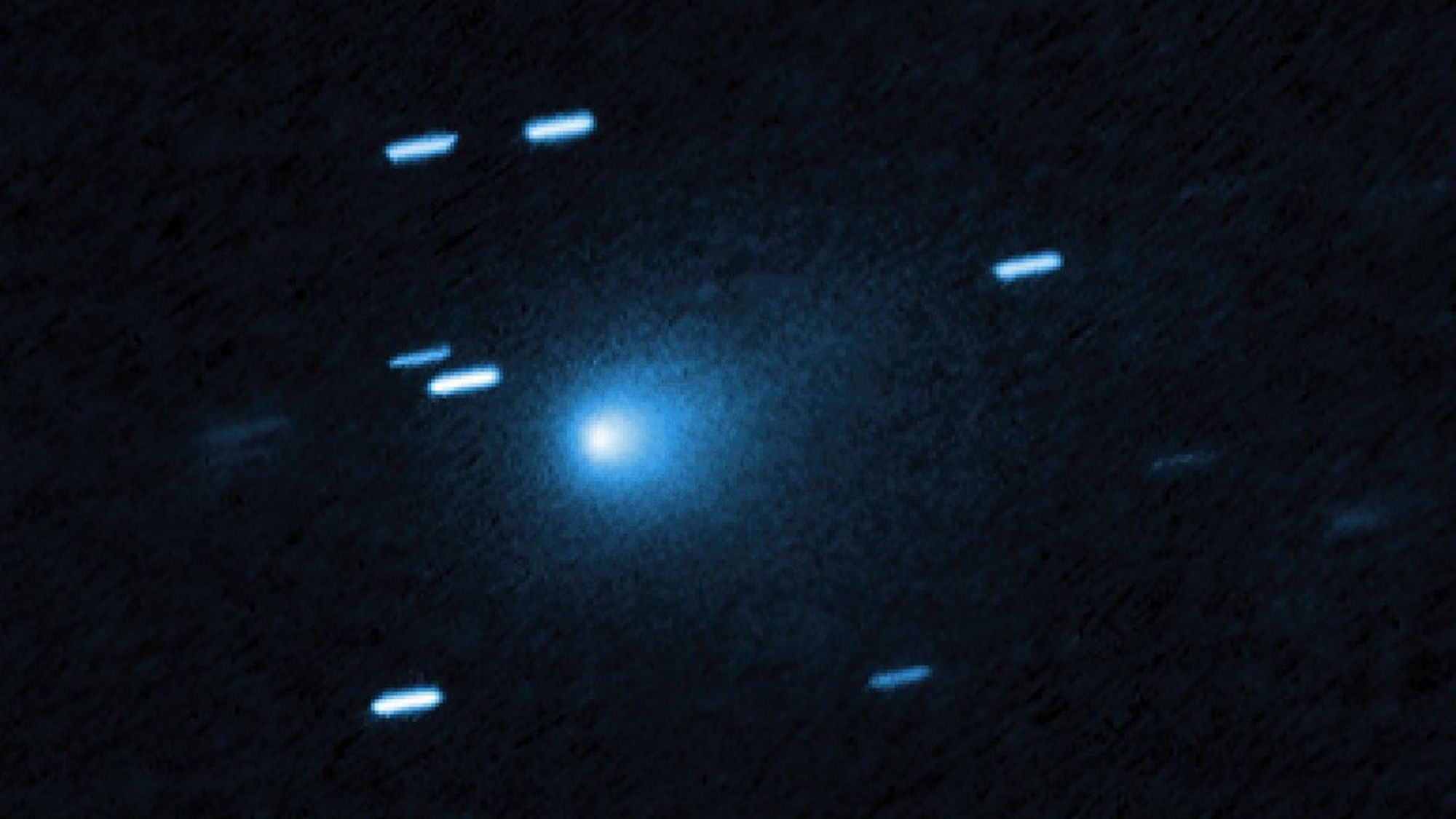
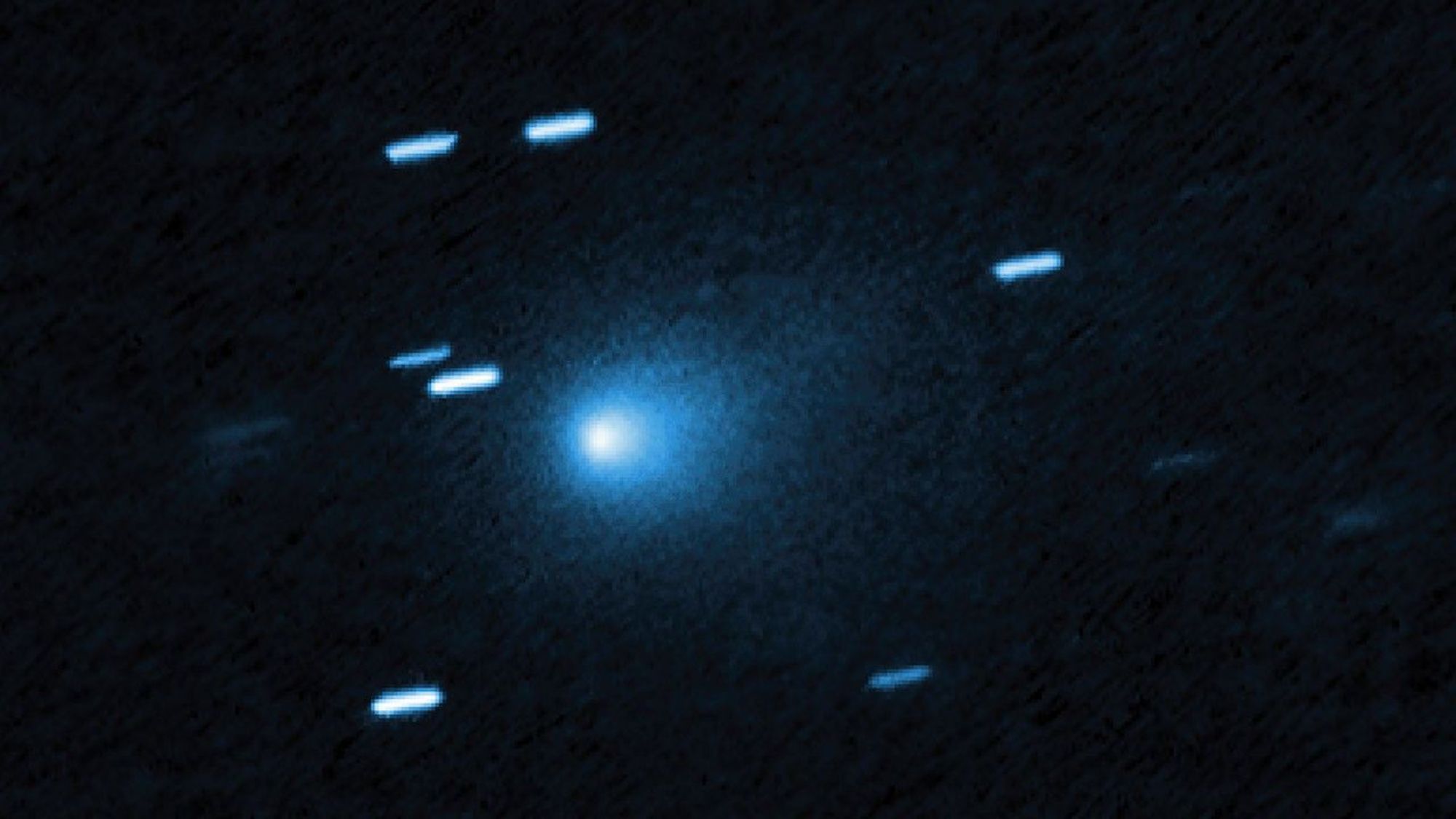
On July 21, 2025, when the object was positioned approximately 277 million miles from Earth, the Hubble Space Telescope captured a stunning, high-resolution portrait of the comet. The imagery revealed a distinct, teardrop-shaped cocoon of dust trailing behind a solid, icy nucleus. This visual data provided the foundation for a global research effort to dissect the comet’s chemical composition, an endeavor that culminated in groundbreaking results published in the Monthly Notices of the Royal Astronomical Society on September 7.
A Chronology of Investigation
The timeline of the 3I/ATLAS mission highlights the rapid advancement of modern observational astronomy.
- Initial Detection: Discovered just over a year ago, 3I/ATLAS immediately sparked interest due to its hyperbolic trajectory, confirming its origin from outside our solar system.
- The Hubble Campaign: In July 2025, Hubble captured detailed structural data, revealing the comet’s active outgassing and complex dust morphology.
- The WEAVE Breakthrough: In late 2025, a research team led by Lea Ferellec of Northumbria University employed the William Herschel Telescope (WHT) in the Canary Islands. Using the telescope’s sophisticated fiber-optic instrument, WEAVE, the team successfully performed high-resolution spectroscopy on the comet’s ion tail.
- Data Synthesis: Throughout the latter half of 2025, researchers analyzed the light signatures, mapping the ions of nitrogen, carbon dioxide, and carbon monoxide to build a profile of the comet’s volatile content.
- Publication: The final analysis, detailing the comet’s nitrogen-rich nature and its implications for its birthplace, was formally released to the scientific community in September.
Spectroscopy: Decoding the Comet’s DNA
To understand why 3I/ATLAS is so special, one must understand the method of spectroscopy. When a comet approaches the sun, the heat causes the solid ice in its nucleus to sublimate into gas, forming a "coma." However, the true chemical fingerprint is often hidden in the ion tail—a structure formed when the sun’s high-energy solar wind strikes the comet’s molecules, ionizing them.
In previous interstellar visits, such as that of 2I/Borisov in 2019, scientists were able to detect the presence of ions but lacked the resolution to identify the specific molecular makeup of those ions. The WEAVE instrument, which only became operational in 2023, changed this. By splitting the incoming light into its constituent wavelengths, WEAVE allowed the team to pinpoint the "fingerprints" of nitrogen, carbon dioxide, and carbon monoxide.
"Finding that it’s so rich in nitrogen tells us it likely formed in extremely cold conditions, far from its home star," noted Lea Ferellec. This identification is not merely a checklist of chemicals; it is a thermal thermometer. Because nitrogen is highly volatile, its presence in such high quantities indicates that the comet must have been forged in an environment where temperatures plummeted below -240°C.
Supporting Data: The Cold-Formation Hypothesis
The ratio of chemical elements within a comet acts as a proxy for the environment in which it was born. In our own solar system, we observe a specific baseline of chemical ratios in comets originating from the Kuiper Belt and the Oort Cloud. 3I/ATLAS, however, deviates significantly from these norms.
The research team compared the nitrogen-to-carbon-monoxide ratio of 3I/ATLAS against known comets within our solar system. The disparity was stark: 3I/ATLAS exhibited a substantially higher nitrogen concentration. In astrophysical modeling, this is a "smoking gun." It suggests the comet formed in the "outer reaches" of its parent solar system—a region of perpetual shadow where the parent star’s radiation was too weak to boil off volatile nitrogen ices.
This finding provides a rare look at the "protoplanetary disk" of another star. By studying the remnants of that disk, scientists can reconstruct the conditions under which planets form in other parts of the galaxy, effectively turning 3I/ATLAS into a robotic probe that has traveled light-years to bring us samples from a distant cradle of star formation.
Official Perspectives and Expert Analysis
The scientific community has lauded the study as a milestone in exoplanetary science. The ability to distinguish between different types of ions in an interstellar visitor’s tail represents a leap forward in our capability to characterize the "building blocks" of other solar systems.
"This object gives us a rare chance to study material that formed somewhere completely different to our own solar system," Ferellec explained in a press statement. "Every one of these objects we study helps us understand a little more about how planets form around other stars."
By analyzing these ions, researchers are not just learning about the comet itself; they are testing the universality of chemistry. Does the formation of icy bodies in other systems follow the same rules as our own? Are the volatile-rich materials that may have seeded life on Earth common across the galaxy? 3I/ATLAS provides the first hard data to begin answering these fundamental questions.
Implications for Future Exploration
The success of the WHT/WEAVE campaign has set a new precedent for how we treat interstellar visitors. Astronomers are now calling for a more robust "early warning system" to detect these objects sooner. The longer we have to observe a visitor like 3I/ATLAS, the more sophisticated the instruments we can bring to bear.
Furthermore, the study of 3I/ATLAS highlights the importance of international collaboration. The combination of Hubble’s deep-space imagery and the ground-based spectroscopic capabilities of the Canary Islands facility demonstrates that no single instrument can solve the mysteries of the cosmos alone.
As 3I/ATLAS continues its journey back into the interstellar void, it leaves behind a legacy of data that will be studied for years to come. It serves as a reminder that the solar system is not an island, but a dynamic participant in a galactic ecosystem. Each interstellar visitor that drifts through our neighborhood is a time capsule, preserving the chemistry of a distant home. With every such visitor we successfully analyze, we move one step closer to understanding our own origins—and our place in the vast, cold, and mysterious architecture of the universe.
The story of 3I/ATLAS is far from over. As researchers continue to refine their models based on this new data, we may find that the "nitrogen-rich" nature of this comet is not an anomaly, but a common characteristic of objects from the deep, dark outskirts of other planetary systems. The universe, it seems, is far more consistent in its chemical diversity than we ever dared to imagine.