
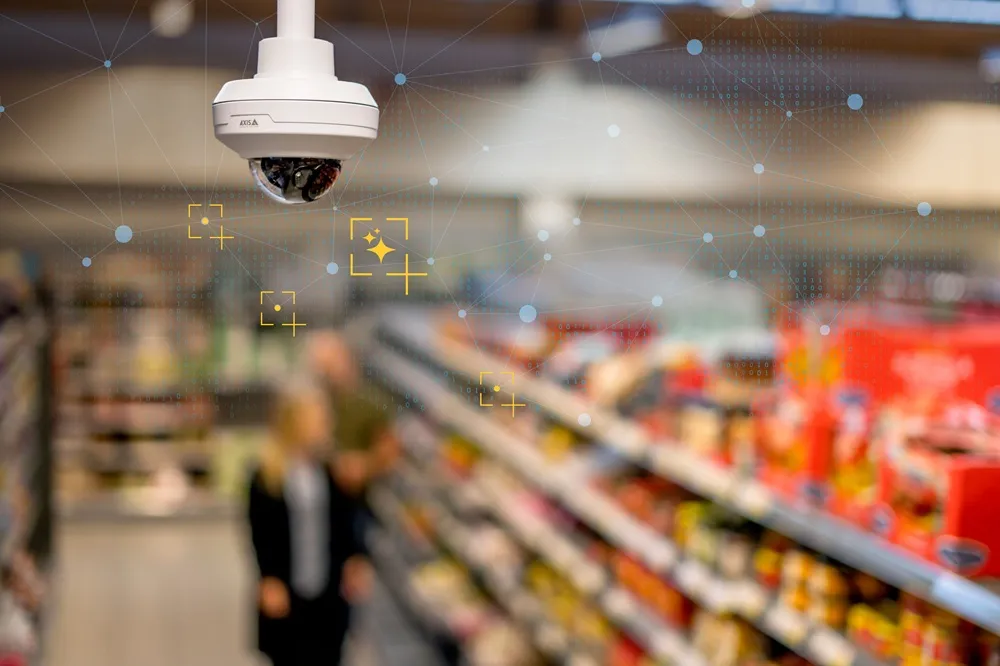
In the modern industrial landscape, the humble security camera has undergone a metamorphosis. Once a passive, recording-only sentinel, the modern security camera has evolved into a sophisticated edge-computing node capable of real-time situational awareness. Yet, this evolution brings a profound tension: the more "intelligent" a camera becomes, the more it threatens individual privacy. Industry leaders like Axis Communications and innovators like Pimloc are now arguing that the path forward isn’t to diminish technological capability, but to implement a design philosophy where privacy is not an afterthought, but a core architectural requirement.
The fundamental challenge for developers today is determining when identity is essential and when it is merely a liability. Whether monitoring a blocked emergency exit in a warehouse or tracking the flow of goods on a production line, the data required is purely functional. In these scenarios, the identity of a worker is not only unnecessary; it is a potential privacy risk.

Main Facts: The New Paradigm of Edge-Based Privacy
At the center of this technological shift is the "Edge AI" movement. By moving heavy data processing from centralized cloud servers to the camera itself, manufacturers are drastically reducing the amount of personal data that leaves the physical premises.
Mats Thulin, director of AI and analytics solutions at Axis Communications, emphasizes that the goal is to practice "data minimization." If a system can determine that a hazardous area has been breached or that a hard hat is missing without ever capturing a recognizable face, it has achieved its objective while maintaining a clean privacy record.

Axis has integrated this functionality directly into its ARTPEC system-on-chip (SoC) architecture. Unlike older generations of surveillance technology that required bulky, external server racks to process video streams, modern Axis cameras utilize deep-learning processing embedded at the hardware level. Features like "Axis Live Privacy Shield" demonstrate this capability in action: the camera analyzes the stream in real-time, detecting faces, license plates, or specific private windows, and masks those pixels before the footage is even stored or transmitted.
Chronology: The Evolution of Surveillance Ethics
The trajectory of surveillance technology has moved through three distinct phases, each defined by how it handles data:

- The Passive Era (Pre-2010s): Surveillance was defined by continuous, raw, and unindexed video recording. Footage was stored on magnetic tape or hard drives, requiring manual human review to identify incidents. Privacy was protected only by the sheer difficulty of reviewing massive volumes of data.
- The Connected Era (2010s): As cameras moved to IP networks, footage became easily accessible and transmittable. This led to increased security but also expanded the surface area for privacy breaches, as video data began flowing into centralized cloud environments.
- The Intelligent Edge Era (Current): Driven by AI, this phase prioritizes "privacy by design." Data is analyzed at the point of capture. The device decides what is relevant and discards the rest. Privacy is no longer a policy choice; it is a technical limitation enforced by the hardware itself.
Supporting Data: Why Local Processing Wins
The argument for edge-based processing is not just ethical; it is practical and operational. Transmitting high-definition video feeds to the cloud consumes significant bandwidth and increases storage costs. Furthermore, it creates a "honey pot" of data that, if breached, could expose thousands of hours of sensitive private information.
By processing locally, organizations realize several key benefits:

- Reduced Bandwidth: Instead of streaming 4K video to a dashboard, a camera can transmit a simple text-based alert—such as "Occupancy: 12"—or a low-resolution, anonymized feed.
- Faster Response: Real-time detection of safety violations (e.g., a person standing in the path of a forklift) occurs in milliseconds because the data does not have to travel to a server and back.
- Tamper Resistance: With advanced features like cryptographic signing, companies can ensure that the footage captured by a camera is authentic and has not been altered, providing a secure chain of custody for evidence.
Official Responses and Strategic Implementations
Industry players are responding to the demand for transparency by building layers of protection into their products. At Axis, the focus is on the hardware and the initial ingestion of data. Thulin notes that for high-security environments—such as banks or transport hubs—there is a legitimate need for unmasked footage to aid in criminal investigations.
In these cases, the systems are designed for "role-based access." A standard security operator might only see the masked, privacy-compliant stream. Only authorized administrators, acting under strict legal protocols, gain access to the raw, unmasked footage. This segmentation ensures that sensitive data is only ever exposed to those who truly require it for their duties.

Beyond the initial capture, there is the "lifecycle" of the video. Simon Randall, CEO of Pimloc, highlights that even if a camera captures data safely, the way that data is shared can lead to privacy disasters. Pimloc’s "Secure Redact" platform provides the necessary post-processing layer.
"The anonymization needs to be irreversible," Randall explains. "We effectively create a whole new version of the file with that personal information removed. It’s theoretically impossible to get back to what was there before." By using AI to automate the redaction of faces, license plates, and even sensitive audio, Pimloc reduces the manual labor of data sanitization from weeks to minutes, allowing organizations to share evidence with authorities or families without violating privacy laws like GDPR or CCPA.

Implications: The Future of the "Privacy-Security Continuum"
The prevailing view that privacy and security exist at opposite ends of a spectrum is increasingly seen as a false dichotomy. In reality, they are deeply intertwined. A secure system is one that protects the privacy of those it monitors, as it reduces the potential for misuse, identity theft, or unauthorized surveillance.
1. The Death of "All-or-Nothing" Surveillance
The future of video analytics is granular. As AI models become more efficient, we will see a move toward systems that can selectively redact specific individuals while leaving others visible, or that can detect an "action" without ever "seeing" the person behind it. We are moving toward a world where a camera knows what happened, but not who did it, unless the situation dictates that identity is legally required.

2. Legal and Regulatory Pressures
Governments globally are tightening regulations on biometrics and video data. Companies that adopt "Privacy by Design" now are future-proofing themselves against inevitable legislative changes. The ability to audit a system—to prove what was captured, how it was anonymized, and who had access—will become a standard requirement for all commercial security deployments.
3. The Trust Dividend
Ultimately, the organizations that will succeed in this new environment are those that earn the trust of their employees and customers. If a warehouse can prove that its safety cameras are incapable of recording private conversations or storing images of employees during break times, they build a culture of trust. Conversely, organizations that adopt "black box" surveillance risk significant reputational damage and legal liability.

Conclusion
The evolution of security cameras represents a broader trend in the Internet of Things (IoT). We are transitioning from a world of "blind" data collection to one of "intelligent" data utilization. The technology exists today to monitor our physical world with high precision while simultaneously shielding the human element from unnecessary scrutiny.
As Thulin and Randall have both noted, the decisive question for the industry is no longer about whether we can collect data, but whether we should. By integrating deep learning, hardware-level encryption, and automated post-processing redaction, the security industry is demonstrating that the most effective surveillance is the kind that remains invisible to the people it protects. The goal of the modern security architect is clear: create a system that is powerful enough to ensure safety, but disciplined enough to respect the fundamental right to privacy.