
Byline: Technology Correspondent
Date: July 15, 2026
In an era defined by shifting geopolitical landscapes and the strategic re-emergence of the Arctic as a theater of critical importance, the ability to maintain robust, high-speed communication has become the ultimate "force multiplier." Swedish satellite provider Ovzon has officially concluded a two-year campaign of rigorous Arctic testing, confirming that its proprietary technology—specifically the Ovzon 3 satellite and its T6/T7 mobile terminals—can deliver reliable, high-bandwidth connectivity in the world’s most challenging electromagnetic environments.
The results, announced on July 9, 2026, suggest that the "connectivity gap" that has long plagued military and commercial operations above the Arctic Circle is rapidly closing.
The Strategic Imperative: Why the High North Matters
The Arctic is no longer a peripheral region of frozen isolation; it is a vital domain for national security, energy resources, and international shipping lanes. For NATO, maintaining a persistent presence in the High North is a core pillar of modern defense strategy. However, the region presents unique obstacles to satellite communications (SATCOM).
Geostationary (GEO) satellites, which orbit above the equator, have historically struggled to serve the High North. As latitude increases, the elevation angle of these satellites decreases, eventually falling below the horizon or being obscured by the Earth’s curvature. This leads to signal degradation, increased latency, and a total loss of connectivity in the deep Arctic. Ovzon’s recent expeditions were specifically designed to overcome these physical limitations, positioning their technology as a critical enabler for NATO forces that require real-time situational awareness, secure data transmission, and constant command-and-control capabilities.
Chronology of the Arctic Expeditions (2025–2026)
Ovzon’s journey to prove the viability of its system was not a single event, but a deliberate, multi-phased campaign of escalating difficulty.
Phase I: Initial Validation (Early 2025)
The first expedition focused on baseline performance within the Arctic Circle. Engineers tested the Ovzon 3 satellite’s ability to maintain a stable link with mobile terminals in varied weather conditions. The goal was to establish a benchmark for high-speed data throughput, comparing Ovzon’s proprietary waveforms against traditional satellite standards.
Phase II: The Stress Test (Late 2025)
Building on initial success, the second expedition moved significantly deeper into the Arctic. During this phase, the team utilized the T6 and T7 mobile satellite terminals, which are designed for rugged, rapid-deployment environments. Tests were conducted during periods of increased solar activity, which can interfere with satellite signals, to ensure that the Ovzon 3 architecture remained resilient under environmental duress.
Phase III: The Deep Arctic Frontier (Mid-2026)
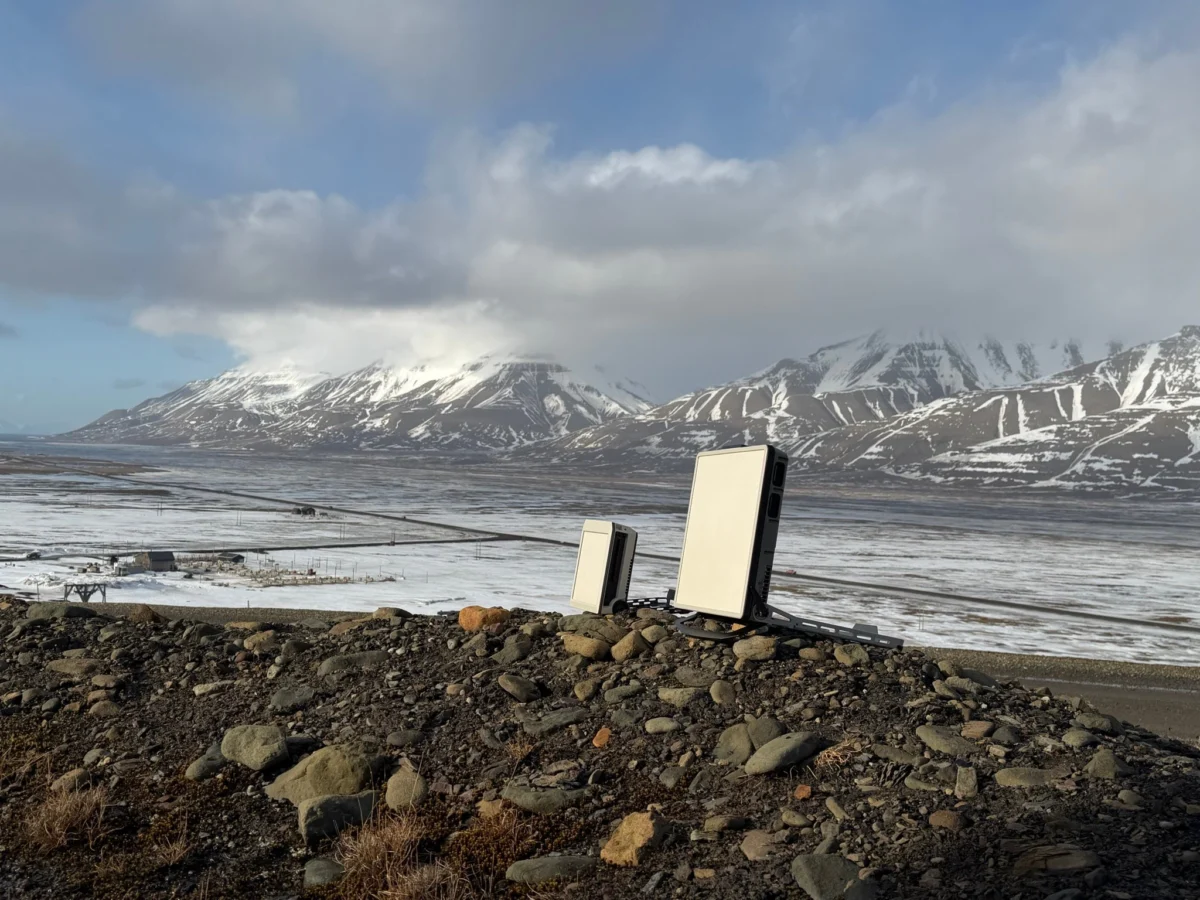
The final expedition, concluded in the summer of 2026, pushed the technology to its limits, operating nearly 1,300 km inside the Arctic Circle. This phase involved both land-based and maritime scenarios, simulating the conditions faced by naval vessels and ground reconnaissance units. It was here that Ovzon confirmed the system’s ability to deliver "high-speed connectivity at latitudes where most satellite systems simply cannot deliver."
Technical Performance: The Ovzon 3 Architecture
The success of these trials is fundamentally tied to the architecture of the Ovzon 3 satellite and its accompanying ground hardware. Unlike standard satellite systems that distribute bandwidth thinly over large areas, Ovzon employs a highly targeted approach.
The Ovzon 3 Advantage
Ovzon 3 is designed to provide high-power, steerable spot beams. This allows the system to focus massive amounts of bandwidth onto a specific geographical area—in this case, the High North—without losing signal integrity. By steering the satellite’s energy, Ovzon can compensate for the lower elevation angles, effectively "bending" the coverage to accommodate the extreme northern latitudes.
Terminal Hardware: T6 and T7
The mobile satellite terminals—the T6 and T7—are central to the system’s utility. These units are built to be man-portable or vehicle-mounted, allowing rapid deployment in "cold-start" scenarios. Key performance indicators during the tests included:
- Throughput: Consistent high-speed data transmission capable of supporting video conferencing, real-time drone telemetry, and large file transfers.
- Latency: Minimized delays, crucial for remote operations and precision data management.
- Portability: The ability for small teams to set up a fully operational link in under 15 minutes, even in sub-zero temperatures.
Official Perspectives and Industry Response
The internal sentiment at Ovzon is one of justified confidence. The success of these trials has effectively transformed the company from a boutique provider into a major contender for defense-sector contracts.
"Each expedition has taken us further north and given us greater confidence in what Ovzon 3 can do in the Arctic," said Tom Hopkins, Chief Operating Officer of Ovzon. "The results speak for themselves—reliable, high-speed connectivity at latitudes where most satellite systems simply cannot deliver. This is exactly what NATO forces operating in the High North need. We intend to keep pushing the boundaries."
Industry analysts note that the validation of this technology comes at a pivotal time. With many nations currently upgrading their Arctic military infrastructure, the demand for "on-the-move" and "at-the-halt" communications that do not rely on fragile terrestrial fiber optic cables is at an all-time high.
Implications for NATO and Global Security
The implications of the Ovzon findings are broad, impacting both tactical military operations and the broader geopolitics of the Arctic region.
Enhanced Situational Awareness
For NATO, the ability to transmit high-resolution imagery and sensor data from the deep Arctic directly to headquarters in Europe or North America changes the tactical calculus. Commanders can now make decisions based on real-time information rather than delayed or intermittent reports.
Resilience and Redundancy
Military planners emphasize the need for "communications resiliency." Should primary communication lines—such as subsea cables or traditional GEO satellite links—be compromised or disrupted by adverse weather or electronic warfare, the Ovzon system provides a secondary, high-performance path for critical data.
Maritime and Aviation Applications
While the trials covered both land and sea, the maritime success is particularly significant. Ships navigating the Arctic face the challenge of moving while maintaining a satellite link. The T7 terminal’s ability to track the Ovzon 3 satellite while on a pitching vessel in the rough waters of the Arctic Ocean proves that the technology is ready for naval integration.
Future Outlook: Beyond the Arctic Circle
As Ovzon looks to the future, the company has indicated that its work in the Arctic is just the beginning. The successful deployment of the Ovzon 3 system in the world’s most hostile environment serves as a "proof of concept" that can be applied to other underserved regions.
The company is expected to leverage these results to secure further government contracts, particularly within the framework of NATO’s digital transformation goals. With the technology now validated at 1,300 km inside the Arctic Circle, the next phase of development will likely focus on miniaturization and further hardening of the terminals against kinetic threats.
In conclusion, the Arctic is no longer a "dead zone" for communications. Through the systematic testing and deployment of high-performance satellite technology, Ovzon has provided a vital lifeline for those operating at the top of the world. As global powers continue to pivot toward the High North, the ability to communicate, command, and coordinate will remain the decisive factor—and for now, that factor looks to be supported by the reach and reliability of the Ovzon 3 network.