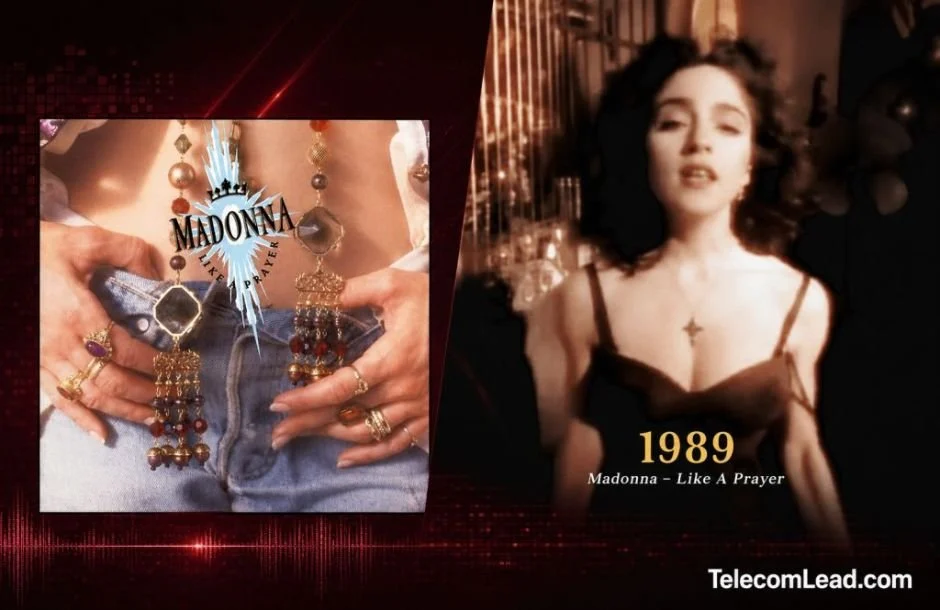
Melbourne, Australia – In a landmark decision that signals a growing global debate around artificial intelligence in creative industries, the Australian Recording Industry Association (ARIA) has officially excluded fully AI-generated music from its prestigious national charts. This pivotal policy shift, effective August 31, 2026, comes in the wake of controversy surrounding an AI-assisted cover of Madonna’s iconic 1989 hit, "Like a Prayer," which rapidly gained traction on Australian radio and reached significant chart positions.
The new ARIA rules, detailed in a comprehensive policy update, aim to preserve the integrity of the official charts by ensuring that eligible recordings are "substantially human made." While generative AI can still play a supporting role in music creation, its primary or complete creative input will now render a track ineligible for chart recognition. This decision has far-reaching implications for artists, labels, and the very definition of musical success in the digital age.
The Catalyst: A Madonna Cover Sparks Controversy
The immediate trigger for ARIA’s policy revision was the unprecedented success of an AI-assisted cover of Madonna’s "Like a Prayer," attributed to Australian DJ Josh Fawaz. The track reportedly garnered over 48 million streams on Spotify and became the most-played song on Australian radio in July 2026. Its rapid ascent saw it climb to the number four position on two ARIA charts, prompting questions and allegations from within the music production community about the undisclosed use of generative AI in its creation.
While Fawaz acknowledged using AI as a tool, he asserted his long-standing career in music production predates generative AI. However, the core of the controversy lay in the alleged use of AI for key creative elements, including vocals and drums. Under ARIA’s revised guidelines, a lead vocal generated entirely by AI, a primary instrumental performance created by AI, or a complete track generated from a text prompt would automatically disqualify a recording from chart eligibility, regardless of subsequent human involvement in mixing, mastering, or marketing.
Navigating the Nuances: ARIA’s Three-Tiered Approach to AI in Music
ARIA has established a clear framework to categorize music involving artificial intelligence, ensuring a nuanced approach that differentiates between supportive AI tools and outright AI authorship. The association has outlined three distinct categories for eligibility:
-
AI-Generated Music (Excluded): This category encompasses recordings where generative AI is responsible for all or the predominant portion of the creative elements. This includes, but is not limited to, AI-generated lead vocals, primary instrumental performances, or entire song structures derived from AI prompts. Such recordings will be ineligible for the ARIA Charts and the ARIA Awards.
-
AI-Assisted Music (Eligible): Recordings where human creativity and performance remain the primary drivers are still welcome. This means the song must be conceived, written, and predominantly performed by human artists, including the lead vocal and principal instrumental contributions. AI can be employed for minor supporting elements, such as backing vocals, secondary instrumentation, or sonic textures that enhance the human performance without replacing it.
-
AI Used in Production (Eligible): The use of AI in the technical aspects of music production is also permissible. This includes applications such as AI-powered mastering, stem separation for remixing, the use of drum machines, sophisticated reverb effects, the incorporation of short background samples, and the utilization of instrument patches that are subsequently performed and manipulated by a human musician.
Crucially, ARIA has clarified that human intervention in the final stages of production will not retroactively legitimize an otherwise AI-generated track. Processes such as human mixing, editing, equalization, or mastering will not convert a recording where AI was the primary creative force into a "human-made" submission.
The Three Pillars of Chart Eligibility
Beyond the categorization of AI’s role, any recording incorporating generative AI must satisfy three fundamental conditions to remain eligible for the ARIA Charts:
-
Human Creativity and Performance as Primary Drivers: The core creative vision, songwriting, and instrumental or vocal performances must demonstrably originate from human artists. This emphasizes the human element as the driving force behind the artistic output.
-
Absence of Streaming or Chart Manipulation Concerns: The recording must not exhibit any signs of artificial inflation of streams, sales, or other chart metrics. This aims to maintain the integrity and authenticity of the consumption data that underpins chart rankings.
-
Compliance with Copyright and Related Laws: The creation and distribution of the recording must adhere to all applicable copyright laws, intellectual property rights, and other relevant legal frameworks.
While ARIA has not yet adopted a proposed fourth global test requiring AI services to be formally authorized by music rights holders, the association acknowledges that licensing arrangements between record companies and generative AI developers are still in a nascent and evolving stage. This indicates a potential future consideration as the legal and ethical landscape surrounding AI in music matures.
Transparency and Accountability: The Declaration Mandate
To enforce these new regulations, ARIA has implemented a mandatory declaration process for all submissions. Artists, record labels, and distributors will be required to answer a specific question regarding the use of generative AI in their recordings. ARIA will initially rely on these self-declarations. However, the association reserves the right to request further information from rights holders in response to credible complaints, initiating an investigation into a recording’s eligibility.
Artists will have the recourse to provide supporting evidence and challenge any exclusion decision through the ARIA Chart and Marketing Committee. Further appeals can be escalated to the ARIA Board. Notably, ARIA will not maintain a public database of investigated or excluded songs, opting for private notifications to rights holders. The association concedes that the increasing sophistication of generative AI tools will make the distinction between AI-generated and AI-assisted recordings increasingly challenging over time.
Consequences of Non-Compliance: Correcting the Record and Revoking Awards
The new criteria are not retroactive, meaning charts published prior to August 31, 2026, will not be subject to revision. However, if a recording that appears on a subsequent chart is later found to be ineligible, ARIA retains the authority to correct the published rankings. This can include adjusting the positions of other artists, withdrawing sales or streaming accreditations, and even revoking ARIA No. 1 Awards, with recipients potentially being asked to return physical accolades.
For the annual ARIA Awards, fully AI-generated tracks will also be deemed ineligible. Albums will be assessed on a track-by-track basis, with excluded tracks not contributing to the overall chart performance of the release. Importantly, artists can replace AI-generated lead vocals or instruments with human performances and resubmit the modified version as a new recording. However, this new submission will not inherit the chart history of its AI-generated predecessor.
The Broader Landscape: AI Music’s Reach Beyond the Charts
It is crucial to understand that ARIA’s policy primarily governs eligibility for its official charts and awards. It does not prohibit streaming services from distributing fully AI-generated music, nor does it dictate royalty payments or prevent radio stations from broadcasting such content. Consequently, AI-generated tracks can continue to accumulate streams, attract audiences, and generate revenue on commercial platforms. Their exclusion from ARIA charts simply means they will not receive official industry recognition as measures of commercial success in Australia.
ARIA’s stated intention is for its charts to reflect the consumption of human-created music, rather than every form of audio gaining popularity online. This distinction underscores the association’s commitment to celebrating human artistry and performance within the established framework of the music industry.
Economic Context: A Thriving Australian Music Market Under Pressure
The decision by ARIA is set against the backdrop of a robust Australian music market. In 2025, the industry’s recorded-music wholesale revenue climbed 1.4 percent to A$727 million, marking the seventh consecutive year of growth. Digital formats overwhelmingly dominate, accounting for A$659 million (90.7 percent) of market revenue, with subscription streaming alone contributing A$517 million. This heavy reliance on digital consumption highlights the critical importance of chart integrity and streaming data.
However, the rapid proliferation of AI-generated music poses a significant competitive threat. These tracks can be produced at a fraction of the cost and time of human-created music, leading to a potential flood of content that could overwhelm streaming platforms and dilute the visibility of human artists. With an estimated 120,000 tracks already being uploaded globally each day, the addition of vast quantities of AI-generated music could make it increasingly difficult for Australian artists to gain traction.
Research by Creative Australia indicated that in 2024, only 8 percent of the 10,000 most-streamed artists in Australia were Australian. The fact that approximately 80 percent of royalties received by Australian artists originate from overseas audiences further emphasizes both the export potential and the challenge of domestic visibility. ARIA argues that allowing fully AI-generated music to occupy chart positions would exacerbate this competitive pressure, potentially disadvantaging local talent.
Global Implications and the Future of Music Recognition
The global music streaming market is immense, exceeding $20 billion for the first time in 2024. This colossal economic landscape has incentivized AI developers to create sophisticated tools capable of generating complete songs from simple text prompts. The stakes are high, leading major record companies to actively pursue licensing agreements with AI music platforms. These agreements aim to secure compensation for the use of existing recordings in AI training data and establish controls to prevent unauthorized imitation of identifiable artists.
ARIA’s stance aligns with global principles advocated by the International Federation of the Phonographic Industry (IFPI), which champions a global labeling system to differentiate "AI-Generated" from "AI-Assisted" recordings. Such transparency is deemed essential for listeners and commercial partners to understand the creative origins of music.
The Australian government has also signaled its commitment to protecting artists. Prime Minister Anthony Albanese has promised measures to ensure artists retain ownership of their work, addressing concerns around copyright exemptions, AI training disclosures, licensing, and compensation. ARIA has actively opposed any weakening of Australian copyright protections to favor international AI companies, advocating for AI innovation built on consent, transparency, and fair remuneration.
While ARIA’s new chart rules do not definitively resolve the complex copyright questions surrounding AI-generated music, they establish an immediate commercial distinction. This decision by ARIA could serve as a bellwether for other national charts and music awards worldwide. If similar policies gain traction, AI-generated songs may continue to be widely accessible on streaming services but will be increasingly excluded from the industry rankings, awards, and accreditations that have traditionally defined and celebrated commercial success. The evolution of AI in music is a dynamic and ongoing narrative, and Australia’s latest move represents a significant chapter in its unfolding story.