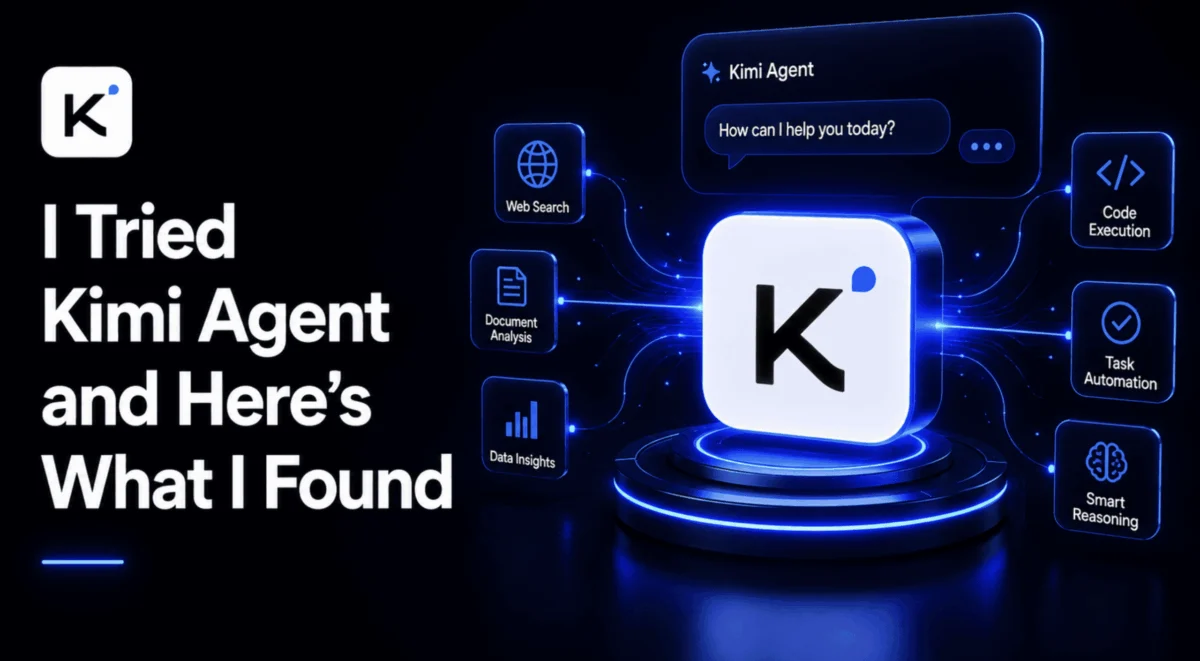
In the rapidly shifting landscape of Large Language Models (LLMs), the term "Agent" has become the industry’s most overused buzzword. However, Beijing-based Moonshot AI is attempting to move beyond the nebulous marketing with its "Kimi Agent" ecosystem. Rather than offering a monolithic tool, Moonshot has rolled out a sprawling, multi-layered architecture designed to tackle complex, autonomous workflows.
At the core of this infrastructure is Kimi K3, a massive 2.8-trillion-parameter Mixture-of-Experts (MoE) model. With a 1-million-token context window, K3 is engineered for the heavy lifting of long-form data synthesis. Yet, the real innovation—and the source of both the platform’s potential and its growing pains—is the Agent Swarm architecture.
The Architecture of Coordination: What is Agent Swarm?
To understand Kimi, one must distinguish between the underlying engine (K3) and the operational framework (Agent Swarm). Unlike traditional agentic models that process tasks sequentially, Agent Swarm functions as a parallelized orchestration system.
Launched in its early iteration alongside Kimi K2.5 in January 2026, the architecture was designed to spin up dozens—and eventually hundreds—of coordinated sub-agents. By the release of K2.6 in April 2026, the system demonstrated a significant performance leap, capable of managing up to 300 simultaneous sub-agent instances and executing over 4,000 tool calls in a single task. Moonshot claims this approach offers a 4.5x speed advantage over sequential processing.
What sets Moonshot apart in its documentation is a refreshing, albeit startling, level of transparency. The company openly acknowledges two primary failure modes:
- Serial Collapse: Where the orchestrator attempts to distribute work, but sub-agents become blocked by dependencies, effectively reverting to a slow, sequential bottleneck.
- Fake Parallelism: Where tasks are distributed across agents that lack the independence to function autonomously, leading to redundant work and wasted compute.
By publishing this "failure taxonomy," Moonshot provides a decision framework for developers. It serves as a warning: not every problem benefits from a swarm approach.
Chronology of the Kimi Expansion
The evolution of the Kimi ecosystem has been characterized by rapid, aggressive feature releases:
- January 27, 2026: Launch of Kimi K2.5 and the first iteration of the Agent Swarm architecture.
- April 20, 2026: Kimi K2.6 update introduces massive parallelization capabilities (300+ sub-agents).
- June 10, 2026: Release of Kimi Work, a dedicated desktop application for macOS (Apple Silicon) and Windows. It introduces "WebBridge," an extension allowing the AI to interact with browser-based forms and navigation, effectively automating human-like web tasks.
- July 2026: High demand leads to a temporary suspension of new K3 subscriptions due to GPU capacity limitations, highlighting the scaling challenges faced by the Beijing-based lab.
- July 27, 2026: Kimi K3 weights are released under a bespoke license, granting users the ability to run the model locally, though notably not under an OSI-recognized Open Source license.
The Product Suite: From Cloud to Desktop
Moonshot’s strategy is to integrate Kimi into every layer of the user’s workflow:
- Kimi Work: The primary desktop client. It brings agentic control to the local machine, though its reliance on local processing means tasks pause if the laptop lid is closed.
- Kimi Claw: The cloud-based counterpart to Kimi Work. It ensures that complex, long-running agent tasks continue to execute in the cloud, even when the user’s local machine is offline.
- Kimi Code: A command-line interface (CLI) optimized for developers, allowing for direct terminal-based interaction with the K3 model.
- Goal: A feature that allows users to define high-level, multi-step objectives in plain language, leaving the sub-agent orchestration to the Kimi engine.
Hands-On Analysis: API Performance and Integration
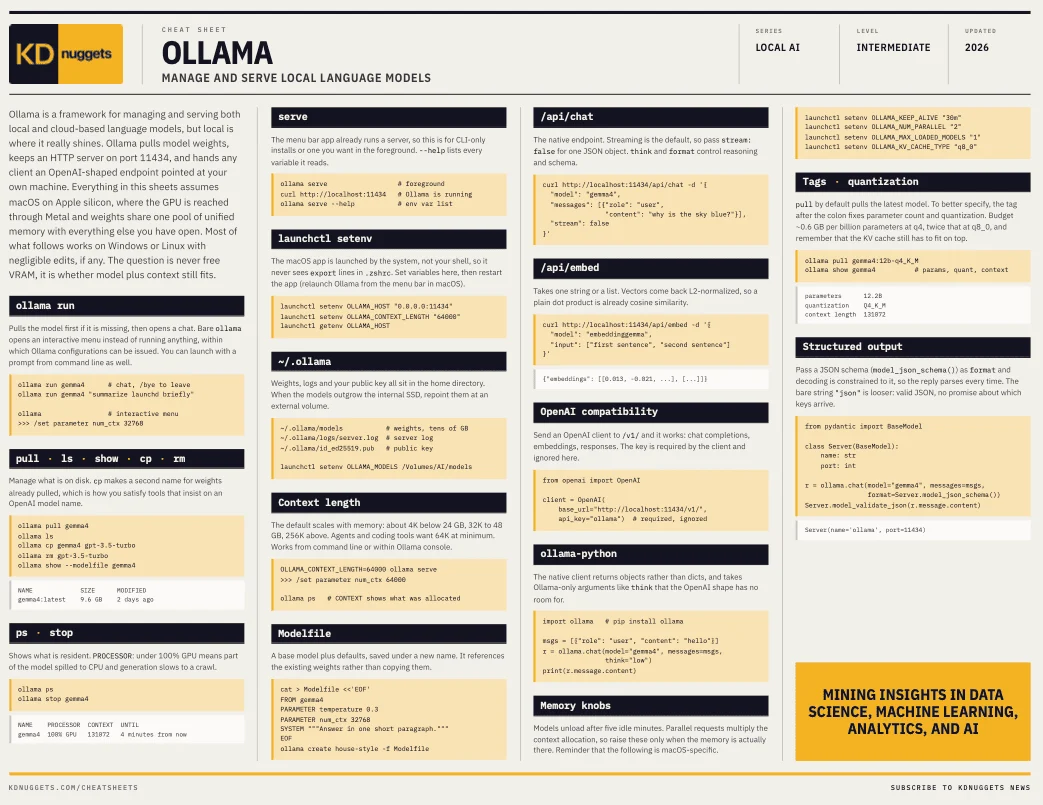
For developers, Moonshot’s commitment to an OpenAI-compatible API is a significant accessibility win. The standard openai Python SDK can be repurposed to interact with K3 simply by swapping the base URL.
A critical transition in the K3 update is the deprecation of the thinking parameter, which has been replaced by reasoning_effort. Currently, "max" is the only supported value, suggesting that Moonshot intends to provide more granular control over inference time in future updates.
From an economic perspective, K3 represents a pivot for Moonshot. While the company built its early reputation on low-cost, high-volume access, K3 is priced at $3 per million input tokens and $15 per million output tokens. While this is significantly more expensive than previous iterations, the introduction of automatic prefix caching—which drops cached-input rates to $0.30 per million tokens—makes the model highly competitive for long-context, repetitive conversational tasks.
Independent Benchmarking and Real-World Limitations
While Moonshot’s internal marketing is bullish, independent testers paint a more nuanced picture.
Document Analysis
In document-heavy tasks, Kimi K3 shines. Users have reported that uploading multiple long PDFs and requesting cross-referenced analysis yields highly accurate results. The model’s 1-million-token context window is a genuine strength, allowing it to maintain coherence over massive datasets where smaller models might lose the thread.
Coding Capabilities
Kimi Code has been praised for its clean, efficient output. While it may lack the highly structured, step-by-step reasoning found in tools like Claude Code, it is generally viewed as a highly capable, cost-effective alternative for routine refactoring and script generation.

The Coordination Gap
The most significant criticism, verified by both independent developers on platforms like Hacker News and Moonshot’s own internal documents, is that K3 struggles with the "hardest" agentic coordination tasks. When compared to frontier models like Claude Fable 5 or GPT-5.6 Sol, K3 often falls short in complex, multi-turn decision frameworks.
Strategic Implications for Enterprise Users
The decision to adopt Kimi is not purely a technical one; it involves significant strategic and regulatory considerations:
- Data Sovereignty: Because Kimi’s hosted API routes through China-based servers, it presents a non-starter for many companies in regulated industries (finance, healthcare, defense) that require strict data residency within Western jurisdictions.
- Model Stability: The July 2026 subscription pause serves as a cautionary tale regarding supply chain stability. For businesses building critical infrastructure on top of Kimi, the reliance on a single provider’s GPU capacity is a tangible risk.
- The "Proactiveness" Factor: Moonshot documentation notes a tendency toward "excessive proactiveness." While this can lead to faster task completion, it can also lead to hallucinations or unprompted actions if the agent encounters ambiguity. Users must implement robust "human-in-the-loop" verification for critical workflows.
- Licensing: The "Open-Weight" status of K3 is a powerful feature for developers who need to run models on-premise, but the bespoke nature of the license requires legal scrutiny to ensure compliance with enterprise-level usage policies.
Conclusion: A Tool for the Pragmatist
Kimi K3 and its Agent Swarm architecture represent a significant leap forward in the practical application of AI agents. It is not, however, a "silver bullet" for every agentic use case.
If your primary objective is cost-effective coding, long-document synthesis, or exploring local-first AI development with an open-weight model, Kimi is a compelling, highly efficient choice. Its pricing structure, combined with advanced prefix caching, makes it a disruptive force in the LLM market.
Conversely, for organizations requiring the absolute highest level of multi-agent reasoning and flawless coordination in high-stakes environments, the current data suggests that Western-hosted frontier models maintain a lead.
Ultimately, the Kimi ecosystem is a testament to the maturation of the AI market. It is moving away from the era of "one model to rule them all" and into an era of specialized architectures—where the right tool for the job is defined not just by raw intelligence, but by efficiency, context capacity, and the honest documentation of its own limitations.