In the evolving landscape of consumer electronics, the boundary between a standard smartwatch and a medical diagnostic tool is dissolving. Huawei, a global leader in technology, is spearheading this convergence by repositioning its wearable portfolio not merely as accessories for fitness enthusiasts, but as vital infrastructure for clinical-grade health monitoring, data collection, and academic medical research.
This transformation was placed front and center at the recent "Chase the Wild" event at the SHOWPALAST in Munich, Germany. There, the tech giant unveiled the next generation of its health-focused hardware—the Watch D3—and introduced a groundbreaking European infrastructure platform, Terve Research. This dual-pronged announcement signals a shift from passive tracking to proactive, medically validated health management.
The Evolution of Health Monitoring: A Chronology of Innovation
Huawei’s current position in the medical-tech space is not an overnight development; it is the culmination of years of targeted research and hardware iteration.
- 2021: The Foundation: Huawei launched the first-generation Watch D, which introduced wrist-based blood pressure measurement—a feature previously reserved for bulky clinical hardware or upper-arm cuffs.
- 2024: The Ambulatory Shift: With the launch of the Watch D2, Huawei introduced 24-hour Ambulatory Blood Pressure Monitoring (ABPM). This allowed for longitudinal tracking, providing a more comprehensive view of hypertension trends than a single snapshot.
- September 2025/2026 (Launch Cycle): The global launch of the Watch D3 marks the maturity of this lineage. By refining the hardware and integrating the Terve Research platform, Huawei has moved from providing individual data points to building a connective tissue between consumers and medical institutions.
The Watch D3: Balancing Precision with Patient Comfort
One of the most persistent criticisms of wearable health technology has been the trade-off between user convenience and clinical accuracy. Critics have long argued that "cuffless" estimation methods—often relying solely on PPG (Photoplethysmography) light-based sensors—lack the rigor required for medical diagnosis.
Huawei has addressed this with the Watch D3, which adopts a hybrid "precision measurement plus trend tracking" approach. By utilizing a miniature pump and airbag for conventional oscillometric measurement, the device maintains the gold standard of blood pressure assessment. However, it strategically pairs this with PPG-based continuous trend monitoring to bridge the gaps between inflations.
Crucially, the D3 reduces the "disruption factor"—a significant pain point for patients undergoing ABPM. By limiting the device to four high-precision pump measurements during the day and three at night, it achieves medical-grade reliability while minimizing the discomfort associated with constant cuff compression. Furthermore, the device is 17.7% thinner and 9% lighter than its predecessor, acknowledging that for health monitoring to be effective, the hardware must be unobtrusive enough for 24/7 wear.
The D3 has achieved CE Medical Device certification for resting blood pressure, ABPM, and pre/post-exercise monitoring, making it the first wrist-worn device to meet ISO standards for measuring blood pressure accurately during physical activity.
The Terve Research Platform: Bridging the Gap to Clinical Science
Perhaps the most significant development is not the hardware itself, but the Terve Research platform. Funded by Huawei and independently managed by medical technology provider Thryve, Terve acts as a bridge between the vast troves of data generated by Huawei wearables and the rigorous requirements of European academic and medical institutions.
This platform allows researchers to:
- Conduct Closed Studies: Working with specific, curated patient cohorts.
- Open Research Participation: Allowing eligible Huawei users to volunteer their data for studies on cardiovascular health, sleep hygiene, and metabolic patterns.
Terve is launching with two primary initiatives: one examining the physiological impact of "social jetlag" and disrupted circadian rhythms, and another investigating the nexus between exercise patterns and long-term cardiovascular risk. By creating a feedback loop where real-world data informs future medical research—and subsequently influences product design—Huawei is effectively turning its user base into a global laboratory for preventive medicine.
Official Perspectives: Redefining the "Full-Body System"
The strategy is underpinned by a vision of health as a continuous, rather than episodic, state. Rico Zhang, President of Huawei’s Smart Wearable and Health Product Line, frames this as a fundamental shift in how we perceive technology.
"From metabolic monitoring and active health management to brain activity sensing, wearables are no longer just about your wrist," Zhang stated at the Munich event. "We are moving toward a complete picture of your health, a full-body system that monitors, understands, and responds."
This sentiment is echoed by Zhou Hong, President of Huawei Research Institute, Europe. According to Hong, the value of the wearable lies in its ability to operate outside the sterile, infrequent environment of a doctor’s office. "Wearable devices enable fast, convenient and reliable multimodal measurements anytime and anywhere," Hong noted. "The health sector is so promising because the potential for discovery is enormous, and the need for actionable, personalized intervention has never been greater."
Supporting Data and Market Implications
The broader industry context confirms that Huawei is not alone in this pursuit, but it is distinguishing itself through its emphasis on validation. According to Counterpoint Research, the metrics that matter in the smartwatch market have shifted. It is no longer enough to track steps; investors and consumers are now scrutinizing devices based on their ability to detect sleep apnea, perform ECGs, and provide validated blood pressure readings.
Huawei’s ecosystem currently includes partnerships with over 160 healthcare institutions and 10 research centers, including three dedicated sports and health science laboratories. This infrastructure allows for a level of data validation that few competitors can match.
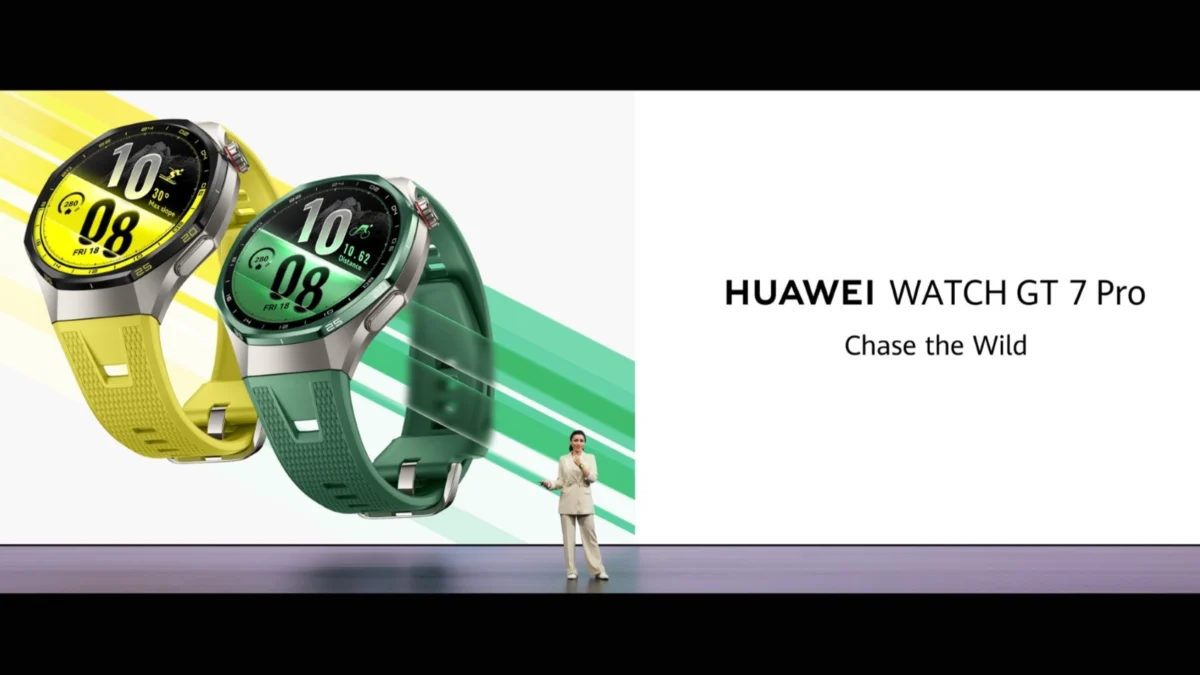
Furthermore, the expansion of the portfolio—including the GT 7 Series and the return of the Watch 6 Series to Europe—shows a tiered approach. While the Watch D3 targets the medical-monitoring demographic, the GT 7 Pro and Watch 6 capture the "prosumer" market with AI-driven workout analysis, G-Force detection, and specialized sports mapping.
The Emergence of the "Health Super-Device"
The announcement of the HUAWEI Mate XT 2 in Guangzhou, China, further highlights this integrated approach. By incorporating advanced health features like ECG analysis into its flagship folding smartphone, Huawei is signaling that the "health platform" is not confined to the wrist. It is becoming an ambient experience that spans sensors, software, and hardware.
The implications for the industry are profound. As fitness tracking becomes commoditized, the "moat" around a brand will no longer be the design of the watch face, but the clinical validity of the data it provides. By prioritizing ISO certification and fostering independent research through platforms like Terve, Huawei is insulating itself against the "toy-grade" label that often plagues wearable manufacturers.
Conclusion: The Road Ahead
Huawei’s pivot from a consumer electronics manufacturer to a digital-health infrastructure provider is a strategic masterstroke. By addressing the critical need for clinical validation and creating a transparent pipeline for medical research, the company is positioning itself to be a permanent fixture in the future of healthcare.
As we move toward an era of personalized medicine, the ability to collect, interpret, and act upon real-world data will define the winners of the next decade. With the Watch D3 and the Terve platform, Huawei is no longer just selling a device; it is selling a continuous, data-driven window into the human body—and inviting the medical community to join them in the process of discovery.