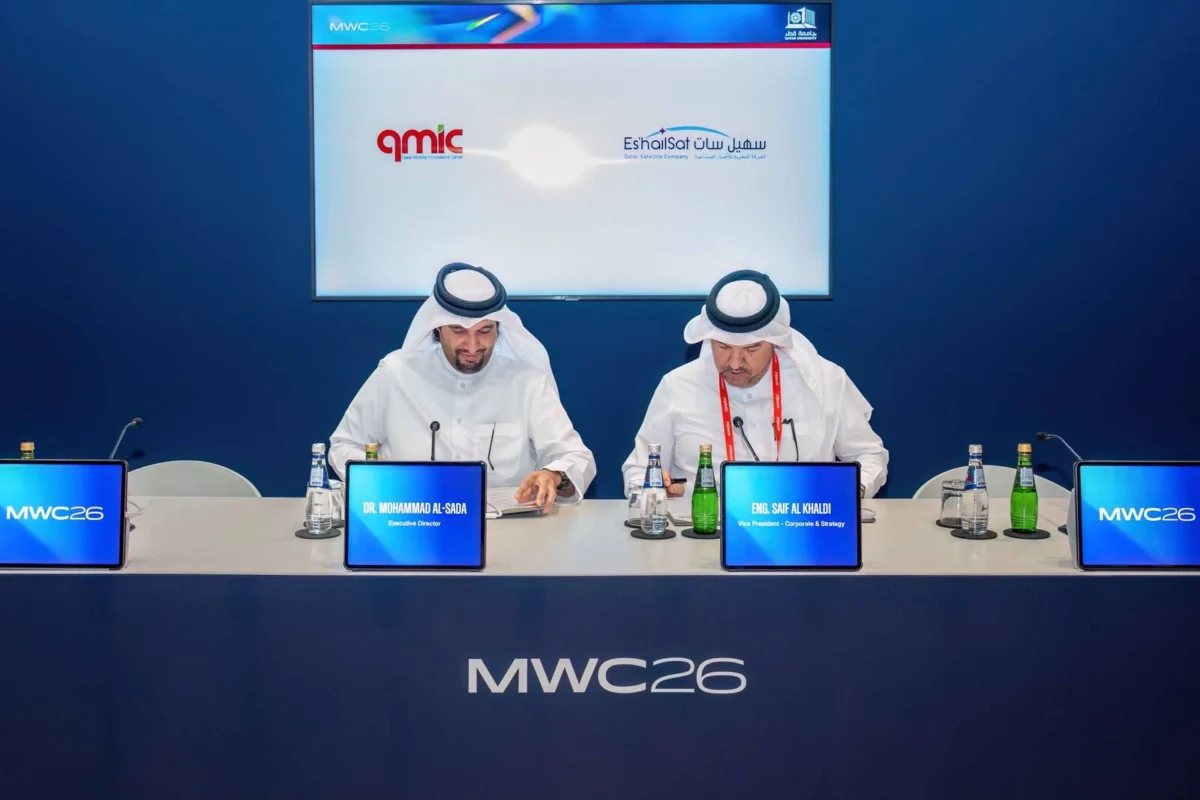
Doha, Qatar — In a landmark development for the Middle East’s aerospace and telecommunications sector, Es’hailSat, the Qatar Satellite Company, has officially announced a strategic Memorandum of Understanding (MoU) with the Qatar Mobility Innovations Center (QMIC). The partnership, disclosed on November 9, 2026, marks a pivotal shift in how satellite operators manage increasingly complex orbital networks, signaling a transition from traditional manual oversight to sophisticated, AI-augmented infrastructure management.
This collaboration between a leading satellite operator and a national powerhouse in research and innovation underscores a broader regional ambition: to transition Qatar into a global hub for high-tech, data-driven aerospace solutions.
Main Facts: The Intersection of Space and Artificial Intelligence
The core of this agreement centers on the deployment of artificial intelligence to enhance the operational lifecycle of satellite communications. As satellite constellations grow more intricate and the demand for constant, uninterrupted connectivity rises, the ability to rapidly diagnose and rectify anomalies becomes paramount.
Under the terms of the MoU, Es’hailSat and QMIC will pool their resources to explore the following key objectives:
- Intelligent Incident Analysis: Leveraging AI models to parse vast streams of telemetry data, enabling the rapid identification of operational anomalies.
- Predictive Troubleshooting: Moving beyond reactive repairs, the partnership seeks to develop tools that provide evidence-based guidance to technical teams, reducing the Mean Time to Repair (MTTR).
- Decision-Support Frameworks: Implementing AI-driven systems that offer real-time insights to human operators, effectively acting as a "force multiplier" for technical teams tasked with maintaining network integrity.
- Joint R&D Ecosystem: Establishing a formal framework for research, experimentation, and the rigorous testing of AI solutions specifically tailored for the harsh, latency-sensitive environment of space operations.
Chronology: The Road to the Partnership
The announcement on November 9, 2026, was not an isolated event but the culmination of a broader strategic evolution within Qatar’s technology sector.
- Early 2026: Es’hailSat began exploring internal initiatives to modernize its Network Operations Center (NOC). Recognizing the limitations of manual monitoring in an era of multi-frequency, multi-beam satellite payloads, leadership identified AI as a critical path forward.
- Mid-2026: Preliminary discussions between Es’hailSat and QMIC commenced. QMIC, already established as a leader in smart mobility and IoT solutions through its work with Qatar University, presented a compelling synergy with the satellite operator’s operational needs.
- October 2026: Finalization of the technical scope and legal frameworks for the partnership. Both organizations aligned on the necessity of integrating machine learning into the "satellite-as-a-service" model.
- November 9, 2026: Official signing of the MoU, formalizing the commitment to collaborate on R&D, experimentation, and the deployment of AI-driven troubleshooting tools.
Supporting Data: Why AI in Space Matters
The integration of AI into satellite operations is no longer a luxury; it is a necessity driven by data volume and operational complexity.
The Complexity Gap
Modern High Throughput Satellites (HTS) generate massive amounts of telemetry data every second. For a human operator, identifying the "needle in the haystack" during an incident—such as a transponder drift or an unexpected signal interference event—can take hours. With AI, the system can cross-reference current telemetry against millions of historical data points, identifying patterns that indicate an impending failure long before it disrupts service for the end-user.
Efficiency Metrics
Industry projections suggest that the adoption of AI-driven diagnostics in the telecommunications sector can reduce network downtime by up to 30%. For a satellite operator like Es’hailSat, which serves mission-critical clients in government, broadcast, and maritime industries, this reduction in downtime equates to a significant increase in Service Level Agreement (SLA) reliability.
The QMIC Advantage
QMIC brings deep expertise in localized data processing. By leveraging QMIC’s existing experience in managing large-scale IoT networks and mobility data, Es’hailSat can accelerate the deployment of intelligent algorithms specifically tuned to the unique geographical and climatic conditions of the MENA region.
Official Responses: A Vision for the Future
The partnership has been hailed as a transformative step for both organizations.
Saif Al Khaldi, Vice President of Corporate & Strategy at Es’hailSat, emphasized that the move is part of a larger, long-term strategic pivot.
"By partnering with QMIC, we are significantly expanding our focus beyond baseline satellite capacity to deliver end-to-end intelligent capabilities," Al Khaldi stated. "As the aerospace ecosystem grows more complex, integrating applied AI through our operations will empower our technical teams to proactively streamline troubleshooting and fortify network resilience."
Industry analysts view this statement as a clear signal that Es’hailSat intends to compete not just on bandwidth, but on the intelligence of its infrastructure. By embedding AI into the core of its operations, the company is positioning itself to offer "self-healing" network capabilities, which are becoming the gold standard in the global satellite communications market.
QMIC, meanwhile, views the collaboration as a validation of its role as a bridge between academic research and commercial application. By applying its mobility-focused AI research to the vertical of space communications, QMIC demonstrates the cross-sectoral versatility of its technology.
Implications: The Future of Satellite Operations
The collaboration between Es’hailSat and QMIC is poised to have profound implications for the industry at large.
A Paradigm Shift in Network Resilience
The most immediate implication is the shift toward "proactive" maintenance. In traditional operations, teams react to an outage after it has been reported. With the proposed AI-driven decision-support systems, Es’hailSat aims to transition to a model where the network identifies degradation and suggests corrective actions before the end-user experiences a drop in service quality.
Setting a Regional Benchmark
This partnership establishes a template for other operators in the Middle East. As regional space agencies grow, the ability to build, maintain, and secure space assets using local expertise and home-grown AI will be a source of significant sovereign strength.
Talent Development and Knowledge Transfer
Beyond the technical outcomes, the MoU represents a commitment to human capital development. By working on the cutting edge of AI and space technology, engineers from both Es’hailSat and QMIC will be tasked with solving some of the most complex problems in modern engineering. This will inevitably foster a pipeline of high-skilled talent in Qatar, reinforcing the nation’s position in the global knowledge-based economy.
Challenges and Future Hurdles
Despite the optimism, the path ahead is not without challenges. The integration of AI into mission-critical infrastructure requires extreme rigor. Ensuring the "explainability" of AI—that is, ensuring that technical teams understand why an AI system suggests a specific troubleshooting path—will be a primary focus for the joint research team. Furthermore, cybersecurity remains a top priority; as these systems become more automated, they become more attractive targets for interference. The collaboration will need to ensure that its AI frameworks are as secure as they are intelligent.
Conclusion: The Path Forward
The MoU between Es’hailSat and QMIC is more than a simple research agreement; it is a strategic alignment of two organizations at the forefront of their respective fields. As the space economy continues to expand, the winners will be those who can harness the power of artificial intelligence to manage the vast complexity of orbital operations.
With the ink now dry on this agreement, the focus shifts to the development phase. The industry will be watching closely as these two entities work to translate theoretical AI models into operational realities. If successful, the collaboration will not only redefine the operational standards for Es’hailSat but will also serve as a beacon for how national institutions can leverage AI to master the final frontier.
As of late 2026, this partnership stands as a testament to the fact that the future of satellite communications is not just about power, signal, and orbit—it is about the intelligent, proactive, and data-driven management of an increasingly crowded and essential space environment.