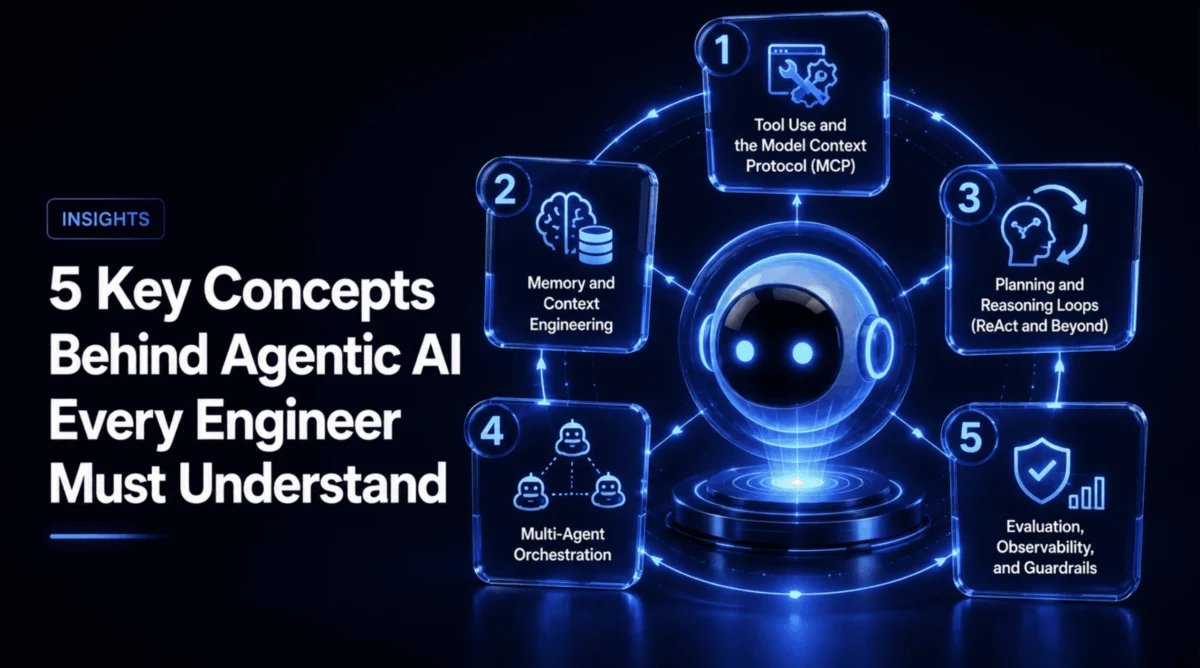
The transition from generative AI as a "conversational oracle" to an "autonomous operator" marks the most significant shift in software engineering since the dawn of cloud computing. If a standard chatbot is a library that answers your questions, an Agentic AI system is a research assistant that not only finds the books but reads them, summarizes the findings, and initiates the required administrative workflows.
This evolution—the leap from "telling" to "doing"—is why agentic architecture has moved from the fringes of R&D to the top of every CTO’s 2026 roadmap. Yet, the industry faces a sobering reality: approximately 88% of AI agent pilots fail to reach production. This article deconstructs the five foundational pillars of agentic systems, providing a blueprint for engineers looking to navigate the complexities of deployment, reliability, and scale.
1. Tool Use and the Standardization of the Bridge
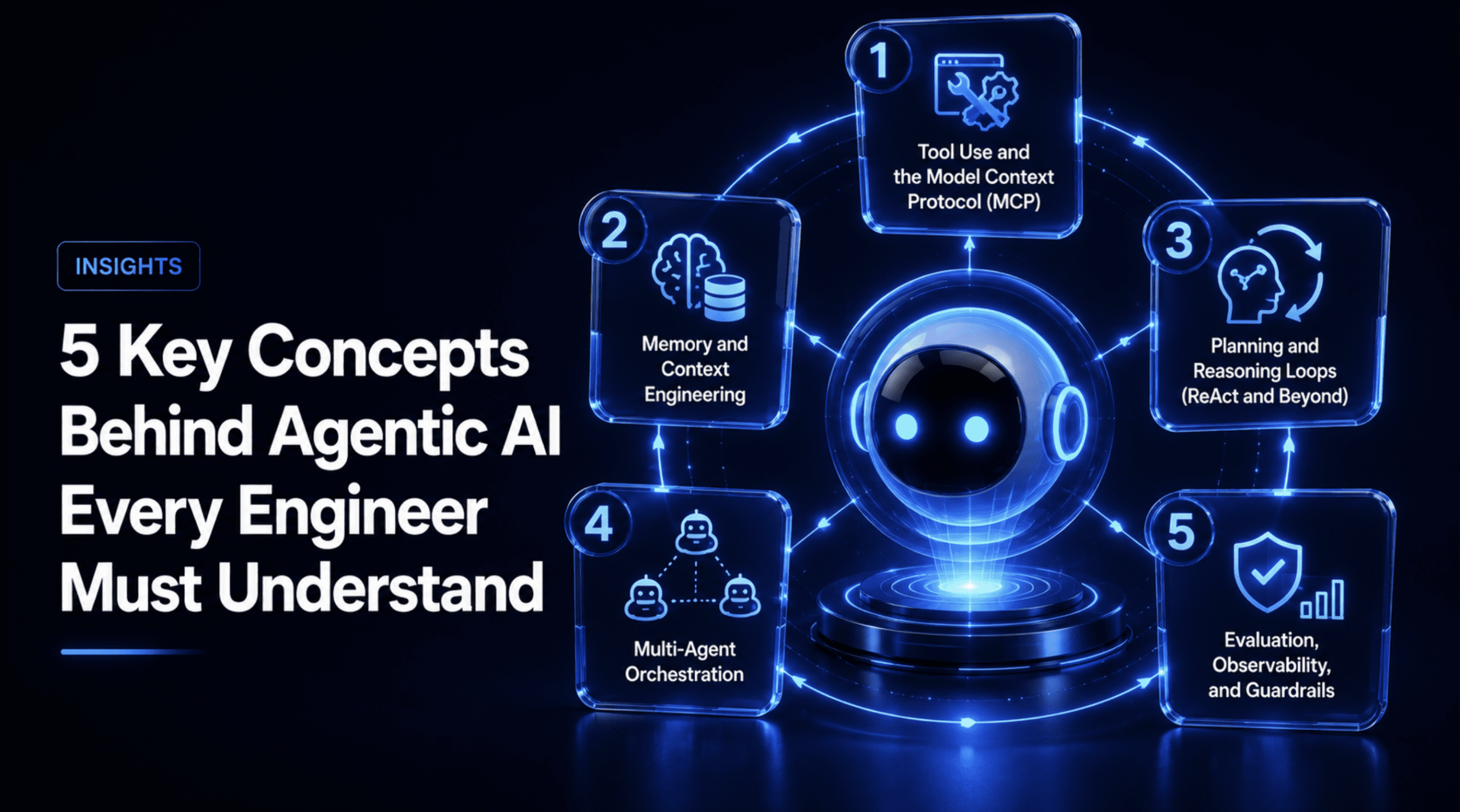
An LLM in isolation is a brilliant but tethered brain. To interact with the world—querying a SQL database, invoking a REST API, or navigating a file system—it requires a standardized interface. Historically, this meant building thousands of "brittle" custom integrations.
The Rise of the Model Context Protocol (MCP)
In late 2024, Anthropic introduced the Model Context Protocol (MCP), a pivotal development that effectively solved the "n-to-n" integration problem. By standardizing how models discover and interact with tools, MCP transformed a chaotic web of proprietary SDKs into a unified ecosystem.
- Chronology of Adoption:
- November 2024: Anthropic launches MCP.
- March 2026: SDK downloads hit 97 million monthly, a growth trajectory that eclipsed the React framework’s adoption curve by a factor of three.
- December 2025: Oversight is transferred to the Linux Foundation’s Agentic AI Foundation, securing the protocol’s status as neutral, shared infrastructure.
Implications for Engineering
Engineers no longer need to write custom "glue code" for every integration. By utilizing MCP-compliant servers, developers can plug in Slack, GitHub, or Notion with minimal friction. However, trade-offs remain: MCP adds token overhead. For high-frequency, low-latency applications, lean CLI-based calls remain the standard, but for enterprise environments requiring OAuth and strict data governance, MCP is now the non-negotiable architectural baseline.
2. Memory: From Statelessness to Contextual Intelligence
The "stateless" nature of LLMs is the primary obstacle to long-term task execution. Without a robust memory layer, an agent is effectively lobotomized every time a new API request is sent.
Architectural Evolution
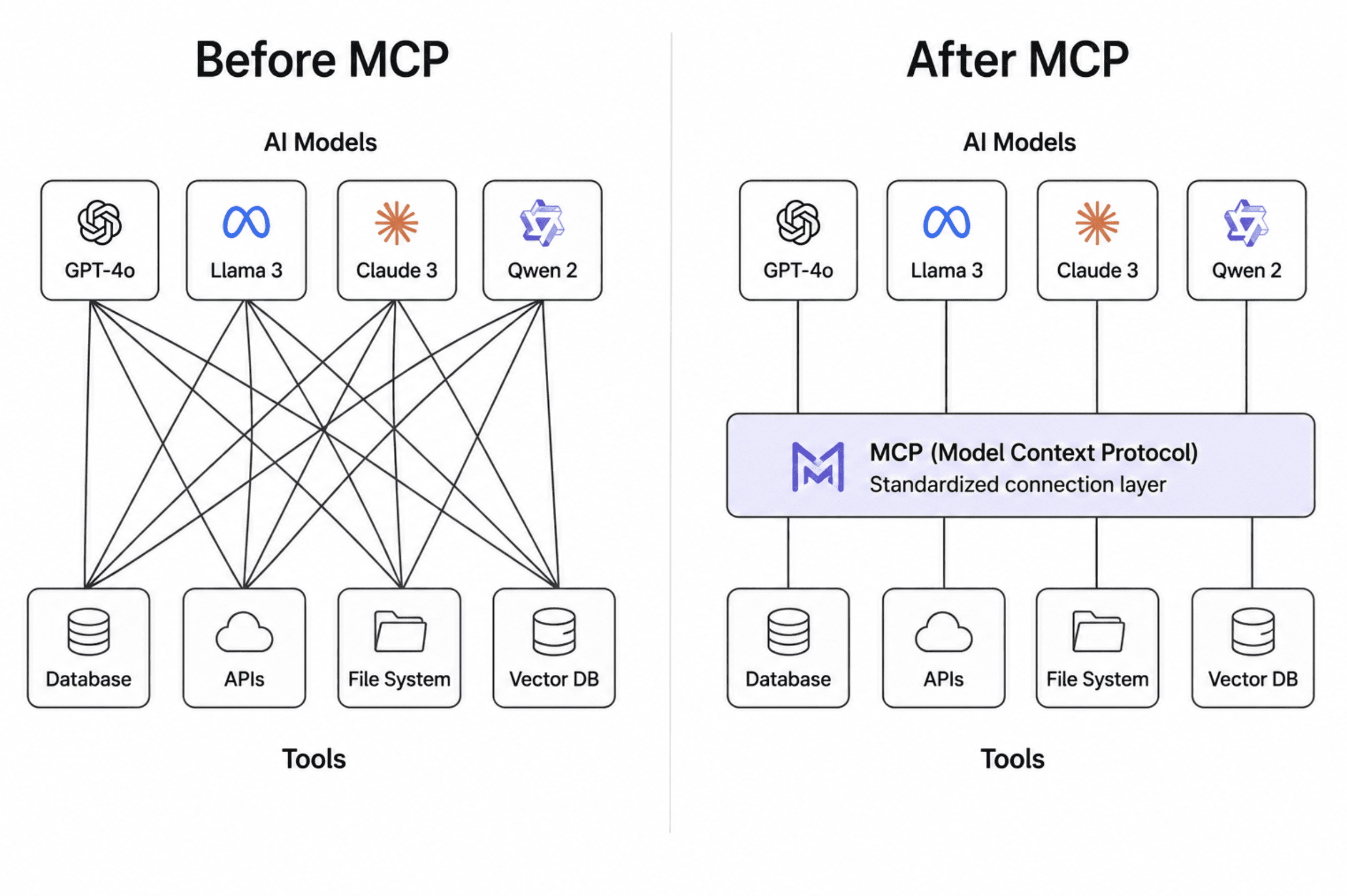
Modern memory is no longer just "stuffing conversation history into the context window." It is now a distinct architectural tier. The current state-of-the-art involves:
- Extraction: Identifying facts worth retaining during a session.
- Storage: Depositing these facts into specialized vector databases or temporal knowledge graphs.
- Retrieval: Injecting only the high-signal, relevant slices of memory into the context window at the start of a new interaction.
Supporting Data
Tools like Mem0 (for personalization) and Zep (which leverages temporal knowledge graphs like Graphiti) have become the industry standard. Zep, in particular, provides a competitive edge in complex reasoning—such as tracking how user behavior evolves following a pricing change—by tagging facts with "validity windows." This shift toward Context Engineering represents a move away from brute-force "prompt engineering" toward the meticulous curation of data.
3. Planning and Reasoning Loops: The "ReAct" Framework
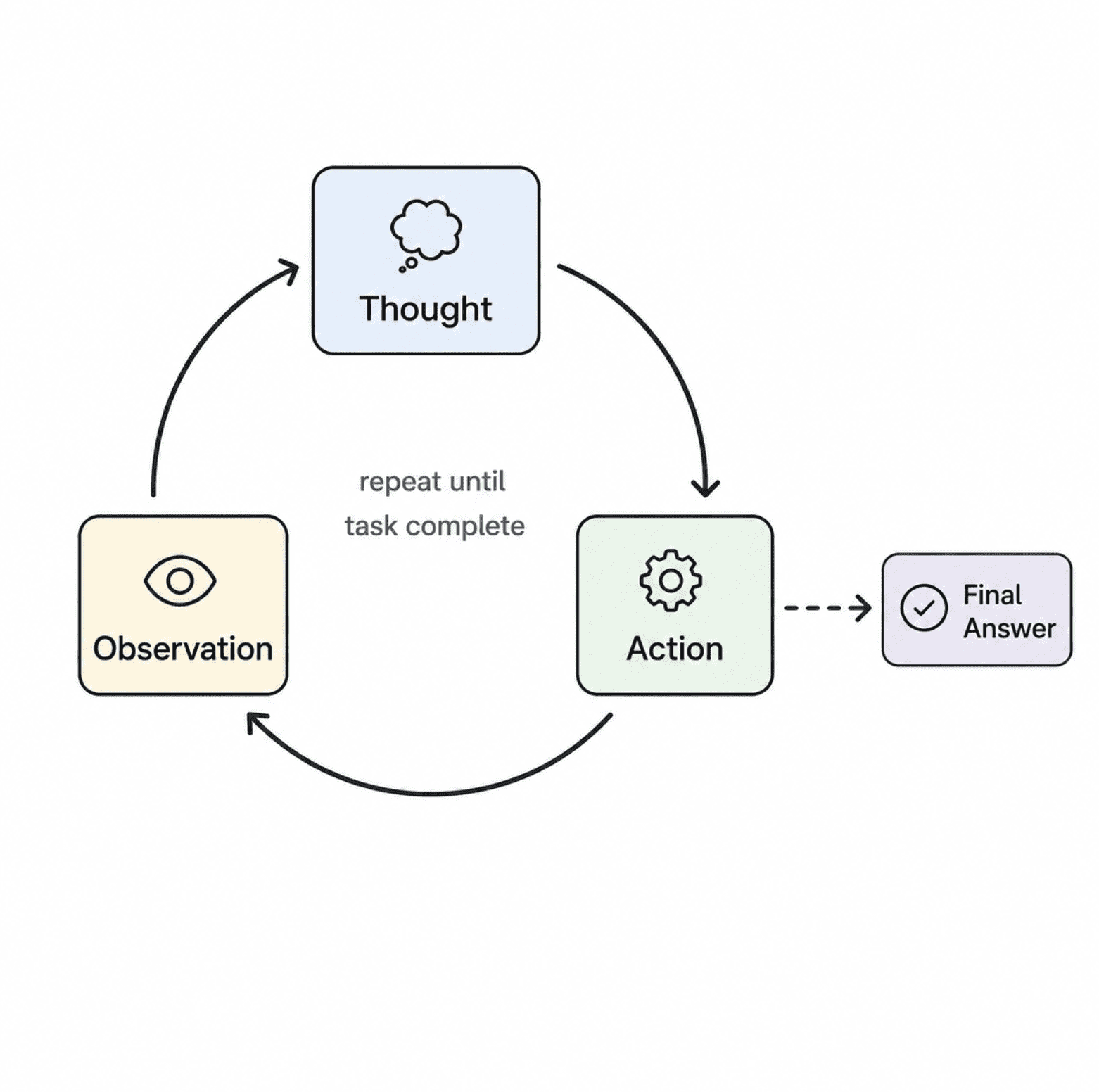
The hallmark of an agent is the ability to operate in a loop: Thought, Action, Observation, Correction. This is the mechanical difference between a chatbot that terminates upon providing an answer and an agent that persists until a task is completed.
The Genesis of ReAct
Originating from Google and Princeton researchers in 2022, the ReAct (Reasoning and Acting) framework allows models to interleave thought processes with tool calls. The model pauses to consider its next step, executes a tool, observes the result, and adjusts its internal logic.
Reliability Challenges
Production data shows that the planning loop is a common point of failure. If left unchecked, these loops can enter infinite recursion or exceed API rate limits. Consequently, engineers are now building "guardrails" around the reasoning loop. This includes explicit task decomposition, where complex objectives are broken into verifiable sub-steps, and self-correction mechanisms that trigger when a tool call returns an error. The planning loop is not just a cognitive process; it is a resource-intensive piece of infrastructure that must be monitored like a database query.
4. Multi-Agent Orchestration: Hierarchy and Interoperability
A single agent attempting to manage an entire codebase, business rules, and research summaries will eventually suffer from "context decay." The industry-standard solution is the Orchestrator-Sub-Agent pattern.
Operational Gains
In hierarchical systems, an orchestrator directs specialized sub-agents—each with a focused context window—to work in parallel.
- Case Study: The hiring platform Fountain utilized hierarchical orchestration to reduce candidate screening time by 50% and onboarding by 40%, effectively turning weeks of work into a 72-hour cycle.
Framework Landscape
The current tooling reflects different team priorities:
- LangGraph: Best for teams requiring fine-grained control and production-grade state management.
- CrewAI: Ideal for rapid prototyping and role-based task delegation.
- AutoGen: The preferred choice for research-heavy environments with complex conversational patterns.
To facilitate communication between these disparate agents, the Agent2Agent (A2A) protocol (housed under the Linux Foundation) has become essential. Just as MCP connects agents to tools, A2A allows agents to negotiate and collaborate without exposing their underlying private logic.
5. Evaluation, Observability, and the Path to Production
If 88% of AI pilots fail, the remaining 12% that succeed share a common trait: rigorous observability. The ROI for successful production deployment—averaging 171%—is gated by the ability to debug the "black box."
The Discipline of Tracing
Engineers are increasingly adopting frameworks like LangSmith to gain full visibility into an agent’s decision tree. If an agent fails in production, the system must provide an audit trail of every reasoning step, tool call, and observation. Without this, debugging is mere guesswork.
Official Responses and Future Outlook
Gartner has predicted that over 40% of agentic AI projects will be canceled by 2027, primarily due to escalating costs and inadequate risk management. To combat this, industry leaders are shifting toward:
- Rubric-based Evaluation: Automatically generating criteria to score agent performance against weighted business dimensions.
- Validation Checkpoints: Implementing "safety gates" at five critical stages: input, reasoning, state, tool execution, and output.
Conclusion: Engineering for Longevity
The agents of 2026 will not be defined by the "flashiness" of their underlying models, but by the robustness of their surrounding infrastructure. Tool use (MCP), memory, reasoning loops, multi-agent orchestration, and rigorous evaluation are the five pillars that turn an experimental demo into a durable enterprise asset.
For engineers starting today, the advice is clear: prioritize system design over model complexity. Start with a single, well-scoped task using MCP and a solid memory layer. Observe the reasoning cycles, bolt on evaluation from day one, and only introduce multi-agent complexity when the task scope necessitates it. By adhering to this systematic approach, engineering teams can transition from the 88% who fail to the 12% who successfully deliver autonomous, high-value AI systems.