The landscape of artificial intelligence is currently defined by a stark, paradoxical divide. While approximately 79% of enterprises report having adopted AI agents in some capacity, a mere 11% have successfully transitioned these systems into production environments. This "implementation gap"—the chasm between a script that functions perfectly on a developer’s laptop and a resilient system serving real-world users—is where the vast majority of agentic projects go to die.
For many engineers, the problem is not a lack of model capability. Modern Large Language Models (LLMs) like Claude 3.5 Sonnet or GPT-4o are more than capable of executing complex tasks. Rather, the failure lies in a lack of "glue": the essential infrastructure, guardrails, and deployment strategies required to transform a proof-of-concept into a reliable, scalable service.
The Reality of the Agentic Gap
The failure to reach production is rarely due to the underlying intelligence of the agent. Instead, it is a failure of scoping and engineering discipline. Projects often stall because developers skip the foundational work of defining hard boundaries, implementing robust error handling, and containerizing the logic for remote execution.
According to projections from industry analysts, over 40% of current agentic AI projects are expected to be canceled by the end of 2027. The primary culprit? A lack of defined operational boundaries, leading to systems that are either too narrow to provide value or too unrestrained to be trusted. To bridge this gap, developers must adopt a production-first mindset, treating agentic workflows with the same rigor as traditional microservices.
Chronology of Development: A Step-by-Step Architecture
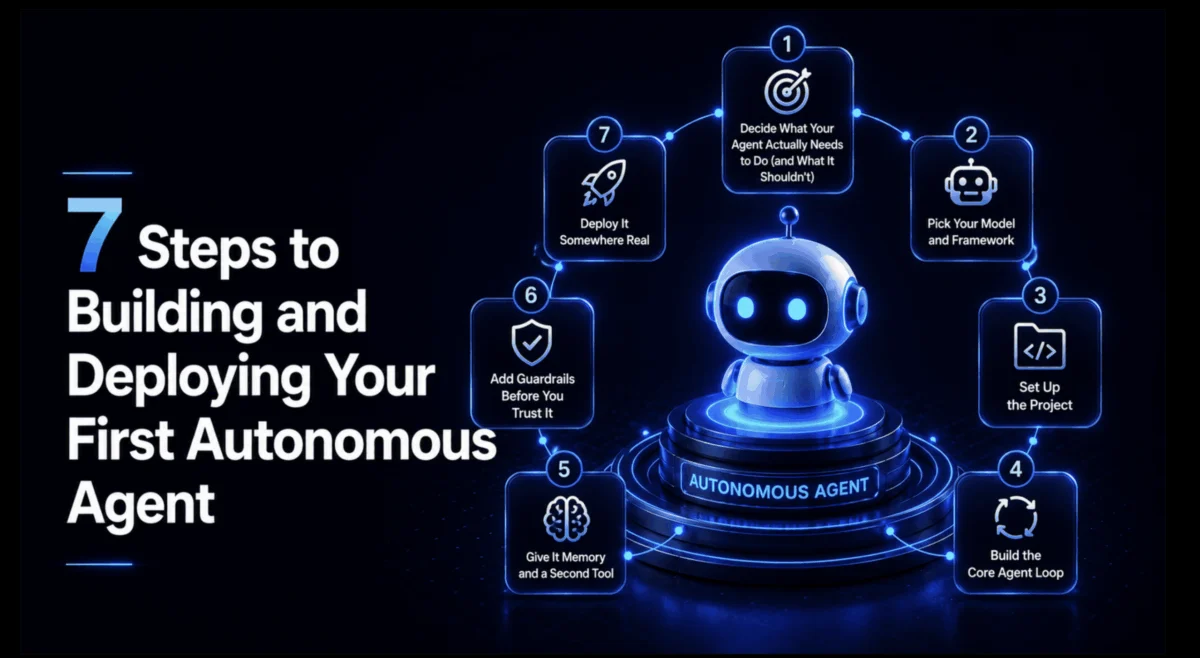
To move from an idea to a deployed agent, one must follow a structured, seven-stage lifecycle. This guide outlines the creation of a research agent—a system capable of synthesizing web-based data into concise, cited briefs.
Step 1: Scoping and Strategic Boundaries
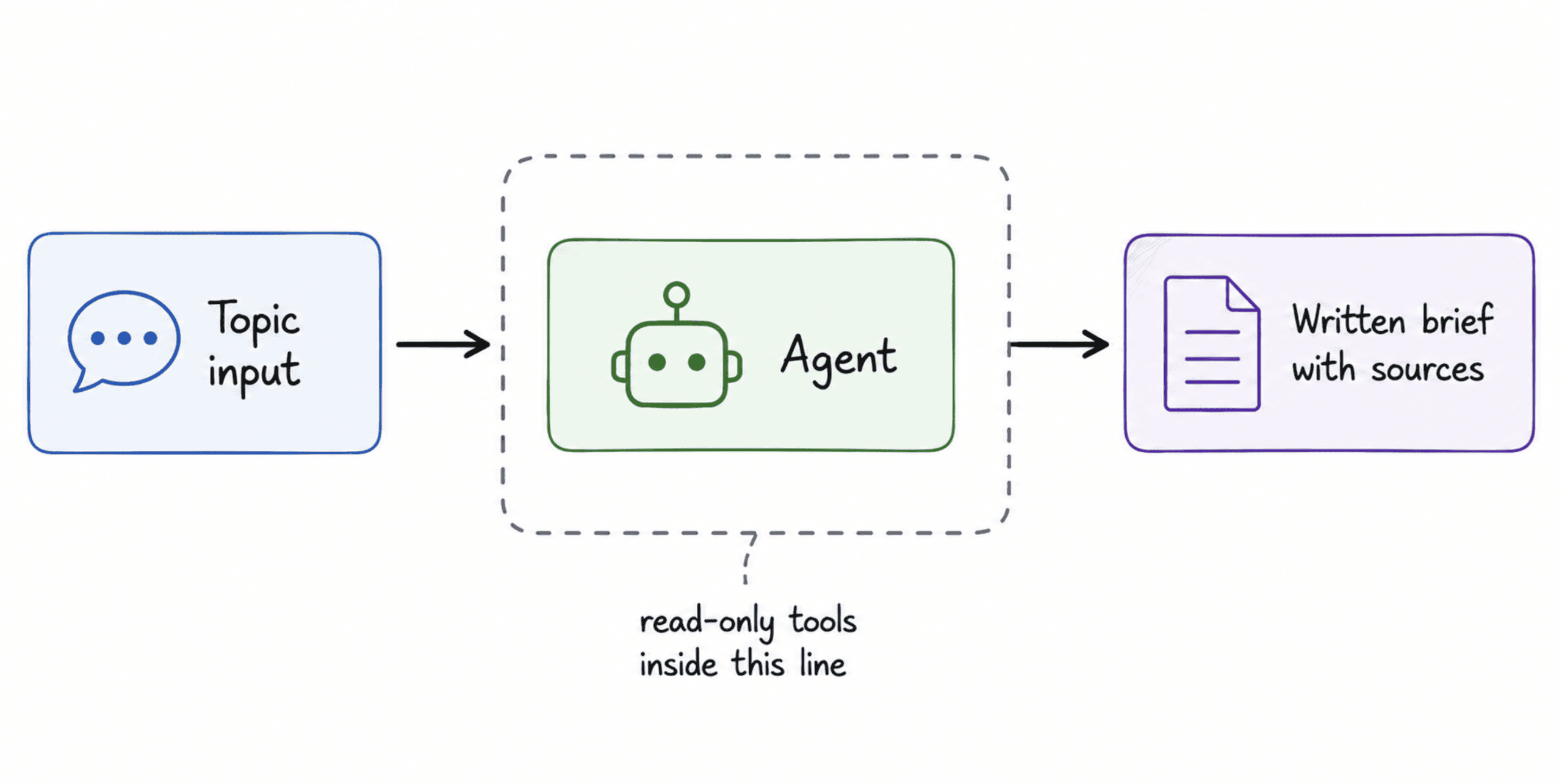
Before writing a single line of code, you must define the agent’s "Operational Manifesto." This involves documenting three distinct pillars:
- The Core Objective: Precisely what is the agent tasked with? (e.g., "Research a topic and produce a brief with sources.")
- The Success Metric: What does a "perfect" output look like? (e.g., "Factually grounded, under 500 words, with verifiable URLs.")
- The Hard Guardrails: What is the agent strictly forbidden from doing? (e.g., "No autonomous file modification or external communication without human verification.")
Step 2: Framework Selection
In the current ecosystem, the choice of orchestration framework is critical. While high-level SDKs like CrewAI offer rapid prototyping, LangGraph has emerged as the industry standard for production-grade, stateful agents. Its ability to provide built-in checkpointing and a robust, graph-based architecture ensures that if a search times out or a process fails, the entire session isn’t lost.
Step 3: Setting Up the Infrastructure
Isolation is the first rule of professional software development. By utilizing virtual environments, you prevent dependency conflicts. The required stack includes:
- LangGraph: For agent orchestration.
- LangChain-Anthropic: To bridge the model connection.
- Tavily-Python & BeautifulSoup4: For web search and content parsing.
- FastAPI & Docker: For API exposure and containerization.
Step 4: The Core Agent Loop
The heart of an agent is the "ReAct" (Reasoning and Acting) loop. Using LangGraph, you construct a system where the model continuously evaluates whether it has enough information to fulfill a request. If the data is insufficient, it triggers a tool (like a web search), processes the result, and re-evaluates. By keeping the model temperature low (e.g., 0.2), you ensure the agent prioritizes accuracy and grounding over creative, potentially hallucinatory output.
Step 5: Persistence and Advanced Tooling
A stateless agent is inherently limited. To make it truly useful, you must implement memory. By utilizing MemorySaver in LangGraph, you enable the agent to maintain context across a conversation. Furthermore, by introducing a second tool—a WebBaseLoader—the agent gains the ability to deep-dive into specific URLs when search snippets provide insufficient detail.
Step 6: Guardrails and Fail-Safes
This is the step most tutorials omit, yet it is the most vital for production stability. Implementing input validation (e.g., limiting topic length) and recursion limits prevents the agent from falling into infinite loops or exceeding token budgets. A properly designed agent should handle failure gracefully, retrying transient network errors and providing clear, actionable error messages instead of silently crashing.
Step 7: Deployment to the Cloud
To make the agent accessible, it must be moved off the local machine. By wrapping the logic in a FastAPI layer, you convert a terminal script into a RESTful API. Containerizing this with Docker ensures consistent performance across any environment, from local machines to cloud platforms like Railway or AWS.
Supporting Data: The Cost of Ignoring Production Standards
The necessity of these steps is underscored by industry data. Research from major firms suggests that the "demo-to-production" failure rate is largely driven by three factors:
- Runaway Costs: Agents without recursion limits or token caps can exhaust budget allocations in seconds.
- Unpredictable Behavior: A lack of system-level guardrails leads to "hallucinated" actions that can violate company policies.
- Deployment Friction: Attempting to run un-containerized, environment-dependent scripts in production leads to high downtime and maintenance overhead.
Official Perspectives on Agentic Safety
Leading AI research organizations emphasize the importance of "Human-in-the-Loop" (HITL) design. Even for a read-only research agent, the architecture should be designed with the expectation of eventual human intervention. Industry leaders advocate for "cautious autonomy," where the agent’s capability to read and search is decoupled from its capability to act. By building the infrastructure for human approval now, developers ensure that their systems are ready to handle more sensitive tasks—such as sending emails or modifying database records—as the project scales.
Implications for the Future of AI Development
The shift toward autonomous agents represents a move from "Software as a Tool" to "Software as a Teammate." As agents become more capable, the role of the developer is evolving. We are moving away from writing line-by-line procedural code and toward designing high-level "cognitive loops" that require monitoring, debugging, and careful alignment.
The implications for businesses are clear: the winners of the next five years will not necessarily be those who have the smartest models, but those who have the best "agentic plumbing." Being able to deploy a research agent that is secure, traceable, and persistent is a fundamental skill. It is the first step toward building the more complex, multi-agent architectures that will likely define the next generation of enterprise software.
Conclusion: Bridging the Final Mile
Building an autonomous agent is no longer a task confined to the realm of research labs. With the advent of frameworks like LangGraph and deployment platforms like Railway, any developer can build, guard, and host an agent that provides tangible value.
The secret to success is not in the complexity of the agent’s "thinking," but in the reliability of its deployment. By focusing on the seven steps outlined above—especially the implementation of memory, guardrails, and API-first design—you can ensure your agent does not just work on your laptop, but serves as a reliable, production-ready asset in your professional toolkit. The gap between a demo and a product is not a mystery; it is a series of engineering steps waiting to be executed.