By Satellite Today Editorial Staff
In a landmark development for deep-space connectivity, NASA has announced that its highly anticipated Artemis III mission will leverage SpaceX’s Starlink laser terminal technology to beam high-definition imagery and video back to Earth. This integration marks a significant pivot toward the commercialization of space infrastructure, signaling a new era where the vast distances of the lunar environment will be bridged by the same high-speed optical technology currently revolutionizing internet connectivity in low-Earth orbit (LEO).
Main Facts: The Integration of Starlink on Orion
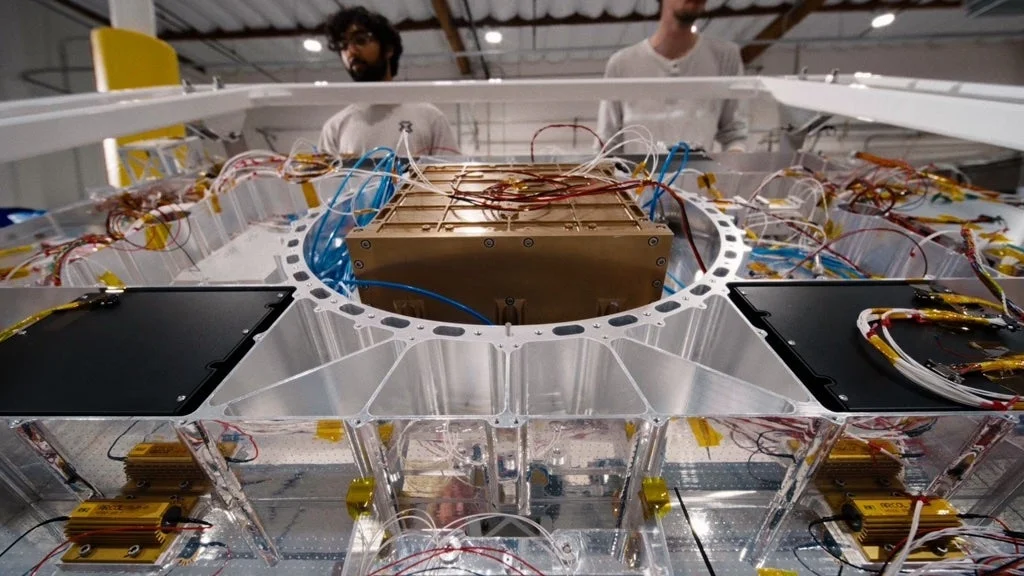
Under the terms of an agreement finalized this week, NASA will outfit the Orion spacecraft with two Starlink mini laser terminals. These compact, high-performance units are designed to establish a robust optical link between the lunar-bound spacecraft and the growing constellation of Starlink satellites, eventually relaying data to mission control in Houston.
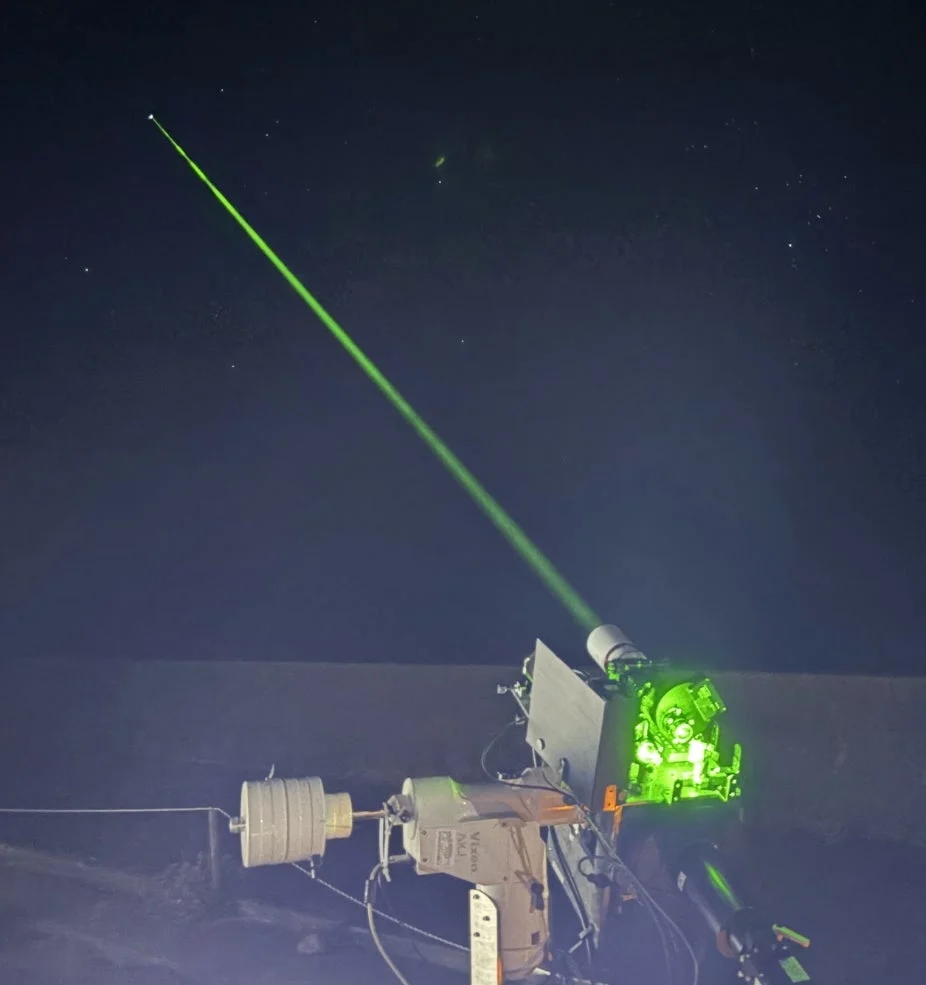
The primary objective of this integration is the transmission of high-fidelity, 4K-resolution imagery and video. As the Artemis III mission—currently slated for 2027—seeks to push the boundaries of human exploration, the ability to transmit real-time, high-bandwidth data is critical. Unlike traditional radio-frequency (RF) communications, which have been the backbone of space exploration for decades, laser communication—or optical communication—utilizes infrared light to transmit data at significantly higher rates, effectively allowing for the streaming of high-definition content from the vicinity of the Moon.
This hardware, adapted from the "Starlink Mini" consumer-grade terminals, represents a significant miniaturization effort. By leveraging commercial off-the-shelf technology, NASA aims to reduce the weight and power constraints typical of specialized deep-space communication arrays while achieving performance benchmarks that were previously unattainable for crewed lunar missions.
Chronology: The Evolution of Optical Links in Space
The inclusion of Starlink terminals in the Artemis program did not happen in a vacuum. It is the culmination of a multi-year strategy aimed at validating optical communications as the standard for future human spaceflight.
From Polaris Dawn to Artemis
The technological foundation for this announcement was laid during the 2024 Polaris Dawn mission. During this historic private spaceflight, SpaceX tested laser communications on its Dragon spacecraft, proving that high-speed data could be maintained even as the vehicle navigated the dynamic environment of LEO. This served as a crucial proof-of-concept, demonstrating that Starlink’s laser inter-satellite links were robust enough to support human-rated mission data requirements.
Following the success of Polaris Dawn, SpaceX continued to iterate on its optical capabilities. In 2025, the Fram2 human spaceflight mission provided a second, more rigorous demonstration for NASA observers. By the time the agency began finalizing plans for Artemis III, the data gathered from these private ventures had provided sufficient confidence to transition the technology from experimental status to mission-critical infrastructure.
The Artemis II Precedent
Before looking toward Artemis III, it is essential to acknowledge the success of Artemis II. During that mission, NASA utilized the Optical Communications System (O2O), developed by the Massachusetts Institute of Technology (MIT) Lincoln Laboratory. The O2O system served as a monumental success, facilitating the transmission of 484 gigabytes of data between the Orion capsule and Earth. This data haul included stunning, high-resolution imagery of the lunar surface and the Earth-set, which captured the global imagination.
While the O2O system proved that optical communications were viable for the lunar distance, the shift to SpaceX terminals for Artemis III highlights a move toward commercial scaling. By moving from government-developed prototypes to commercially procured solutions, NASA is signaling a transition toward a more sustainable and cost-effective model for deep-space communications.
Supporting Data: Why Laser Communication Matters
The transition from radio waves to lasers is often compared to the transition from dial-up internet to fiber optics. The physics of optical communication allows for data transmission at rates up to 10 to 100 times faster than current RF systems, depending on the architecture.
Bandwidth and Latency
Radio frequency communication is constrained by the electromagnetic spectrum, which is becoming increasingly crowded. Furthermore, RF signals spread out over long distances, resulting in a lower signal-to-noise ratio. Laser communication, by contrast, uses tightly focused beams of light. This allows for:
- Higher Data Throughput: Essential for the 4K video feeds requested by scientists and the public.
- Reduced Interference: By narrowing the beam, the potential for signal interference from other space-based assets is minimized.
- Security: The narrow nature of the laser beam makes the communication path significantly more difficult to intercept compared to broad-spectrum radio transmissions.
The 484 GB of data transmitted during Artemis II serves as the benchmark. With the Starlink integration, NASA expects to handle not only higher volumes of visual data but also increased telemetry from the commercial human landing systems that will be tested during the 2027 mission.
Official Responses and Strategic Vision
NASA’s collaboration with SpaceX is facilitated through the agency’s Space Communications and Navigation (SCaN) Communications Services Project (CSP). This project is part of a broader NASA initiative to sunset the reliance on government-owned and operated networks—such as the Deep Space Network—for LEO and lunar-proximity communications.
In 2022, NASA identified six companies, including SpaceX, to participate in the CSP. The intent was to catalyze a commercial market for space communications. By acting as an anchor customer, NASA is essentially providing the necessary demand to allow these companies to build out their space-based relay constellations.
"The goal is to foster a marketplace where NASA is just one of many customers," a spokesperson for the SCaN office noted in recent briefings. "By leveraging commercial laser terminals, we are not just saving taxpayer dollars; we are ensuring that when we go back to the Moon to stay, we have the infrastructure equivalent to a terrestrial broadband network."
SpaceX, for its part, has framed this as a natural extension of its mission to make space more accessible. By deploying Starlink terminals on the Orion capsule, the company is demonstrating that its constellation is no longer just for internet users on the ground—it is a backbone for the interplanetary internet.
Implications: A New Paradigm for Lunar Exploration
The integration of Starlink on Artemis III has profound implications for the future of space exploration.
Commercializing the Lunar Gateway
As NASA and its international partners prepare for the long-term habitation of the lunar surface, the communication requirements will grow exponentially. Astronauts will need access to cloud-based data, real-time medical monitoring, and high-speed communication with Earth to maintain mental health and mission safety. The presence of Starlink-capable terminals on Orion suggests a roadmap where the Moon is eventually surrounded by a communications relay network, similar to how the Earth is currently managed.
Impact on Mission Operations
For the mission controllers in Houston, the ability to receive 4K video in near-real-time changes the nature of remote assistance. In previous decades, controllers relied on low-resolution imagery and telemetry to guide astronauts through complex docking or surface operations. With the high-bandwidth connectivity provided by laser terminals, ground-based experts can participate in "over-the-shoulder" support, effectively seeing exactly what the crew sees, in real-time.
The "Internet of Space"
This development is a foundational block for the "Interplanetary Internet." As humanity eyes Mars, the lessons learned in managing laser-based data relays between the Earth, the Moon, and orbiting spacecraft will be indispensable. The ability to route data through a commercial constellation removes the bottleneck of relying on individual, dedicated ground stations that are subject to weather, geography, and limited transmission windows.
Challenges Ahead
Despite the optimism, significant challenges remain. The Moon’s distance from Earth requires extremely precise pointing and tracking for laser terminals. Any vibration or misalignment in the Orion spacecraft could lead to a loss of the data link. Furthermore, the harsh radiation environment of deep space poses a threat to the sensitive electronics within the Starlink terminals. NASA and SpaceX engineers are currently working to "harden" these commercial units to ensure they can survive the journey through the Van Allen radiation belts and the vacuum of space.
Conclusion
The decision to install Starlink mini laser terminals on the Artemis III mission is a bold step that bridges the gap between private enterprise and state-led exploration. As the Orion spacecraft approaches the Moon in 2027, it will be carrying more than just astronauts; it will be carrying the promise of a connected lunar future. By transforming how we share the experience of space exploration—moving from the grainy, flickering images of the Apollo era to the crystalline, high-definition reality of the Artemis age—NASA is ensuring that the next chapter of human history will be one that the entire world can watch in real-time.