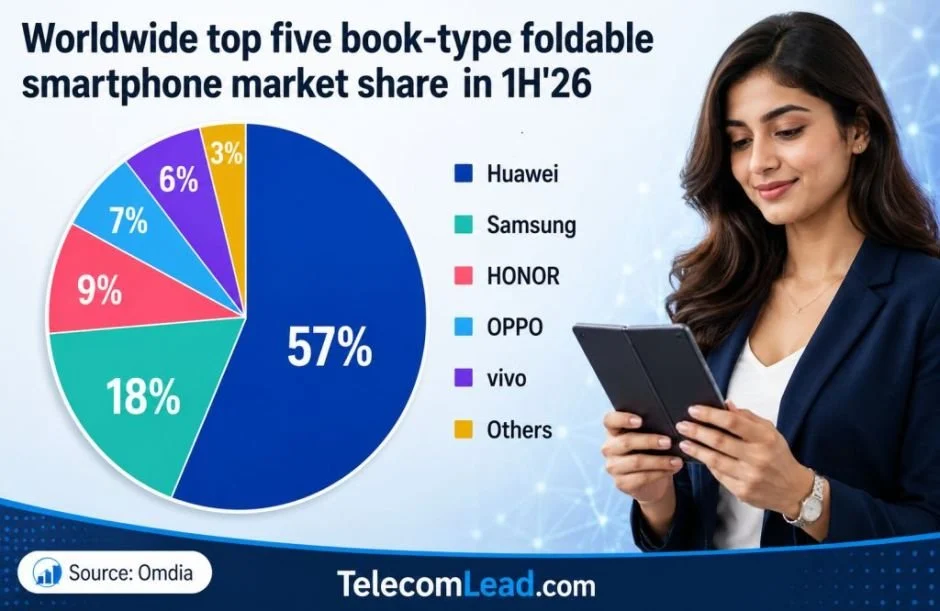
Beijing, China – August 28, 2026 – Huawei has decisively seized the lead in the burgeoning book-type foldable smartphone market, capturing an impressive 57 percent share in the first half of 2026 (1H26), according to a comprehensive new report from leading technology research firm Omdia. This significant market penetration positions Huawei as the undisputed frontrunner in this premium smartphone segment, a testament to its strategic product development and aggressive market strategy.
The report, titled "Foldable Smartphone Market Dynamics: H1 2026," reveals that Samsung, a long-standing player in the foldable space, secured the second position with an 18 percent market share. Together, Huawei and Samsung commanded a formidable 75 percent of all book-type foldable shipments globally during the analyzed period, underscoring their dual leadership in shaping the future of this innovative device category.
Key Highlights from the Omdia Report:
- Huawei’s Unrivaled Dominance: Huawei’s 57 percent market share in book-type foldables is more than triple that of its closest competitor, Samsung.
- Two Giants, Three-Quarters of the Market: Huawei and Samsung collectively accounted for 75 percent of global book-type foldable shipments in 1H26.
- Emerging Players: HONOR secured third place with a 9 percent share, followed by OPPO at 7 percent and vivo at 6 percent.
- Market Rebound Expected: Despite a soft start to 2026, foldable smartphone shipments are projected to more than double by 2028, reaching 36 million units, with annual growth exceeding 20 percent.
- Flip Foldables Lagging: Shipments of flip-type foldable smartphones experienced a significant decline of 47 percent in 1H26, indicating a clear consumer preference shift towards larger, book-type devices.
- Wide-Format Designs as a Growth Catalyst: New wide-format book-type foldables, exemplified by recent launches from Huawei and Samsung, are identified as key drivers for future market expansion.
- Premium Segment Remains: Foldable smartphones are expected to maintain their premium positioning, accounting for less than 3 percent of total global smartphone shipments even by 2030, due to persistent cost and manufacturing challenges.
This report not only highlights Huawei’s current triumph but also provides a critical outlook on the foldable smartphone market’s trajectory, signaling a period of significant growth and innovation driven by evolving consumer preferences and technological advancements.
The Ascendancy of Huawei: A Deep Dive into Market Dynamics
The first half of 2026 has witnessed a dramatic shift in the global book-type foldable smartphone landscape, with Huawei emerging as the dominant force. Omdia’s data paints a clear picture of Huawei’s strategic success, capturing over half of the market share with its innovative devices. This achievement is particularly noteworthy given the competitive nature of the premium smartphone segment and the established presence of rivals like Samsung.
The report further details the market breakdown, revealing that HONOR secured the third position with a respectable 9 percent share. Close behind were OPPO and vivo, holding 7 percent and 6 percent of the market respectively. Collectively, these top five vendors – Huawei, Samsung, HONOR, OPPO, and vivo – accounted for an overwhelming 97 percent of the global book-type foldable smartphone market in 1H26. This concentration underscores the significant barriers to entry and the intense competition among the leading smartphone manufacturers in this specialized category. The remaining 3 percent of the market was distributed among other smartphone vendors, indicating a highly consolidated industry.
The sheer magnitude of Huawei’s lead is striking. Its 57 percent share is more than three times Samsung’s 18 percent, a significant indicator of changing consumer preferences and Huawei’s effective product positioning. This dominance suggests that Huawei’s foldable offerings are resonating strongly with consumers seeking the advanced features and versatile form factor that book-type foldables provide.
Chronology of a Market Shift: From Growth to Rebound
The foldable smartphone market has experienced a dynamic evolution, with 2025 marking a period of moderate growth, followed by a challenging start to 2026, and an anticipated strong rebound. In 2025, global foldable smartphone shipments reached 18.2 million units, representing a year-on-year increase of just 6 percent. This growth rate, while positive, was the lowest recorded in recent years, signaling a potential slowdown in market momentum.
The first half of 2026 presented further headwinds, with shipments falling by a notable 21.6 percent year on year, totaling 5.1 million units. This decline was particularly attributed to weakened demand for flip-style devices, which have traditionally been more accessible in terms of price and form factor.
However, the Omdia report projects a sharp recovery in the latter half of 2026. Worldwide foldable smartphone shipments are now forecast to exceed 22 million units for the full year, a substantial increase of over 22 percent compared to 2025. This anticipated rebound is expected to be fueled by the introduction of new form factors and increased production targets from leading smartphone vendors, indicating a renewed consumer interest and a more robust market offering.
Looking further ahead, the foldable smartphone market is poised for sustained growth. Omdia forecasts shipments to double by 2028, reaching 36 million units. This trajectory is expected to continue, with shipments projected to hit 45 million units by 2030. Despite this impressive growth, it’s important to note that foldables will continue to represent a niche segment within the broader smartphone market, accounting for less than 3 percent of total global smartphone shipments even by the end of the decade. This outlook reflects the inherent premium nature of foldable technology and the ongoing challenges in achieving mass-market adoption.
Supporting Data: The Flip vs. Book Divide and the Rise of Wide-Format Designs
The stark divergence in performance between flip-type and book-type foldable smartphones has been a defining characteristic of the 1H26 market. Shipments of flip-type foldables experienced a dramatic plunge of 47 percent compared to the first half of 2025. In contrast, book-type foldable shipments remained relatively stable, indicating a sustained demand for this form factor.
This performance gap has led to a significant shift in market composition. Book-type devices now account for a dominant 69 percent of global foldable smartphone shipments in 1H26, a substantial increase from previous periods. This trend suggests a clear consumer preference for larger, more versatile foldable devices that offer enhanced productivity, entertainment, and multitasking capabilities over the more compact, albeit arguably less functional, flip-style models.
The emergence of new wide-format book-type foldable smartphones is identified as a critical catalyst for the next phase of market growth. Huawei ignited this trend with the launch of its Pura X Max in May 2026, a device that redefines the book-type foldable with a shorter and wider aspect ratio. Samsung followed suit in August 2026 with its Galaxy Z Fold 8, adopting a similar design philosophy. This new generation of devices aims to provide a more immersive, tablet-like viewing experience when unfolded, while the wider external display offers improved horizontal content visibility during conventional smartphone use.
The advantages of this wide-format design are manifold. It can lead to a reduction in overall device volume and weight while simultaneously increasing usable screen real estate. These characteristics make wide-format foldables particularly attractive for content-intensive activities such as multitasking, productivity applications, and video consumption. The industry is anticipating similar product introductions from other major smartphone vendors in the coming months, further solidifying this new form factor as a key driver of future growth. Leading manufacturers have already revised their 2026 production targets for these devices upwards, and additional Android brands are expected to embrace similar designs in 2027, which should further increase production volumes and establish the wide-format category as a significant contributor to the projected market expansion.
Official Responses and Industry Outlook
While specific official statements from Huawei and Samsung regarding their H1 2026 foldable market performance were not detailed in the provided text, the Omdia report itself serves as a significant industry validation. The report’s findings are based on Omdia’s extensive market research, which includes analysis of supply chain data, sales figures, and industry expert interviews.
The Omdia report’s projection of a robust rebound for the foldable market, driven by new form factors and increased production, suggests an optimistic outlook from industry analysts. The forecast of shipments reaching 36 million units by 2028 and 45 million by 2030 indicates a strong belief in the long-term viability and growth potential of foldable technology.
The report also acknowledges the persistent challenges that continue to define the foldable smartphone market. High component costs, including flexible displays, sophisticated hinge mechanisms, and specialized glass, contribute to significantly higher bill-of-materials costs compared to conventional smartphones. This economic reality limits the ability of vendors to aggressively push foldables into mass-market price segments. As a result, manufacturers are prioritizing premium positioning and profitability over aggressive volume-driven price reductions.
Furthermore, consumers face additional considerations beyond the initial purchase price, such as potentially higher repair costs. Balancing the benefits of larger flexible displays against factors like camera performance and overall ownership costs remains a key consideration for potential buyers.
The path forward for foldable smartphones, as outlined by Omdia, involves a critical need for vendors to demonstrate benefits that extend beyond hardware novelty. The development of services and applications specifically optimized for larger foldable displays is crucial to enhancing the value proposition for productivity, multitasking, and entertainment. Strategic partnerships aimed at reducing ownership and repair costs could also play a vital role in expanding the addressable market beyond early adopters.
Implications: The Future of Foldables and Consumer Choices
The data from Omdia carries significant implications for both the smartphone industry and consumer behavior. Huawei’s commanding lead in the book-type foldable segment signifies a successful strategic pivot and execution, potentially reshaping competitive dynamics within the premium smartphone market. For consumers, the clear preference for book-type foldables over flip-style devices suggests a maturing understanding of the technology’s benefits, with an emphasis on functionality and immersive experiences.
The rise of wide-format designs is a pivotal development, indicating a deliberate effort by manufacturers to refine the foldable experience and address existing limitations. This innovation could unlock new use cases and appeal to a broader audience, moving foldables beyond a niche category for early adopters. The increased production targets from leading vendors further suggest confidence in the market’s ability to absorb these new devices.
However, the persistent reality of foldables remaining a premium segment, even with projected growth, highlights the ongoing challenges of cost reduction and broader accessibility. The high component costs are a fundamental barrier to mass-market adoption, suggesting that foldable smartphones will likely coexist with, rather than fully replace, traditional smartphones for the foreseeable future.
The future success of foldable smartphones will hinge on their ability to offer compelling value propositions that justify their premium price point. This means not only showcasing innovative hardware but also fostering an ecosystem of optimized software and services. As the market matures, the focus will increasingly shift towards demonstrating tangible benefits in productivity, entertainment, and everyday utility, moving the foldable smartphone from a technological marvel to an indispensable tool for a wider range of consumers. The continued dominance of Huawei and the strategic innovations from Samsung and others suggest a dynamic and evolving landscape where foldable technology is set to play an increasingly significant role in the premium smartphone segment.