By Industry News Desk
October 29, 2026
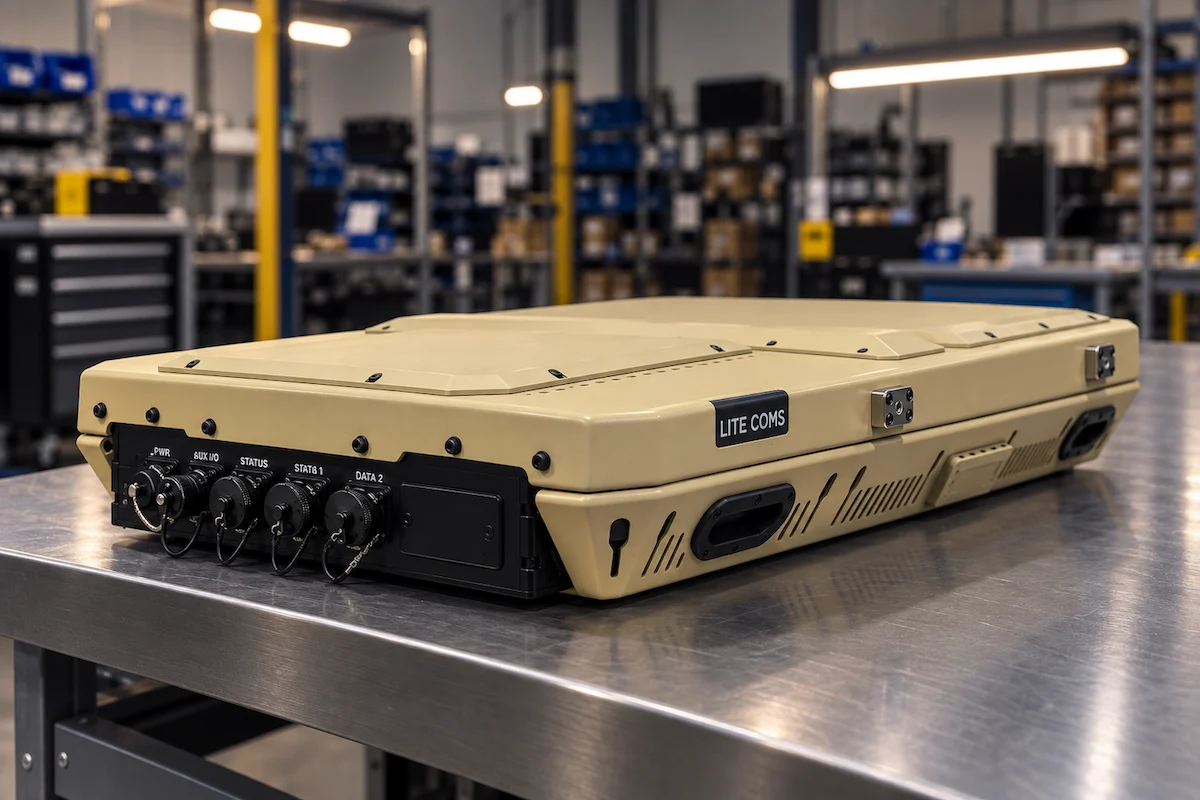
In an era defined by the rapid proliferation of Low Earth Orbit (LEO) satellite constellations, the defense and government sectors face a mounting challenge: how to maintain resilient, high-throughput communication without becoming tethered to the infrastructure of a single provider. Addressing this critical need for interoperability, Lite Coms has officially unveiled the GT3, a ruggedized, multi-network flat panel antenna system designed to provide simultaneous connectivity across diverse satellite and terrestrial networks.
By leveraging commercial off-the-shelf (COTS) technology and transforming it into a mission-ready platform, Lite Coms is positioning the GT3 as the definitive answer to the "analysis paralysis" currently plaguing government acquisition programs.
Main Facts: Breaking Down the GT3 Terminal
The GT3 is not merely an antenna; it is an integrated communications hub designed for high-stakes mobility. At its core, the terminal is built to facilitate simultaneous operation across multiple transport paths, including industry-leading LEO constellations such as Starlink and OneWeb, alongside 5G and LTE cellular networks.
The terminal’s primary value proposition lies in its flexibility. Unlike traditional proprietary terminals that lock end-users into a specific ecosystem, the GT3 acts as a bridge. By utilizing a modular, COTS-based architecture, Lite Coms has created a system that allows operators to switch between networks—or utilize them in tandem—depending on the mission requirements of the day. Whether the priority is low latency for real-time tactical surveillance or high throughput for massive data transfer, the GT3 allows for dynamic network selection in the field.
Chronology of Development: From Concept to Deployment
The development of the GT3 is the latest milestone in Lite Coms’ ongoing strategy to democratize high-end satellite connectivity. Based in New York, the company has spent years refining its manufacturing processes for VSAT and flat panel antennas.
- Foundation of Expertise: Lite Coms established its reputation by producing single-network, ruggedized antennas, currently maintaining a production cadence of approximately 30 units per week.
- Customer-Driven Innovation: Throughout the development cycle of the GT3, the company engaged in extensive feedback loops with defense and government partners. The recurring demand from these stakeholders was clear: they did not want experimental, bespoke hardware. They wanted the reliability of commercially proven technology, hardened for the extreme rigors of military and tactical environments.
- The October 2026 Launch: Following successful internal testing and validation of the multi-network switching software, the company officially launched the GT3 in late October 2026, marking a strategic pivot toward multi-orbit, multi-transport capability.
Supporting Data: Why "Ruggedized COTS" Matters
In the defense procurement landscape, the term "COTS" often carries a stigma of fragility, while "custom-built" often carries a price tag that is prohibitive. Lite Coms has effectively bridged this gap. By utilizing existing, mass-produced components, the company avoids the high overhead costs associated with developing proprietary radio frequency (RF) hardware from scratch.
Cost Efficiency and Scalability
The economic argument for the GT3 is compelling. By aggregating COTS components into a ruggedized enclosure, the terminal remains significantly more affordable than bespoke government-developed hardware. This allows agencies to equip a wider array of assets—from tactical utility task vehicles (UTVs) and SUVs to mobile command centers—without the budgetary constraints typically associated with advanced satellite terminals.
The Power of Multi-Path Connectivity
The GT3’s ability to operate across Starlink, OneWeb, and 5G/LTE networks simultaneously serves as a hedge against signal degradation or adversarial jamming. In a contested environment, the ability to flip between satellite constellations or terrestrial cellular backups without replacing hardware is a force multiplier.
Official Responses: The Strategic Vision
Andrew Colaruotolo, Chief Strategy Officer at Lite Coms, emphasized that the GT3 was designed with the modern warfighter’s reality in mind.
"The biggest thing that the GT3 brings to the market is that you have high throughput, low latency access to networks that can operate either independently or simultaneously," Colaruotolo stated during the product unveiling. "You’re not locked into a single network—you can choose which is best for your mission for the day."
Addressing the industry trend toward proprietary lock-in, Colaruotolo highlighted that Lite Coms’ philosophy remains fundamentally agnostic. "When we started Lite Coms, it was never to choose a technology and get behind it. We take multiple technologies and bring them into our users’ hands. The feedback that we’ve had from our customers is to take what’s commercially available and make it rugged for the military."
Implications: The Future of Battlefield Communications
The introduction of the GT3 has profound implications for the future of mobile connectivity in government and defense sectors.
1. The Death of Vendor Lock-In
For years, the satellite communications industry has seen a push toward vertical integration. By championing a platform that prioritizes interoperability, Lite Coms is challenging the status quo. The GT3 proves that specialized tactical hardware can be built on a foundation of open, commercial standards, effectively future-proofing the terminal against the obsolescence of any single network provider.
2. Resilience Through Diversity
As global tensions rise, the need for redundant communication paths is paramount. The GT3 provides a "fail-safe" mechanism. If one satellite network experiences a service disruption—whether through orbital debris, atmospheric interference, or cyber-attacks—the GT3’s software-defined nature allows for immediate transition to an alternative, ensuring that the mission is not compromised.
3. Scaling for Emerging Constellations
The satellite industry is not static. With new LEO constellations and non-geostationary orbit (NGSO) technologies coming online, the GT3 is engineered to be an evolving platform. Lite Coms has confirmed that they have a roadmap for integrating future network technologies, ensuring that the terminals deployed today will remain relevant as the orbital ecosystem matures.
4. Tactical Versatility
The form factor of the GT3 is specifically designed for the "edge" of the battlefield. By making the terminal compatible with standard vehicles like UTVs and tactical SUVs, Lite Coms is enabling communication capabilities that were previously restricted to heavy command vehicles. This puts high-speed, low-latency data directly into the hands of small-unit leaders and mobile reconnaissance teams.
Conclusion: A New Standard for Tactical Connectivity
Lite Coms has identified a critical bottleneck in modern defense communications: the tension between the rapidly evolving commercial satellite market and the rigid, often sluggish nature of government procurement. The GT3 represents a sophisticated synthesis of these two worlds.
By prioritizing affordability, multi-network simultaneous operation, and the ruggedization of proven COTS hardware, Lite Coms is setting a new standard for how the military consumes satellite bandwidth. As the company continues to scale its manufacturing and expand its network support, the GT3 is poised to become an essential component of the modern, connected, and resilient military vehicle fleet.
In a world where information dominance is as important as physical maneuverability, the GT3 offers the agility required to succeed in the most challenging environments on the planet. As Colaruotolo and his team look toward the future, the message is clear: the era of being trapped by a single network provider is over. The era of the multi-path, resilient terminal has arrived.