November 4, 2026 — In a pivotal development for the future of global connectivity, satellite operator SES has successfully demonstrated a bi-directional optical communications link between a ground-based station and its "meoSphere" pathfinder payload, hosted aboard the K2 Space Gravitas satellite. This achievement marks a significant milestone in the evolution of Medium-Earth Orbit (MEO) networking, signaling a shift toward laser-based communications that promise higher data throughput and enhanced security compared to traditional radio-frequency (RF) systems.
Main Facts: A New Era for Optical Links
The successful test involved a complex, end-to-end data transfer sequence. SES utilized an optical ground station located in Rennes, France—operated by Cailabs—to transmit video messages to the meoSphere payload, which is integrated into the K2 Space Gravitas satellite. The space-side of the link was managed via a Mynaric Condor optical communications terminal, a cutting-edge piece of hardware designed to maintain high-precision pointing and tracking in the harsh environment of space.
This demonstration confirms that the meoSphere architecture can effectively bridge the gap between terrestrial fiber networks and space-based assets. By using lasers, the system bypasses the spectrum congestion issues currently plaguing RF-based satellite communication, offering a "fiber-in-the-sky" capability that could eventually facilitate terabit-per-second data rates.
Chronology of the Mission
The journey toward this milestone began long before the successful link on November 4, 2026. The development reflects a rapid iteration strategy favored by the modern space industry.
- Mid-2025: SES officially announces a strategic partnership with K2 Space. The collaboration aims to accelerate the development of SES’s next-generation MEO network, with an emphasis on flying multiple "pathfinder" missions to test modular hardware.
- September 2025: SES CEO Adel Al-Saleh unveils the "meoSphere" concept, a vision for a highly flexible, multi-orbit, software-defined MEO constellation.
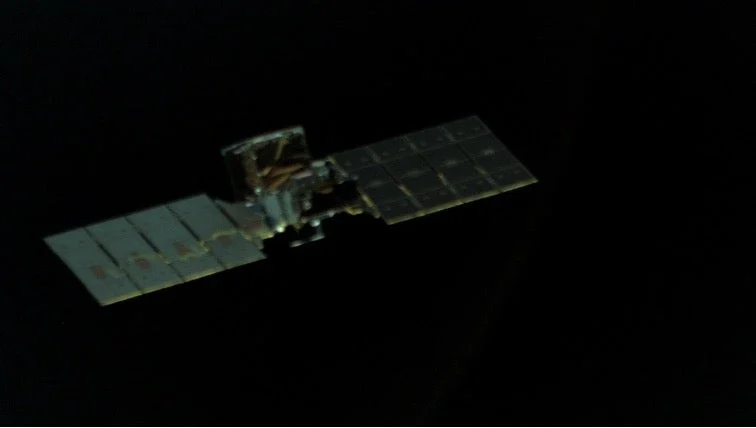
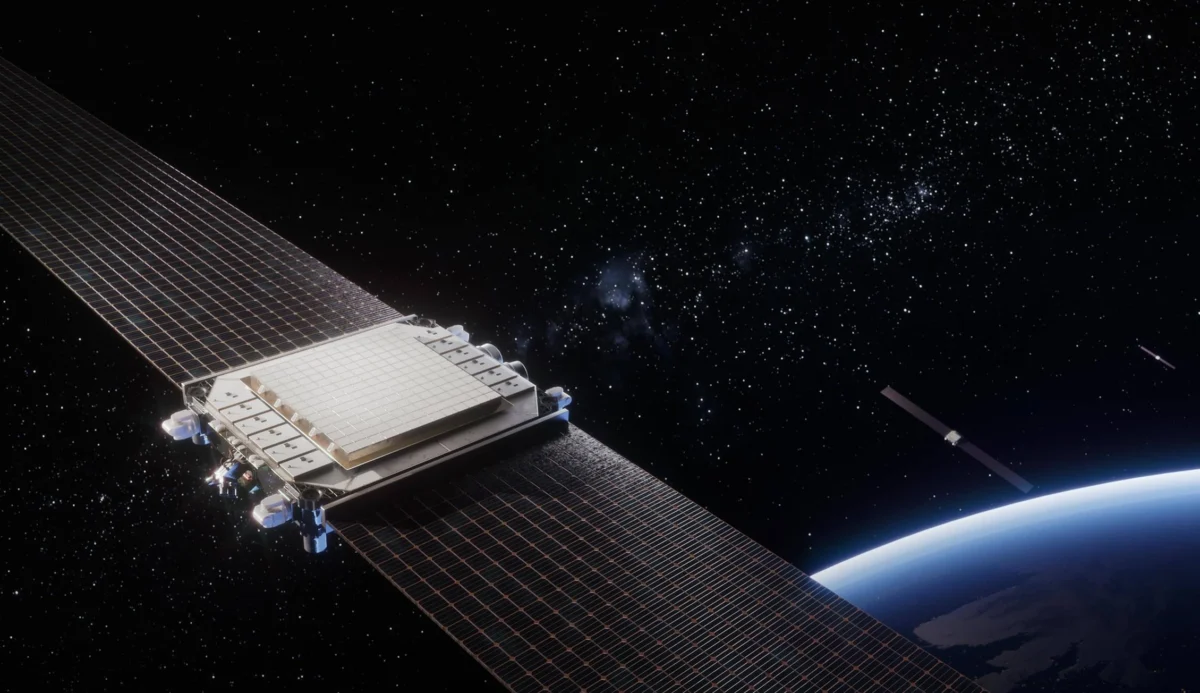
- March 2026: The K2 Space Gravitas satellite, a "Mega-class" platform, successfully launches into orbit. The mission serves as a critical testbed, carrying multiple experimental payloads for SES.
- April – October 2026: SES and its industrial partners, including Thales Alenia Space, conduct intensive system integration, testing, and operations commissioning for the meoSphere payload.
- November 4, 2026: SES officially confirms the success of the bi-directional optical communications link, marking the transition from lab-based testing to operational orbital validation.
Supporting Data and Technical Collaboration
The success of the Gravitas mission is the result of a highly coordinated industrial effort. SES served as the architect of the mission, designing and developing the core optical software and automation protocols that allowed the ground station to lock onto the moving target in space.
The Industrial Ecosystem
- K2 Space: Provided the Gravitas Mega-class satellite bus. K2’s platform is designed for high-capacity hosting, allowing SES to rapidly deploy experimental hardware without waiting for the multi-year lead times typical of traditional satellite manufacturing.
- Cailabs: Provided the optical ground station infrastructure in Rennes. Their expertise in beam shaping and atmospheric compensation was essential to ensuring the laser signal could penetrate the atmosphere with minimal data loss.
- Mynaric: Supplied the Condor optical terminal. The Condor is specifically engineered for the "space-to-ground" use case, capable of compensating for the extreme velocities of MEO satellites relative to stationary ground stations.
- Thales Alenia Space: Played a foundational role in the assembly, integration, and testing (AIT) of the meoSphere module, ensuring the delicate optical instruments could survive the vibrations of launch and the thermal extremes of space.
Official Responses and Strategic Vision
The leadership at SES views this achievement not as a one-off experiment, but as the validation of their "vertically integrated, iterative approach."
"This Pathfinder 1 achievement validates our vertically integrated, iterative approach to developing next-generation space capabilities," said Carmel Ortiz, Senior Vice President of MEO Programs at SES. "Together with our partners, we have successfully and repeatedly transferred data between space and the ground, demonstrating the performance of optical communications in an operational environment."
Industry analysts note that SES’s decision to move away from monolithic satellite procurement toward these smaller, modular pathfinder missions allows them to pivot faster than legacy operators. By testing components like meoSphere in actual orbit, SES minimizes the risk associated with large-scale constellation deployments.
Implications: The Future of MEO and Beyond
The implications of this demonstration are profound for the telecommunications sector. As global data demand continues to explode, the limitations of RF bandwidth are becoming increasingly apparent. Optical (laser) communication is widely regarded as the "Holy Grail" of satellite connectivity for several reasons:
1. Increased Bandwidth
Laser communication can carry significantly more data than traditional RF links. As optical terminals become standardized, the latency and capacity of space-based networks will begin to rival terrestrial fiber-optic backbones.
2. Enhanced Security and Intercept Resistance
Because laser beams are highly directional and possess a very narrow divergence angle, they are significantly harder to intercept or jam compared to the broad-beam broadcasts of traditional radio satellites. This is a critical selling point for government and defense clients.
3. Spectrum Independence
With the International Telecommunication Union (ITU) facing mounting pressure to manage overcrowded radio spectrums, optical communication offers a path forward that does not require additional licensing for radio frequency bands.
4. The "Mega-class" Advantage
The K2 Space platform has proven its value as a flexible host. By utilizing the Gravitas mission, SES has bypassed the "capital wars" that currently threaten to slow down major space operators. The ability to iterate on hardware design while in orbit—through software updates and rapid payload integration—provides a significant competitive edge in the rapidly evolving space economy.
Looking Ahead: The Road to Commercialization
SES has made it clear that the work is far from over. Following the successful validation of the bi-directional link, the company intends to expand the scope of the mission. Future testing phases will focus on three key metrics:
- Link Duration: Extending the amount of time the optical link can be held without interruption as the satellite passes overhead.
- Throughput Benchmarking: Pushing the bit-rate to its theoretical limit to determine the maximum data throughput possible for commercial applications.
- Atmospheric Resilience: Testing the link under varying weather conditions, a major hurdle for optical communications, to determine the reliability of the Rennes ground station and future sites.
As the industry observes the success of the meoSphere pathfinder, the pressure is now on other satellite operators to demonstrate similar capabilities. The integration of optical links into MEO networks is no longer a theoretical pursuit; it is a live, operational reality.
For SES, this marks a fundamental shift in their identity from a traditional satellite operator to a multi-orbit, data-centric network provider. By leveraging the agility of K2 Space and the technical prowess of partners like Mynaric and Cailabs, SES is setting the stage for a new generation of connectivity that could redefine the global digital infrastructure for the 2030s and beyond.
The success of the Gravitas mission proves that while the challenges of space remain formidable, the technological pathways to overcoming them are now wider, faster, and more efficient than ever before.