By Technology Editorial Desk
Friday, September 4, 2026
In a significant leap forward for cybersecurity and space-based telecommunications, Hellas Sat and Italian international service provider Sparkle have successfully demonstrated a quantum-safe satellite connection linking Greece and Cyprus. This breakthrough represents a critical milestone in the effort to protect sensitive data against the looming threat of quantum computing, establishing a robust, end-to-end encrypted path that spans approximately 72,000 kilometers across the Mediterranean.
The deployment marks the first time that Quantum-Safe IPsec (QSI) technology has been successfully implemented over a live Geostationary Orbit (GEO) satellite link, signaling a paradigm shift in how governments, financial institutions, and critical infrastructure operators can secure cross-border communications in the coming decade.
The Technical Breakthrough: Bridging the Quantum Divide
The project, which builds upon previous successful terrestrial trials, involved the integration of quantum-resistant cryptographic algorithms into existing satellite transmission protocols. By securing the link between Sparkle’s data center in Metamorfosis, Athens, and Hellas Sat’s specialized infrastructure in Cyprus, the partners have effectively created a "quantum-hardened" corridor.
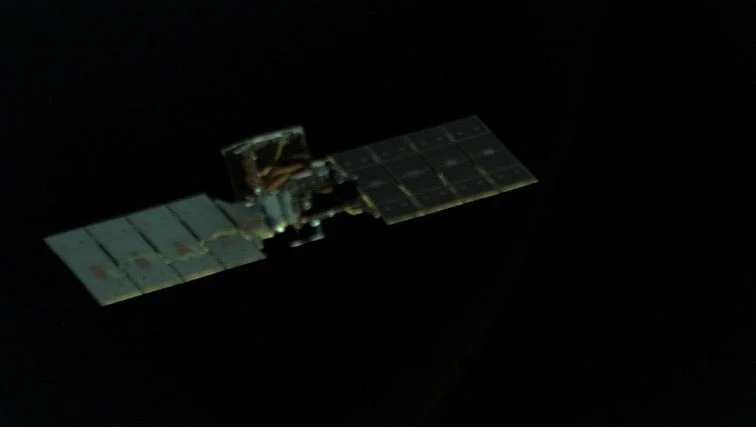
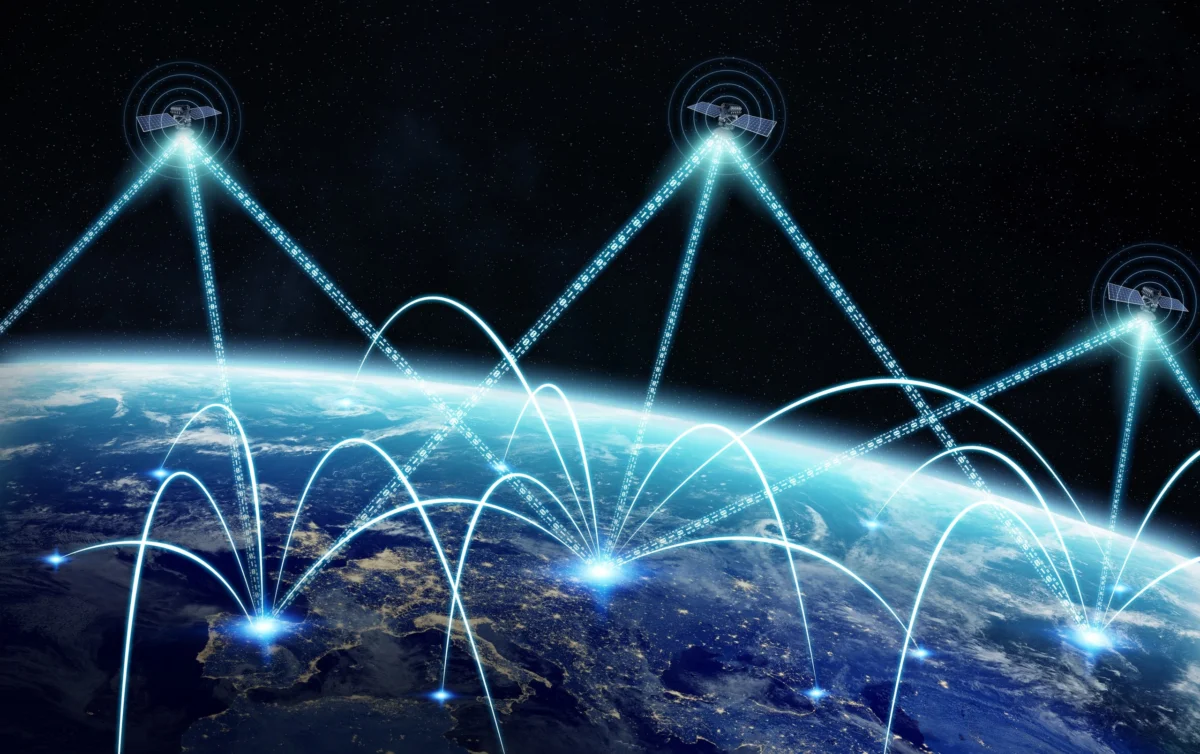
The connection utilizes the robust footprint of Hellas Sat’s GEO constellation, which serves as the backbone for the transmission. The data path involves a complex relay: an uplink from Cyprus to the GEO satellite, followed by a downlink to the ground station in Greece. Despite the significant latency and technical complexities inherent in long-distance space-to-ground communications, the QSI protocols remained stable, ensuring both integrity and confidentiality.
Unlike traditional encryption, which relies on mathematical problems that could potentially be solved by powerful future quantum computers (the "harvest now, decrypt later" threat), quantum-safe encryption uses advanced algorithms designed to resist these future threats.
Chronology of Development
The path to this week’s announcement was not an overnight success but the result of a deliberate, phased research and development cycle.
- Q1 2026: Sparkle and Hellas Sat initiated the partnership, identifying the need for secure, resilient infrastructure for Mediterranean communications.
- April 2026: The companies successfully validated a quantum-safe IPsec connection between two terrestrial data centers in Greece. This initial phase proved that the QSI protocols were compatible with the companies’ existing networking hardware and software architectures.
- June–August 2026: Engineering teams began the complex task of adapting these protocols for the satellite domain. This required addressing the specific signal-to-noise ratio challenges and the propagation delay inherent in a 72,000-kilometer round-trip signal.
- Late August 2026: The live testing phase commenced, involving rigorous stress testing of the encrypted link under varying atmospheric and orbital conditions.
- September 2026: Official validation of the successful end-to-end link, culminating in the public announcement made on September 4.
The Infrastructure Players
Understanding the significance of this project requires a closer look at the two organizations involved, both of which provide critical infrastructure for the European region.
Sparkle: The Global Network Provider
Sparkle, the international services arm of the TIM Group, is one of the world’s leading global operators. With an extensive submarine and terrestrial fiber-optic network, Sparkle provides capacity and managed services to internet service providers, media companies, and government entities. Their move into quantum-safe satellite connectivity reflects a broader strategic shift toward "sovereign cloud" and "zero-trust" networking.
Hellas Sat: The Satellite Specialist
Hellas Sat operates a sophisticated constellation of Geostationary Orbit satellites, providing high-quality video and data services to Europe, the Middle East, and Africa. With two primary teleport facilities in Greece and Cyprus, Hellas Sat acts as a regional anchor for space-based communications. By integrating QSI into their satellite operations, they have positioned themselves as a premier provider for "quantum-resilient" satellite bandwidth.
Implications for Global Security
The implications of this collaboration extend far beyond the Greece-Cyprus corridor. As the threat of quantum computing moves from theory to reality, the security of current public-key infrastructure (PKI) is being called into question.
1. Defeating "Harvest Now, Decrypt Later"
Intelligence agencies and cybersecurity experts have long warned of "Harvest Now, Decrypt Later" attacks, where adversaries intercept and store encrypted data today with the intention of decrypting it once quantum computers reach sufficient scale. By utilizing QSI, Hellas Sat and Sparkle have ensured that the data transmitted today remains secure even against tomorrow’s most advanced computational capabilities.
2. Resilience in Geographically Distributed Environments
Many enterprises operate across dispersed geographies where fiber-optic cables are either unavailable or physically vulnerable to sabotage. Satellite links offer a necessary redundancy. However, the inherent openness of the broadcast nature of satellite signals has historically been a security concern. This breakthrough proves that satellite links can be made just as secure—if not more so—than terrestrial fiber, enabling safe communications for remote outposts, maritime operations, and disaster-relief scenarios.
3. Setting a Regional and European Standard
As the European Union pushes for the European Quantum Communication Infrastructure (EuroQCI), the collaboration between Hellas Sat and Sparkle serves as a blueprint for other member states. It demonstrates that interoperability between satellite and terrestrial networks is possible and that quantum-safe transitions do not require a complete "rip-and-replace" of existing hardware.
Official Responses
The industry reaction to the announcement has been largely positive, emphasizing the transition from theoretical research to practical, real-world application.
"The extension of QSI to satellite connectivity with Hellas Sat represents a concrete step in the evolution of our quantum-safe portfolio," said Antonella Sanguineti, Head of Networking, Cloud, Security & Identity Solutions at Sparkle. "It demonstrates that QSI can be deployed consistently across different network layers, connectivity domains, and operational environments, opening new opportunities to protect communications for customers requiring secure, resilient connectivity across geographically distributed environments."
Industry analysts have noted that Sanguineti’s emphasis on "consistency" is the key to this project’s success. By ensuring that the same security policy can follow a data packet from a terrestrial data center, through a satellite uplink, and back to a ground station, the partners have removed a significant barrier to enterprise-wide quantum security adoption.
The Future of Quantum-Safe Communications
Looking ahead, the success of this project prompts several questions about the scalability of quantum-safe technology.
Next Steps: Speed and Latency
While the current deployment confirms the viability of the security protocol, future research will likely focus on optimizing the overhead. Quantum-safe algorithms are generally more computationally intensive than their classical counterparts. As the volume of traffic increases, the companies will need to ensure that the cryptographic overhead does not introduce unacceptable levels of latency or reduce the effective throughput of the satellite transponders.
The Role of QKD
While this project utilized QSI (a software-based, post-quantum approach), the industry is also watching the progress of Quantum Key Distribution (QKD), which uses the principles of quantum mechanics to distribute encryption keys. The current Sparkle-Hellas Sat model provides a highly secure, scalable, and cost-effective alternative that can be deployed today, whereas QKD often requires specialized, dedicated hardware.
Expanding the Network
The successful Greece-Cyprus link is likely the first of many. Industry experts predict that we will see a rapid expansion of these quantum-safe corridors across the Mediterranean and beyond. As more organizations look to secure their supply chains and internal communications, the demand for "quantum-hardened" satellite bandwidth is expected to grow exponentially.
Conclusion
The partnership between Hellas Sat and Sparkle is a testament to the fact that the cybersecurity industry is not waiting for the quantum era to arrive before it prepares its defenses. By successfully implementing a quantum-safe satellite connection, they have bridged a 72,000-kilometer gap, effectively securing a critical communication link against the most sophisticated threats on the horizon.
In an era defined by increasing geopolitical tension and the rapid evolution of computational power, such initiatives provide a crucial layer of stability. As governments and private enterprises continue to navigate the transition to a quantum-ready world, the work done in the Mediterranean this week will undoubtedly be cited as a foundational step toward a more secure global communications infrastructure.