In an era defined by hyper-connectivity and the digital integration of critical infrastructure, the vulnerability of Global Navigation Satellite System (GNSS) signals—such as GPS—has emerged as a paramount national security and economic concern. Addressing this systemic fragility, satellite communications giant Iridium has officially moved its Positioning, Navigation, and Timing (PNT) Application Specific Integrated Circuit (ASIC) into full commercial availability. This milestone, coming shortly after the technology’s initial unveiling in October 2025, marks a significant shift in how industries protect against signal jamming, spoofing, and the inherent limitations of conventional satellite-based navigation.
The Core Innovation: Technical Capabilities of the Iridium ASIC
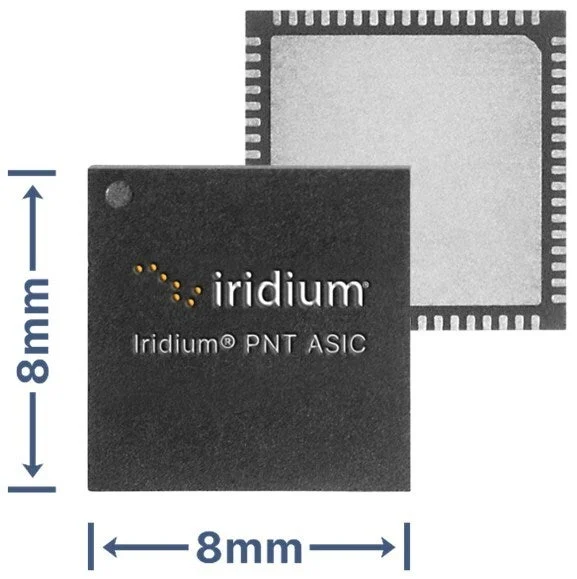
The Iridium PNT ASIC is a compact, 8-by-8-millimeter powerhouse designed to integrate seamlessly into a wide array of electronic devices. Unlike standard GPS receivers that rely on signals easily disrupted by atmospheric interference, physical obstructions, or deliberate electronic warfare, the Iridium solution operates through a distinct, hardened architecture.
The chip functions by leveraging Iridium’s unique L-band satellite constellation. By utilizing one-way signal bursts, the ASIC provides cryptographically secure timing and location data. This design philosophy prioritizes "assured PNT," ensuring that even in contested environments—such as combat zones or urban canyons where GPS signals are frequently blocked—users can maintain accurate positioning and synchronized time.
Crucially, the chip is designed for versatility. It can operate as a standalone receiver or function as part of a hybrid system alongside traditional GNSS and inertial sensing technologies. This hybrid approach is increasingly viewed as the "gold standard" for resilient PNT, providing a fail-safe mechanism that triggers automatically if the primary GNSS signal becomes unreliable or unavailable.
Chronology: From Concept to Commercialization
The journey to this commercial launch reflects a strategic pivot in Iridium’s service portfolio.
- Pre-2025 Research and Development: Iridium spent years refining the signal processing algorithms necessary to deliver precise PNT data over its existing satellite network without requiring hardware overhauls for the constellation itself.
- October 2025 – The Unveiling: The company officially debuted the PNT chip, positioning it as the ultimate remedy for "GNSS-denied" environments. Initial interest from the defense and aerospace sectors was immediate.
- Q4 2025 – The Beta Phase: Iridium initiated a controlled beta program, granting select strategic partners early access. This allowed for real-world stress testing of the ASIC in varying environments, from maritime shipping lanes to high-altitude aviation.
- Late 2025 – Commercial Availability: Following the success of the beta program and the overwhelming volume of interest from over 150 organizations, Iridium transitioned the product to full-scale commercial availability, inviting manufacturers to integrate the hardware into their product roadmaps.
Supporting Data: Why "Assured PNT" Matters
The urgency behind Iridium’s launch is backed by mounting data regarding the fragility of the global navigation ecosystem. According to industry security reports, the frequency of GPS jamming and "spoofing" (where false signals are broadcast to mislead receivers) has risen by over 300% in the last three years.
For the aviation, maritime, and telecommunications sectors, the consequences of a PNT failure are catastrophic. Financial markets rely on microsecond-level timing synchronization to execute trades; power grids require precise timing to manage load balancing; and autonomous vehicles depend on absolute positioning to ensure safety.
The interest from 150 organizations—ranging from defense contractors to industrial IoT manufacturers—underscores a market shift. No longer is PNT considered a "nice-to-have" feature; it is now viewed as an essential utility. By shrinking this capability into an 8x8mm chip, Iridium has effectively democratized access to hardened positioning, allowing it to be embedded in everything from handheld survey equipment to large-scale infrastructure monitoring nodes.
Official Responses and Strategic Vision
Dr. Michael O’Connor, Executive Vice President of PNT at Iridium, emphasized the strategic importance of this launch during a recent press briefing. "The market response to the Iridium PNT ASIC has reinforced what we’re hearing from customers around the world: assured PNT is becoming an essential capability across critical industries," Dr. O’Connor stated.
He further highlighted the role of the manufacturer community in this ecosystem, noting, "With commercial availability, we’re enabling manufacturers to integrate trusted timing and location capabilities into smaller, more efficient designs, making assured PNT accessible to more applications than ever before."
Early adopters, such as Solace Communications, have already begun building the chip into their hardware portfolios. Solace is integrating the ASIC into its "Vector" family of PNT products. By layering Iridium’s signal security with existing inertial sensing capabilities, Solace is creating a multi-layered defense against signal loss, proving that the industry is ready to move beyond reliance on a single constellation.
Implications for Industry and National Security
The launch of the Iridium PNT ASIC arrives at a complex time for the company. As Iridium continues its integration into the broader aerospace ecosystem, including its pending acquisition by Rocket Lab, the PNT chip serves as a high-value asset.
1. The Defense and Aerospace Landscape
For defense forces, the ability to operate in GPS-denied environments is a core requirement for modern multi-domain operations. The small form factor of the Iridium chip allows it to be integrated into drones, wearable tech for infantry, and missile guidance systems without imposing significant weight or power constraints.
2. The Infrastructure and IoT Sector
Beyond the battlefield, the economic implications are profound. As the world moves toward "Smart Cities," the reliance on time-stamped sensor data will grow exponentially. A failure in GPS could effectively "blind" an automated city. The integration of Iridium’s hardened PNT chips into infrastructure hardware provides a necessary insurance policy against the systemic shocks of signal failure.
3. The Rocket Lab Connection
The backdrop of the pending acquisition by Rocket Lab adds an interesting dimension to this rollout. As Rocket Lab looks to expand its footprint in space systems and launch services, the inclusion of a proprietary, high-demand PNT technology creates a synergistic vertical. The combination of Rocket Lab’s launch capabilities and Iridium’s established, resilient communication network creates a formidable entity capable of controlling both the delivery vehicle and the critical payload-to-orbit lifecycle.
Conclusion: Setting the New Standard
The commercialization of the Iridium PNT ASIC is more than just a product release; it is an acknowledgement that the "Open Sky" era of navigation is changing. With GNSS signals increasingly treated as a contested domain, the move toward hybrid, resilient, and cryptographically secure positioning is the only logical path forward for global enterprise.
As manufacturers begin to roll out the first generation of consumer and industrial devices equipped with this technology in 2026, we can expect a rapid transition in how we define "reliable" positioning. Iridium, by making this technology accessible and scalable, is not only securing its own future within the global communications market but is also providing a foundational layer of stability for the digital infrastructure of the next decade.
For the 150 organizations already in line, the message is clear: the future of PNT is resilient, it is hybrid, and as of today, it is available for deployment.