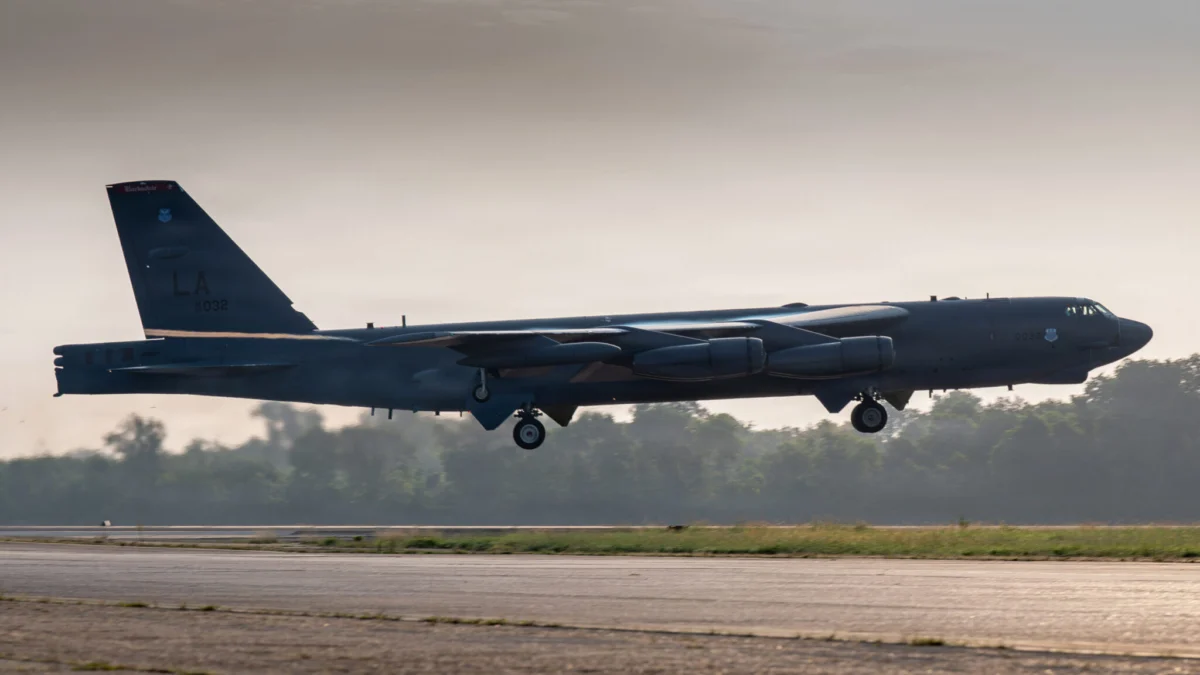
The B-52 Stratofortress, a symbol of American air power since the Eisenhower administration, is currently the subject of one of the most ambitious and complex modernization efforts in the history of the United States Air Force. Tasked with extending the service life of this iconic airframe through the 2050s, the Air Force has committed to a sweeping overhaul across 13 distinct upgrade programs. However, a damning new report from the Government Accountability Office (GAO) suggests that this massive $21 billion undertaking is plagued by persistent cost overruns, schedule volatility, and questionable management practices that threaten the long-term viability of the fleet.
The GAO’s findings, released today, provide a sobering assessment of the "BUFF" (Big Ugly Fat Fellow), noting that the two most critical pillars of this modernization—the propulsion overhaul and the radar replacement—are teetering on the edge of failure. With the Air Force struggling to maintain operational readiness, the watchdog’s report serves as a warning that without significant course corrections, the service may find itself with an aging fleet that is increasingly grounded and technologically obsolete.
The Core Modernization Efforts: Engines and Radar
At the heart of the B-52’s modernization are two primary initiatives: the Commercial Engine Replacement Program (CERP) and the Radar Modernization Program (RMP).
The Commercial Engine Replacement Program (CERP)
The CERP is designed to replace the aging, fuel-hungry Pratt & Whitney TF33 engines with modern, efficient Rolls-Royce F130 powerplants. While the program is slated for completion in 2033, its budget has ballooned to $15.4 billion—a $400 million increase over previous projections.
The GAO highlights a concerning 38 percent cost growth since 2018. Notably, this growth would have typically triggered a Nunn-McCurdy breach—a congressionally mandated reporting process for massive cost overruns—but the trigger was avoided because the program’s development timeline was pushed back by nearly three years. This "hidden" delay allowed the Air Force to circumvent the scrutiny that such a massive financial spike would normally invite.
The Radar Modernization Program (RMP)
The RMP, which involves integrating an advanced RTX (formerly Raytheon) sensor, is faring no better. With a budget that has swelled by 30 percent to over $2.9 billion, the program has already triggered a Nunn-McCurdy breach in the past. The system is now expected to reach operational status in the third quarter of fiscal year 2030—three-and-a-half years behind the original schedule.
Perhaps most alarming is the Air Force’s decision to remove specific performance requirements for the radar to keep costs under control. As the GAO succinctly noted, "In this case, after contract award, the Air Force will receive less capability while paying more for the program."
Chronology of Challenges
The modernization of the B-52 is not a sudden crisis, but rather a slow-moving storm of management oversight and technological hurdles.
- 2018: Baseline cost projections for the engine replacement program are established. Since this time, costs have climbed by over 38 percent.
- November 2022: A formal assessment finds that the B-52 fleet is failing to meet basic mission-capable benchmarks.
- May 2026: The Air Force announces that the CERP has passed its Critical Design Review, a milestone that should have theoretically occurred earlier in the development lifecycle.
- June 2026: A tragic setback occurs at Edwards Air Force Base in California, where a flight test aircraft involved in the B-52 program crashes, resulting in the loss of all eight crew members. This incident has forced a re-evaluation of the RMP timeline as the program pivots to assist with the crash investigation.
- Present Day: Development of the CERP is slated to kick off in the third quarter of fiscal year 2026, even as the GAO warns of "concurrency risks" where production and testing are scheduled to overlap.
Supporting Data and Technical Concerns
The GAO report underscores that the Air Force’s management of these programs relies on an outdated approach to systems engineering. While the CERP program has begun to adopt some digital engineering practices, the other 12 modernization efforts remain largely tethered to traditional, manual design methods.
This failure to embrace digital transformation is not merely a bureaucratic preference; it represents a tangible risk. Digital engineering allows for virtual testing and "what-if" scenarios that can predict maintenance needs and supply chain disruptions years in advance. By failing to integrate these tools, the Air Force is losing out on critical efficiencies, effectively guaranteeing that future sustainment costs will be higher than they otherwise would be.
Furthermore, the "concurrency" of the CERP program is a primary source of anxiety for the GAO. By planning to start engine production and developmental flight testing simultaneously in fiscal year 2029, the Air Force is inviting disaster. If testing reveals a design flaw after production has already commenced, the resulting rework could cost billions and add years to an already delayed schedule.
Official Responses and Organizational Woes
The Air Force’s response to the GAO report has been largely defensive but cooperative on surface-level issues. The service concurred with five of the six recommendations offered by the watchdog. However, it only "partially concurred" with the recommendation to delay the CERP production decision until a comprehensive impact analysis of cost and schedule delays is completed.
The Department of Defense has been notably tight-lipped regarding the granular details of the fleet’s health. In its report, the GAO revealed that specific mission-capable rates and availability data for the B-52 were withheld from the public, citing that such details were "sensitive." This lack of transparency makes it difficult for taxpayers and lawmakers to hold the service accountable for the fleet’s operational readiness.
Meanwhile, the prime contractor for both programs, Boeing, has remained silent, offering no immediate comment on the GAO’s findings. An Air Force spokesperson noted that they are prioritizing the investigation into the June crash, acknowledging that the incident will necessitate further, yet-to-be-defined, schedule adjustments.
Strategic Implications: Can the B-52 Survive?
The implications of these findings extend far beyond the balance sheet. The B-52 is a central component of the U.S. nuclear triad and a workhorse for conventional global strike missions. If the Air Force cannot effectively sustain the engines or integrate the modern sensors needed to navigate current threat environments, the fleet’s utility will rapidly decline.
1. The Sustainment Cliff
The GAO report warns that if the CERP effort continues to slip beyond 2031, the Air Force will be unable to effectively sustain the current TF33 engines. This would lead to a catastrophic shortage of available aircraft, potentially leaving the U.S. unable to meet operational requirements during a major global conflict.
2. Organizational Silos
Beyond technical upgrades, the GAO identified a failure in organizational management. The fleet is currently missing one-third of the unique support equipment required to maintain it, and there is no clear guidance on who holds responsibility for the lifecycle management of that equipment. This lack of accountability creates a "tragedy of the commons" where maintenance tools and specialized support equipment are neglected, directly impacting the ability of ground crews to keep the bombers flight-ready.
3. The Path Forward
To rectify these issues, the GAO has issued six recommendations aimed at forcing the Air Force to modernize its management style. These include:
- Standardizing the use of digital engineering across all 13 modernization efforts.
- Assigning clear, centralized responsibility for the management of B-52 support equipment.
- Conducting a full-scale analysis of how current cost spikes and schedule delays will impact the long-term sustainment of the fleet before proceeding with full-rate production.
As the Air Force continues to push for a fleet that can fly into the 2050s, the B-52 faces a "sustainment cliff." The aircraft is currently in a state of high demand, yet its underlying infrastructure is crumbling under the weight of neglected equipment and fragmented management. Whether the service can overcome these self-inflicted wounds or if the B-52 will eventually be sidelined by its own modernization efforts remains the central question for the future of the American bomber force. For now, the "Stratofortress" remains in a race against time—and, increasingly, against its own internal bureaucracy.