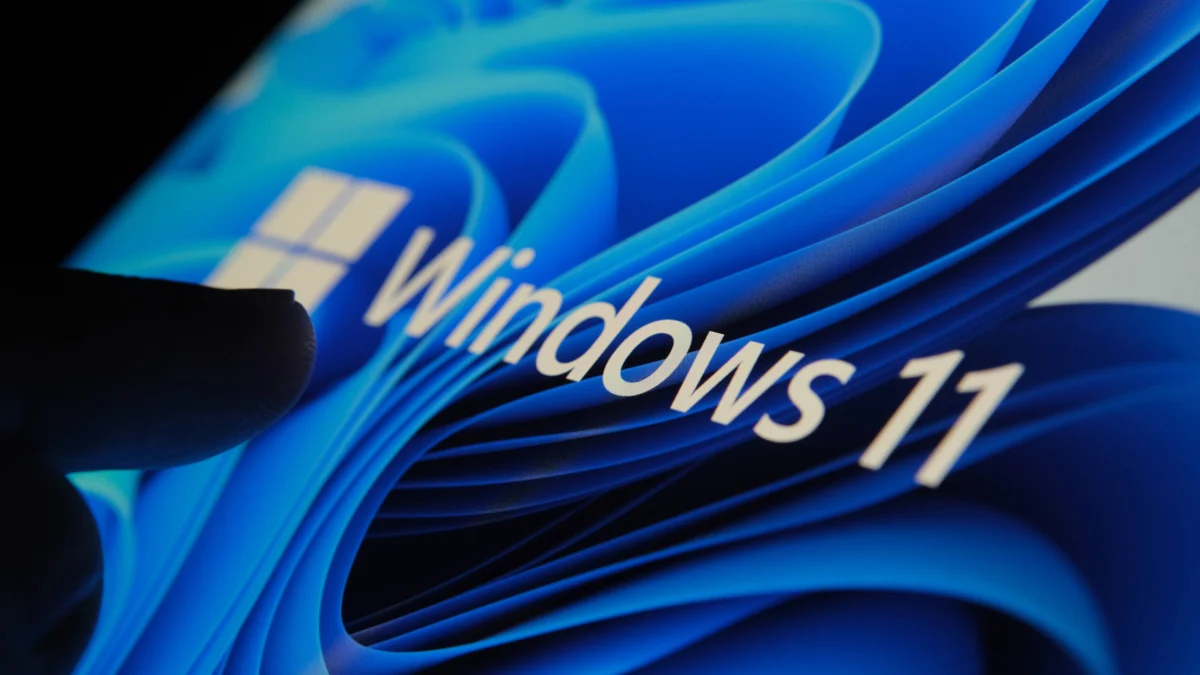
In the corridors of corporate IT departments and the home offices of millions, a silent standoff is taking place. Despite Microsoft officially ending mainstream support for Windows 10 over a year ago, the operating system remains a stubborn fixture of the global computing landscape. According to recent market data, nearly 28% of Windows devices worldwide are still operating on the legacy platform. This resilience is not born of choice, but of necessity—a byproduct of a “perfect storm” of economic headwinds, soaring hardware costs, and a fundamental shift in the PC market that has left both consumers and enterprises in a state of extended limbo.
The Anatomy of the Stagnation
The global PC market is currently grappling with a phenomenon industry insiders are calling "the hardware squeeze." For years, the PC industry relied on a predictable cycle: hardware becomes faster and cheaper, prompting users to upgrade their software and systems. That cycle has been shattered.
The primary culprits are twofold: "chipflation" and the "RAMpocalypse." As the prices for CPUs and memory modules climb, the base cost of entry-level and mid-range PCs has surged, effectively pricing out the average consumer. Dean McCarron, principal analyst at Mercury Research, notes that the decision by manufacturers—including Intel—to raise CPU prices has created a barrier that cannot be ignored. "When prices are higher, demand goes down," McCarron explains. "It causes a deferred upgrade cycle. Users simply aren’t seeing the value proposition in upgrading their hardware when the cost-to-performance ratio is so skewed."
Chronology of a Market Contraction
To understand how we arrived at this impasse, one must look at the turbulent timeline of the last two years:
- Early 2026: A brief, frantic rush to upgrade systems in anticipation of memory-driven price hikes led to a 3.2% growth in global PC shipments. This proved to be a "dead cat bounce" rather than a recovery.
- Q2 2026: Reality set in as shipment volumes fell by 4%. The market began to feel the weight of high component costs, exacerbated by international trade tensions and geopolitical instability.
- Q3 2026: The collapse accelerated. Global PC shipments plummeted by 21%, a staggering figure that signaled a fundamental change in consumer behavior.
- Late 2026 to Present: The market has entered a period of extreme caution. While enterprise replacements provided a slight cushion, they were insufficient to offset the broader contraction. Current projections suggest a 27% year-over-year decline in Q4 2026, marking a bleak finish to a difficult year.
Supporting Data: The Persistence of Windows 10
StatCounter data paints a revealing picture of user behavior. In February 2026, Windows 10 held a market share of approximately 26.45%. By September 2026, that figure had actually ticked upward to 27.7%.
Conversely, the trajectory of Windows 11 has been erratic. After an initial surge following the end of Windows 10 mainstream support—reaching a peak of 72.57% market share—the operating system saw its momentum stall, dipping back to 71.5% by September. This data suggests that the migration to Windows 11 is not merely a technical transition but a financial one. Users who are not forced to upgrade due to hardware failures or enterprise mandates are choosing to stick with their current, familiar environments, even if it means missing out on the latest security features unless they opt for costly Extended Security Updates (ESU).
Official Responses and Corporate Strategy
The financial impact of this stagnation is rippling through the technology sector, most notably at Microsoft. During a recent earnings call, CFO Amy Hood acknowledged that Windows revenue from PC makers had fallen by 27%, a figure that missed analyst expectations.
Microsoft’s challenge is compounded by the fact that PC manufacturers are currently sitting on mountains of unsold inventory. Because manufacturers pay a licensing fee to Microsoft for every machine sold, the slowdown in retail and corporate purchasing has directly hit the company’s bottom line.
However, the industry is not sitting idle. Vendors are attempting to mitigate the impact through "restricted configurations and bundles," according to Steven Dickens, principal analyst at Hyperframe Research. By bundling hardware or limiting options, manufacturers are trying to stabilize margins in a market where the cost of raw materials—specifically memory—remains heavily skewed toward the high-demand data center sector.
The AI Conundrum and Enterprise Hesitation
For the enterprise sector, the decision to upgrade is no longer as simple as replacing aging hardware. A new variable has entered the equation: the "AI PC."
Neil Shah, vice president of research at Counterpoint Research, describes the current enterprise sentiment as a "conundrum." IT managers are caught between the need to replace aging fleets and the uncertainty of investing in new AI-capable hardware. These machines, designed to run Large Language Models (LLMs) locally, carry a significant price premium.
"All these trends are deflating the demand and slowing down the replacement cycle," says Shah. Enterprises are being "prudent," waiting for either a stabilization in prices or a clearer business case for AI deployment. As a result, the "AI PC", while a massive marketing focus for companies like Intel and Microsoft, has yet to act as the primary catalyst for a broad-based upgrade cycle.
Implications: The "Compressed Spring" Effect
When will the cycle break? Most analysts agree that 2027 will not be the year of recovery. Supply constraints for memory and core components are expected to persist, potentially dragging into 2029.
However, there is a silver lining for the long term. Analysts view the current market behavior as a "compressed spring." Because the natural lifecycle of a PC—typically 4 to 6 years—cannot be deferred indefinitely, there is a massive backlog of necessary upgrades building up in the background.
"At some point, enterprises will have to upgrade," says McCarron. "If a soft PC market goes on for too long, it will turn into a larger boom, perhaps a year later. It’s like compressing a spring. The longer you hold it down, the harder it snaps back."
This "snap-back" suggests that while the industry is currently weathering a harsh winter, the inevitable return to growth will be dramatic. The question remains whether that growth will be driven by a sudden correction in component prices, a breakthrough in the utility of AI PCs that forces mass adoption, or simply the unavoidable failure of aging hardware that has been pushed past its reasonable lifespan.
For now, the global PC market remains in a state of high-cost, low-volume stasis. Windows 10, despite its "end-of-life" status, continues to serve as the reliable, if aging, engine for nearly a third of the world’s desktop computers, underscoring a fundamental reality of the tech world: users will only pay for progress when the cost of standing still becomes more expensive than the cost of moving forward. That threshold, it seems, has yet to be crossed.