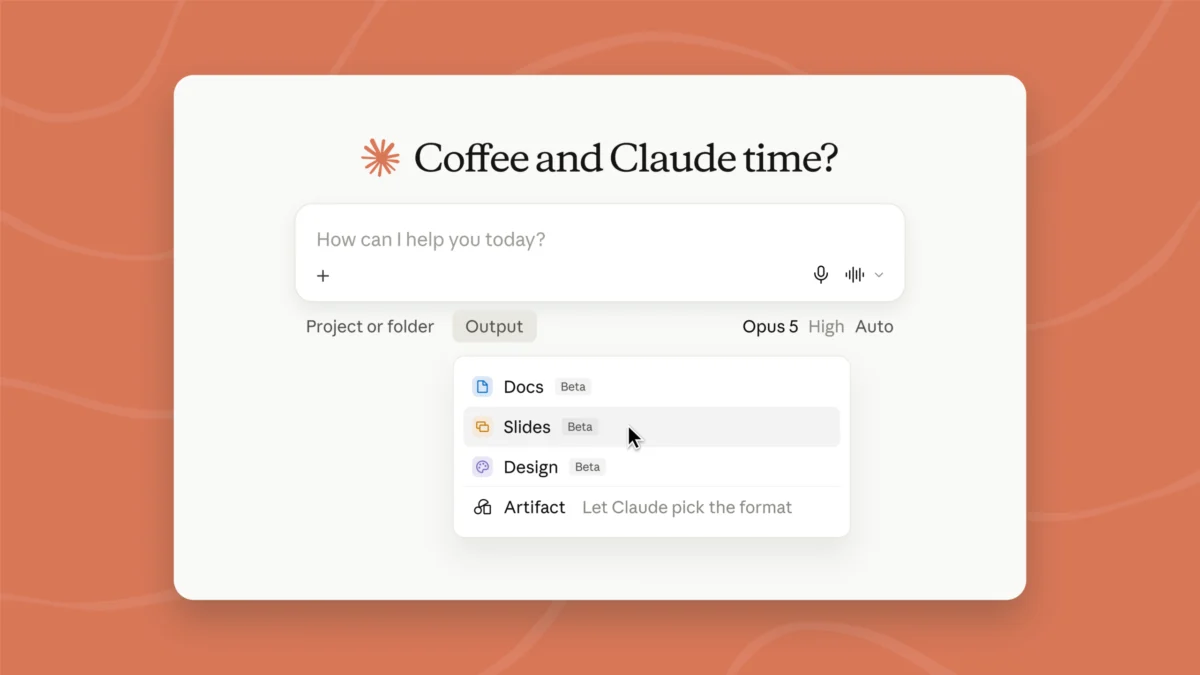
In a strategic maneuver that marks a significant escalation in the ongoing "AI workspace wars," Anthropic has unveiled Claude Docs and Claude Slides. These new tools represent more than a simple feature update; they signify a fundamental shift in how Anthropic envisions the future of knowledge work. By integrating a rich-text editor directly into the Claude chat interface, the company is attempting to pivot its flagship assistant from a passive chatbot into an active, agentic platform capable of managing the full lifecycle of document creation.
The move places Anthropic in direct competition with the established titans of industry—Microsoft and Google—by challenging their long-standing dominance as the primary interfaces for professional productivity.
Main Facts: Bringing the Office into the Chatbot
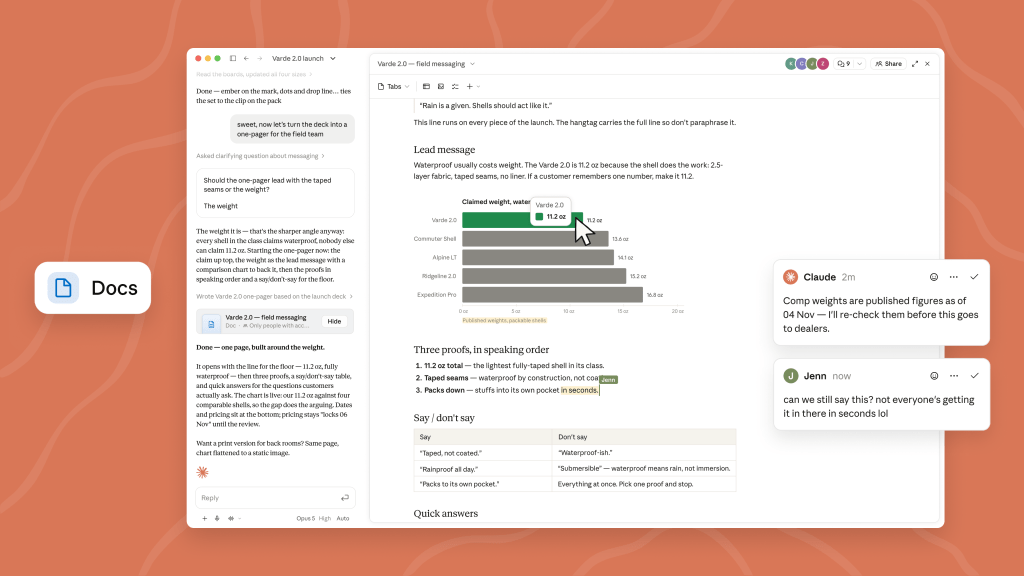
The core of this update is the seamless integration of document creation within the Claude ecosystem. Previously, users relied on Claude to generate content that was then copied and pasted into external applications like Microsoft Word or Google Docs. Now, Claude Docs allows users to draft, edit, and refine documents directly within the interface.
Key features of this new paradigm include:
Direct Drafting: Users can initiate requests for reports, memos, or slide decks via the chat interface. Claude will proactively engage in a "clarifying dialogue," asking questions to refine the output before committing to a draft.
Contextual Collaboration: Claude can leave internal comments, explaining the rationale behind specific structural choices or content inclusions.
Artifacts Integration: Once a document is created, it is stored in the "Artifacts" tab. From here, users can export the output into standard formats, including PDF, Markdown, Microsoft Word, and Google Docs.
Consolidated Workflow: Anthropic has merged "Claude Cowork"—its multi-stage task executor—with the standard chat interface. The system now intelligently routes requests, determining whether a task requires standard text generation, visual design (via Claude Design), or complex, agentic, multi-step execution without the user needing to manually toggle between specialized tools.
Despite these advancements, the feature is currently in beta and comes with notable limitations. There is no version history, access control, or external sharing functionality for Team and Enterprise plans at this stage. Furthermore, for organizations prioritizing high-security compliance—such as those utilizing customer-managed encryption keys (CMEK) or zero data retention (ZDR) configurations—the feature remains unavailable.
Chronology: The Evolution of the AI Assistant
The journey toward this release reflects the rapid acceleration of the generative AI sector:
Pre-2024: The era of the "Chat-first" model. AI assistants were primarily used for brainstorming and basic text generation, requiring heavy manual intervention to move content into traditional productivity suites.
Mid-2024: The introduction of "Artifacts." Anthropic allowed users to view and edit code and content in side-by-side windows, setting the stage for more complex workspace integration.
Late 2024 – Early 2025: The rise of "Agentic AI." Competitors began releasing agents capable of executing tasks across software environments.
September 2026 (The Current Pivot): Anthropic launches Claude Docs and Slides. This represents the formal transition from a generative AI model to a productivity platform, where the chat window serves as the primary "home" for document creation.
Supporting Data: Why Productivity is the New Frontier
The motivation for this shift is rooted in clear usage data. Industry analysis from the 2026 Employee Workplace Technology Survey conducted by FDM CCS Insight reveals that approximately 50% of employees utilizing generative AI in the workplace spend their time creating or editing reports and formal documents.
For AI vendors, "stickiness" is the ultimate goal. By capturing the creation process, Anthropic ensures that users spend more time within their ecosystem, thereby increasing the likelihood that Claude becomes the "primary interface" for daily tasks.
However, this strategy faces a steep adoption curve. Analysts note that while the tools are powerful, they are currently limited by:
Usage Limits: Large, complex document generation tasks consume significantly more of a user’s token allocation.
Enterprise Hesitation: The absence of HIPAA-ready configurations and advanced enterprise security protocols means that the most lucrative segment of the market—large corporations—will be slow to adopt these tools until the feature set reaches parity with existing compliance standards.
Official Responses and Expert Analysis
Industry experts are divided on whether a "chatbot-first" approach can actually displace the entrenched productivity giants.
Arun Chandrasekaran, Distinguished VP Analyst at Gartner, views this as a strategic inflection point:
"Strategically, this signals Claude moving from an AI assistant into an agentic platform meant for the full lifecycle of knowledge work. We anticipate strong early demand around recurring, template-driven work, such as status reports, board decks, and data-to-story reports."
However, Maria Bell, senior research analyst at FDM CCS Insight, emphasizes the difficulty of changing ingrained work habits:
"Microsoft and Google are bringing AI deeper into established productivity environments, while Anthropic is bringing more of the productivity environment into AI. Microsoft and Google are deeply embedded in how people already work… Anthropic must do more than match document-creation features; it has to offer an experience compelling enough for users to build new habits around Claude."
Jack Gold, principal analyst at J. Gold Associates, remains skeptical of the "replacement" narrative:
"The fundamental question is, if I am used to certain tools and they work for me, am I willing to change for the promise of working better? Not sure that will be a winning strategy. Users have spent years becoming comfortable with their [Microsoft and Google] products and workflows."
Implications: The Future of the Digital Workplace
The launch of Claude Docs and Slides creates three distinct implications for the future of knowledge work:
1. The Death of the "Switching Cost" Gap
For years, the biggest friction point in AI adoption was the "copy-paste gap." By allowing users to stay in one tab, Anthropic is removing the mental load of context-switching. If the platform becomes robust enough to handle the full lifecycle—from data analysis to slide deck creation—the necessity of opening a secondary office suite diminishes.
2. The Rise of "Agentic" Routing
The integration of Claude Cowork, Claude Design, and standard chat into a single interface is a breakthrough in user experience. By allowing the AI to decide which "agent" to deploy, Anthropic is essentially automating the project management side of document creation. This moves the user from being a "writer" to an "editor/director," where the AI handles the tool selection and execution.
3. The Enterprise Compliance Barrier
Anthropic’s biggest hurdle remains the "Enterprise-ready" threshold. The fact that these features are turned off by default for enterprise plans and excluded for those with strict encryption requirements highlights the tension between innovation and security. For Anthropic to truly compete with the Microsoft 365 Copilot suite, it must prove that it can offer the same level of granular data control and compliance that multinational corporations demand.
Final Outlook
Anthropic’s latest update is a bold attempt to redefine the professional workspace. While it is unlikely to trigger a mass exodus from Microsoft or Google in the near term, it marks the beginning of a new era where the "AI assistant" is no longer an add-on—it is the destination. The success of this strategy will not be measured by the sophistication of the document editor, but by whether the company can convince the average worker that the benefit of shifting their habits outweighs the comfort of their legacy tools. As the market matures, the competition will increasingly center on which platform provides the most seamless "flow state" for the modern knowledge worker.