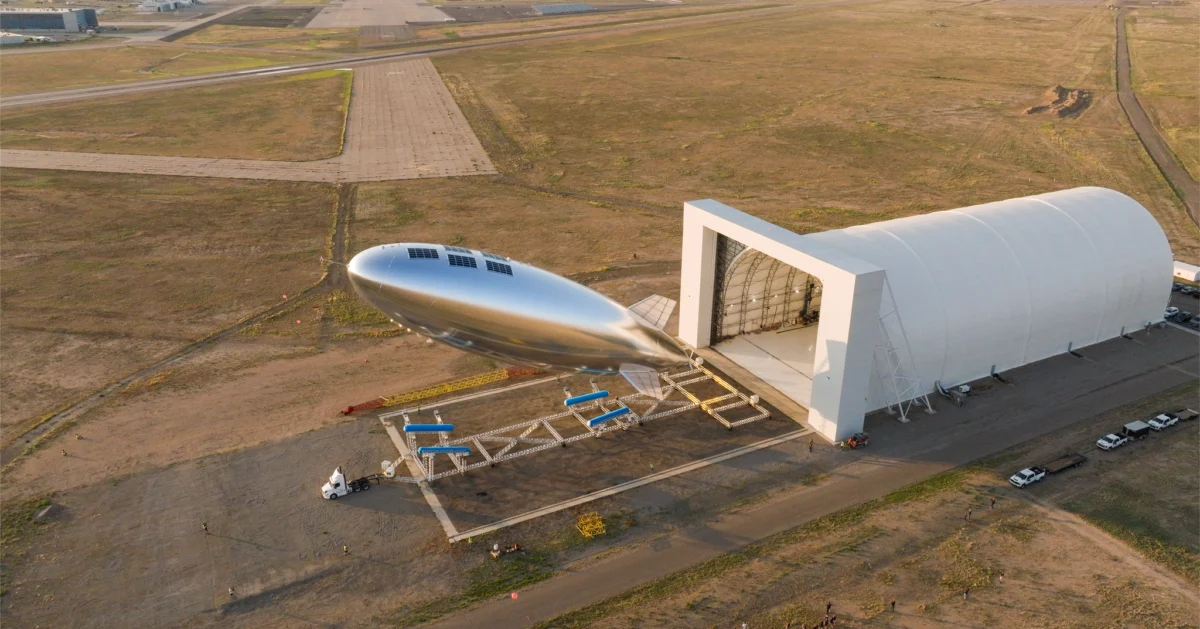
In a landmark achievement for aerospace engineering and telecommunications, U.S.-based Sceye has successfully completed a trans-Pacific mission with its Service Test 1 (ST1) platform. Traveling over 15,000 kilometers from New Mexico to Japanese airspace, the mission marks a pivotal step toward the commercialization of High-Altitude Platform Systems (HAPS). By demonstrating the ability to deliver mobile broadband directly to unmodified smartphones from the stratosphere, Sceye and its strategic partner, SoftBank Corp., have effectively moved the concept of "cell towers in the sky" from the realm of theory into viable, scalable infrastructure.
The Mission: Bridging Continents via the Stratosphere
On August 9, 2026, at 7:00 AM MDT, Sceye’s ST1 platform lifted off from its launch facility in New Mexico. What followed was a 13-day voyage through the stratosphere, an atmospheric layer that offers a unique vantage point: high enough to provide massive geographical coverage, yet close enough to Earth to facilitate high-capacity, low-latency connectivity.
The ST1 mission was not merely a test of endurance; it was a functional demonstration of a three-dimensional communications network. Upon reaching Japanese airspace, the platform successfully integrated with SoftBank’s core network. This allowed for the delivery of mobile broadband to standard, unmodified consumer devices, effectively bypassing the need for terrestrial cell towers. The tests covered a comprehensive suite of services, including voice calls, text messaging, high-speed internet access, and video streaming. Furthermore, the platform successfully demonstrated emergency alert messaging capabilities—a critical tool for disaster management—and facilitated edge computing communication with drones, showcasing the platform’s utility for complex aerial logistics.
A Chronology of Progress: From Endurance to Global Reach
The success of the ST1 mission is the culmination of a rigorous, multi-year development program focused on proving the viability of long-duration stratospheric flight.
The Endurance Program
Earlier in 2026, Sceye completed its "Endurance Program," a critical precursor to the current trans-Pacific mission. Utilizing its SE2 HAPS platform, the company successfully executed a 10,000-kilometer flight from New Mexico to the coast of Brazil. During this mission, the platform maintained its station-keeping capabilities over its operational area for several days. This proved that Sceye’s technology could handle the rigors of consecutive day-and-night cycles—a historical hurdle for solar-powered HAPS, as platforms must navigate the loss of solar energy during the night while maintaining altitude.
The Service Test Program (ST1)
Following the success of the Endurance Program, the ST1 mission was launched to push the boundaries of operational distance. Crossing the Pacific Ocean represents a massive increase in scale, requiring sophisticated navigation, power management, and communication handoffs. By successfully reaching Japan, Sceye has demonstrated that their infrastructure is not just regional, but global in scope. At the time of this report, the ST1 platform remains in flight, beginning its return journey toward the United States, further cementing its status as a robust, long-endurance asset.
Supporting Data: Why the Stratosphere?
To understand the magnitude of Sceye’s achievement, one must look at the physics and economics of modern telecommunications. Terrestrial networks are limited by geography, terrain, and the immense cost of installing and maintaining physical towers in remote or challenging environments. Satellite constellations, while effective, suffer from high latency and the significant cost of orbital deployment.
The "Goldilocks" Zone
The stratosphere acts as a "Goldilocks" zone for connectivity. It is roughly 1,800 times closer to the Earth’s surface than geostationary satellites, which allows for significantly lower latency—a prerequisite for the next generation of 6G and AI-driven applications.
Scale and Efficiency
Sceye’s proprietary "cell tower in the sky" technology, branded as SceyeCELL, provides a level of efficiency previously thought impossible. Current internal projections suggest that a single Sceye HAPS unit can provide coverage equivalent to roughly 500 terrestrial towers. This drastic reduction in physical infrastructure requirements could fundamentally alter the economics of rural and disaster-stricken connectivity.
Space-Like Performance, Earth-Like Costs
Unlike orbital satellites, which are subject to extreme launch costs and the inevitable degradation of space debris, Sceye’s HAPS platforms operate in a stable, reusable environment. They are designed for persistence—staying aloft for long durations while maintaining their position through precise station-keeping. This provides the reliability of a geostationary satellite with the accessibility and cost-efficiency of a localized network.
Official Responses and Strategic Vision
The partnership between Sceye and SoftBank is rooted in a shared ambition to solve the "digital divide" and prepare for the demands of a 6G future.
The Perspective of Sceye
Mikkel Vestergaard Frandsen, Founder and CEO of Sceye, emphasized that this flight is a "defining moment" for the entire HAPS industry. "Flying from the US to Japan demonstrates the performance required to make the stratosphere a viable layer of infrastructure and realize the future of AI, edge computing, and 6G," Frandsen noted. He highlighted that the goal is not to replace terrestrial networks, but to complement and extend them, providing persistent connectivity at a scale that was previously impossible.
The Perspective of SoftBank
SoftBank, which invested in Sceye in 2025, sees this technology as a cornerstone of its vision for a "three-dimensional communications network." Junichi Miyakawa, President & CEO of SoftBank Corp., stated that the successful trial in Japanese airspace has provided the company with the confidence to move forward with commercializing HAPS. "By combining the HAPS flight and operational technologies that Sceye has developed with SoftBank’s communications technologies, we have gained confidence to realize a three-dimensional communications network," Miyakawa said. The collaboration aims to integrate communication and AI technologies to transform HAPS into a core component of global social infrastructure.
Implications: The Future of Global Infrastructure
The success of the ST1 mission carries significant implications for various sectors, ranging from disaster relief to the implementation of the Internet of Things (IoT).
1. Disaster Resilience
One of the most immediate applications of Sceye’s technology is in the wake of natural disasters. When terrestrial fiber and cell towers are destroyed, HAPS can be deployed rapidly to provide a "blanket" of coverage, allowing emergency services and civilians to communicate when it matters most. The ST1 mission’s successful testing of emergency alert messaging is a direct response to this need.
2. The 6G and AI Era
As 6G standards evolve, the requirement for ultra-low latency and high-density connectivity will grow. The stratosphere provides the ideal platform for edge computing, where data processing happens closer to the user, thereby reducing the burden on the core network. By hosting AI-driven applications at the edge, Sceye’s platforms can facilitate real-time data processing for everything from autonomous drone fleets to precision agriculture.
3. Bridging the Digital Divide
Despite the global spread of the internet, vast swathes of the planet remain unconnected or underserved due to mountainous terrain, deep forests, or remote maritime regions. The ability of a single HAPS unit to cover the ground equivalent of 500 towers offers a realistic path toward universal connectivity. This is not just a technological win; it is a socio-economic imperative that could bring educational, healthcare, and economic resources to millions of people who currently lack access to the digital world.
4. Environmental Monitoring
Beyond telecommunications, the Sceye platform serves as a high-altitude observatory. Because these platforms stay in the stratosphere for long durations, they are uniquely positioned to perform real-time environmental monitoring. Whether tracking climate change, detecting forest fires, or monitoring methane emissions, the platform offers a continuous, high-resolution view of the planet that satellites cannot always replicate due to orbital mechanics.
Conclusion
The trans-Pacific journey of the ST1 mission is more than just a test of a balloon-like craft; it is a validation of a new paradigm in aerospace. By successfully proving that they can navigate the stratosphere from one continent to another and provide reliable, high-speed mobile connectivity to standard devices, Sceye and SoftBank have opened a new chapter in global communications.
As the ST1 platform completes its return journey, the focus for the industry will now shift to commercial scale-up and regulatory integration. While challenges remain—including airspace management and international telecommunications standards—the success of the ST1 mission provides a clear roadmap. The stratosphere is no longer just a place to fly through; it is becoming a place to stay, to serve, and to connect the world in ways previously relegated to science fiction. The "cell tower in the sky" has arrived, and it is ready to redefine the future of human connectivity.