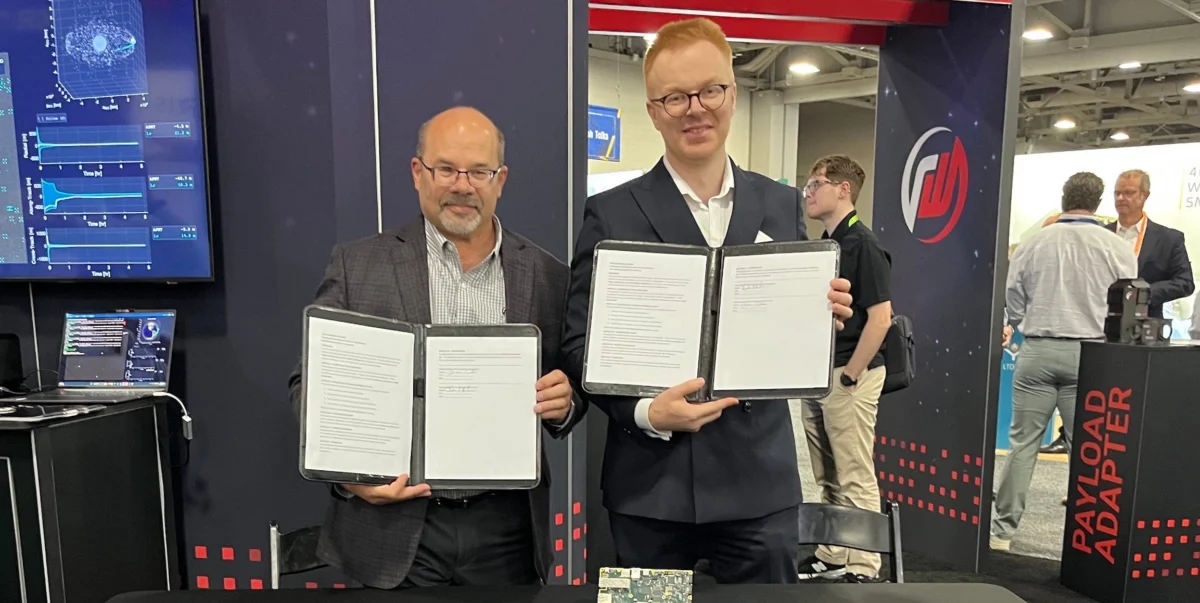
In a landmark development for airborne intelligence, surveillance, and reconnaissance (ISR) operations, ThinKom Solutions has announced that its ThinAir GT2517 Ka-band terminal has become the first airborne antenna system to receive Government Technology Certification (GTC) for operation on the SES O3b mPOWER satellite constellation.
This certification, announced on Monday, represents a significant leap forward in the integration of multi-orbit connectivity for government and defense aircraft. By successfully passing the rigorous testing protocols mandated by SES Space and Defense (SESSD), the GT2517 is now positioned to provide seamless, resilient, and high-throughput communications to specialized mission aircraft, capable of switching between Geostationary (GEO) and Non-Geostationary (NGSO) orbits with unprecedented efficiency.
The Technological Breakthrough: Bridging GEO and NGSO
The core of this achievement lies in the GT2517’s ability to leverage the unique advantages of the O3b mPOWER network. Unlike traditional satellite systems that rely solely on GEO satellites—which, while stable, often suffer from higher latency due to their distance from Earth—the O3b mPOWER constellation operates in Medium Earth Orbit (MEO). This proximity allows for significantly lower latency and higher data throughput.
The GTC process required the integration of SESSD’s terminal manager software module directly into the GT2517’s architecture. This integration allows the system to autonomously handle scheduling and resource allocation, ensuring that the aircraft remains connected to the optimal satellite path without manual intervention. Furthermore, the certification specifically covers the Type 3 configuration, which pairs the ThinKom antenna with the Hughes HM400 software-defined modem. This combination creates a robust, end-to-end communication pipeline capable of meeting the stringent security and reliability requirements of modern defense operations.
Chronology of the Certification Process
The road to this milestone was marked by months of collaborative engineering between ThinKom and the technical teams at SES Space and Defense.
- Initial Integration Phase: The project began with the architectural alignment of the GT2517’s phased-array antenna technology with the O3b mPOWER waveform. Engineers focused on ensuring that the antenna’s beam-steering capabilities could maintain lock-on during high-speed, high-maneuverability flight paths common in ISR missions.
- Software Module Implementation: The middle phase involved the implementation of the SESSD terminal manager software. This was a critical hurdle, as the software had to manage the handoff between GEO and NGSO satellites without dropping data packets or losing signal integrity.
- Testing and Validation: The certification process involved extensive field testing in simulated operational environments. This included verifying the terminal’s performance under various weather conditions and its resistance to electronic interference.
- Final Certification: With the successful completion of these trials, the Type 3 certification was officially granted, confirming that the hardware and software suite meets the defense-grade standards required for SESSD asset deployment.
Supporting Data: Why Multi-Orbit Matters
The necessity for multi-orbit connectivity in the defense sector cannot be overstated. As the geopolitical landscape grows increasingly complex, the reliance on single-orbit connectivity has become a strategic vulnerability.
Resilience Against Adversarial Interference
Adversaries are increasingly employing sophisticated electronic warfare (EW) techniques, including signal jamming and spoofing. A terminal that can only communicate via a single orbit is a "sitting duck" for such interference. The ThinAir GT2517’s ability to pivot between GEO and NGSO orbits provides a "frequency and path diversity" that makes it exponentially harder for an adversary to disrupt the mission. If a signal is jammed on one beam, the system can instantly seek an alternative path via the O3b mPOWER constellation.
Throughput and Latency
The O3b mPOWER constellation is designed to deliver fiber-like speeds to remote locations. For ISR aircraft, this is transformative. High-definition video feeds, real-time sensor data, and massive intelligence packets can be transmitted from the aircraft to command centers in near-real-time. This reduces the "sensor-to-shooter" timeline, enabling faster decision-making on the ground.
The Role of Phased-Array Technology
ThinKom’s proprietary phased-array antenna technology is central to this success. Unlike traditional parabolic dishes, which are mechanically bulky and prone to wear, ThinKom’s antennas are low-profile, solid-state, and highly aerodynamic. This makes them ideal for aircraft where drag and weight are critical factors in mission endurance.
Official Responses and Strategic Vision
Bill Milroy, the Chief Technology Officer at ThinKom, emphasized the strategic importance of this certification during his press statement.
"This latest technology certification builds upon our mission to provide government partners with the highest-performing, secure, and flexible connectivity solutions, while preventing adversarial interference," Milroy stated. "The addition of O3b mPower to the GT2517’s available GEO and NGSO connectivity options ensures that secure, resilient, multi-orbit service is readily available for the broadest range of airborne operations and missions."
The collaboration with SES Space and Defense highlights a growing trend in the defense industry: the shift toward commercial off-the-shelf (COTS) technology that has been hardened and certified for government use. By leveraging the scale and innovation of the commercial satellite industry, the defense sector can access cutting-edge technology at a fraction of the cost and time it would take to develop bespoke, government-owned systems from the ground up.
Broader Implications for the Defense Sector
The certification of the GT2517 for O3b mPOWER signals a shift in how airborne intelligence missions will be conducted over the next decade.
1. Standardization of Airborne Connectivity
With the Type 3 certification, ThinKom has set a benchmark. Other manufacturers are likely to follow suit, leading to a more standardized landscape for airborne terminals. This standardization will make it easier for defense contractors to integrate different systems across their fleets, simplifying logistics and maintenance.
2. Enhanced Mission Profiles
Aircraft that were previously limited by low-bandwidth satellite links can now be outfitted for high-data-rate missions. This expands the role of smaller, tactical aircraft, allowing them to act as mobile intelligence hubs, capable of streaming high-resolution imagery directly to theater commanders.
3. Future-Proofing Fleets
ThinKom has already announced plans for the certification of its GT1717 terminal, as well as additional modem configurations. This indicates a long-term roadmap that allows the military to upgrade its connectivity capabilities through software updates and modular hardware swaps rather than replacing entire antenna systems.
4. The "Software-Defined" Future
The integration of the Hughes HM400 modem highlights the transition toward software-defined networking in space. As satellites and terminals become more "programmable," the military gains the flexibility to adapt to new waveforms and security protocols over the air, effectively extending the lifespan of their hardware assets by years.
Conclusion
The successful certification of the ThinKom ThinAir GT2517 for SES’s O3b mPOWER constellation is more than just a technical achievement; it is a vital step forward for national security. In an era where data is the most valuable commodity on the battlefield, the ability to maintain secure, high-speed, and resilient connectivity across multiple orbital layers is non-negotiable.
As ThinKom looks toward the future, including the upcoming certification of its GT1717 model, the industry will be watching closely. The synergy between ThinKom’s aerodynamic antenna technology and the massive data throughput of the O3b mPOWER network promises to redefine the operational capabilities of the global defense aviation fleet. By bridging the gap between commercial innovation and defense requirements, this partnership ensures that mission-critical aircraft remain connected, secure, and capable in the most challenging environments on Earth.