It remains a point of curious speculation whether a young Christopher Nolan, growing up in the formative era of the 1980s, ever found himself glued to the television set watching the adventures of a space-faring hero trapped in a cosmic Odyssey. While there is no definitive record of the director’s childhood viewing habits, the thematic parallels between Homer’s ancient epic and the French-Japanese animated co-production Ulysses 31 offer a fascinating case study in how classical mythology can be repurposed for the high-concept science fiction genre.
Forty-five years after its debut, Ulysses 31 stands as a monumental, if slightly surreal, cultural artifact. It was a bold attempt to distill the essence of the Odyssey into a space opera format, predating the Coen Brothers’ Southern-fried adaptation O Brother, Where Art Thou? by nearly two decades. For a generation of children in the 1980s, the series served as an unconventional, laser-blasting crash course in Greek mythology, blending the majesty of the ancients with the aesthetic sensibilities of the Star Wars era.
The Core Premise: A Mythic Blueprint in Deep Space
At its heart, Ulysses 31 maintains the structural spine of Homer’s original narrative, albeit through a funhouse mirror of futuristic technology. The hero, Ulysses, is a captain attempting to navigate his way back to his wife, Penelope, after a grueling campaign at a starbase known as Troy. His homecoming is violently interrupted when his son, Telemachus, is kidnapped to be offered as a sacrifice to a colossal, sentient robot Cyclops.
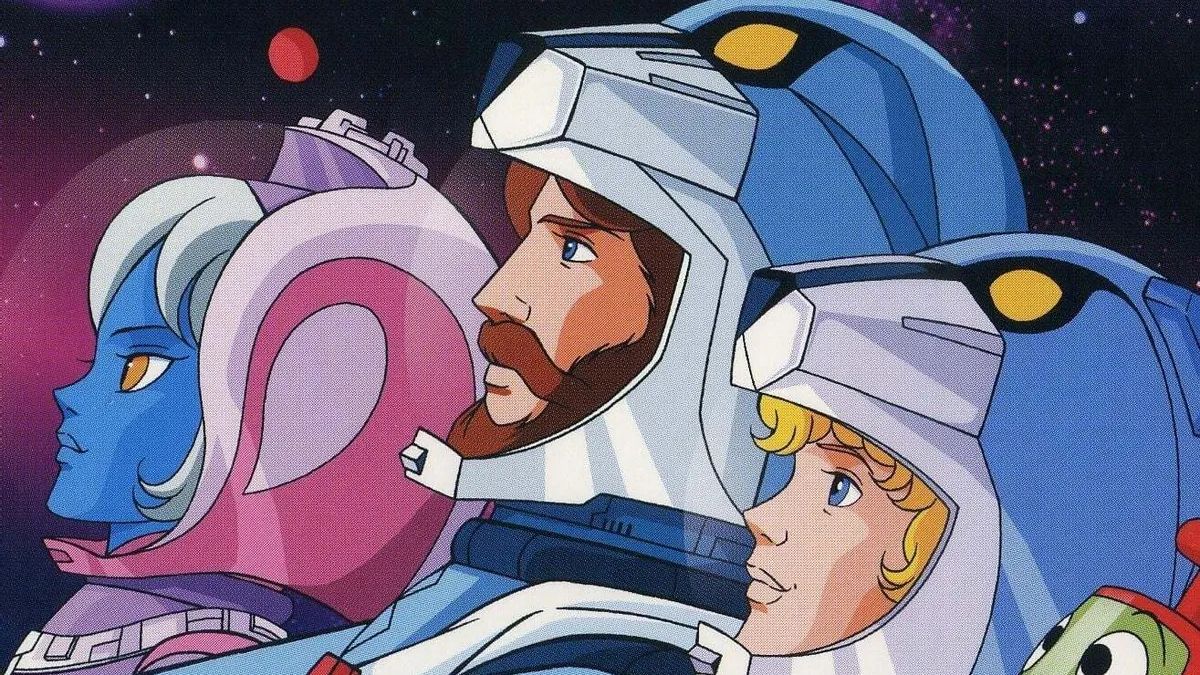
In a sequence that would set the tone for the entire series, Ulysses takes decisive action, destroying the mechanical beast to rescue his son, along with two blue-skinned alien refugees, Yumi and Numinor—a pair of Zotrians who, it is safe to assume, do not appear in the original Homeric texts.
The tragedy, however, is that this Cyclops was under the divine protection of Poseidon, the Olympian god of the sea who has, in this narrative, established his dominion over the cosmic reaches. Enraged by the mortal’s defiance, Poseidon appeals to Zeus, the "head honcho" of Mount Olympus, to inflict a divine curse. The result is a brutal sentence: Ulysses’ ship, the Odyssey, has its navigation systems wiped, and his loyal crew—or "companions," as they are referred to in an early nod to modern corporate terminology—are cast into a state of perpetual, suspended animation. To break the curse and return home, Ulysses must locate the mythical Kingdom of Hades before his 26-episode journey reaches its conclusion.
Chronology and Production Context
Ulysses 31 was a landmark collaboration between DIC Audiovisuel (France) and Tokyo Movie Shinsha (Japan). While it found its way onto British and American television screens in the mid-1980s, the series was originally produced in 1981. It was a product of a specific moment in animation history—a bridge between the hand-drawn, cel-shaded artistry of the 70s and the increasingly commercialized, toy-driven aesthetics of the late 80s.
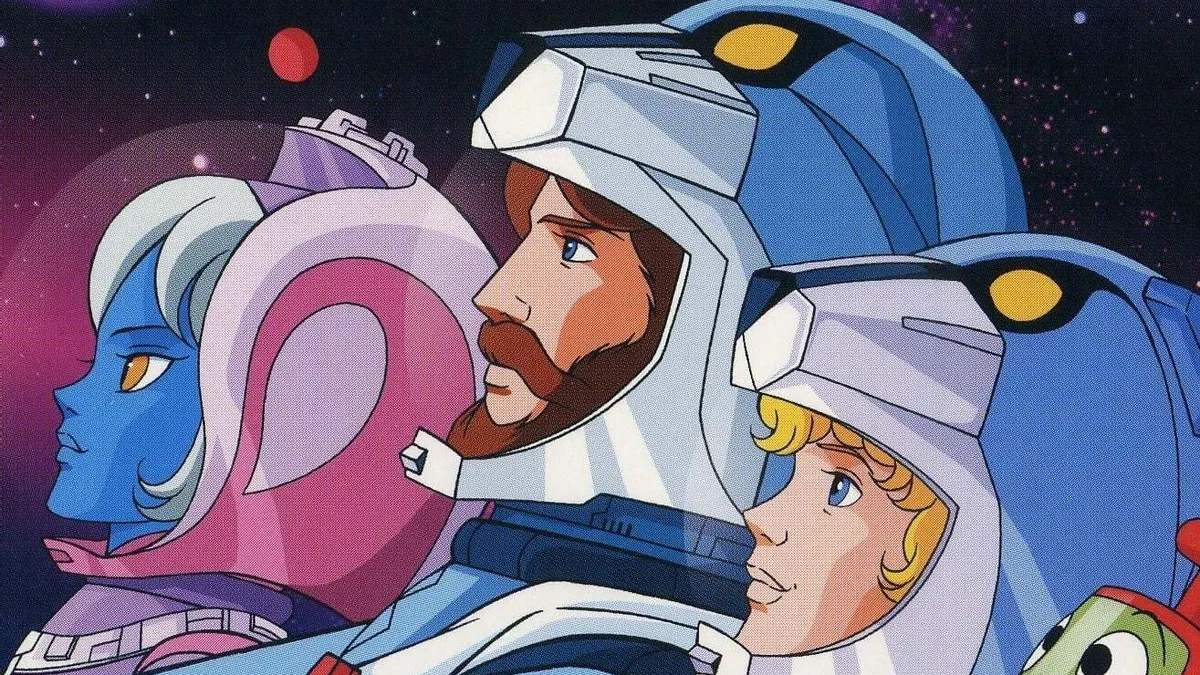
The production timeline saw the series attempting to bridge the gap between European artistic sensibilities and the high-octane action sequences that had become the hallmark of Japanese anime. This cross-pollination resulted in a show that felt entirely distinct from its contemporaries. Unlike the static, moralistic narratives of Masters of the Universe or He-Man, Ulysses 31 operated on a level of existential dread. The good guys were not guaranteed a victory; the environment was often hostile; and the stakes—the lives of his companions and his son—were consistently perilous.
Supporting Data: Mythology Meets Modernity
The series is not merely an adaptation; it is a "greatest hits" compilation of classical lore filtered through a science-fiction lens. The showrunners were clearly well-versed in the source material, as evidenced by the recurring appearances of iconic figures:
- The Sirens and Lotus Eaters: These are directly translated from Homer’s original, serving as moral and physical traps in the cosmic void.
- Sisyphus: Reimagined as a man trapped in a loop of eternal, repetitive labor, reflecting his original Greek punishment.
- Orpheus: Featured on a journey to the underworld, though here the descent into Hades is depicted as a cosmic voyage.
- Cerberus: Transformed from a three-headed dog into a sophisticated, three-headed interceptor satellite.
Furthermore, the naming conventions pay constant homage to the source. Priam serves as the commander of the Troy starbase; Nestor acts as a trusted advisor; and the ship’s onboard computer, Shirka, derives her name from the sorceress Circe.
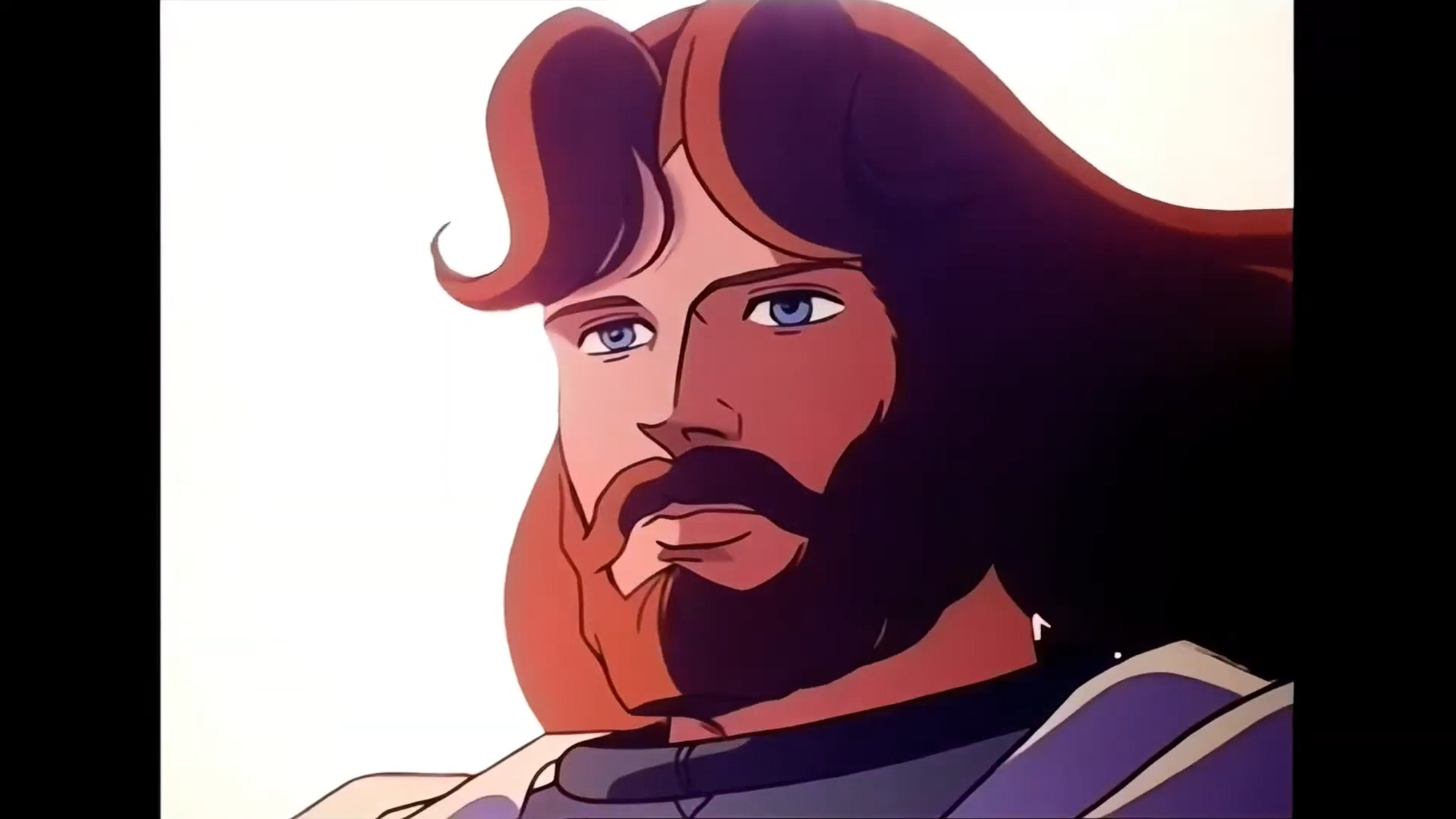
However, the creative team took significant liberties to ensure the show functioned as a coherent serialized drama. Telemachus, for instance, is a constant companion to his father rather than the distant figure found in the poem. The "suspended animation" of the crew acts as a narrative device to keep the ship’s interior focused on the core family unit of Ulysses, Telemachus, and Yumi. In one particularly ambitious episode, the show even features a time-travel narrative where the 31st-century Ulysses meets his ancient namesake, blurring the lines between the two eras.
The Aesthetic and the Uncanny
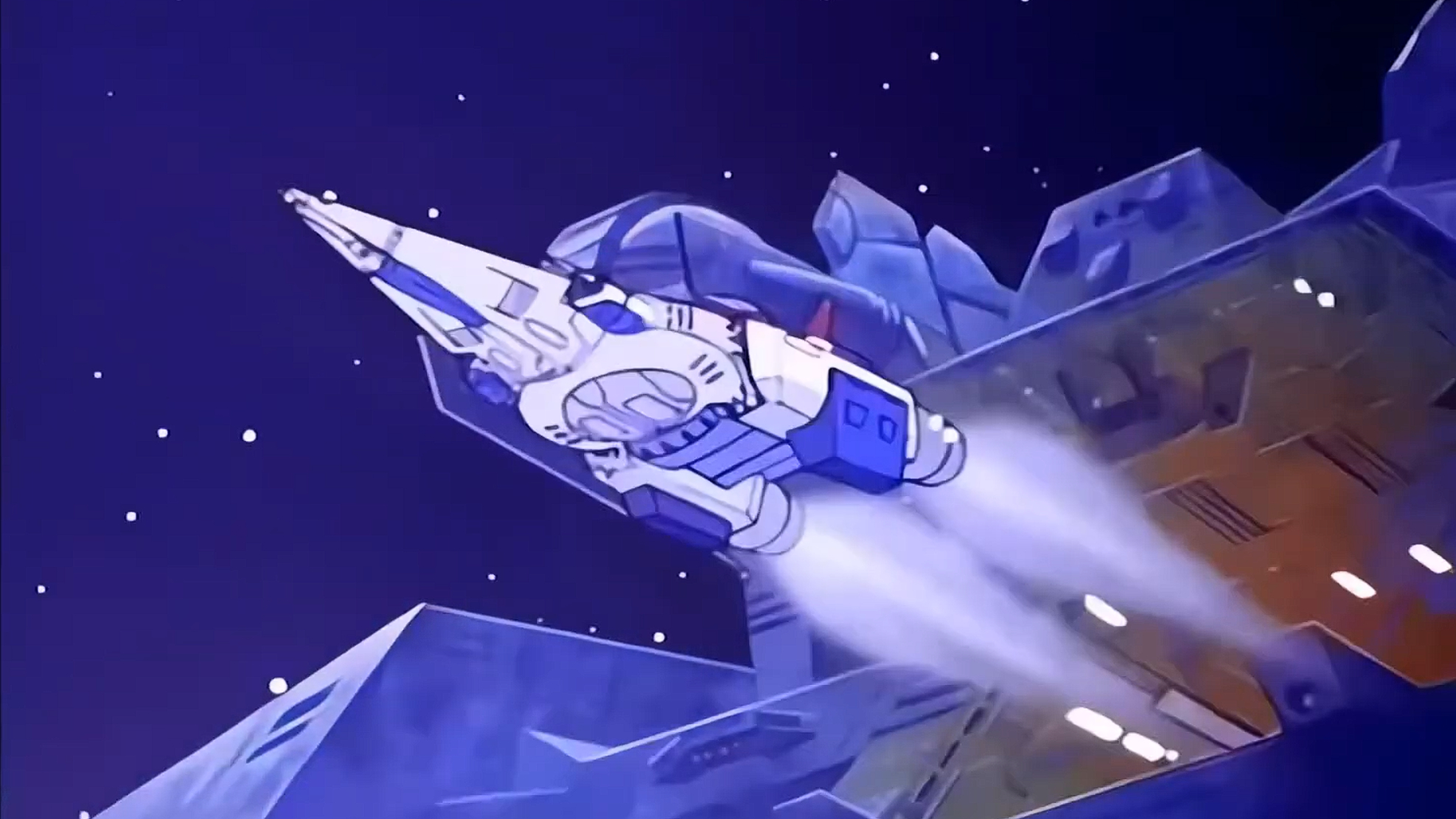
For modern viewers, Ulysses 31 shows its age. The animation, by contemporary standards, is rudimentary. Space battles often consist of a static cutout of the Odyssey sliding across a starry backdrop. The dialogue, which is played with an intensity that borders on the operatic, relies heavily on characters shouting one another’s names in the heat of battle—a trope that has become a nostalgic hallmark for fans of the show.
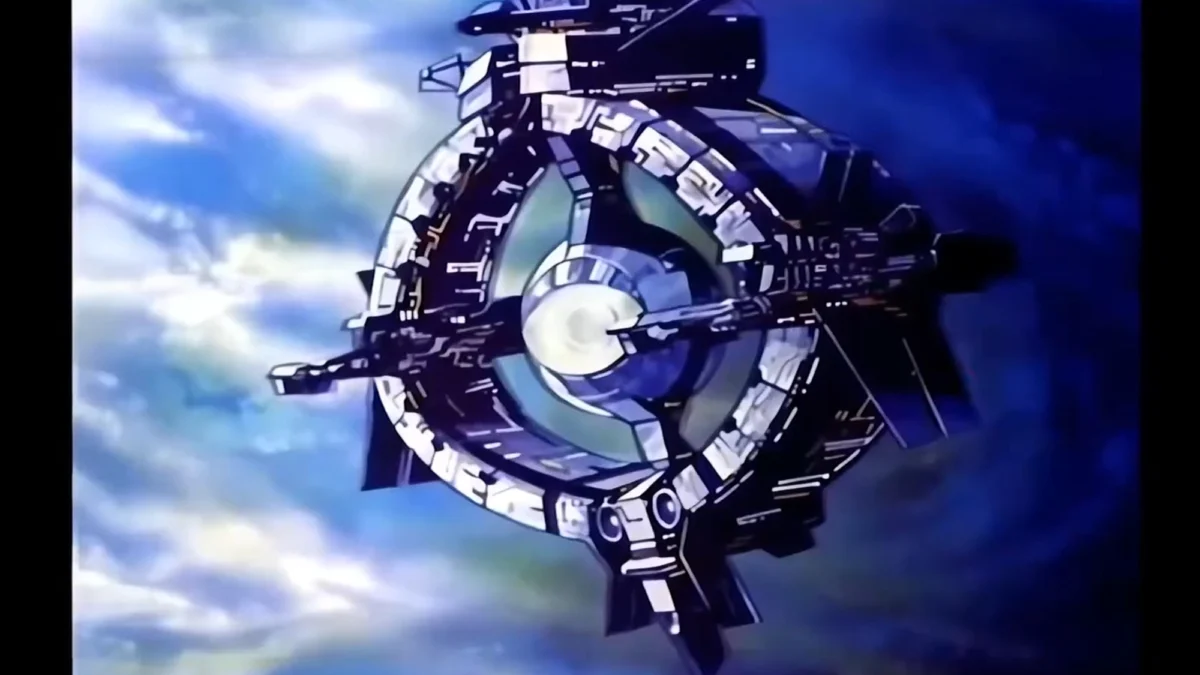
Yet, there is an undeniably striking quality to the art direction. The spaceship designs possess a retro-futuristic elegance, particularly the eye-shaped Odyssey, which feels plucked from a 1970s sci-fi paperback cover. The influence of Star Wars is omnipresent, from the lightsaber-esque laser weapons to the incidental music, which occasionally mirrors the bombastic orchestral sweeps of John Williams.
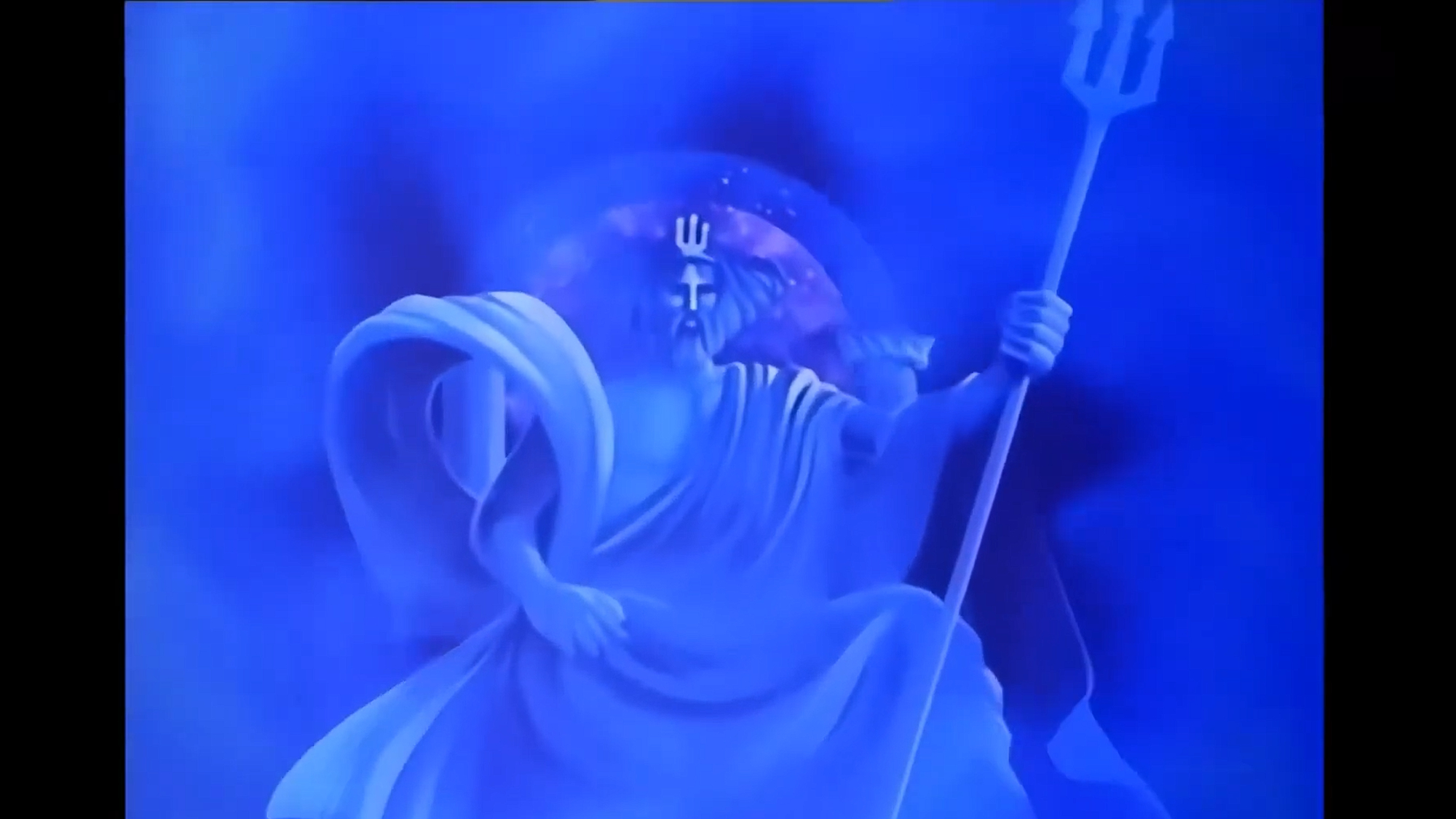
The show also holds a surprisingly dark edge. The images of the crew members floating in the cargo hold, suspended in a frozen, death-like state, provided many young viewers with their first taste of "the uncanny." The gods themselves are portrayed not as benevolent deities, but as capricious, bored, and dangerous entities who view the suffering of humans as a form of cosmic spectator sport. This portrayal captures the cynical, often cruel nature of the Greek pantheon more effectively than many live-action adaptations of the same period.
The Sound of the Gods: A Legacy of Music
Perhaps the most enduring element of Ulysses 31 is its soundtrack. Composed by Denny Crockett and Ike Egan, with contributions from the legendary duo of Shuki Levy and Haim Saban, the music elevated the series far beyond its budget. Levy and Saban, who would later become titans of children’s television, injected the series with a sense of urgency and haunting melancholy. The refrain of "The Curse of the Gods" remains a masterclass in tension, perfectly capturing the portentous nature of the protagonists’ plight.
Then, of course, there is the theme song. For those who grew up in the 80s, the mere mention of the name "Ulysses" is enough to trigger the infectious, synthesizer-heavy chorus: "Ulysee-ee-ee-ee-ees!" It is an earworm of the highest order, a sonic monument that has survived long after the show’s original broadcast run.
Implications for Modern Sci-Fi
The legacy of Ulysses 31 is a testament to the versatility of classical mythology. It demonstrates that the structures of ancient epics are robust enough to withstand any setting, whether it be the wine-dark seas of the Mediterranean or the cold vacuum of deep space.
While the show is not currently featured on major streaming platforms, its cult status remains unassailable. It sits in the annals of television history as an experiment that succeeded because it took its premise seriously. It did not talk down to its audience; it introduced them to the concepts of hubris, divine wrath, and the longing for home, all while delivering the high-concept thrills of a space opera.
In an era where reboots and reimaginings are the standard, Ulysses 31 serves as a reminder that the best adaptations don’t just copy the source—they recontextualize it. It remains a strange, beautiful, and occasionally terrifying relic of a bygone age, proving that even after four decades, the journey home is a story that never truly loses its resonance. Whether or not Christopher Nolan was watching, the spirit of the Odyssey in the 31st century clearly left its mark on the collective imagination of a generation.