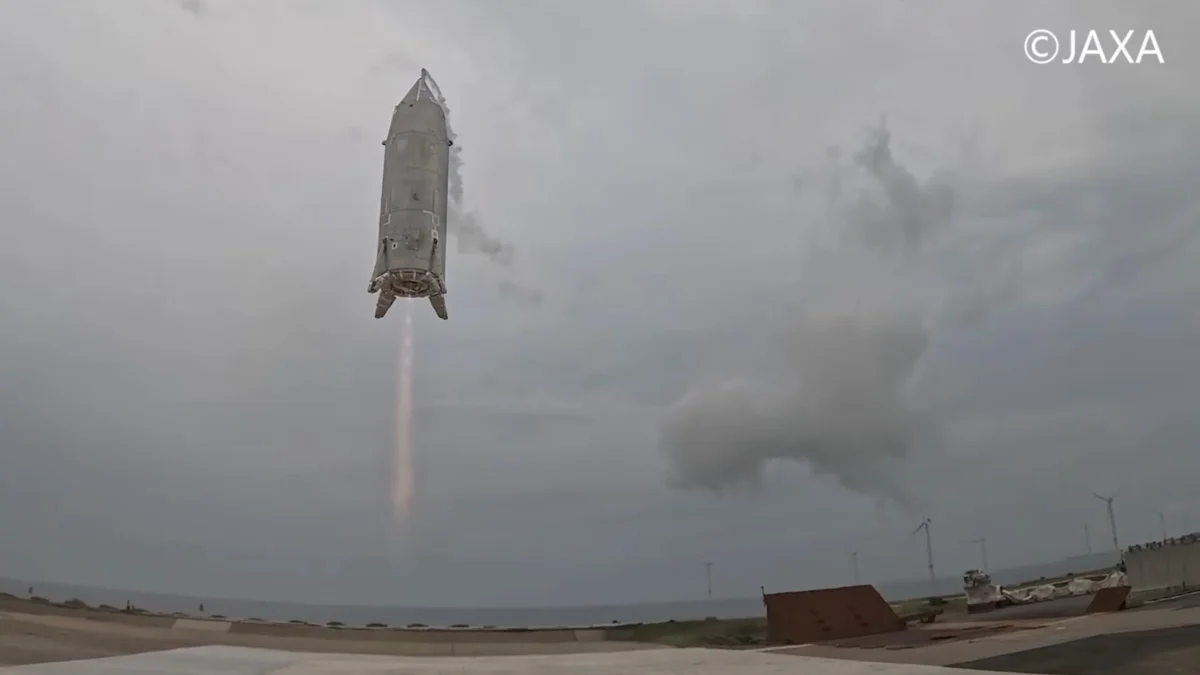
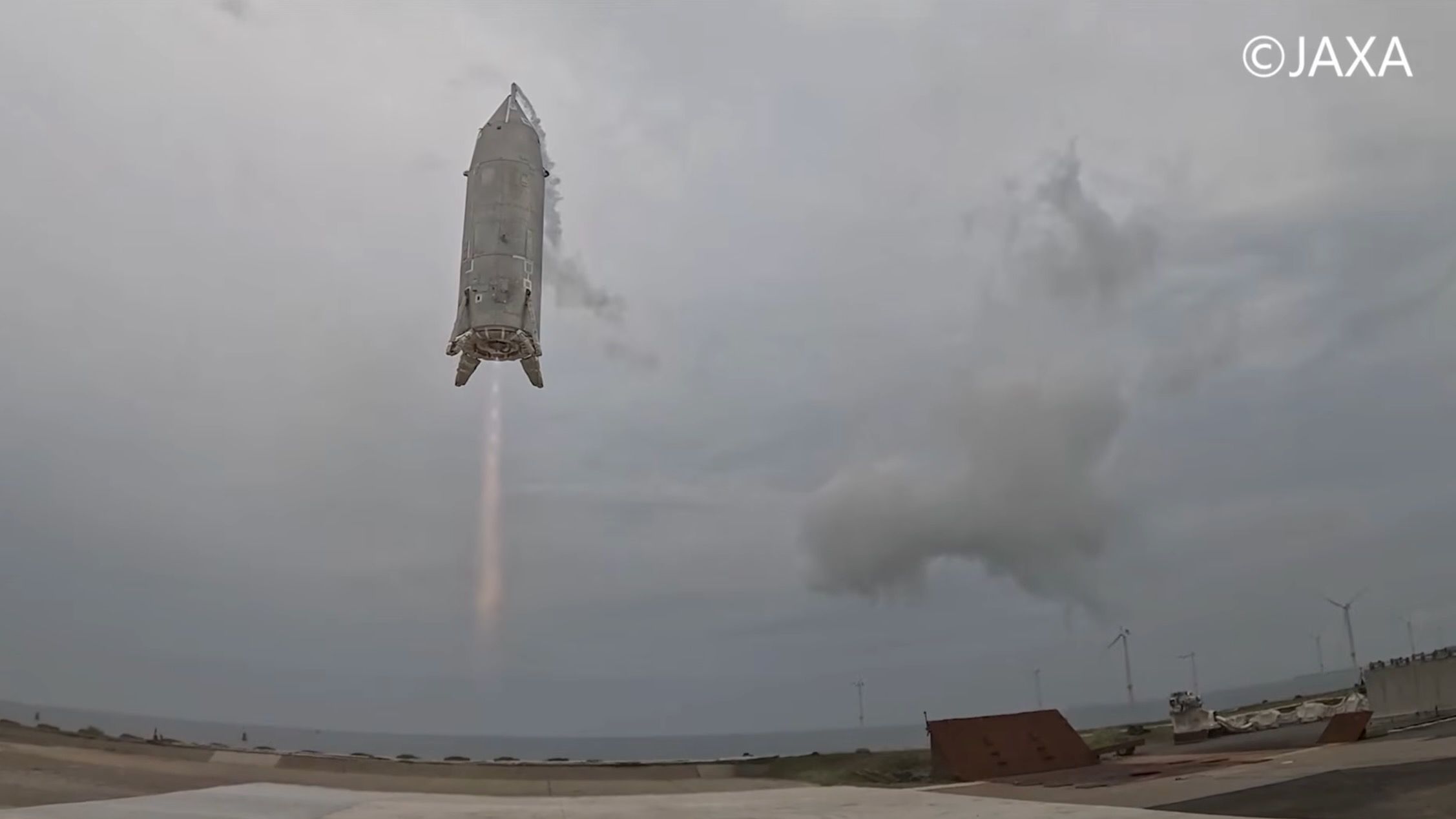
In a significant milestone for Japan’s aerospace ambitions, the Japan Aerospace Exploration Agency (JAXA) has successfully conducted the maiden flight test of its RV-X experimental reusable rocket prototype. The test, performed on July 11, 2026, at the agency’s Noshiro test facility, represents a pivotal step in Japan’s endeavor to secure a foothold in the competitive, cost-driven landscape of modern spaceflight.
While the "hop"—as it is technically classified—lasted a mere 40 seconds, its implications for the future of Japanese space infrastructure are profound. The 24-foot-tall (7.3 meters) vehicle demonstrated the critical vertical takeoff and landing (VTOL) capabilities that have become the gold standard for global launch providers. By mastering the ability to launch, maneuver, and land a vehicle with precision, JAXA is signaling its intent to move beyond the era of expendable launch vehicles and into a new chapter of orbital efficiency.
The Chronology of the "Hop"
The test flight, held at the dedicated JAXA facility in Noshiro, was a masterclass in controlled execution. Shortly after ignition, the single-engine prototype rose to an altitude of just over 33 feet (10 meters). Rather than performing a simple vertical ascent and descent, the vehicle executed a controlled lateral transition, traveling approximately 50 feet (15 meters) horizontally across the concrete pad.
The vehicle then performed a soft landing on the side of the pad opposite its liftoff point, completing the sequence exactly as flight engineers had modeled in simulations. For JAXA, this "hop" was not merely a proof-of-concept for the rocket itself, but a vital exercise in testing ground-based operational procedures. These include the complexities of launch pad setup, fuel management, vehicle recovery, and the rapid post-flight inspections necessary for rapid turnaround times—a core requirement for any truly reusable rocket system.
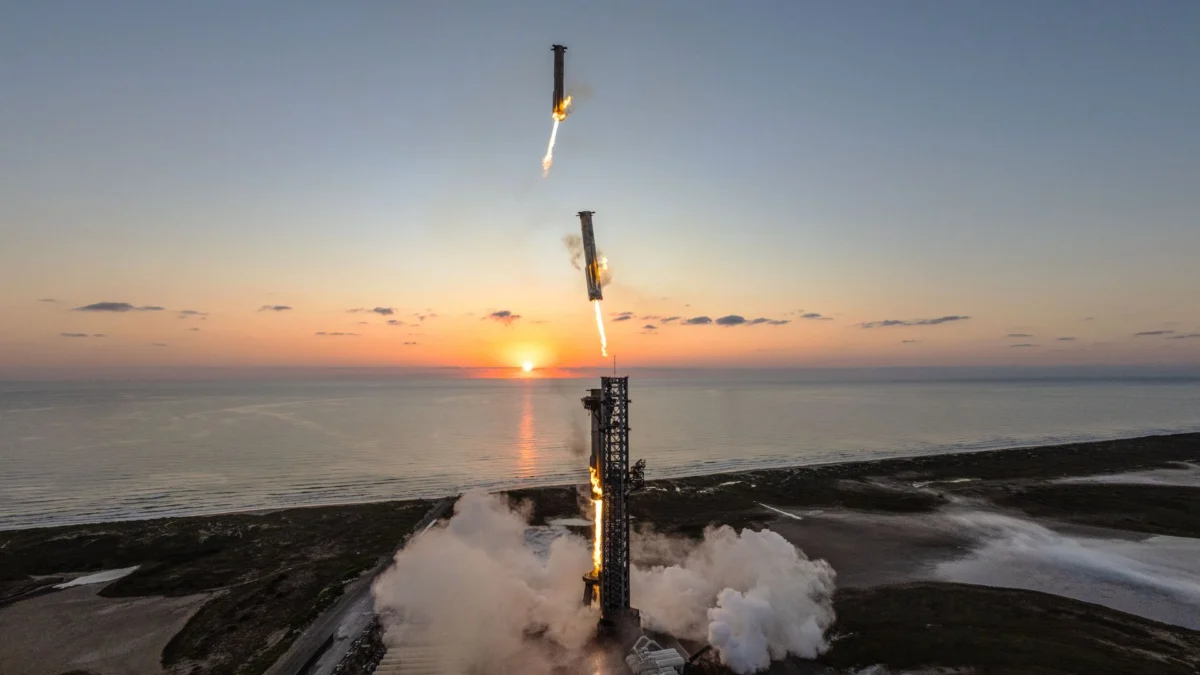
This successful test mirrors the early, iterative development cycles seen in other major space programs. Specifically, it invites comparisons to the early days of SpaceX’s Starship development, where the "Starhopper" vehicle famously performed similar low-altitude hops in 2019 at the Starbase facility in South Texas. Like Starhopper, the RV-X serves as a "pathfinder," a rugged, simplified vessel designed to iron out the fundamental physics of flight before more complex, orbital-class hardware is introduced.
Supporting Data and Technical Context
The RV-X prototype is not an isolated experiment. It is a precursor to the CALLISTO (Cooperative Action Leading to Launcher Innovation in Stage Toss-back Operations) project. CALLISTO is a multinational collaborative venture between JAXA, France’s National Centre for Space Studies (CNES), and the German Aerospace Center (DLR).
The primary objective of the CALLISTO program is to develop a single-stage rocket that can be launched, landed, refurbished, and flown again—a capability currently dominated by a small, elite group of private and state-backed entities. The list of organizations that have achieved such feats includes SpaceX (Falcon 9, Falcon Heavy, and Starship), Blue Origin (New Glenn), and, most recently, the China National Space Administration with its Long March 10B.
For JAXA, the technological gap is a matter of both national pride and economic necessity. Japan’s current heavy-lift workhorse, the H3 rocket, debuted in 2023. While the H3 is a significant improvement over its predecessor, the H-2A, in terms of performance and per-kilogram launch costs, it remains an expendable system. In an industry where the reusability of the first stage has slashed the price of reaching Low Earth Orbit (LEO) by nearly an order of magnitude, the H3—despite its recent successes following early setbacks—is inherently limited by its reliance on single-use hardware.
The RV-X is designed to bridge this gap. By utilizing a single-engine configuration, engineers are focusing on the most difficult aspect of rocket recovery: the precision thrust vector control required to return a vehicle to a specific landing target after a high-velocity descent.
Official Perspectives: The Path to Operational Feasibility
JAXA has been transparent about the philosophy driving the RV-X program. On the agency’s official research portal, the focus is placed squarely on "operational feasibility."
"Reusable rockets require consideration of operational feasibility," the agency notes in its project overview. "By repeatedly verifying maintenance, operation, vehicle movement, and launch pad setup using an actual experimental vehicle in preparation for flight tests, we were able to establish operational procedures that will contribute to the repeated operation of future rockets."
This statement highlights a shift in the aerospace industry’s thinking. It is no longer enough to land a rocket; the process must be scalable. The logistical "ballet" of clearing a launch pad, inspecting engine nozzles for thermal degradation, and refilling propellant tanks in a timely manner is where the real economic value of reusability is captured. By using the RV-X to refine these "ground-side" operations, JAXA is effectively building the organizational muscle memory required to manage a fleet of reusable vehicles.
Mitsubishi Heavy Industries (MHI), a long-time partner of JAXA and the primary industrial contractor for the H3, is working closely with the agency on the RV-X. This partnership ensures that the lessons learned from the prototype will be seamlessly integrated into the design requirements for the next generation of Japanese launch vehicles.
Strategic Implications for the Future of Japanese Spaceflight
The success of the July 11 test sets the stage for a rapid escalation in the program’s scope. Following the 33-foot (10 m) hop, JAXA’s development team is already looking toward higher-altitude flight tests. The next iteration of the RV-X test series is expected to reach altitudes of up to 330 feet (100 m). These subsequent flights will involve more complex lateral maneuvers and longer durations, pushing the flight-control algorithms to their limits.
The Economic Imperative
The global space economy is moving toward a model of high-frequency, low-cost access. If Japan is to remain a major player in the launch services market, it cannot rely solely on the H3. The H3 is a fine instrument for government and scientific missions, but in the commercial sector—where satellite constellations require constant replenishment and logistical flexibility—the "throwaway" rocket model is increasingly viewed as a liability.
Technological Sovereignty
By developing its own reusable technology, Japan is also securing its technological sovereignty. Relying on foreign launch providers or being left behind by the reusability revolution would compromise Japan’s ability to conduct independent deep-space exploration and national security missions. The CALLISTO partnership with European counterparts (CNES and DLR) further underscores that Japan is not acting in a vacuum, but is instead positioning itself as a central node in an international network of space-faring nations.
The Long-Term Vision
As the RV-X program progresses, the data gathered will feed directly into the design of larger, orbital-class reusable vehicles. While it is too early to predict when a fully reusable Japanese orbital rocket will reach the launch pad, the trajectory is clear. The "hopper" phase of development is a rite of passage for any space agency seeking to master the physics of return.
By taking this small, 33-foot jump, JAXA has essentially cleared the first hurdle on a path that could eventually see Japanese rockets landing vertically on pads at Tanegashima, mirroring the spectacle of SpaceX landings at Cape Canaveral. The path forward remains long and will undoubtedly be filled with the same challenges that have plagued every major rocket developer in history. However, for a nation that has spent decades perfecting the precision and reliability of its expendable rockets, this pivot toward the reusable future marks a new, ambitious, and necessary era for the Japan Aerospace Exploration Agency.