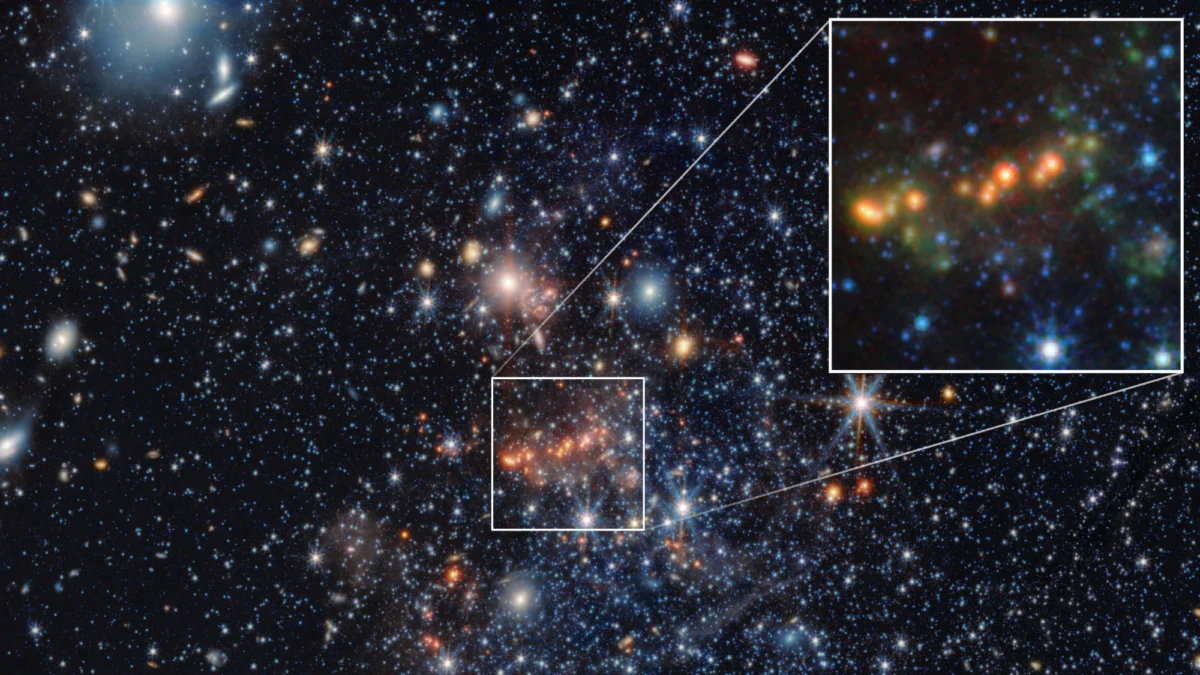
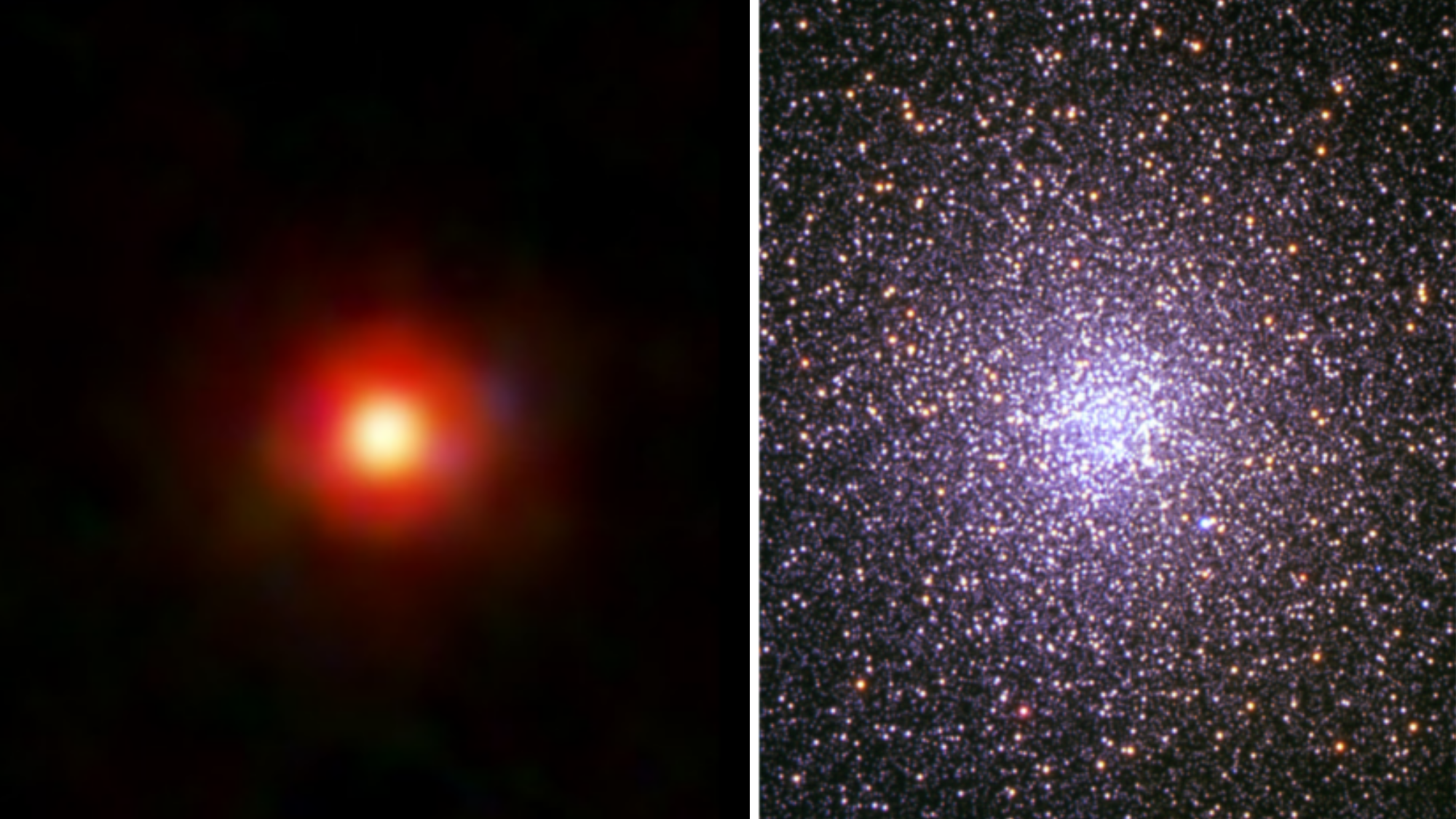
In the vast, unfolding narrative of our universe, few mysteries have captured the attention of astrophysicists quite like the "Little Red Dots." First identified in 2022 by the James Webb Space Telescope (JWST), these compact, crimson-hued anomalies appeared in the deep-field images of the early universe—roughly 600 million years after the Big Bang. Initially, their existence posed a direct challenge to established models of galaxy formation, as their light profiles suggested they were either unexpectedly massive galaxies or hosts to incredibly hungry black holes.
However, a groundbreaking new theory proposed by a team of researchers from the University of Texas at Austin suggests that these objects are neither simple galaxies nor isolated black holes. Instead, they may be the embryonic, high-energy precursors to one of the most familiar structures in the modern cosmos: the globular cluster.
This hypothesis, currently circulating as a pre-print study, draws a compelling parallel to evolutionary biology. Just as paleontologists eventually realized that the dinosaurs did not vanish but rather evolved into the avian species we see today, astronomers are beginning to suspect that these "cosmic dinosaurs" underwent a dramatic transformation, maturing into the dense, sparkling spheres of ancient stars that orbit within galaxies like our own Milky Way.
The Mystery of the Little Red Dots: A Chronological Puzzle
To understand the gravity of this discovery, one must look at the timeline of the early universe. When the JWST first peered into the "Cosmic Dawn," it revealed a bustling environment that defied expectations. The Little Red Dots (LRDs) were everywhere, appearing in high abundance within that critical 600-million-year window.
The Temporal Discrepancy
The primary source of confusion for the scientific community was the "disappearing act" performed by these objects. By the time the universe had aged to approximately 2 billion years, these distinct red, point-like sources were nowhere to be found. If they were standard galaxies, where did they go?
The prevailing theories had been divided into two camps:
- The Active Galactic Nuclei (AGN) Hypothesis: The LRDs were early black holes obscured by massive amounts of gas and dust.
- The "Black Hole Star" Model: A more exotic theory suggesting that these objects were fueled by "supermassive stars"—theoretical giants that exist only in the most extreme, dense environments.
As researchers analyzed the infrared data from the JWST, it became clear that the LRDs possessed a specific signature: high-energy emissions that suggested intense nuclear activity. Yet, the lack of traditional galactic features—like spiral arms or disk structures—kept them shrouded in mystery.
Supporting Data: Connecting the Dots through Chemistry
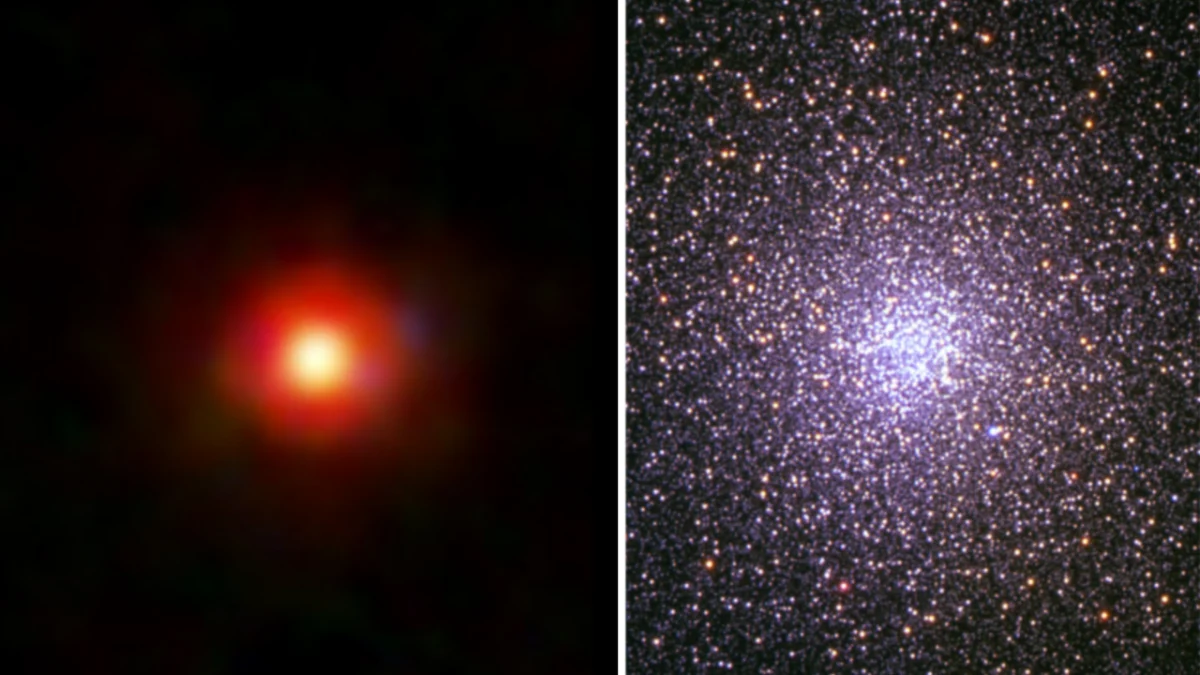
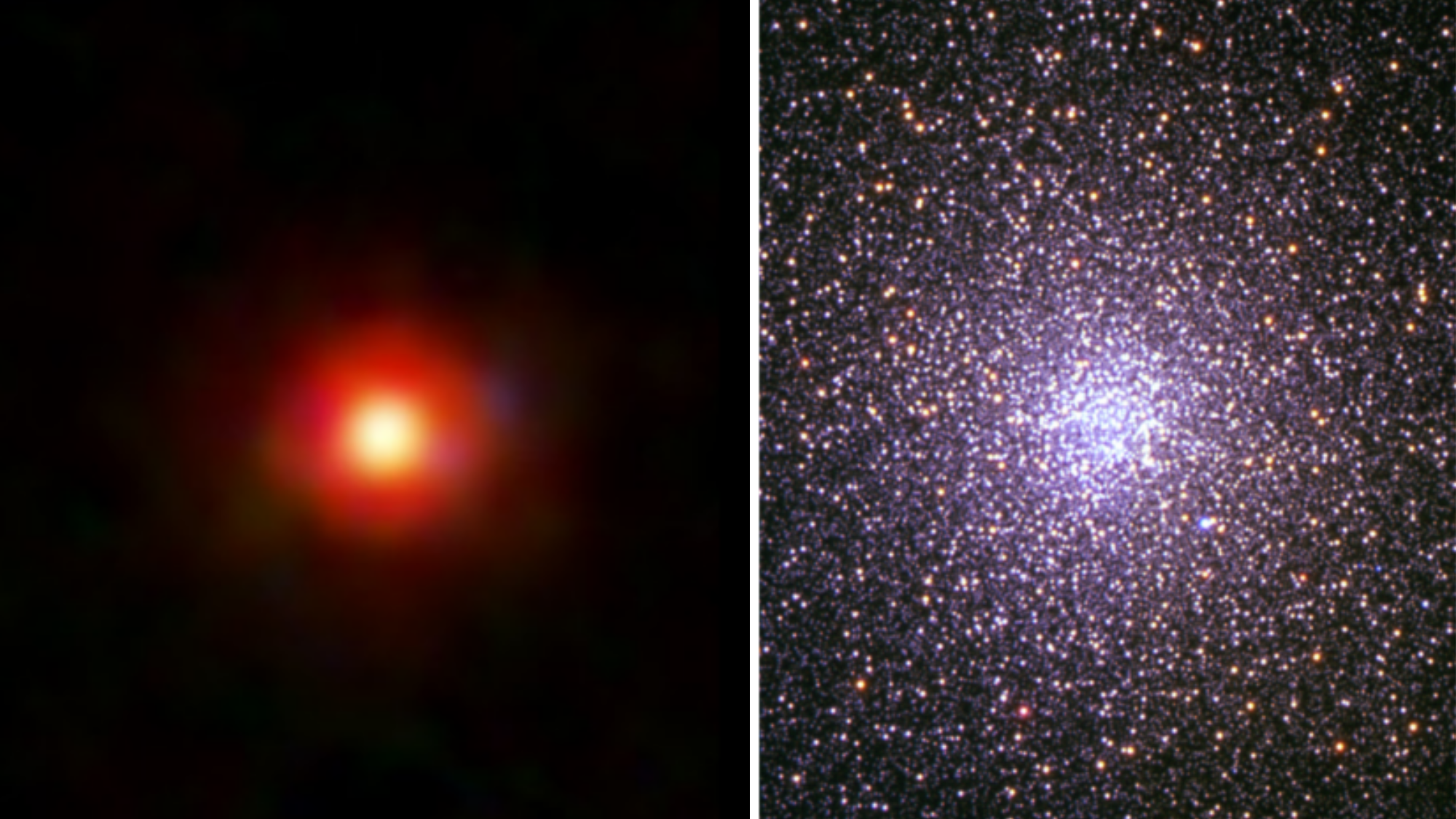
The core of the new research, led by John Chisholm, rests on a fundamental curiosity about globular clusters. A globular cluster is a spherical collection of hundreds of thousands, or even millions, of stars, all bound tightly by gravity. Our own Milky Way is home to at least 150 of these relics.
The Chemical "Fingerprint"
For decades, astronomers have struggled to explain the chemical composition of stars within these clusters. Standard models of stellar evolution suggest that all stars in a cluster should share the same elemental birth certificate. However, globular clusters exhibit a "peculiar chemistry": they are unusually rich in helium, nitrogen, sodium, and aluminum, while being conspicuously deficient in carbon, oxygen, and magnesium.
"This specific pattern indicates nuclear fusion at very high temperatures, much higher than in the cores of even massive normal stars," explains team member Mike Boylan-Kolchin. "A supermassive star is precisely the kind of environment that could produce this combination."
The hypothesis posits that the LRDs were not just clumps of stars, but the cradles where these supermassive stars were born. In the high-density environment of an early, forming globular cluster, stellar collisions would occur at a rapid frequency. These mergers would feed a central "supermassive star," a behemoth with a mass ranging from 1,000 to 10,000 times that of our sun.
Because these supermassive stars are incredibly short-lived—burning through their fuel in a mere million years—they would have acted as cosmic factories. They would fuse elements at extreme temperatures before detonating in massive supernova explosions. This process would enrich the surrounding gas with the very chemical signatures we observe in modern globular clusters today.
Official Responses and Theoretical Implications
The team at the University of Texas at Austin has been careful to present their findings as a potential solution to multiple astronomical puzzles simultaneously.
Bridging the Gap
"These may not be just a strange new JWST population with no connection to the universe around us today," said team leader John Chisholm. "Instead, Little Red Dots may persist past the early universe, evolving into something relatively familiar."
The implications of this research are profound. If LRDs are indeed the progenitors of globular clusters, it provides a unified explanation for two distinct phenomena:
- The Population Problem: It explains why LRDs appear in such high numbers in the early universe and why they seem to "vanish." They don’t disappear; they evolve. Once the supermassive star dies and the initial burst of star formation subsides, the object becomes a stable, long-lived globular cluster, which is far less luminous and harder to distinguish at vast cosmic distances.
- The Structural Problem: It explains how the mass of the LRDs aligns with the observed mass of globular clusters today. The mathematical models run by the team suggest that the density and distribution of LRDs in the early universe are a perfect match for the spatial distribution of globular clusters in the modern era.
Implications for Modern Astrophysics
If confirmed, this discovery would represent a significant milestone in our understanding of stellar dynamics. It shifts the perspective on how the universe "ages." We often view galaxies as the primary building blocks of the cosmos, but this theory highlights the importance of sub-galactic structures—the globular clusters—as essential participants in the cosmic story.
Why It Matters
- Redefining Galactic Evolution: If globular clusters have such violent, supermassive origins, it forces a rethink of how galaxies aggregate their mass over time.
- Validating Supermassive Star Theory: While supermassive stars have been a theoretical construct for years, the LRDs provide the first observational evidence that such entities could have existed in the early universe.
- The Search for "Smoking Guns": While the team admits there is no single "smoking gun" yet, the correlation between the chemical anomalies of old clusters and the light signatures of the young LRDs is, as Mike Boylan-Kolchin notes, an explanation for "a lot of diverse and surprising observations."
Future Research
The next phase of investigation will likely involve deeper, more targeted observations with the JWST, looking for the intermediate stages of these objects. Astronomers will be searching for "middle-aged" clusters that have shed their supermassive stars but have not yet fully settled into the stable, ancient clusters we recognize.
Furthermore, computational simulations will be refined to see if the lifecycle of a supermassive star, followed by a period of cooling and star-formation maturation, can fully replicate the complex light-curve data observed by the JWST.

Conclusion: The Cosmic Cycle
The transformation of Little Red Dots into globular clusters suggests that the universe is far more efficient and interconnected than we previously imagined. The "cosmic dinosaurs" of the early universe did not simply fade into the darkness of space; they left behind a legacy.
By burning bright, living fast, and dying young, those first supermassive stars seeded the cosmos with the necessary elements to create the stable, long-lived star systems that define our galaxy today. As we continue to decipher the data flowing back from the JWST, we are not just looking at the past—we are uncovering the ancestral lineage of the stars that shine above us tonight.
The mystery of the Little Red Dots may be the key to understanding how the universe transitioned from a chaotic, high-energy environment into the structured, stable cosmos we inhabit. For now, the scientific community waits for the peer-review process to conclude, but the evidence is mounting: the secrets of the early universe are not hidden in the dark, but are instead disguised as the very things we have been looking at all along.