On crisp September evenings, as the sun dips below the horizon and the heat of the day dissipates into the cooling air, a familiar sight greets the observer looking toward the zenith. While the changing foliage and earlier sunsets serve as a visceral reminder that the seasons are shifting, the night sky remains stubbornly anchored by a trio of brilliant luminaries: Vega, Altair, and Deneb. Collectively known as the "Summer Triangle," this celestial asterism commands the overhead darkness with an authority that seems to defy the calendar. Even as mid-November approaches, the pattern remains prominent, hanging high in the heavens long after the summer solstice has faded into memory. This persistence raises a compelling question that has long puzzled casual stargazers and professional astronomers alike: if this brilliant landmark remains a fixture of our autumn nights, why does it remain tethered to the moniker of "Summer"?
The Mechanics of a Seasonal Misnomer
The designation "Summer Triangle" is not merely a poetic flourish; it is rooted in the practical mechanics of the night sky’s seasonal rotation. To understand why we categorize it as a summer feature, one must observe how the pattern traverses the heavens during the peak of the warmer months.
During the height of summer, the Triangle is a constant companion from dusk until dawn. At nightfall, it emerges in the east-northeast; by the middle of the night, it reaches its apex near the zenith; and as the first light of day begins to break, it can be seen descending toward the west-northwest horizon. It is this "all-night" visibility that defines its relationship with the summer season.
As we drift into autumn, the geometry shifts. While the Triangle remains visible for a significant portion of the evening, it begins its descent much earlier in the night. By the time the cold winds of winter truly set in, the Triangle is found hugging the horizon at dusk before slipping away into the sunset, eventually disappearing until the cycle resets in the following spring. Thus, the name serves as a functional reminder of the period when the stars are at their most omnipresent, rather than a rigid rule regarding their total disappearance.
A Study in Cosmic Disparity: Distance and Luminosity
While the Summer Triangle appears as a cohesive geometric unit to the human eye, it is an optical illusion born of perspective. The three stars that form its vertices—Vega, Altair, and Deneb—share little in common in terms of their physical reality, existing at wildly different distances from Earth and possessing vastly different intrinsic luminosities.
The closest of the three is Altair, situated a mere 16.7 light-years from our solar system. Following closely behind is Vega, located approximately 25 light-years away. These two stars are relatively nearby neighbors in the galactic neighborhood. Deneb, however, exists in an entirely different league of scale. It is estimated to be between 1,400 and 2,600 light-years away. The light we observe from Deneb tonight began its journey toward Earth when the Roman Empire was still a burgeoning power.
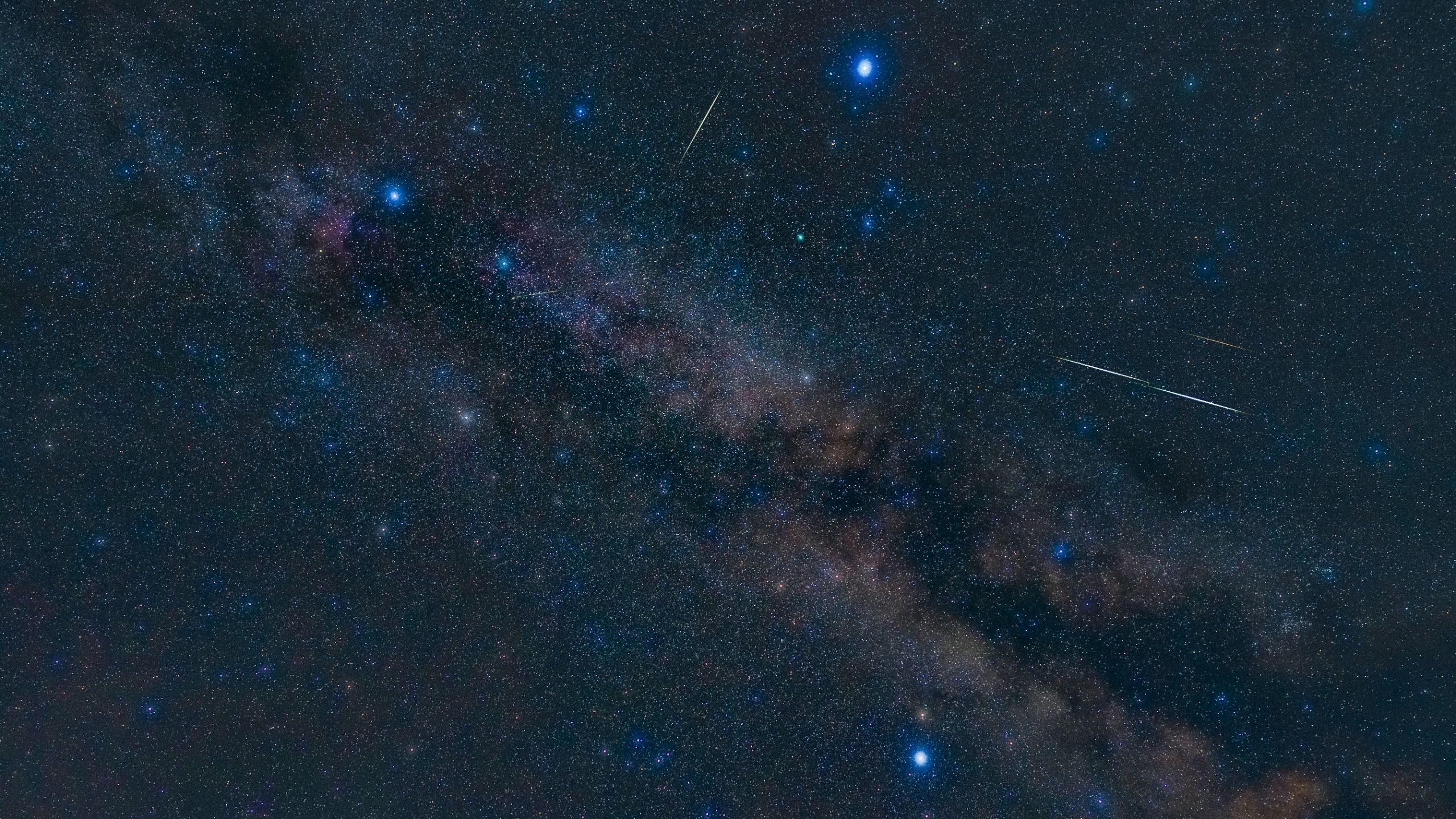
The fact that Deneb remains a "first-magnitude" star—shining with an intensity comparable to Vega and Altair despite its gargantuan distance—speaks to its nature as a blue supergiant. It is a stellar powerhouse, radiating energy at a scale at least 55,000 times greater than our own sun. If our sun were placed at the distance of Deneb, it would be entirely invisible to the naked eye. In this cosmic comparison, Vega and Altair are, metaphorically speaking, flickering penlight flashlights, while Deneb acts as a massive, high-intensity lighthouse piercing the interstellar void.
The Linguistic Debate: "Vee-ga" or "Vey-gah"?
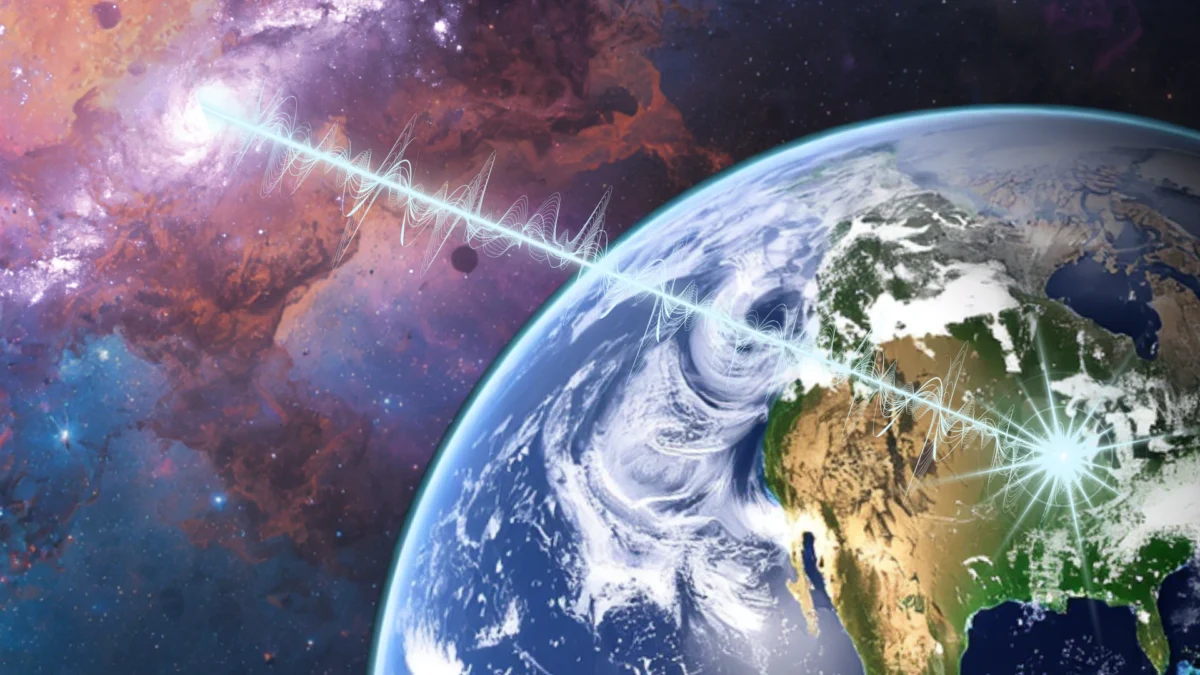
The discussion of the Summer Triangle often wanders into the realm of cultural history, particularly regarding the pronunciation of its brightest member, Vega. This debate was thrust into the public consciousness by the 1997 science fiction film Contact, based on the seminal novel by Carl Sagan. In the film, the protagonist, Dr. Ellie Arroway, famously encounters a signal originating from the star.
Throughout the film, the characters pronounce the name "Vey-gah," a choice that likely drew inspiration from the 1970s subcompact automobile, the Chevrolet Vega. However, the scientific community maintains a strict adherence to a different pronunciation. Traditionally, astronomers pronounce the star "Vee-ga," placing the emphasis on the long ‘e’ sound.
The late George Lovi, a highly respected authority on celestial nomenclature and a fixture of the planetarium community, frequently chided those who used the automotive pronunciation. His famous maxim—"Vee-ga is a star and Vey-gah is a car"—serves as a linguistic boundary between popular culture and astronomical precision. In the halls of professional observatories and planetariums, the "Vee-ga" pronunciation remains the gold standard, preserving a tradition that predates the modern subcompact vehicle by centuries.
The Origins of a Nickname: A Chronological Mystery
Who was the first to formalize the term "Summer Triangle"? The answer is obscured by decades of competing claims and independent discovery. For years, the credit was widely attributed to the legendary British broadcaster and astronomer Sir Patrick Moore. In his writings, Moore claimed that during a BBC television broadcast in 1958, he introduced the term to the public, noting, "everyone now seems to use the term, even though it is completely unofficial."
However, historical records suggest the moniker was in use well before Moore’s broadcast. H.A. Rey, the celebrated author of the Curious George series and a dedicated amateur astronomer, utilized the term in his 1954 children’s book Find the Constellations. In his 1952 masterwork, The Stars: A New Way to See Them, Rey had already begun to identify the pattern, referring to it as a "right triangle," effectively laying the groundwork for the more popular name.
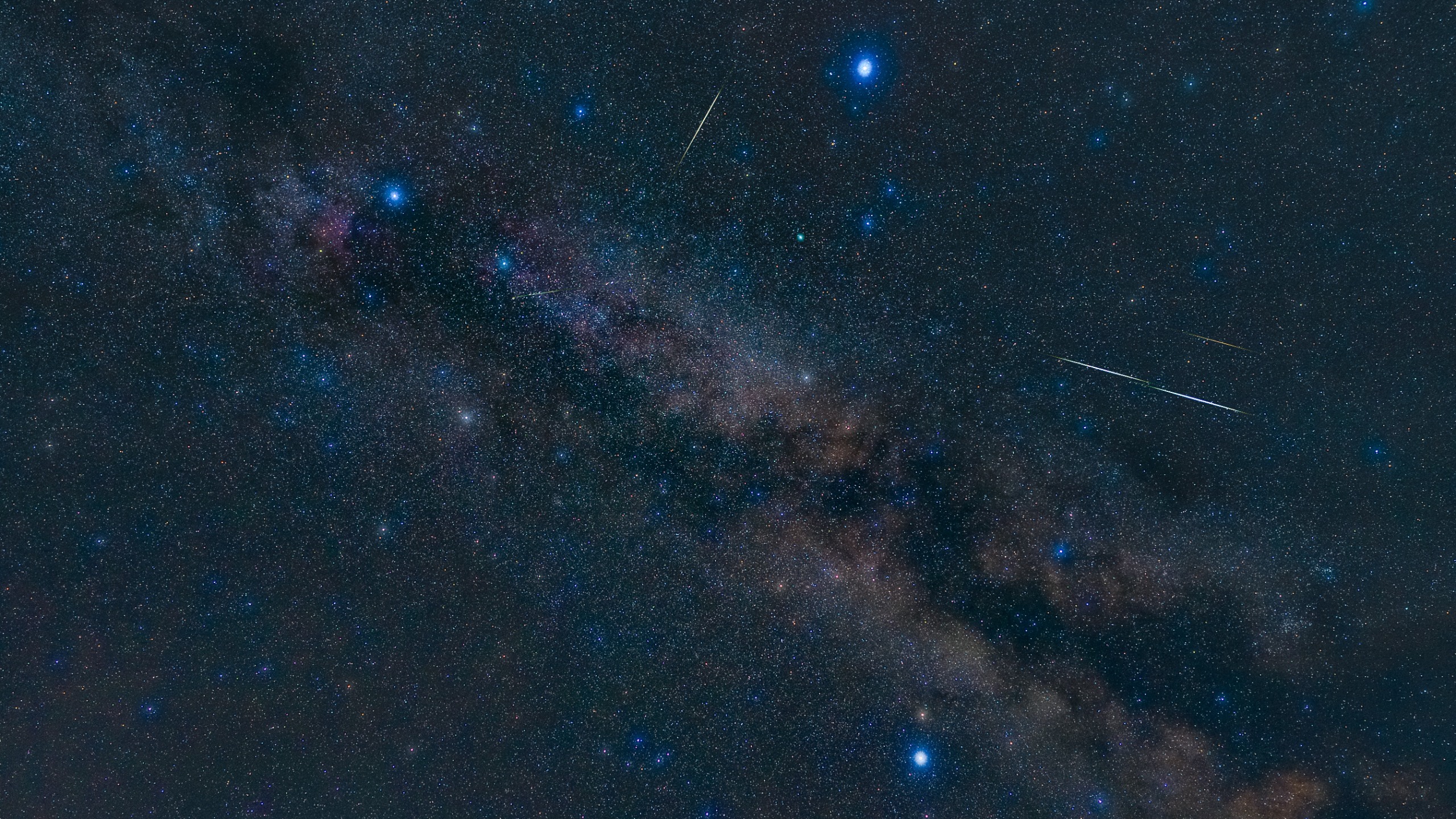
The origins may stretch even further back. Evidence suggests that U.S. military navigation manuals utilized during World War II may have employed the term to help pilots and navigators identify key reference points in the night sky. Furthermore, the Austrian astronomer Oswald Thomas used the term "Grosses Dreieck" ("Great Triangle") in the late 1920s, later refining it to "Sommerliches Dreieck" ("Summerly Triangle") in 1934. These various threads indicate that the Summer Triangle was not the invention of a single mind, but rather an organic evolution of astronomical education, adopted by navigators, teachers, and enthusiasts alike to make the vast, chaotic tapestry of the night sky more accessible.
Implications for Future Stargazing
As we look toward the future of amateur astronomy, the Summer Triangle serves as a crucial "gateway" asterism. For the novice, it provides a stable foundation from which to navigate the constellations of Cygnus (the Swan), Lyra (the Harp), and Aquila (the Eagle). By anchoring one’s gaze on these three beacons, the observer can move outward to explore the richer, more complex structures of the Milky Way, which glows between them.
The enduring popularity of the Summer Triangle highlights the importance of storytelling in science. While professional astronomers may concern themselves with the complex, non-linear distances of light-years and the spectral classifications of blue supergiants, the public remains captivated by the patterns we project onto the stars. Whether we call it the "Summer Triangle" or recognize it as a collection of disparate, distant suns, the asterism continues to fulfill its primary purpose: it draws our eyes upward, forces us to question our place in the cosmos, and reminds us that even as the seasons change, the stars remain a constant, guiding presence in our collective human experience.
Ultimately, the Summer Triangle is a testament to the intersection of human language and cosmic scale. It is a reminder that while the universe is governed by cold, mathematical laws, our understanding of it is filtered through the warmth of human curiosity. As long as there are people looking up at the night sky, Vega, Altair, and Deneb will continue to hold their positions—forming a bridge between the seasons and a timeless connection to the history of astronomical exploration.