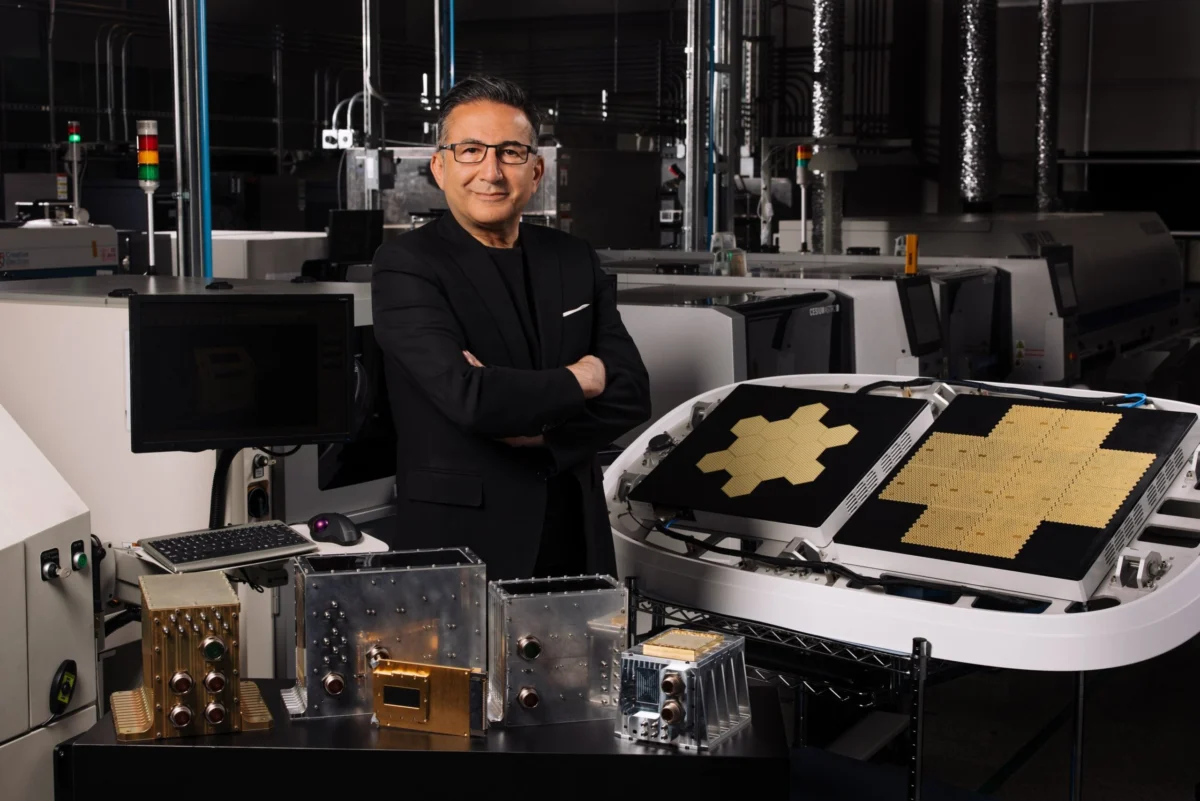
In a definitive move to reshape the landscape of aerospace and defense communications, Austin-based CesiumAstro announced on August 12 its acquisition of Jariet Technologies. This strategic merger marks a significant milestone in the evolution of space-based hardware, as CesiumAstro—a pioneer in active phased array technology—integrates Jariet’s specialized expertise in millimeter-wave (mmWave) Radio Frequency System-on-Chip (RF-SoC) semiconductors.
The acquisition is more than a simple business expansion; it represents a fundamental shift toward vertical integration within the satellite communications (SATCOM) sector. By bringing the "brain" of the signal chain—the chip-level design—under the same roof as its modular phased array payloads, CesiumAstro is positioning itself to lead a new generation of high-speed, software-defined, and mission-critical satellite infrastructure.
The Core Facts: What the Deal Changes
At the heart of this acquisition is the synergy between CesiumAstro’s expertise in active electronically scanned arrays (AESA) and Jariet’s mastery of wideband RF processing. Jariet Technologies has long been recognized for its sophisticated RF-SoC solutions, which facilitate high-speed data processing for electronic warfare (EW), radar, and complex satellite communications.
By absorbing Jariet, CesiumAstro gains proprietary control over the most critical components of the radio frequency signal chain. This allows the company to move away from relying on off-the-shelf, general-purpose components that often lack the efficiency required for the extreme environment of space. The result is a unified architecture that spans from the silicon substrate to the final software-defined waveform, designed to support commercial, civil, and national security mission requirements.
A Chronology of Innovation: The Path to Integration
To understand the significance of this acquisition, one must examine the individual trajectories of both companies.
The Rise of CesiumAstro
Founded by former Lockheed Martin executive Shey Sabripour, CesiumAstro emerged with the mission of making satellite communications modular and scalable. Over the past several years, the company has focused on "plug-and-play" satellite payloads. Their flagship product lines—which include software-defined radio payloads and modular phased arrays—have successfully transitioned from the drawing board to orbit, proving that high-performance, flight-ready hardware could be produced with shorter lead times than traditional, custom-built satellite components.
The Specialization of Jariet
Jariet Technologies established its reputation by tackling the "bottleneck" of modern wireless communication: the interface between the analog RF world and the digital processing world. By specializing in direct RF- and IF-sampling combined with advanced Digital Signal Processing (DSP), Jariet enabled wideband processing that could handle the massive data throughputs required by modern radar and EW systems. Their focus on the mmWave spectrum—a critical frontier for high-bandwidth space communication—made them a high-value asset in an era of congested and contested spectrums.
The Merger (August 2024)
The August 12 announcement serves as the culmination of an industry-wide trend toward "owning the stack." Recognizing that system-level performance is increasingly dictated by chip-level limitations, CesiumAstro leadership determined that the next leap in performance would not come from mechanical design, but from the tight coupling of software, hardware, and silicon.
Supporting Data: Why Vertical Integration Matters
In the satellite industry, the acronyms SWaP-C (Size, Weight, Power, and Cost) dictate every engineering decision. The integration of Jariet’s RF-SoC technology directly addresses these four pillars:
- Size and Weight: By consolidating discrete signal processing components into a single System-on-Chip, CesiumAstro can significantly reduce the physical footprint of their satellite payloads. In the space industry, every gram of mass reduction translates directly into launch cost savings.
- Power Efficiency: Integrated circuits are inherently more energy-efficient than assemblies of discrete components. As satellites rely on limited solar-generated power, maximizing the efficiency of the RF signal chain is vital for maintaining uptime and high data rates.
- Performance Scaling: Jariet’s DSP and digital beamforming (DBF) capabilities allow for more sophisticated signal management. This enables "beam hopping" and multi-beam capabilities that are essential for dynamic, software-defined satellite constellations.
- Cost Reduction: By removing the need to procure, integrate, and validate third-party semiconductors, CesiumAstro can shorten the supply chain. This vertical model mitigates the risks associated with semiconductor shortages and intellectual property (IP) licensing bottlenecks.
Official Perspectives: The Vision from Leadership
The leadership teams of both organizations have expressed that this deal is driven by a shared vision of a "software-defined future."
Shey Sabripour, Founder and CEO of CesiumAstro, emphasized the strategic necessity of the move in his official statement:
"This acquisition brings a foundational semiconductor capability into CesiumAstro. Integrating advanced mixed-signal semiconductor design in-house gives us greater control over performance from the RF front-end through the complete mission system, while enabling us to field new capabilities faster. Combined with our expertise in software-defined communications, active phased arrays, payloads, and satellite platforms, Jariet strengthens our ability to deliver differentiated, high-performance systems at scale."
Industry analysts note that Sabripour’s background—he spent nearly two decades at Lockheed Martin—is instrumental here. He understands that for a private aerospace company to compete with established defense primes, it must offer not just a component, but a complete, reliable, and high-performance mission system that is ready for the rigors of national security applications.
Strategic Implications: Redefining the Aerospace Sector
The ripple effects of this acquisition will be felt across the commercial, civil, and defense sectors in three major ways:
1. Competitive Advantage in Defense
The Department of Defense (DoD) is increasingly reliant on "resilient" space architectures—constellations that can withstand interference or direct attack. Jariet’s technology, particularly in electronic warfare and advanced radar, is perfectly suited for these environments. With the acquisition, CesiumAstro can now offer "hardened" communication systems that can dynamically adjust their waveforms to avoid jamming or detection, providing a distinct advantage in contested space domains.
2. Democratizing High-Bandwidth Space
By lowering the complexity and cost of the RF signal chain, this merger makes high-performance satellite communications more accessible. Commercial entities, such as those building Earth Observation (EO) constellations or global IoT networks, will benefit from the "plug-and-play" nature of these integrated payloads. The ability to deploy a full-featured, software-defined radio system without the overhead of custom chip development will accelerate the deployment of next-generation constellations.
3. The Shift toward "Digital-First" Satellites
This deal highlights a broader industry shift: the satellite is becoming a "flying server." As satellites move toward fully software-defined architectures, the ability to update a satellite’s mission in orbit—via a software patch rather than a hardware replacement—is the new gold standard. Jariet’s DSP expertise is the engine that makes this possible, allowing CesiumAstro to provide customers with satellites that evolve alongside their mission needs.
Future Outlook: What Lies Ahead
As the integration process begins, the primary challenge for the unified organization will be scaling its manufacturing and design processes to meet the increasing demand for LEO (Low Earth Orbit) and MEO (Medium Earth Orbit) infrastructure.
With Jariet’s team now operating under the CesiumAstro umbrella, the company is expected to accelerate the development of next-generation active phased arrays that are smaller, faster, and more efficient than anything currently on the market. Furthermore, the ability to design bespoke silicon for specific mission profiles will likely open doors to new government contracts, where custom performance is often a requirement rather than a luxury.
In conclusion, the acquisition of Jariet Technologies by CesiumAstro is a masterclass in strategic consolidation. By welding the precision of semiconductor design to the agility of modular aerospace engineering, CesiumAstro is not just participating in the current space race—it is helping to build the very infrastructure upon which that race will be won. As the satellite industry continues its rapid expansion, the companies that control the underlying technology stacks will be the ones defining the future of global connectivity, national security, and space exploration.