By Editorial Staff
In a move that signals a paradigm shift for orbital infrastructure, Kongsberg Satellite Services (KSAT) has officially launched its "Hyperion" demonstration campaign. This strategic initiative serves as the critical proving ground for "Hyper," the company’s ambitious next-generation satellite relay network designed to seamlessly integrate radio frequency (RF) and optical laser communications. By positioning itself as a provider of "orbiting ground stations," KSAT is bridging the widening gap between the surge in Low Earth Orbit (LEO) satellite constellations and the terrestrial ground networks struggling to keep pace with modern data demands.
Main Facts: The Anatomy of the Hyper Network
At its core, the Hyper project represents a fundamental reimagining of how data is retrieved from space. As the number of LEO satellites increases exponentially, traditional ground-based antennas are facing congestion, latency, and line-of-sight limitations. KSAT’s Hyper network seeks to mitigate these issues by moving the "ground station" into space, creating a hybrid relay layer that captures data in orbit and transmits it back to Earth via high-speed optical links.
The Hyperion campaign is not merely a technical test; it is an operational validation. KSAT is inviting a consortium of technology providers, satellite operators, and institutional partners to pressure-test the infrastructure. Key technical specifications of the Hyper satellites include:
- Hybrid Connectivity: The system utilizes a dual-pronged approach, featuring S-band connectivity for essential telemetry, tracking, and command (TT&C) functions, and Ka-band communications for high-throughput payload data relay.
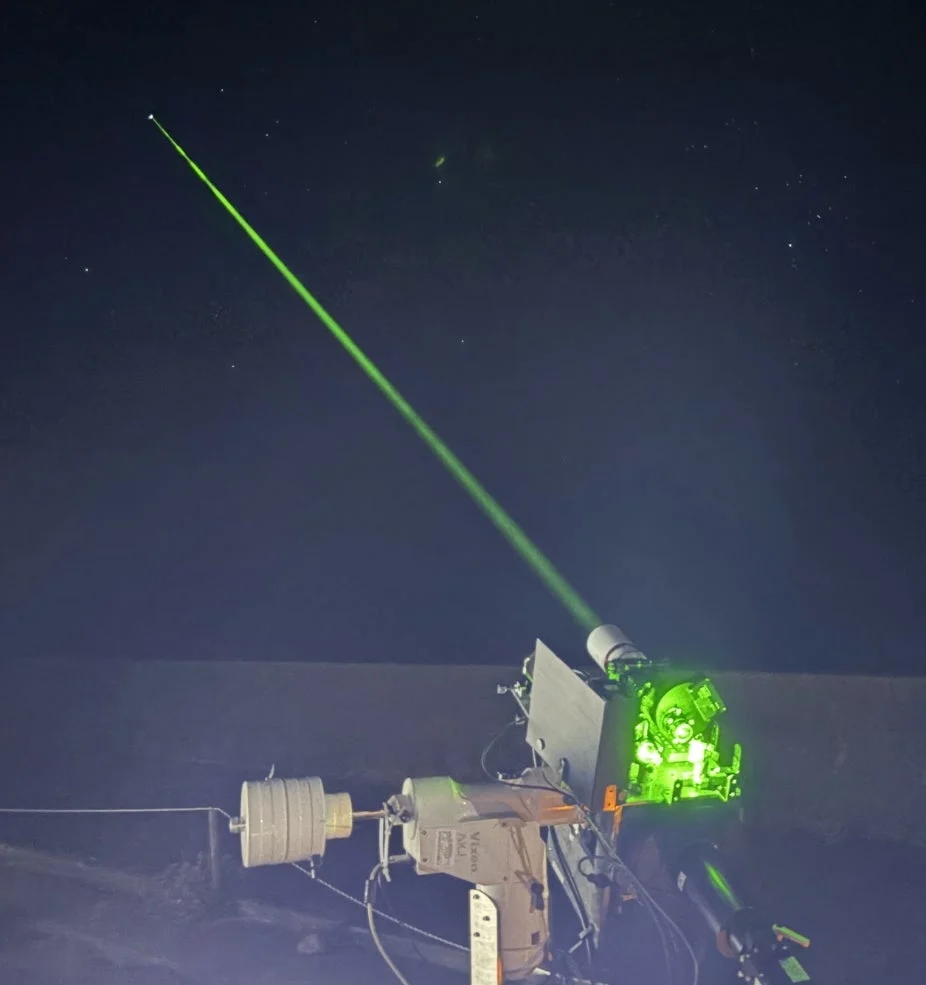
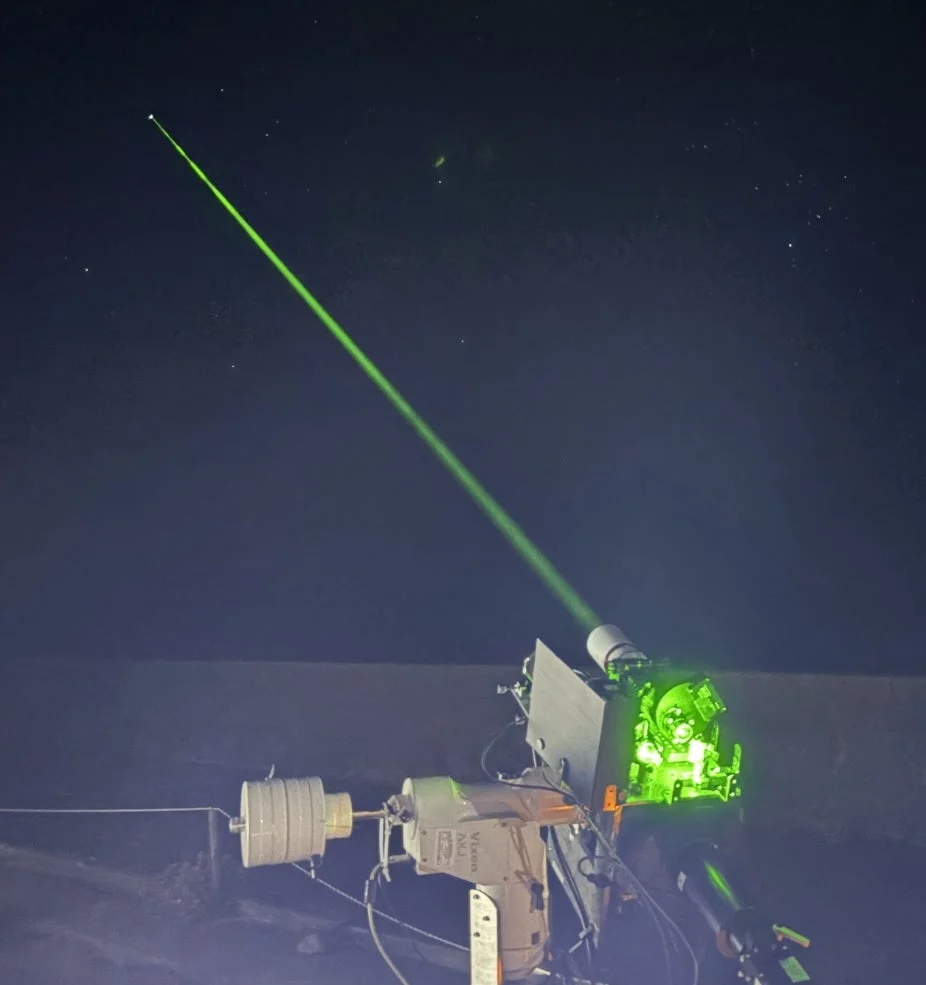
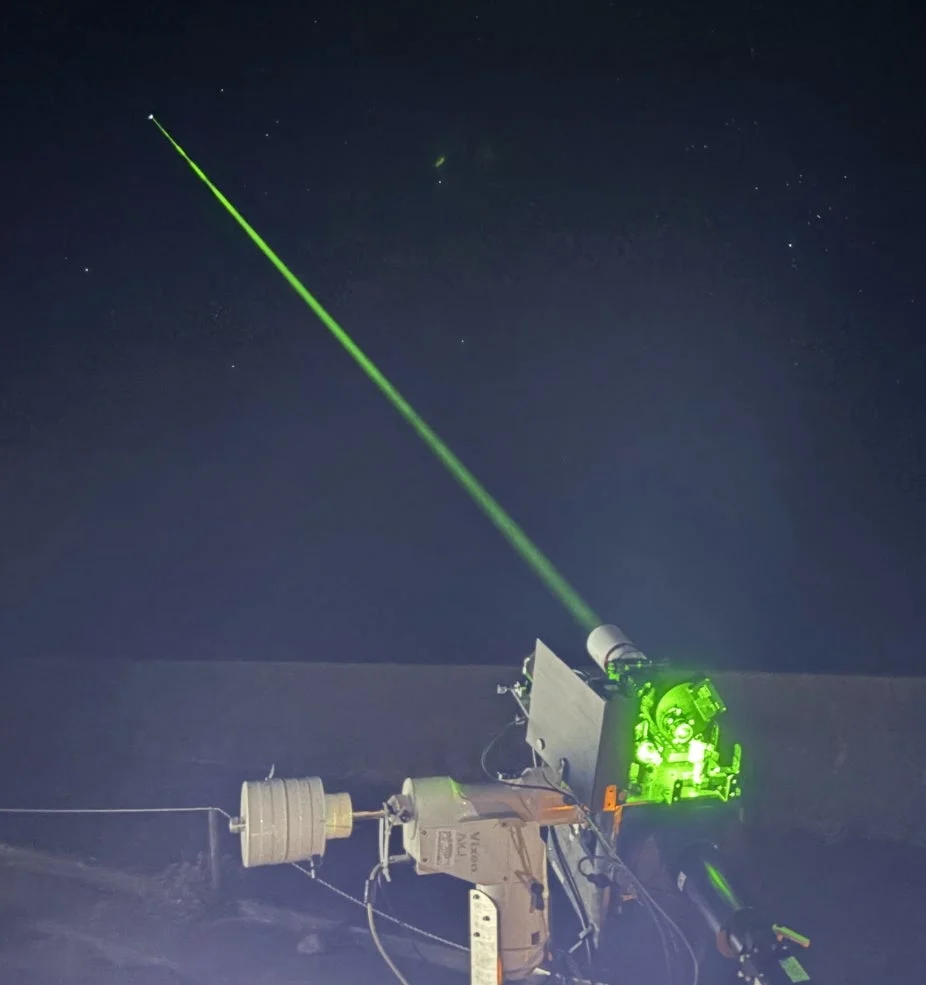
- Advanced Optical Terminals: The satellites are equipped with cutting-edge optical terminals provided by Sony Space Communications Corp. (SSCC) and Rocket Lab. Notably, Rocket Lab’s contribution follows its strategic acquisition of laser communications technology assets, positioning the company as a key player in the optical relay space.
- Seamless Integration: The network is designed for complete backward compatibility with KSAT’s existing "KSATlite" service, meaning potential customers can adopt the Hyper relay service without the need for additional proprietary hardware or complex onboard software modifications.
Chronology: From Concept to Orbital Validation
The roadmap to Hyperion has been a deliberate, multi-year progression for the Norwegian space giant.
- August 2024: KSAT first publicly disclosed its vision for "Hyper," describing it as a game-changing architecture that would effectively "take the ground network to space." The industry response was immediate, as the concept addressed the mounting bottleneck in satellite data downlink speeds.
- Early 2025: KSAT finalized its supply chain partnerships, integrating Sony’s proven optical terminal technology and securing the hardware assets from Rocket Lab’s acquisition of Mynaric’s laser communication division.
- August 2025: The official announcement of the Hyperion campaign. This phase marks the transition from conceptual design and laboratory simulation to real-world orbital demonstration.
- Late 2025–2026 (Projected): Following the successful completion of the Hyperion campaign, KSAT intends to move into full-scale commercial operations, providing a reliable, high-speed relay service that serves as the backbone for international space agency missions and commercial constellation operators.
Supporting Data: The Convergence of RF and Optical
The necessity for the Hyper network is underscored by the current limitations of RF-only communication. While radio frequency has been the standard for decades, it is increasingly constrained by spectrum congestion and physical throughput ceilings. Optical (laser) communication offers the solution: it is essentially immune to radio frequency interference, highly secure due to the narrow beam width, and capable of transmitting gigabits of data per second—orders of magnitude faster than traditional RF.
However, the industry faces a "hybridization" challenge. Satellites in LEO require the reliability of S-band for command and control, but they need the massive bandwidth of optical links for sensor data. KSAT’s design solves this by offering a "one-stop-shop" architecture. By incorporating terminals from both Sony and Rocket Lab, KSAT is building a multi-vendor ecosystem that ensures redundancy and prevents vendor lock-in for its customers.
The institutional participation of the National Oceanic and Atmospheric Administration (NOAA) and the European Space Agency (ESA) through the European Resilience from Space (ERS) program provides the necessary validation to ensure the network meets the stringent data requirements of climate monitoring, weather forecasting, and national security assets.
Official Responses and Strategic Vision
The leadership at KSAT views the Hyperion campaign as the ultimate "stress test" for the future of space-based data relay.
"Hyperion is about proving operational services, not just technology," stated Edvard Foss, Vice President of the Hyper program at KSAT. "By bringing together customers, technology providers, and institutional partners, we’re demonstrating the hybrid RF and optical capabilities that will underpin the future Hyper network. These campaigns validate real operational use cases while laying the foundation for Europe’s next-generation commercial satellite relay infrastructure."
Industry analysts point out that Foss’s emphasis on "operational services" is deliberate. While many startups have launched individual optical terminals, few have proposed an end-to-end service network that manages the complex handover protocols between orbiting nodes and terrestrial stations. By positioning Hyper as an extension of the existing KSATlite ecosystem, the company is lowering the barrier to entry for smaller satellite operators who lack the capital to build their own dedicated ground relay constellations.
Implications: A New Era for Space Data
The success of the Hyper network could have profound implications for the global space economy.
1. The Death of Latency
For Earth Observation (EO) operators, the time between a satellite capturing an image and a user receiving it is a critical performance metric. In disaster response, environmental monitoring, and intelligence, "near-real-time" is the new standard. By relaying data via optical inter-satellite links before handing it off to ground stations, KSAT is effectively slashing the latency that has traditionally hindered LEO operations.
2. Democratizing Access to High-Speed Data
Historically, only major government agencies could afford the infrastructure for high-throughput space communication. By offering Hyper as a commercial service, KSAT is effectively democratizing this capability. Small-to-medium-sized satellite operators can now leverage high-speed relay without building their own orbital infrastructure, effectively creating a "Space-as-a-Service" model that mirrors the cloud computing revolution of the early 2000s.
3. Strengthening European Autonomy
The inclusion of the ESA’s ERS program highlights a geopolitical dimension. As Europe seeks to decrease its reliance on non-European infrastructure for critical space data, the Hyper network represents a strategic asset. By establishing a commercial relay infrastructure that meets the standards of both ESA and NOAA, KSAT is positioning itself as a vital component of the Western space industrial base.
4. The Future of the "Orbiting Ground Station"
The "Hyper" concept suggests a future where satellites are no longer solitary actors, but nodes in a mesh network. If KSAT succeeds, the orbital environment will become significantly more interconnected. The ability to relay data through multiple nodes in space will lead to more resilient satellite constellations, capable of maintaining communications even when line-of-sight to a specific ground station is obscured by geography or atmospheric interference.
Conclusion
As the Hyperion campaign gets underway, the space industry is watching closely. The technical hurdles—handing off terabytes of data between moving targets in LEO with sub-millisecond precision—are immense. However, with the backing of industry leaders like Sony and Rocket Lab and the institutional weight of NOAA and the ESA, KSAT appears well-equipped to overcome these challenges.
If the Hyperion campaign confirms that these orbiting ground stations can perform with the reliability of their terrestrial counterparts, the satellite communications landscape will be permanently altered. The transition from terrestrial-bound data retrieval to a hybrid, space-based relay architecture is not just an upgrade; it is the necessary evolution for a world that is becoming increasingly dependent on the data flowing from the skies. The Hyper network is poised to be the central nervous system of this new, connected orbital reality.