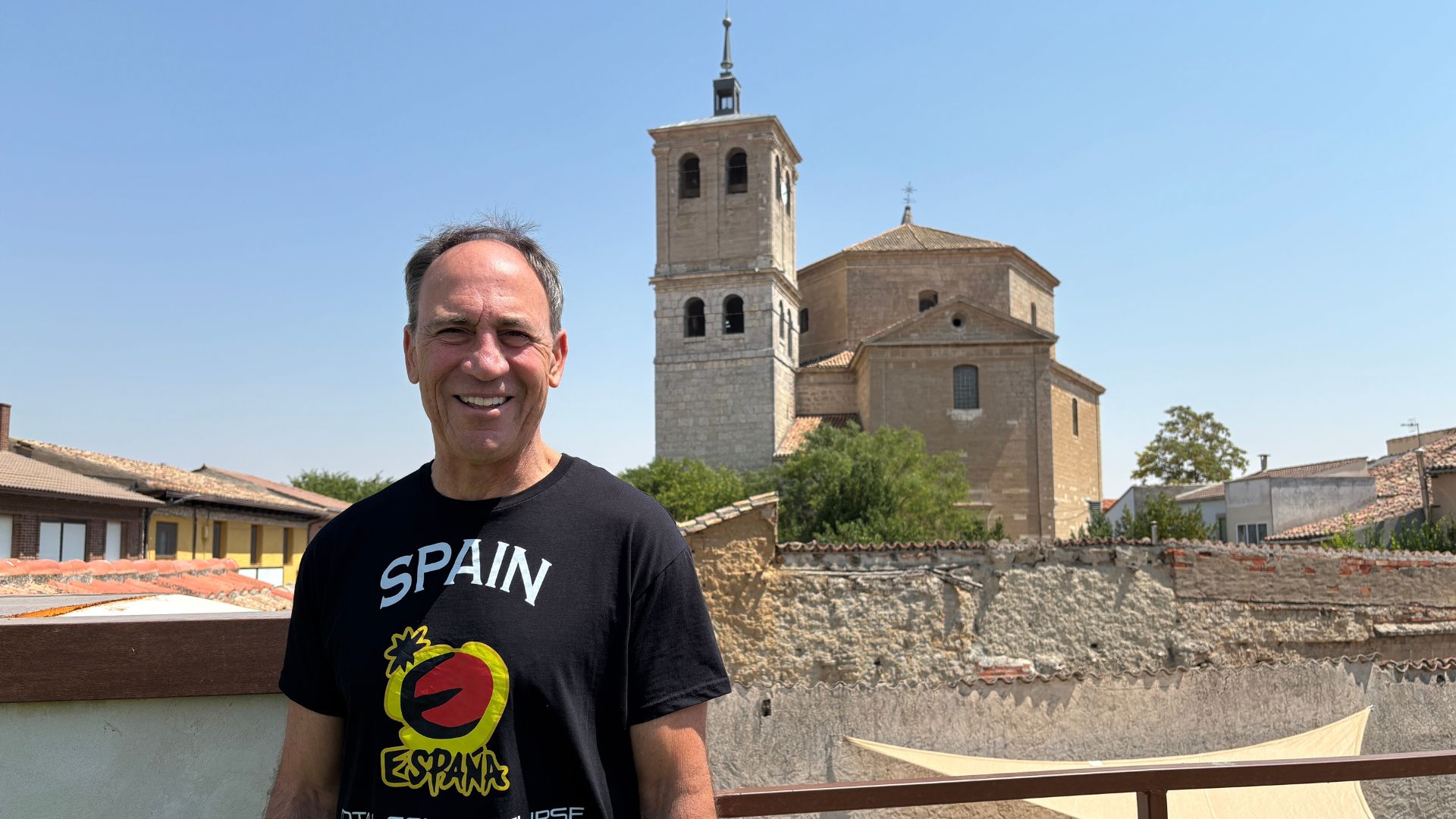
For 37 years, the total solar eclipse remained a phantom in my life—a celestial event I admired through the lenses of others, always reading about the "black sun" but never standing in its shadow. As a writer for Space.com, my professional existence is tethered to the rhythmic, clockwork movements of the cosmos. Yet, despite my immersion in the science of the heavens, the opportunity to witness totality had eluded me until the summer of 2026.
That changed in the small, sun-drenched pueblo of Valoria la Buena in central Spain. On August 12, I joined an international cohort of citizen scientists to witness a spectacle that defied my expectations—a profound intersection of cutting-edge physics, cultural connection, and the raw, primal awe of the human experience.
The Mission: Citizen Science in the Path of Totality
My journey to Valoria la Buena was not merely for observation; it was a mission of participation. I joined the Dynamic Eclipse Broadcast (DEB) Initiative, a voluntary effort led by professional astronomers from Southern Illinois University, with critical support from NASA’s Science Mission Directorate and the National Science Foundation.
The DEB Initiative’s objective was ambitious: to capture high-resolution data on the sun’s corona—the sun’s elusive outer atmosphere—while broadcasting a live, real-time feed to a global audience via NASA. For a skywatching writer who had spent years describing these phenomena from a keyboard, the transition to the field was both exhilarating and daunting.
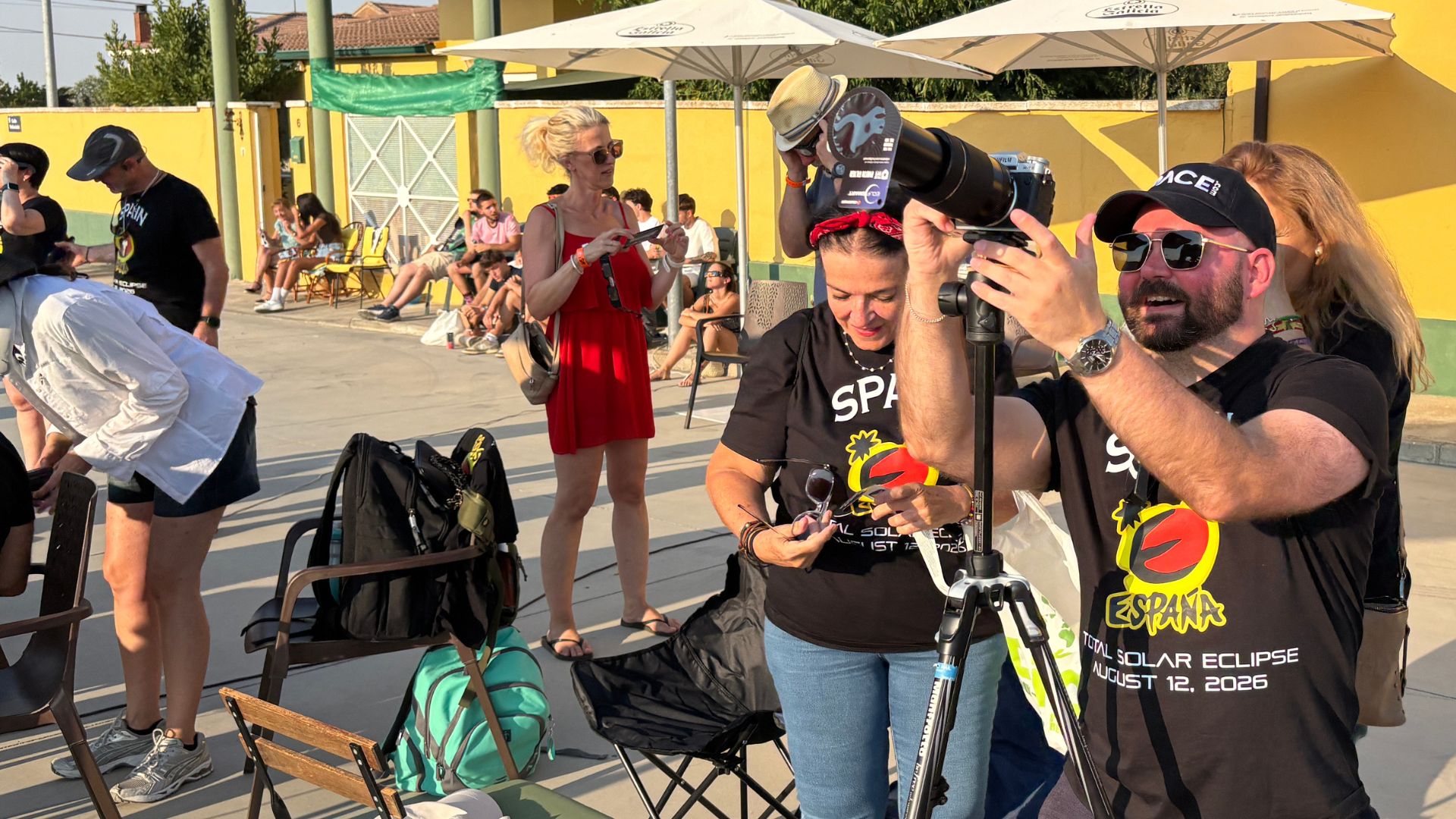
The team was led by Charles Greenwald, a retired U.S. Air Force colonel and commercial pilot whose technical acumen and infectious passion served as the project’s backbone. Greenwald, who had previously mobilized a team for the 2024 Great American Eclipse, brought together a diverse group of participants from Mexico, the United States, and Spain. Among them were Arath, a mathematics student from the Universidad de Guadalajara, and two local Spanish high school students, Aimar and Aaron, whose grasp of physics and celestial mechanics was as impressive as it was humble.
Chronology of an Eclipse: From Preparation to Totality
The Prelude: Technical Ingenuity
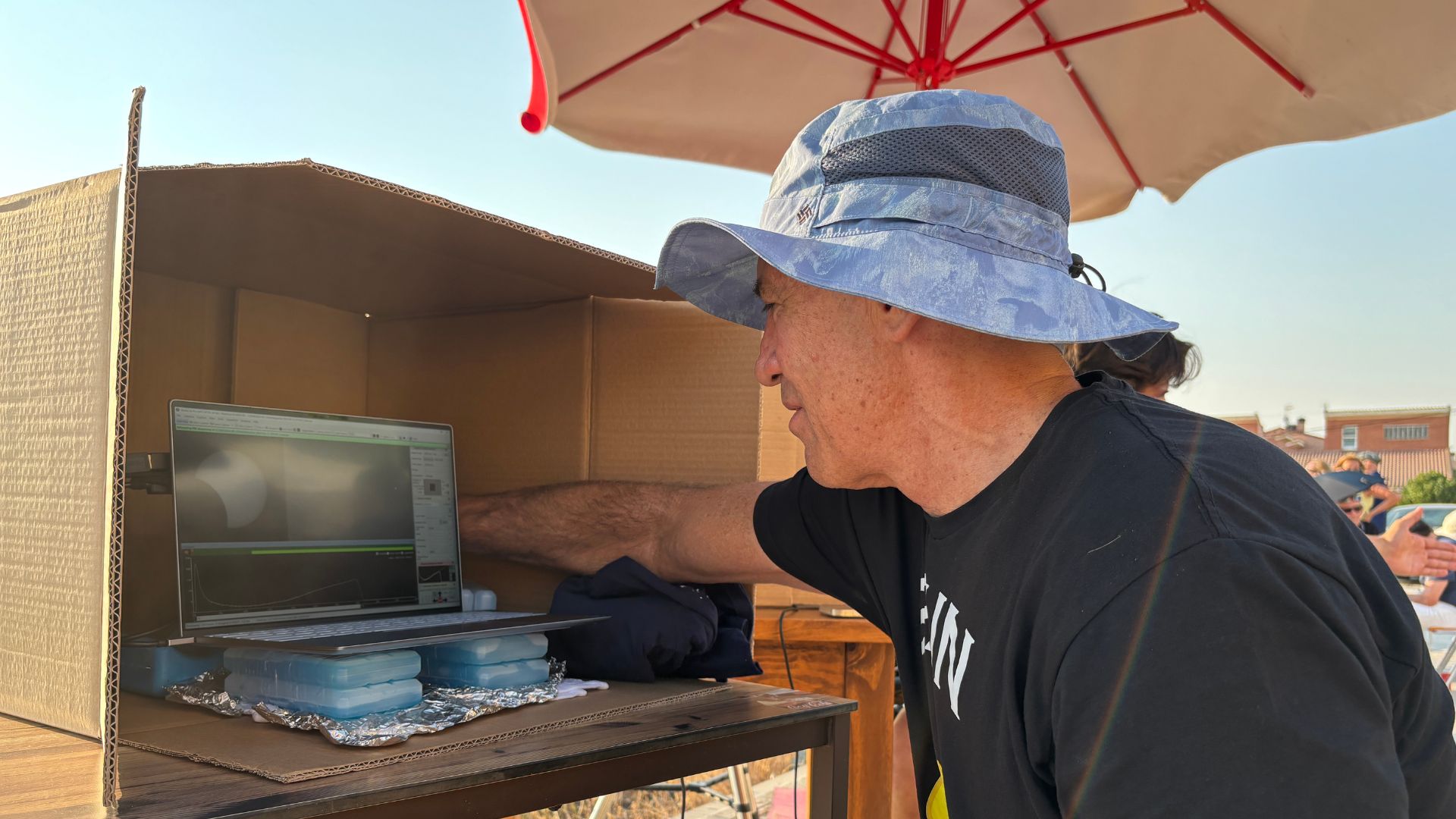
The days leading up to the eclipse were defined by high stakes and high temperatures. Spain was in the grip of a relentless heatwave, which presented a significant obstacle: the computers responsible for controlling the solar telescopes and maintaining the NASA uplink were at risk of overheating.
In a display of classic "field science" ingenuity, the team constructed a makeshift cooling system. Using wet towels frozen overnight, a cooler, and a cardboard box, they created a DIY heatsink that kept the essential hardware running. It was a stark reminder that even in the age of space-age technology, scientific discovery often relies on the most basic principles of thermodynamics and a bit of improvisational spirit.
The Spiritual and the Scientific
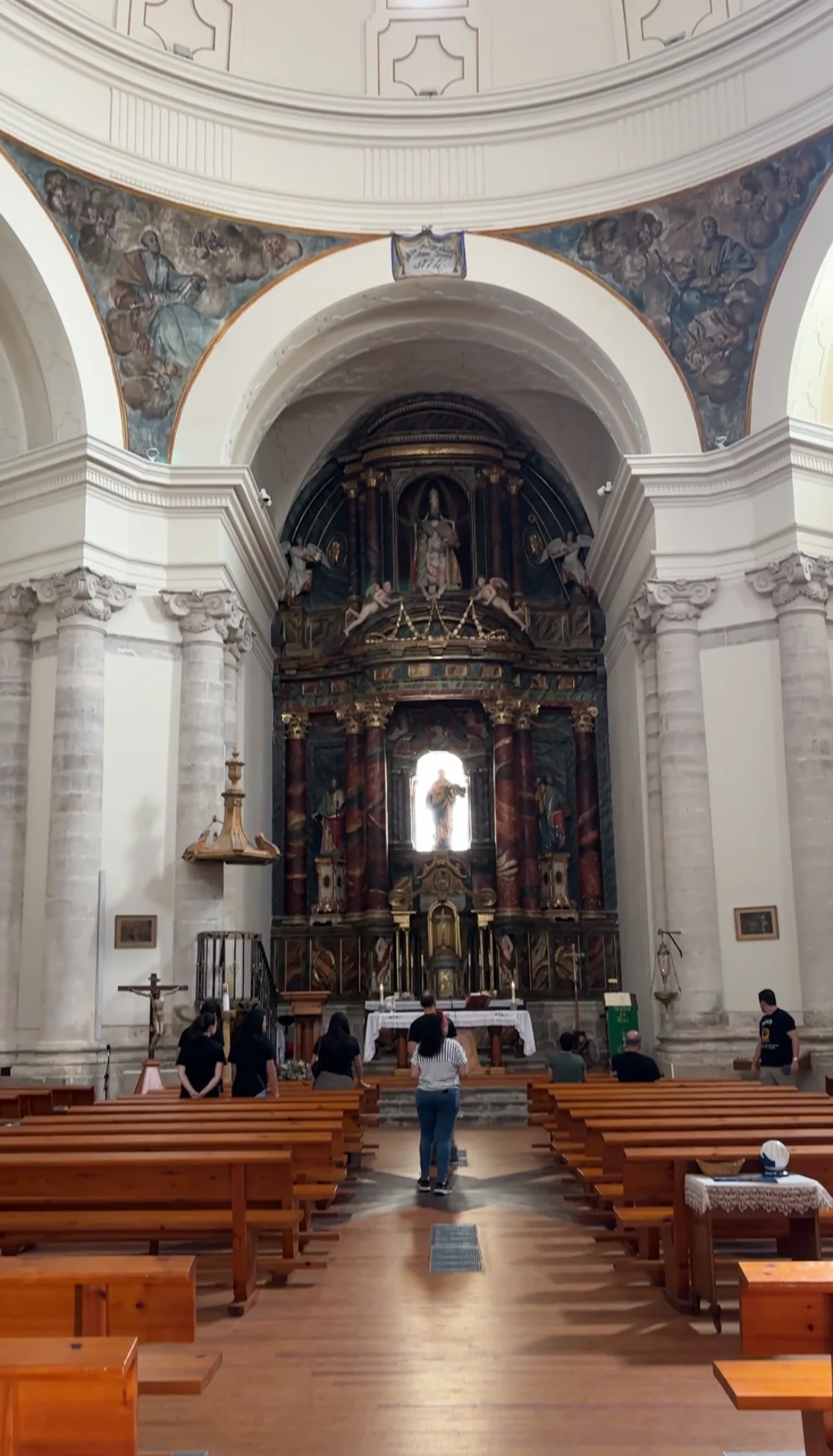
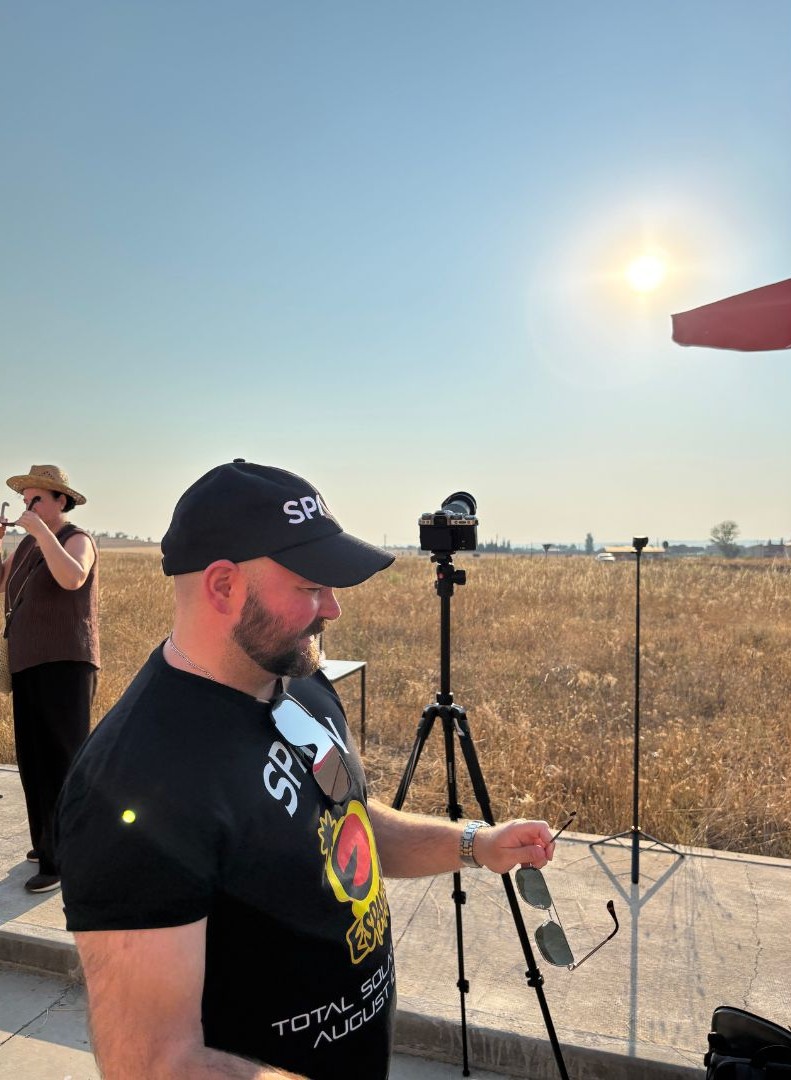
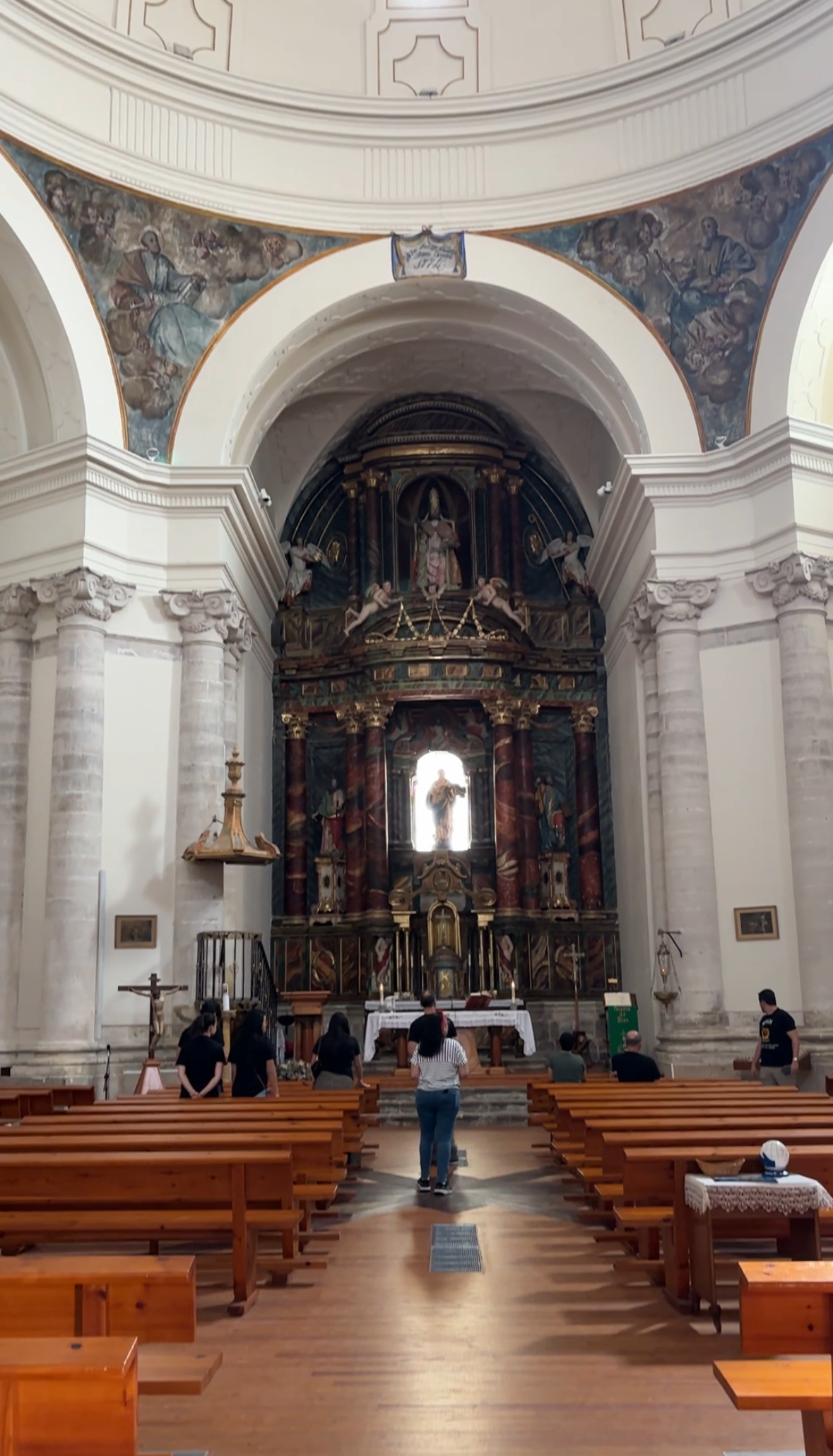
On the morning of August 12, the atmosphere in Valoria la Buena was charged. Before the main event, I was invited by the local community to attend a Mass at the village’s 250-year-old church. Watching the local priest reflect on the upcoming eclipse, with parishioners wearing commemorative t-shirts, was a poignant reminder of how celestial events have served as the bridge between human faith and scientific inquiry for millennia.
The Moment of Totality
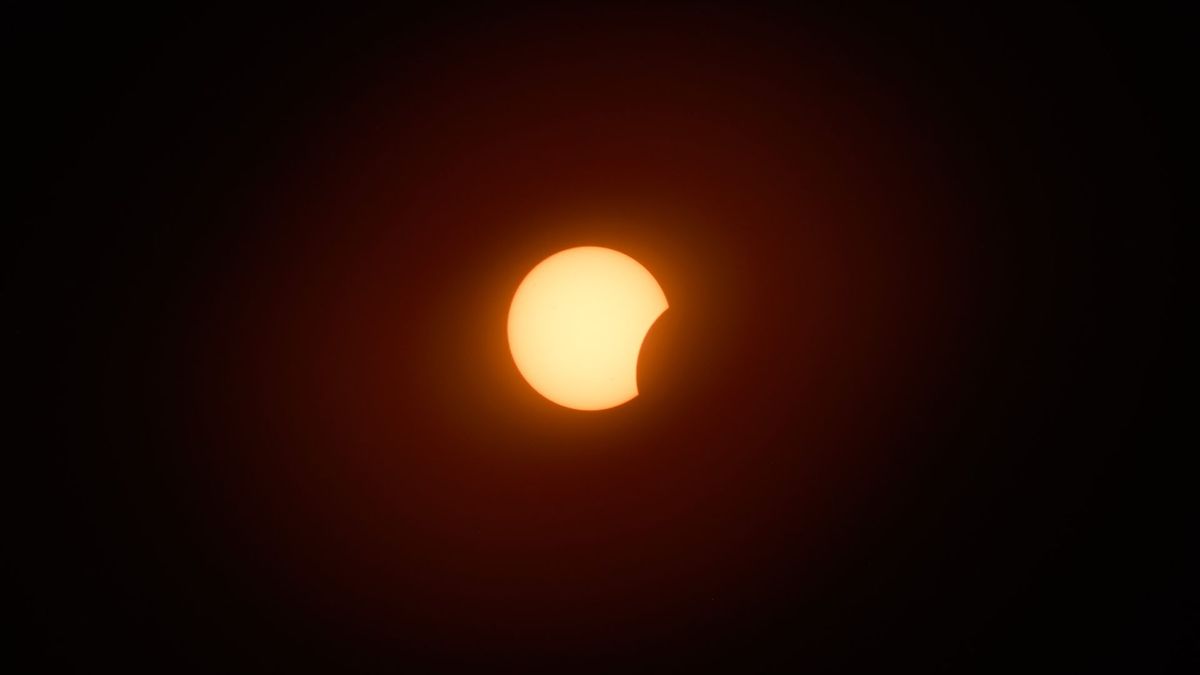
As the eclipse progressed, the village turned into an impromptu laboratory and festival. When first contact occurred—the moon taking its first "bite" out of the solar disk—the collective energy was palpable.
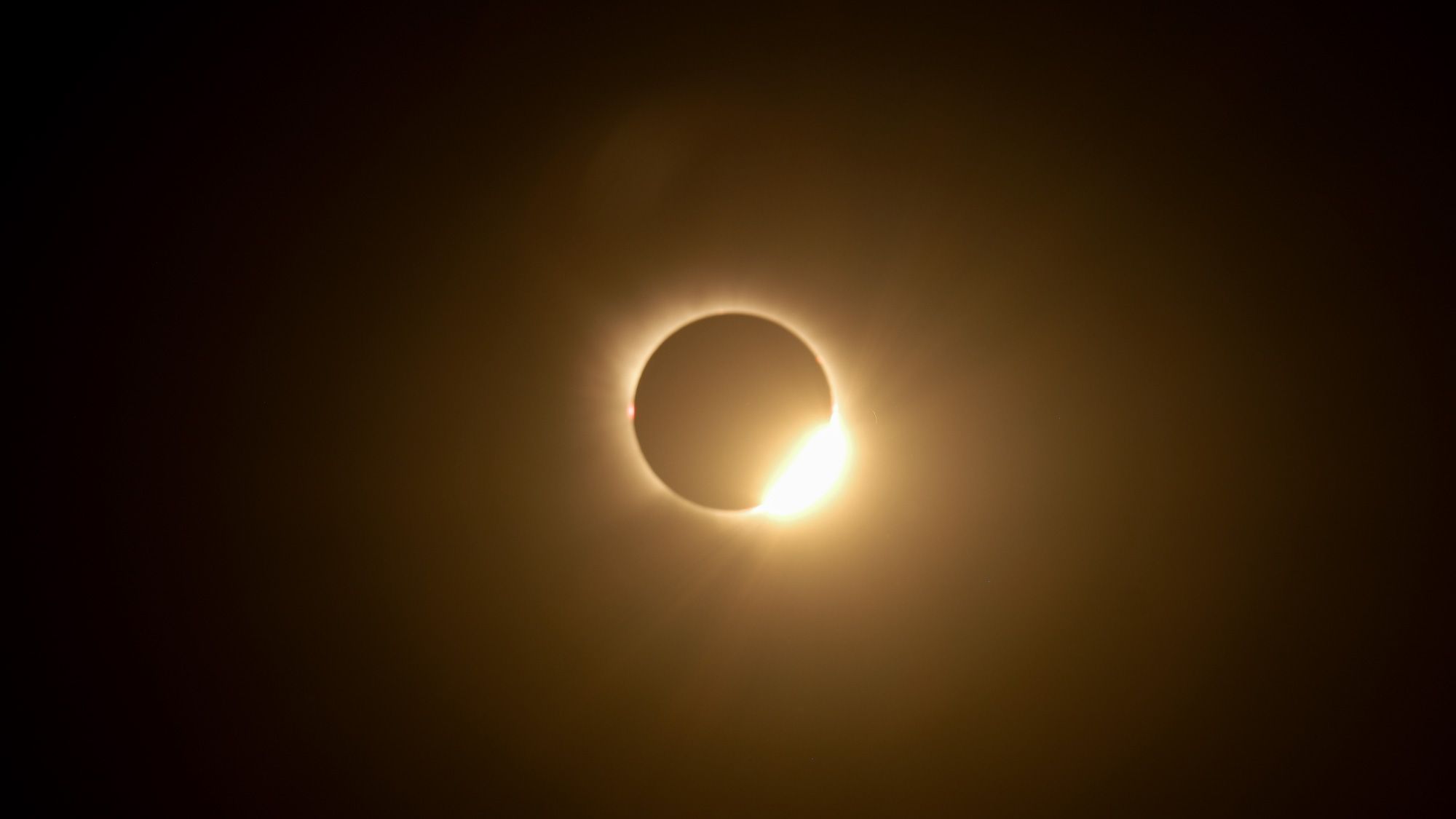
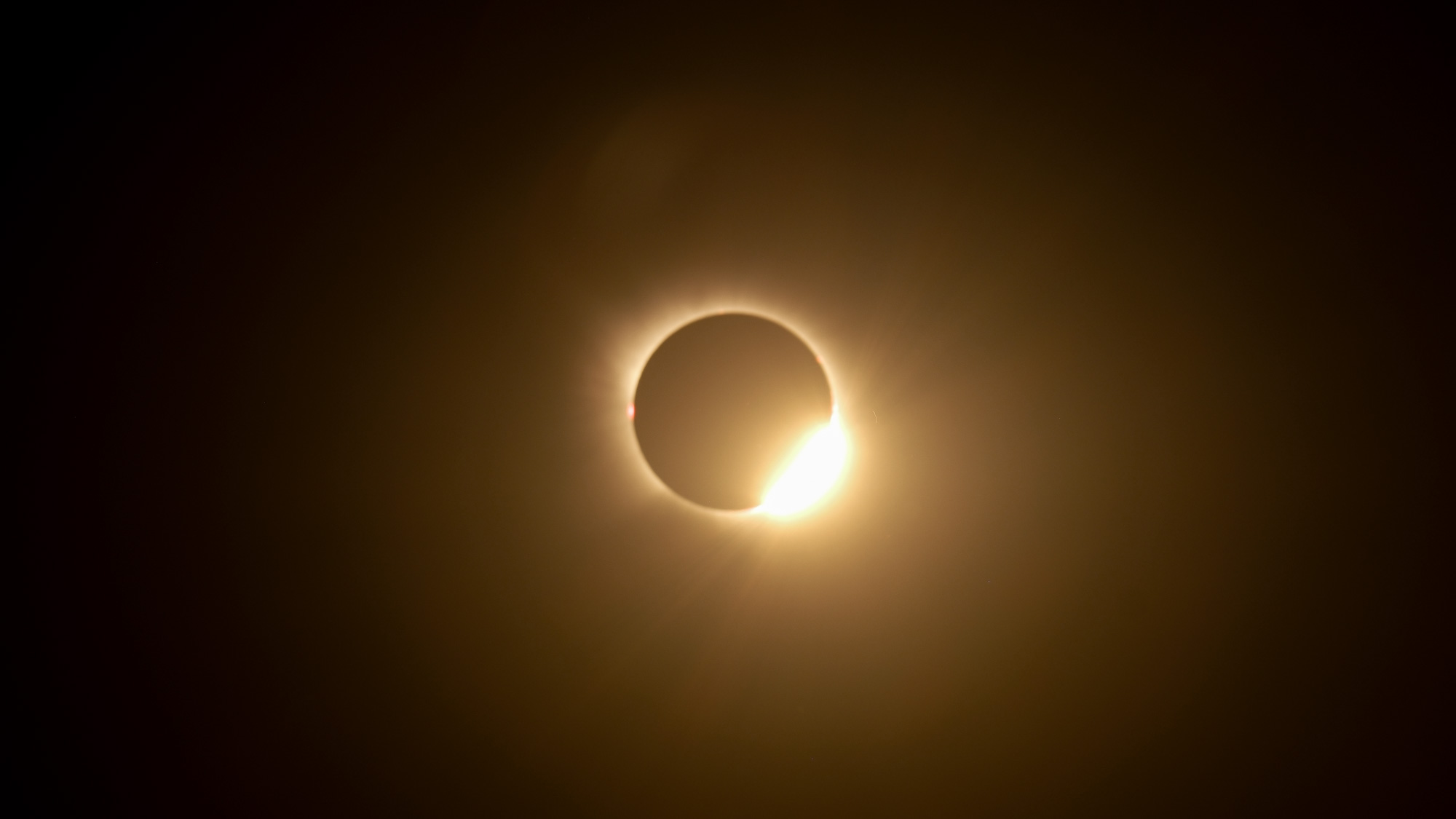
As the sun’s crescent thinned, the environment shifted. A strange, unnatural twilight descended upon central Spain. The temperature dropped, the birds fell silent, and the "diamond ring" effect—a final, blinding flare of sunlight—signaled the imminent onset of totality. At that moment, I set aside my camera, grabbed my binoculars, and looked up.
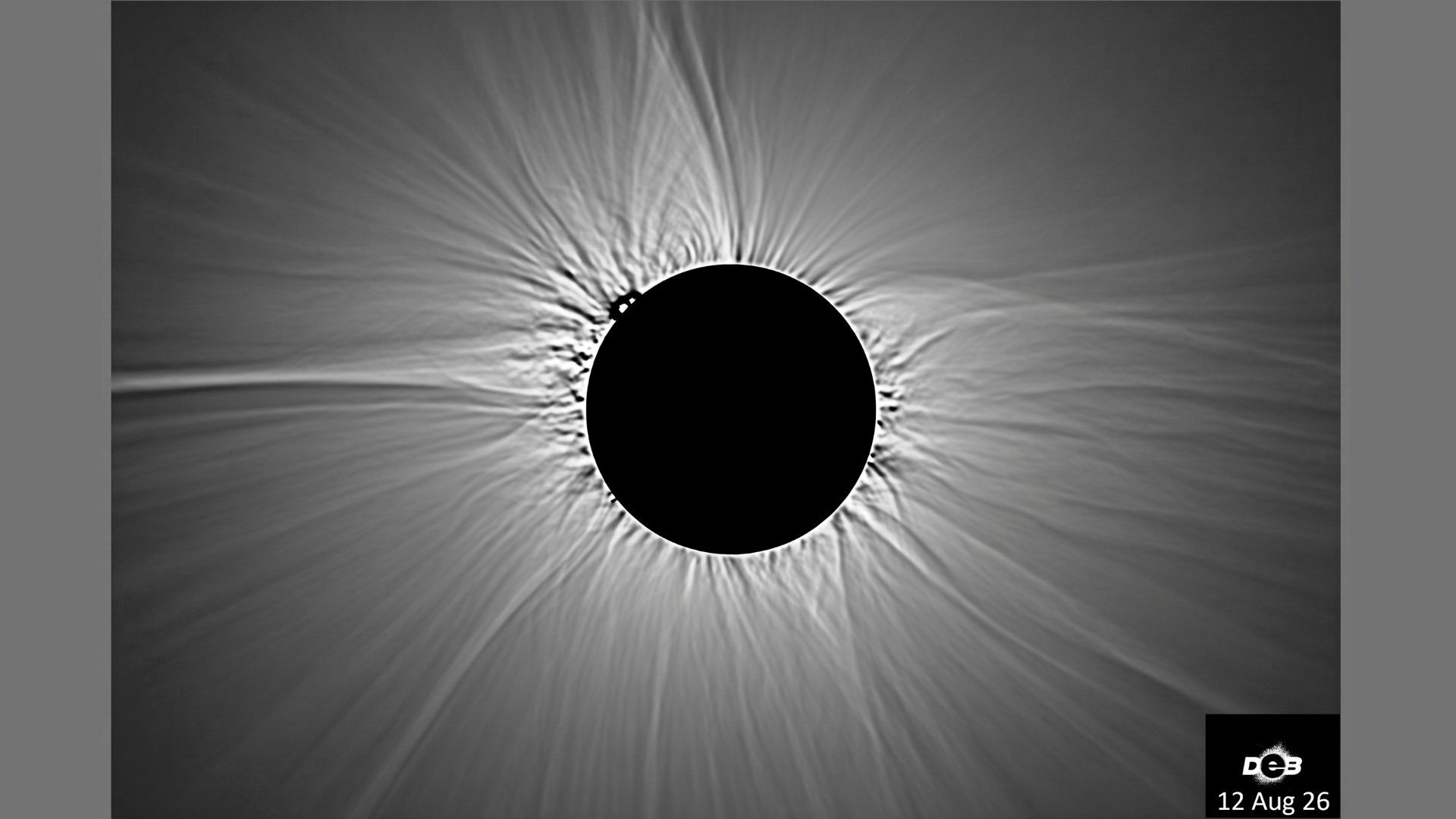
For 1 minute and 37 seconds, the world stopped. The solar corona blossomed into view, a white, ethereal halo surrounding the pitch-black silhouette of the moon. Venus became visible, hanging like a lantern in the midday sky. The sight triggered an ancient, visceral reaction in my brain; it felt, quite literally, as if the natural order had been suspended. It was, as I would later write, like watching a leviathan pass just beneath the surface of a fathomless ocean.
Supporting Data and Technical Observations
The DEB Initiative’s success hinged on more than just the visual spectacle. The project was designed to fill a critical gap in solar research. By deploying a network of telescopes across the path of totality, the DEB allows researchers to track changes in the solar corona over time, providing a continuous view of the sun’s magnetic environment that a single location could not capture.
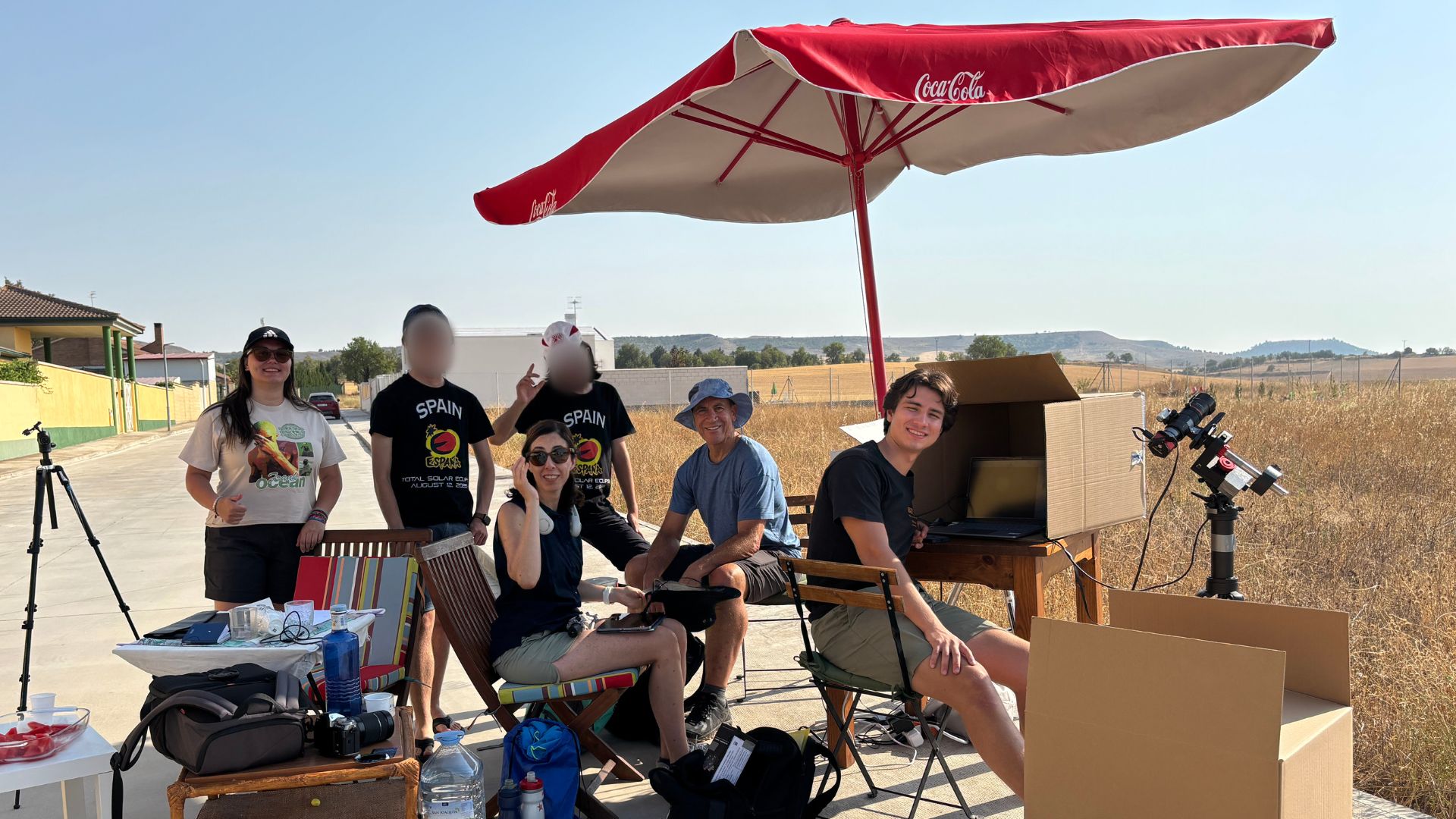
The data gathered in Valoria la Buena—despite the focus challenges I faced during the height of the moment—was part of a broader, successful campaign. The team in Leon, 91 miles (147 kilometers) away, successfully maintained their uplink, and the collective stream provided researchers with a wealth of information regarding coronal structure and temperature gradients.
The "DIY" nature of our cooling setup was not just a clever workaround; it was a testament to the viability of decentralized, volunteer-led science. By utilizing consumer-grade equipment and accessible software, the DEB Initiative has demonstrated that significant contributions to solar physics can be made outside of traditional, government-funded observatories.
Official Perspectives and Scientific Implications
The significance of total solar eclipses has shifted from the historical observation of superstitions to the rigorous analysis of solar activity. NASA’s continued support for citizen science projects like the DEB underscores a strategic pivot: the agency recognizes that the scale of a total solar eclipse is too vast to be captured by stationary professional assets alone.
Professional astronomers, such as those at Southern Illinois University, rely on these distributed networks to observe the "middle" corona, a region that is notoriously difficult to image due to its faintness compared to the sun’s surface. By capturing this data, citizen scientists are helping to refine models of the solar wind and coronal mass ejections (CMEs)—phenomena that directly impact Earth’s technological infrastructure, including satellite communications and power grids.
The Human Implication: A Shared Experience
Beyond the data points and the technical challenges, the core of this experience was its capacity to unify. We were a group of people from different continents, languages, and backgrounds, all tethered to the same 1 minute and 37 seconds of shadow.
The interaction between the DEB team and the residents of Valoria la Buena highlighted the cultural importance of these events. For the locals, the presence of international scientists was an opportunity for engagement; for the scientists, the warmth and hospitality of the villagers grounded the mission in a human context.
The eclipse served as a mirror. As we looked at the sun, we were also looking at each other—a community of humans united by a brief, shared moment of wonder.
Conclusion: The Lingering Shadow
My return journey was, predictably, a logistical challenge of delayed trains and missed connections. Yet, the malaise of travel could not dampen the memory of that afternoon in Spain.
The 2026 eclipse was not just a data point in a solar study; it was a transformative event. It bridged the gap between my professional life as a space writer and my personal life as an observer of the universe. I returned home with a new understanding: the "black sun" is not a terrifying omen, but a reminder of our place in the cosmic dance.
As I look toward future eclipses, I know that the experience will be different—a different location, a different corona, a different set of companions. But the memory of Valoria la Buena remains. It stands as a testament to the power of citizen science and the enduring, irrepressible human drive to reach out and touch the mysteries of the stars. Whether through the lens of a telescope or the simple wonder of the naked eye, the message remains the same: we are small, we are connected, and we are fortunate to live on a planet that provides such a perfect view of the heavens.