For many, the allure of the night sky is tempered by the daunting technical barrier of entry. Between equatorial mounts, polar alignment, and the frustrating reality of "star-hopping" with a paper atlas, the path to becoming an amateur astronomer is often littered with abandoned equipment. However, a significant shift in consumer technology has arrived, and for a limited time, one of its best-performing examples—the Celestron StarSense Explorer DX 130AZ—is available at a price point that makes the hobby more accessible than ever.
Currently, this highly-regarded Newtonian reflector is seeing a 17% discount on Amazon, bringing the cost down to $414.99. This represents the lowest price seen since the height of Prime Day in June, offering a rare opportunity for hobbyists to secure a top-tier beginner telescope at a significant markdown from its $499.95 MSRP.
The Intersection of Tradition and Innovation
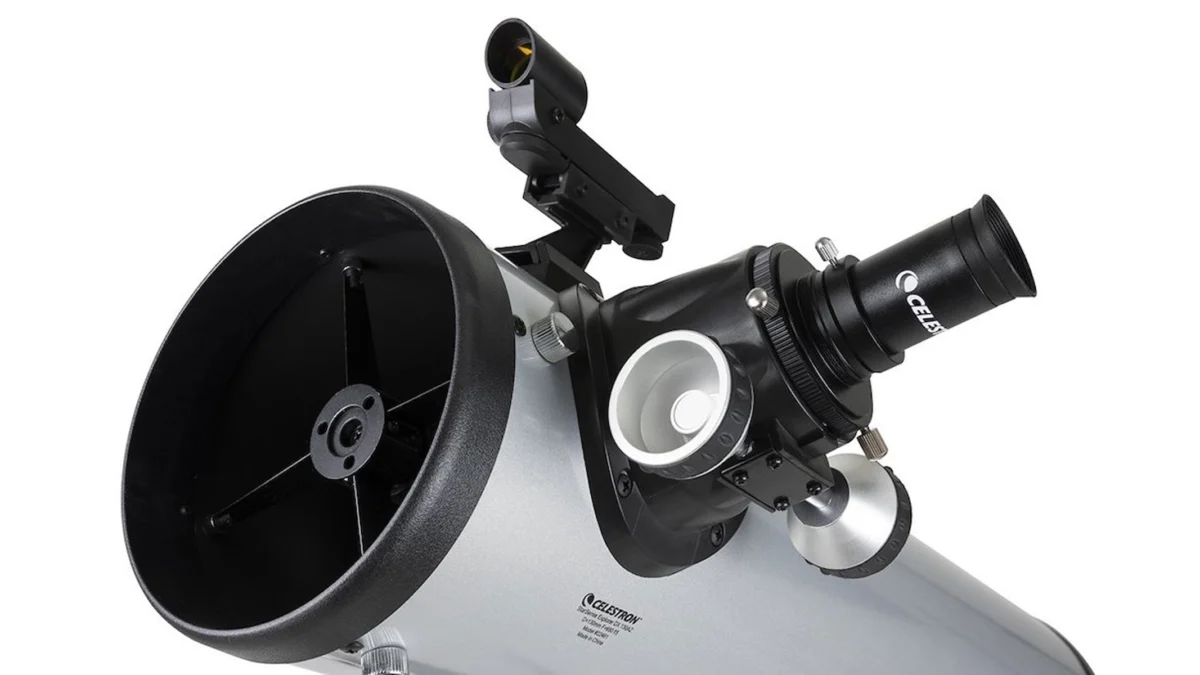
The Celestron StarSense Explorer DX 130AZ does not attempt to reinvent the physics of optics; instead, it revolutionizes the user experience. At its core, it is a traditional Newtonian reflector featuring a 5.1-inch (130 mm) aperture. This is a "sweet spot" for beginners: it is large enough to resolve stunning detail on the craters of the moon, the cloud belts of Jupiter, and the rings of Saturn, yet it remains portable enough to transport to a dark-sky site without needing an engineering degree to assemble.
What sets this model apart—and what earned it a 4-out-of-5-star rating in our extensive testing—is the proprietary StarSense technology. By utilizing a smartphone-integrated dock and a dedicated app, the telescope bridges the gap between the manual experience of star-gazing and the convenience of modern software.
The "StarSense" Advantage: Eliminating the Learning Curve
For centuries, finding a specific celestial object meant navigating the night sky using visual landmarks—a skill that can take years to master. The StarSense Explorer DX 130AZ bypasses this. By leveraging your smartphone’s camera and high-speed image processing, the app performs a process called "plate solving." It takes a snapshot of the sky above, identifies the star patterns, and matches them against a massive internal database.
Once aligned, the app provides the user with simple, real-time, on-screen arrows that guide them to their target. When the target is centered, the bullseye on your phone screen turns green. This system allows even a complete novice to locate galaxies, nebulae, and binary star systems within minutes of setting up, effectively turning the sky into an interactive map.
A Detailed Chronology of the Technology
To understand why this specific telescope holds such high value, we must look at the evolution of amateur astronomy equipment.
- Pre-2010s: The era of the "dumb" telescope. Beginners were forced to rely on manual alt-azimuth mounts or complex equatorial mounts that required precise leveling and polar alignment—both significant hurdles for beginners.
- 2010–2018: The rise of computerized "GoTo" mounts. These provided automated tracking, but often at the cost of extreme weight, battery dependency, and a "black box" experience where the user often failed to learn the actual positions of the stars.
- 2020 (The Launch): Celestron released the StarSense Explorer series. This marked the shift toward "Smart-Manual" telescopes. By moving the processing power to the user’s smartphone, Celestron was able to reduce the manufacturing cost (by removing heavy, expensive motors) while simultaneously improving the user interface.
- 2024 (The Current Market): The DX 130AZ remains a cornerstone of this category. Its popularity has stabilized, but supply chain fluctuations mean that significant discounts, like the current $414.99 price point, remain rare, high-value events.
Technical Specifications and Performance Data
The utility of a telescope is ultimately determined by its glass and mechanics. The DX 130AZ offers a balanced technical profile designed for versatility:
- Optical Design: Newtonian Reflector (provides a bright, color-aberration-free image).
- Aperture: 5.1 inches (130 mm). This allows for a light-gathering capacity roughly 345 times greater than the human eye.
- Focal Length: 650 mm.
- Focal Ratio: f/5. This makes the telescope "fast," providing a wider field of view, which is ideal for viewing large deep-sky objects like the Andromeda Galaxy or the Pleiades star cluster.
- Mount: Manual Alt-Azimuth with a slow-motion control rod.
- Weight: Approximately 18 lbs (8.16 kg).
While our expert reviewer, Damian Peach, noted that the inclusion of higher-powered eyepieces would have elevated the experience further, the current bundle provides everything a beginner needs to start immediately. The inclusion of two eyepieces (typically a 25mm and a 10mm) allows for both wide-field and detailed lunar/planetary observation right out of the box.
Official Perspectives and Expert Consensus
When evaluating the StarSense series, the consensus among industry experts is remarkably consistent. The primary critique of traditional telescopes is that they often become "expensive coat racks" because the user gets frustrated with the learning curve.
Industry experts emphasize that the DX 130AZ solves the "frustration factor." By gamifying the search for celestial objects, it ensures that users achieve a "win" early in their hobby. A win—the sight of Saturn’s rings or the moons of Jupiter—is what encourages a novice to return to the eyepiece.
The Digital Camera World review echoed the sentiments found in our own testing, highlighting that while the build quality is plastic-heavy to keep costs down, the optical performance punches well above its weight class. It is a tool designed for the backyard astronomer who wants to see the universe without the headache of professional-grade logistics.
Implications for the Modern Stargazer
Why does this deal matter now? The hobby of amateur astronomy is currently experiencing a "renaissance." With increased light pollution in urban areas, the ability to quickly and accurately locate deep-sky objects is more important than ever.
1. Removing the Barrier to Entry
By digitizing the navigation process, the DX 130AZ democratizes astronomy. You no longer need to be a member of an astronomy club or possess a decade of experience to see the "hidden" wonders of the universe. This makes it an ideal gift for students, families, or anyone with a burgeoning interest in STEM.
2. A Sustainable Hobby
Unlike many gadgets that become obsolete in two years, a Newtonian reflector is a timeless instrument. The app-based technology is supported by your phone, meaning that as your phone upgrades, your telescope’s "brain" effectively upgrades with it. The optical tube itself is a durable piece of equipment that can serve a user for decades.

3. The Economic Context
With inflation affecting the cost of hobbyist electronics, seeing a price drop on a premium, high-demand item like the StarSense 130AZ is noteworthy. The MSRP of $499.95 reflects its status as a top-tier beginner model. At $414.99, it sits in a price bracket that competes with inferior, smaller-aperture telescopes, making this a clear "best-in-class" value proposition.
Conclusion: Is It Right for You?
The Celestron StarSense Explorer DX 130AZ is not for everyone. If you are an experienced astrophotographer looking for an equatorial mount to track the stars for long-exposure imaging, or if you prefer the traditional, analog method of star-hopping with a paper chart and a red flashlight, you may find the software integration unnecessary.
However, for the vast majority of people—the ones who want to stand in their backyard, look up, and know exactly what they are looking at—it is arguably the best purchase on the market today.
Summary Recommendation:
- Buy it if: You are a beginner or intermediate observer who wants a high-quality, large-aperture telescope that removes the frustration of navigation.
- Skip it if: You require a fully automated "GoTo" mount that moves the telescope for you, or if you prefer a completely "unplugged" experience that excludes smartphones.
As the nights grow longer and the clear skies of the coming season approach, having a reliable guide to the stars is invaluable. With this latest discount, the cosmos has never been closer.