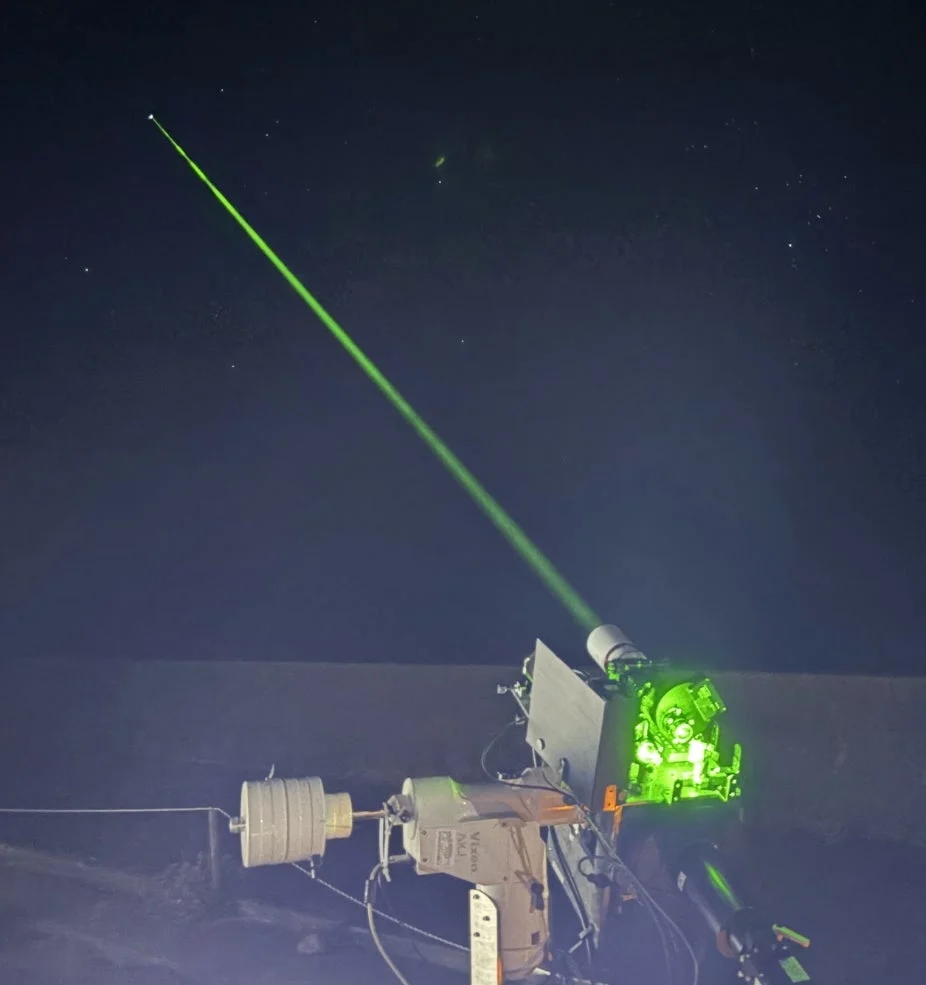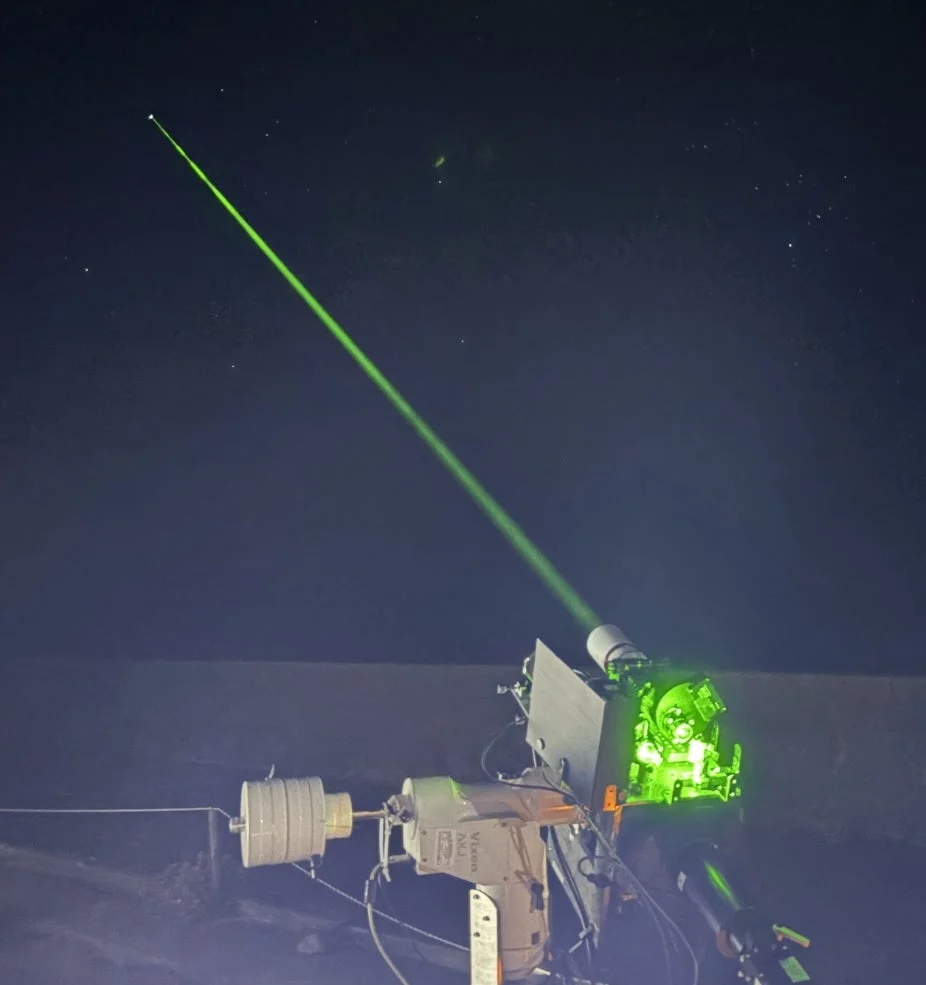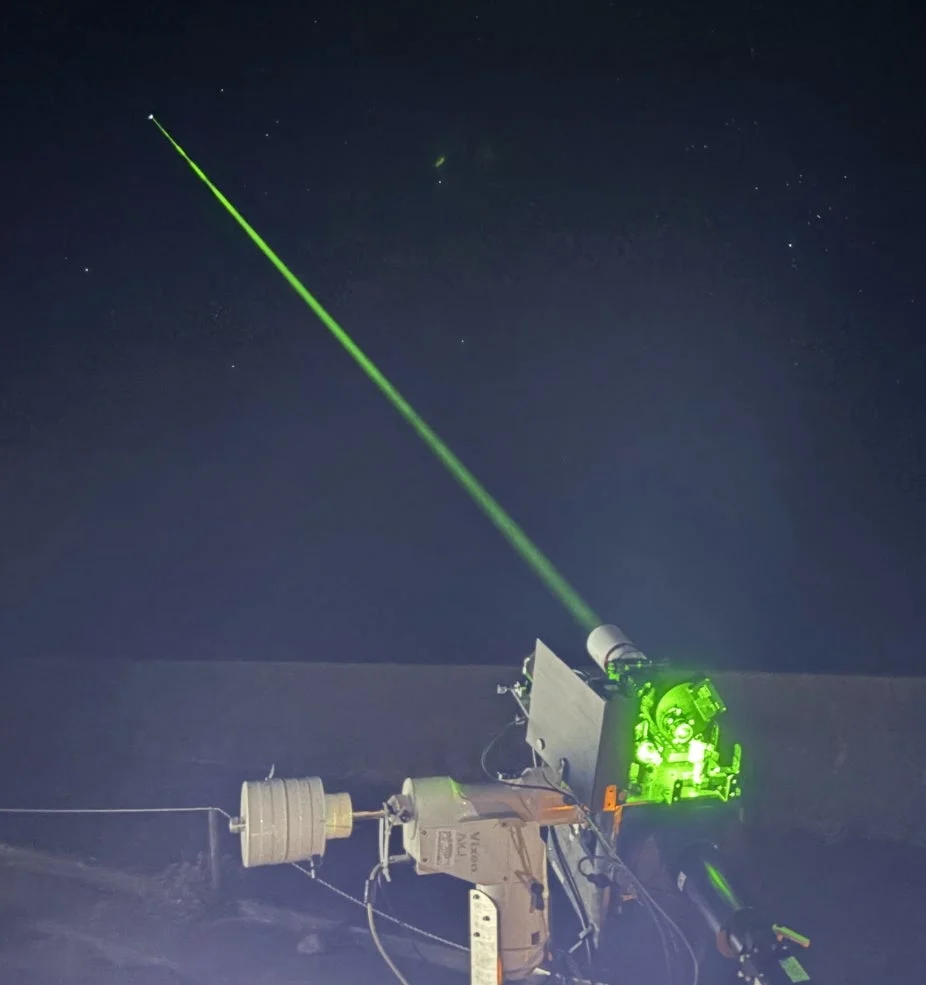
OSLO, Norway — Kongsberg Satellite Services (KSAT), the global leader in ground station network services, has officially signaled a paradigm shift in how space-based data is managed and transmitted. This week, the company announced the commencement of its “Hyperion” demonstration campaign, a comprehensive operational trial designed to validate the viability of its next-generation hybrid radio frequency (RF) and optical relay network, known as HYPER.
By effectively positioning itself as an “orbiting ground station” provider, KSAT is looking to dissolve the bottlenecks that have long plagued Low Earth Orbit (LEO) satellite operators. The Hyperion campaign serves as the critical bridge between theoretical capability and commercial deployment, inviting key industry and institutional stakeholders to pressure-test a network architecture that promises to redefine connectivity in the modern space economy.
Main Facts: The Architecture of HYPER
At the core of the HYPER project is the integration of diverse communication modalities. Unlike traditional constellations that rely solely on RF links—which are increasingly prone to spectrum congestion and bandwidth limitations—the HYPER network leverages a dual-modality approach.
The HYPER satellites are equipped with advanced optical terminals supplied by industry stalwarts Rocket Lab and Sony Space Communications Corp. (SSCC). These laser-based systems allow for massive throughput, significantly exceeding the capabilities of standard RF links. Complementing this, the satellites maintain robust RF capabilities, including S-band connectivity for Telemetry, Tracking, and Command (TT&C) and Ka-band communications for high-speed payload data relay.
The objective is to create a seamless “space-to-space” data highway. By acting as an intermediary in orbit, the HYPER network allows LEO satellites to offload data without needing to wait for a direct line-of-sight to a ground station. This reduces latency from hours to seconds, a critical requirement for time-sensitive missions such as climate monitoring, disaster response, and maritime domain awareness.
Chronology: From Concept to Orbiting Ground Station
The journey toward the Hyperion campaign has been one of rapid iteration and strategic acquisition within the space sector.
- 2024: The Genesis of the Concept. KSAT first unveiled its vision for the HYPER constellation, framing it as a natural evolution of its existing ground network. The company sought to solve the “waiting game” that LEO operators face, where data remains trapped on a satellite until it passes over a ground station.
- Early 2025: Strategic Supply Chain Integration. A significant milestone occurred when Rocket Lab acquired laser communications technology through its purchase of Mynaric. This provided KSAT with a high-performance, flight-proven optical terminal pipeline, essential for the high-data-rate demands of the HYPER network.
- August 2025: Official Announcement. Following the initial reveal last year, KSAT confirmed the launch of the Hyperion campaign. This phase serves as the “dress rehearsal” for commercial service, ensuring that all software interfaces and hardware handshakes function in a realistic operational environment.
- Late 2025 and Beyond: The demonstration phase is intended to culminate in a fully realized commercial service offering, providing seamless integration with the existing KSATlite ground network infrastructure.
Supporting Data: Addressing the Bottleneck
The demand for high-speed, low-latency space data is currently outstripping the capacity of terrestrial ground stations. As the number of LEO satellites increases exponentially, the “contact time” available to each satellite—the window during which it can dump data to a ground station—has become a precious commodity.
Industry data suggests that for high-resolution Earth Observation (EO) satellites, the inability to downlink large files quickly forces operators to store data onboard for extended periods. This limits the frequency of revisit and the timeliness of the intelligence gathered.
The HYPER solution is designed to:
- Increase Data Throughput: Optical communications (laser) can handle orders of magnitude more data than traditional radio frequency bands.
- Ensure Near-Instantaneous Connectivity: By utilizing a relay architecture, the HYPER network acts as a data “drain,” picking up information from LEO sensors and routing it back to Earth via dedicated, high-capacity gateways.
- Reduce Hardware Friction: KSAT has emphasized that HYPER is designed for total compatibility with its KSATlite service. This means operators do not need to overhaul their satellite hardware to benefit from the relay, lowering the barrier to entry for prospective customers.
Official Responses: The Vision for European Resilience
The Hyperion campaign has garnered significant institutional support, signaling its strategic importance to both national and international space agencies. Among those participating in the trials are the National Oceanic and Atmospheric Administration (NOAA) and the European Space Agency (ESA) through its European Resilience from Space (ERS) program.
Edvard Foss, Vice President of the HYPER program at KSAT, articulated the significance of the campaign during the announcement:
“Hyperion is about proving operational services, not just technology. By bringing together customers, technology providers, and institutional partners, we’re demonstrating the hybrid RF and optical capabilities that will underpin the future Hyper network. These campaigns validate real operational use cases while laying the foundation for Europe’s next-generation commercial satellite relay infrastructure.”
The participation of ESA’s ERS program highlights the geopolitical shift toward sovereign, resilient space infrastructure. In an era where secure data transfer is as critical as the data itself, the ability to maintain a robust, high-speed relay network is seen as a pillar of regional strategic autonomy.
Implications: The Future of the Commercial Space Economy
The successful implementation of the HYPER network, validated through the Hyperion campaign, will have profound implications for several sectors:
1. Earth Observation and Real-Time Analytics
Currently, Earth Observation data is often “stale” by the time it reaches the end user. With the HYPER relay, a satellite monitoring a wildfire, an oil spill, or a developing meteorological event can relay that data to the ground almost immediately. This shift moves the industry from “retrospective” analysis to “real-time” decision-making.
2. Space Situational Awareness (SSA)
As orbits become increasingly crowded, the need for rapid communication between satellites and ground-based traffic controllers is paramount. The HYPER network’s ability to handle high-volume data relay ensures that SSA sensors can stay connected to ground centers without gaps in coverage, improving the safety of flight for all orbital assets.
3. The Democratization of Space Data
By offering relay services that integrate with the KSATlite platform, KSAT is effectively lowering the cost-to-benefit ratio for smaller satellite operators. Companies that lack the capital to build their own global ground station network can now “rent” a high-speed relay service, effectively gaining the capabilities of a much larger space-faring entity.
4. Setting the Standard for Hybrid Networks
The hybrid nature of the HYPER network—blending the reliability of RF with the speed of optical laser links—is likely to become the industry gold standard. It provides a “fail-safe” mechanism; if atmospheric conditions or technical issues hinder an optical link, the system can seamlessly transition to RF to maintain the communication link. This redundancy is essential for mission-critical operations.
Conclusion: A New Era of Connectivity
The launch of the Hyperion campaign marks a transformative moment for KSAT and the satellite industry at large. By transitioning from a ground-based service provider to a space-based relay operator, KSAT is addressing the most pressing challenge of the New Space era: the ability to move data as quickly as it is generated.
As the demonstrations continue, the industry will be watching closely to see how the integration of Rocket Lab and Sony technology performs under real-world stress. If the Hyperion campaign succeeds in proving that the HYPER network is both scalable and reliable, the infrastructure will provide a foundation for a new generation of commercial space applications.
For LEO operators, the “orbiting ground station” model is no longer a futuristic concept—it is an imminent reality that promises to unlock the full potential of space-based data, ensuring that the critical information generated in orbit is available when and where it is needed most. As KSAT moves forward, the success of Hyperion will undoubtedly set the pace for global space communication standards for the next decade.