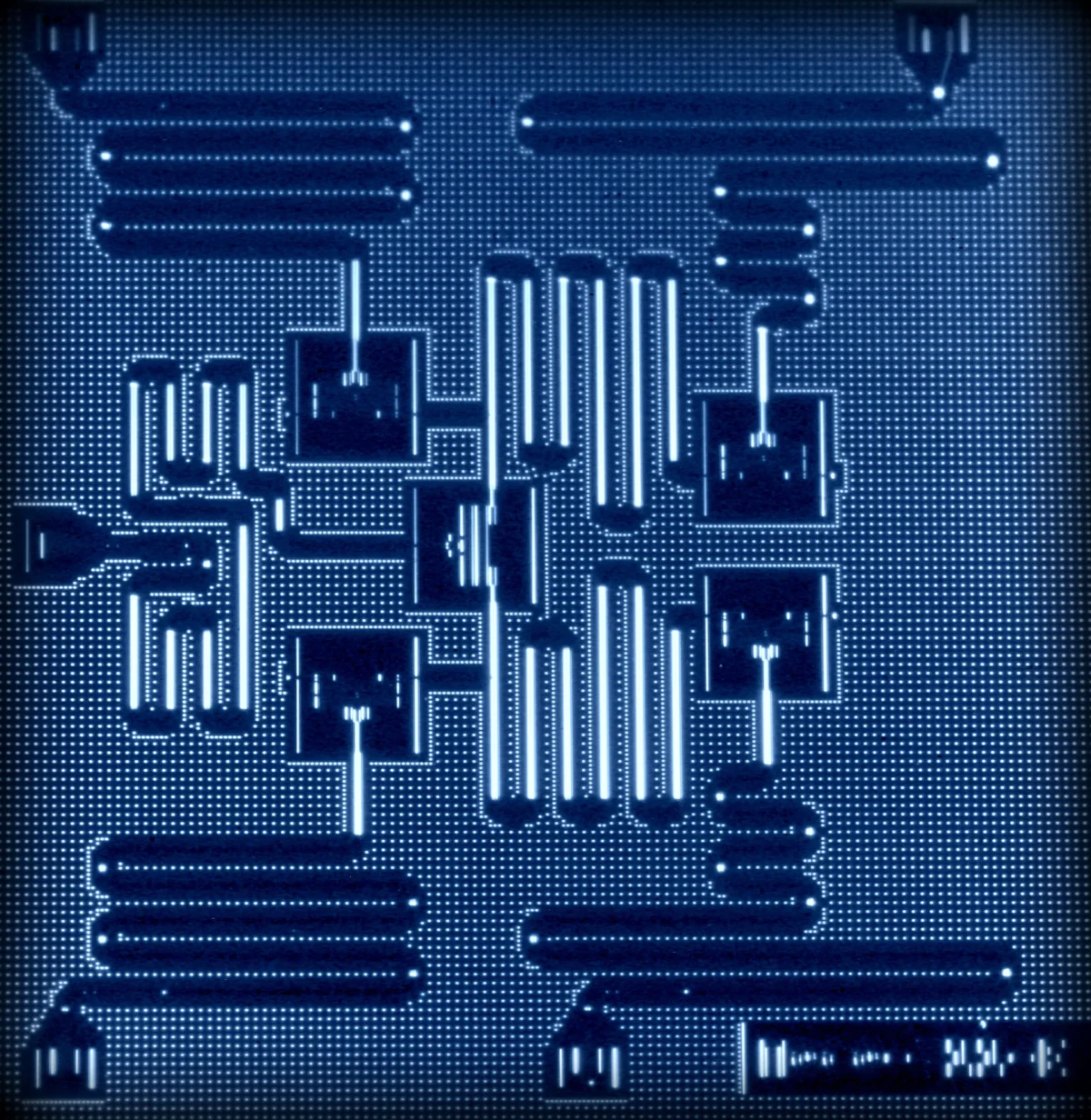
India is currently navigating a pivotal chapter in its technological evolution. As the nation aggressively pursues the development of an indigenous quantum hardware ecosystem, it is simultaneously securing access to some of the world’s most advanced quantum computing platforms. This dual-track strategy—leveraging global partnerships while nurturing domestic capability—is designed to position India as a formidable force in the emerging quantum economy.
At the heart of this strategy is the impending installation of IBM’s Quantum System Two in Amaravati, Andhra Pradesh. This facility will place a world-class production quantum system within the reach of Indian researchers, startups, and enterprises. Meanwhile, domestic pioneers like QpiAI are working to build home-grown processors, control electronics, and software stacks. This configuration provides India with a unique advantage: it does not need to wait for its domestic processors to reach maturity before it begins building the essential algorithms, applications, and quantum engineering expertise required for future-ready computing.
The National Quantum Mission: A Strategic Blueprint
India’s ambitions are anchored by the National Quantum Mission (NQM), a comprehensive policy framework approved with a significant outlay of ₹6,003.65 crore (~$626.8 million) to be deployed over eight years. The mission serves as the bedrock for building domestic quantum infrastructure, providing vital support to startups working in the realms of quantum processors, sensing, communications, and quantum-safe cryptography.

The NQM has established four specialized thematic hubs, which represent the core pillars of India’s quantum strategy:
- Quantum Computing: Focused on hardware and algorithmic advancement.
- Quantum Communications: Centered on secure, long-distance transmission.
- Quantum Sensing and Metrology: Targeting ultra-precise measurement tools.
- Quantum Materials and Devices: Researching the foundational physics of next-generation components.
These hubs, hosted by premier institutions such as IISc Bengaluru, IIT Madras (in collaboration with C-DoT), IIT Bombay, and IIT Delhi, became operational during the 2024–2025 financial year. Each functions as an independent Section 8 company with its own governing board, ensuring agility and specialized focus. To date, the mission has sanctioned approximately ₹2,330.68 crore (~$243.3 million) for these hubs, with nearly ₹700 crore already released to catalyze immediate progress.
Chronology and Milestones of the Quantum Ecosystem
The trajectory of India’s quantum journey is marked by rapid, tangible progress. In less than two years, India successfully demonstrated a 1,000-km quantum key distribution (QKD) network, achieving 50% of the NQM’s eight-year goal for secure communications. This feat utilized indigenous technology developed by QNu Labs, a startup supported by the Department of Science and Technology.

The government’s support has now expanded to 17 startups, with recent additions focusing on cutting-edge fields like quantum biosensors, photon sensing, atomic memory, and precision electronics.
The NQM has set aggressive technology targets that serve as a yardstick for indigenous development:
- Short-term (3 years): Achieving 20 to 50 physical qubits.
- Mid-term (5 years): Scaling to 50 to 100 physical qubits.
- Long-term (8 years): Reaching the 50 to 1,000 physical qubit threshold.
While these qubit counts are conservative compared to the leading edge of IBM’s global roadmap, policymakers and industry experts emphasize that qubit count is only one metric of performance. The true measure of a system’s utility lies in its circuit depth, error rates, and connectivity—the "triad" that determines the actual power of a quantum processor.

IBM’s Rationale: The Importance of the Feedback Loop
IBM’s decision to plant a flag in Amaravati is rooted in the belief that a quantum computer is more than just a piece of hardware; it is the center of a collaborative network. Amith Singhee, CTO of IBM India and South Asia, emphasizes that a machine without a user base is "just a piece of metal."
"The technology stack—the hardware and software—is vital," Singhee explained. "But the second part, which is equally important, is the network of users who use the system to tell us what is working and what is not. They are the ones who advance the application algorithms layer. Without that feedback loop, you cannot achieve meaningful progress."
The selection of Amaravati was driven by the Andhra Pradesh government’s proactive efforts to build a "quantum cluster." By fostering a collaborative environment involving TATA Consultancy Services, Larsen & Toubro, and top-tier academic institutions, the region has created a unique ecosystem that aligns with IBM’s goal of engaging with researchers while quantum applications are still in their infancy.

Technical Realities: Inside the Cryogenic Infrastructure
The installation of a system like IBM’s Quantum System Two is a feat of extreme engineering. Unlike conventional servers that can be rack-mounted, a superconducting quantum computer requires a specialized, climate-controlled environment of approximately 100 square meters.
At the core of this system is the dilution refrigerator, which cools the quantum processor to a staggering 10 to 20 millikelvins—colder than deep space. Using a specialized mixture of helium-3 and helium-4, the refrigerator maintains an environment where superconducting qubits can function without thermal interference. The assembly, often described as "chandelier-like," features a complex web of cryogenic wiring, filters, and amplifiers. These components ensure that microwave pulses can control the qubits while extremely weak output signals are amplified before they reach the room-temperature electronics that process the data.
IBM manages the end-to-end integration of these systems, though it relies on a sophisticated global supply chain for components like refrigerators and cryogenic electronics. Singhee sees this as a massive opportunity for India’s "Make in India" initiative. "Why shouldn’t these refrigerators and peripheral components be made in India?" he asked. The alignment of India’s semiconductor mission with the specific needs of quantum hardware could potentially turn India into a global manufacturing hub for quantum infrastructure, not just a consumer of it.

The Indigenous Push: QpiAI’s Quantum Foundry
While IBM provides the global standard, local startups are moving to challenge the status quo. QpiAI, based in Bengaluru, has inaugurated what it claims is Asia’s largest quantum foundry. This 70,000-square-foot facility brings QPU fabrication, testing, and solution development under one roof.
Founder Nagendra Nagaraja has taken a vertically integrated approach, developing everything from transmon and fluxonium-based processors to proprietary controllers. By designing its own controllers in-house, QpiAI achieves tighter integration with its AI software, which dynamically tunes the qubits to improve performance.
The company’s roadmap is ambitious: after the 25-qubit Indus and 64-qubit Kaveri processors, QpiAI is targeting a 1,000-qubit system dubbed Everest. Furthermore, the company is aiming for 100 logical qubits by 2029—a threshold that would theoretically unlock large-scale commercial viability. By choosing superconducting technology, QpiAI argues it is prioritizing long-term data center compatibility, avoiding the instability of gas-chamber or laser-based qubit technologies.

Implications: The Hybrid Future of Computing
The future of quantum computing is not "quantum vs. classical," but rather a "hybridized" model. In this framework, classical supercomputers and AI engines will handle the bulk of a workload, calling upon the quantum processor only for specific, high-complexity tasks—such as molecular simulations or complex material discovery—that are fundamentally intractable for binary systems.
The software layer will be the great equalizer. As IBM explores the potential of making its programming platform, Qiskit, interoperable with third-party hardware, there is a clear vision for a future where a common language connects diverse quantum processors.
For India, the implications are profound. If the nation can successfully integrate its growing talent pool of software engineers, physicists, and systems architects with the hardware access provided by the Amaravati installation, it could capture a significant share of the global quantum software and services market.

"We hope and expect that India will become a major player in quantum software and services," Singhee stated. "There is going to be a big global market in quantum over the next decade. India should capture half of it, just as it has in the enterprise software and services sector."
The challenge ahead is one of cohesion. The ultimate test for India’s National Quantum Mission will not just be the number of qubits or the length of the fiber-optic network, but whether the country can weave together its startups, academic hubs, and global partners into a singular, sustainable industrial fabric. As it stands, India is not merely participating in the quantum race; it is building the foundation for a permanent presence in the next great technological epoch.