In a breakthrough that promises to reshape our understanding of the cosmos, astronomers have successfully utilized South Africa’s MeerKAT radio telescope to detect hydrogen gas from a period when the universe was in its relative infancy. By isolating the faint, ethereal "21-centimeter line" emitted by neutral hydrogen billions of light-years away, researchers have demonstrated a powerful new technique for mapping the large-scale structure of the universe, bypassing the limitations of traditional optical surveys.
This achievement, detailed in the July edition of The Astrophysical Journal Letters, marks a significant milestone in observational cosmology. It proves that we can now chart the distribution of the universe’s most abundant element across vast epochs, providing a new 3D lens through which we can view the evolution of galaxies and the mysterious dark energy that continues to accelerate the expansion of the cosmos.
The 21-Centimeter Challenge: Capturing the Invisible
Neutral hydrogen is the fundamental building block of the universe. In its neutral state, it emits a specific, faint radio signal at a wavelength of 21 centimeters. As light and radio waves travel across the expanding fabric of space-time, they are stretched—a phenomenon known as "redshift." Because the universe is expanding, the degree of this redshift acts as a cosmic clock; the further the light has traveled, the more it has been stretched, allowing astronomers to pinpoint exactly when the gas existed.
However, detecting this signal is notoriously difficult. The 21-centimeter line is exceptionally faint and is often drowned out by "noise," including human-made radio-frequency interference, instrumental effects, and the glow of foreground celestial objects. Until now, most attempts to map this hydrogen have relied on "cross-correlation," where radio data is combined with visible-light surveys of galaxies. This new study by the MeerKAT team represents a departure from that methodology, successfully extracting the signal directly from radio data alone.
A Journey Back in Time: The Chronology of Discovery
The data utilized in this study were not gathered during a recent, specialized mission, but were instead pulled from a "trove" of observations taken as early as 2018. When MeerKAT, an array of 64 high-precision antennas located in the remote Karoo region of South Africa, first began its scientific operations, it was already capturing data that contained the keys to this discovery—if only researchers knew how to unlock it.
- 2018: MeerKAT begins initial science operations, collecting massive amounts of radio data from the Southern Hemisphere sky.
- Post-2018 Analysis: The research team, led by Sourabh Paul, begins the rigorous process of isolating the faint hydrogen signature from the background "static." This involved years of developing sophisticated algorithms to mitigate interference and instrumental noise.
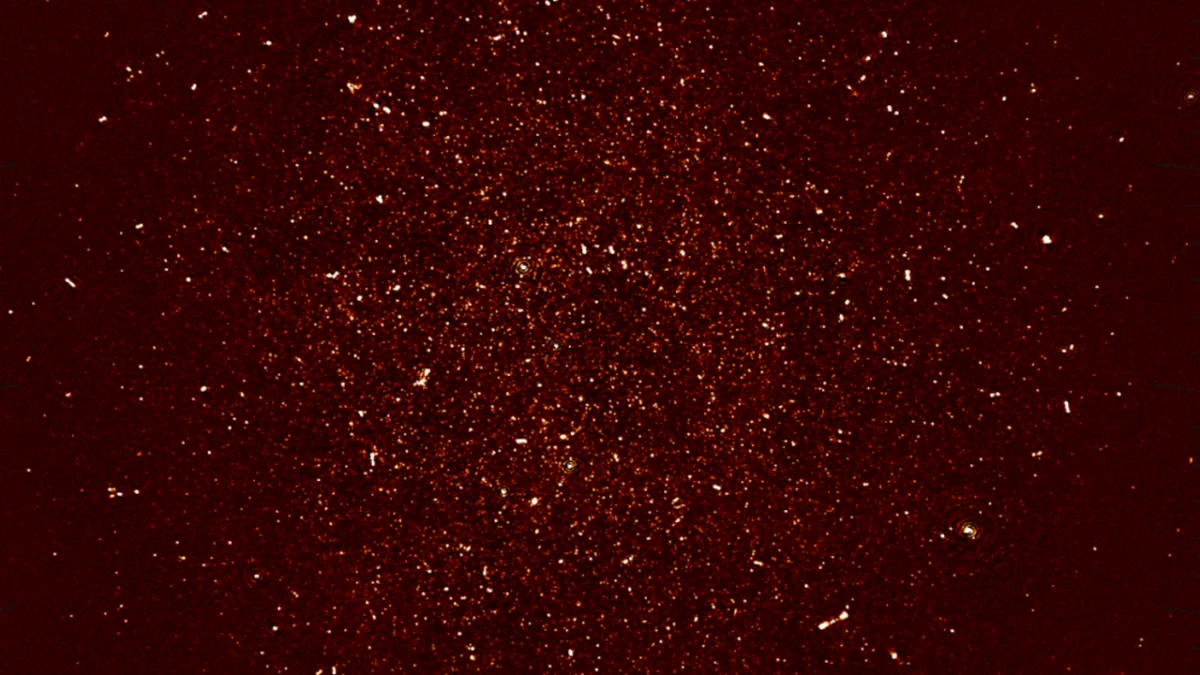
- The Breakthrough: The team successfully processes 96 hours of observational data, identifying hydrogen signatures dating back 4 to 5 billion years.
- July 2026: The peer-reviewed findings are published in The Astrophysical Journal Letters, confirming that the technique is not only viable but a highly practical tool for future cosmological surveys.
Supporting Data and Methodology
The scale of the discovery is profound. By analyzing nearly four days of cumulative observation time, the team traced hydrogen spanning millions of light-years—a spatial gap comparable to the distance between the Milky Way and our nearest galactic neighbor, the Andromeda galaxy.
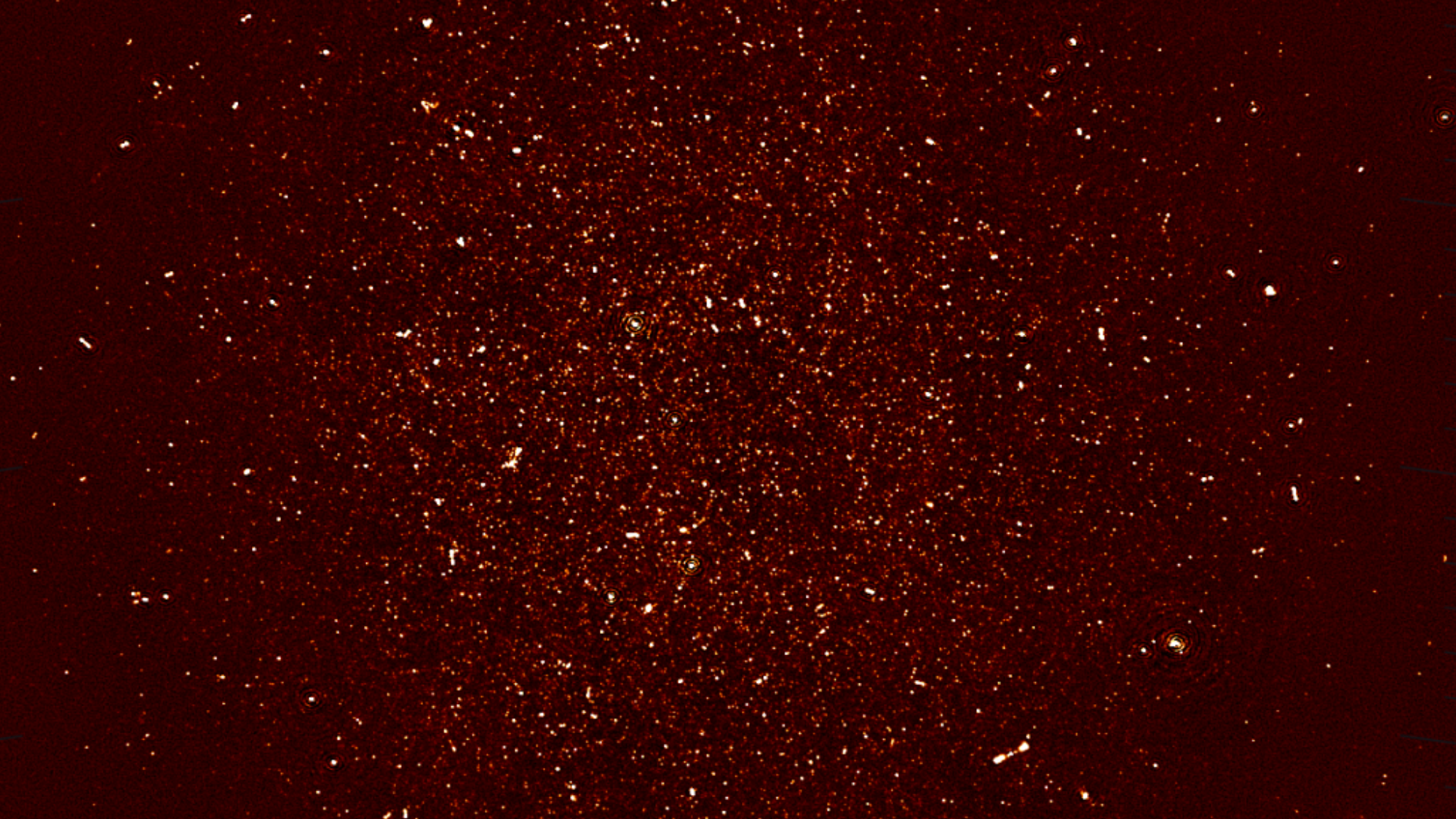
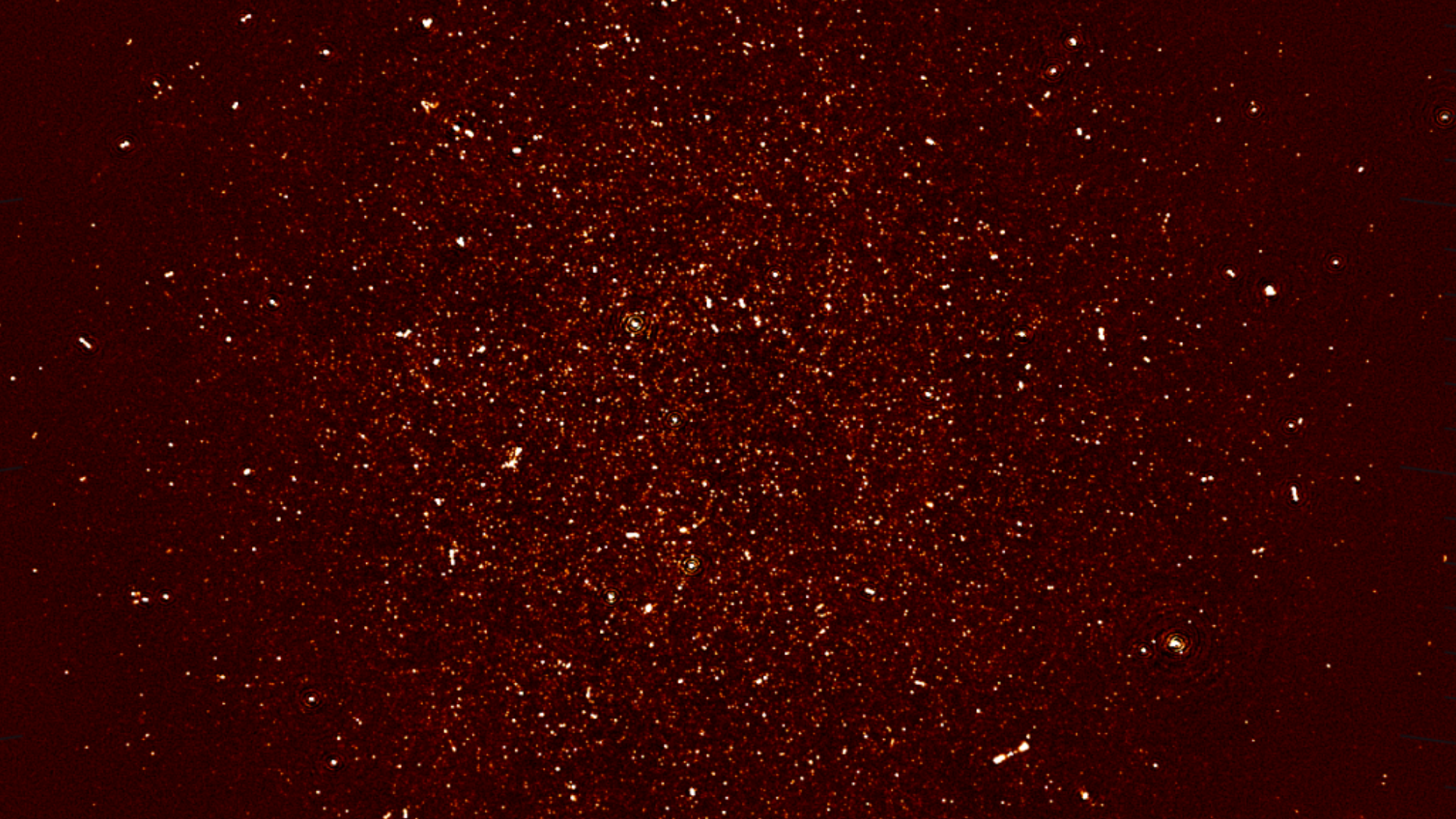
The methodology required an unprecedented level of precision. Because the signal is so weak, any imperfection in the calibration of the 64 MeerKAT dishes could have rendered the data useless. The team had to account for "foreground contamination," which includes everything from local terrestrial radio broadcasts to the synchrotron radiation emitted by our own galaxy. By successfully filtering these out, the team proved that hydrogen intensity mapping could be used to see structures that are far too faint or distant to be captured by even the most sensitive optical telescopes.
Official Perspectives: The Scientific Community Weighs In
The team’s success has sent ripples through the astrophysical community, with experts highlighting both the technical prowess required and the implications for the future of the field.
"This is a very exciting milestone," said Sourabh Paul, lead author of the study. "Hydrogen intensity mapping has long been seen as a promising way to map the universe efficiently, but the signal is extremely faint and difficult to isolate… Detecting it directly with MeerKAT shows that this technique is becoming a practical tool for cosmology."
Zhaoting Chen of the University of Edinburgh emphasized the shift in how we approach galaxy evolution. "With intensity mapping, we do not need to detect every individual galaxy," Chen noted. "Instead, we can measure the collective signal from hydrogen across large cosmic volumes, giving us a new way to study both galaxy evolution and the underlying matter distribution of the universe."
The sentiment was echoed by Mario G. Santos of the University of the Western Cape, who marveled at the retrospective value of the telescope’s early data. "It is particularly remarkable that the data used in this study were taken in 2018, when MeerKAT had only just started science operations. There is now a rich trove of MeerKAT data waiting to be explored with this method."
Laura Wolz from the University of Manchester added, "The fact that this signal can be extracted from observations that were not originally designed for hydrogen intensity mapping is very encouraging. It shows the enormous scientific value of MeerKAT data and points the way to future observations with the Square Kilometre Array Observatory (SKAO)."
Implications for the Future of Cosmology
The implications of this discovery are twofold: they transform our current capability to survey the universe and they provide a clear roadmap for the next generation of observatories.
1. Mapping the "Dark" Web
The universe is structured like a vast web, with galaxies clustered along filaments of dark matter and gas. By mapping the neutral hydrogen, which acts as a tracer for this underlying matter, astronomers can build a 3D map of the universe’s large-scale structure. This allows us to observe how gravity has pulled matter together over billions of years, providing a vital test for our current models of gravity and dark matter.
2. Preparing for the SKAO
The MeerKAT telescope is effectively a precursor to the Square Kilometre Array Observatory (SKAO), an international project currently under construction in Australia and South Africa. The SKAO is set to become the world’s largest radio telescope, and the techniques refined by the MeerKAT team will be foundational to its operation. By proving that hydrogen intensity mapping can be done without relying on optical surveys, the team has expanded the "field of view" for the SKAO, allowing it to survey the deep, early universe with unprecedented speed and accuracy.
3. Understanding Dark Energy
Perhaps most significantly, this technique offers a new way to measure the expansion rate of the universe. By observing the distribution of hydrogen across different cosmic epochs, researchers can track how dark energy has influenced the growth of structures over time. If the distribution of gas appears different than what current models predict, it could force a fundamental rethink of the "Standard Model" of cosmology, potentially revealing new physics behind the mysterious force driving the universe apart.
Conclusion: A New Window into the Past
As the team moves forward, they plan to collect more data covering wider swaths of the sky over longer durations. This will allow for higher-resolution maps, effectively letting us peer into the "middle ages" of the universe—the era when the first galaxies were rapidly growing and consuming the surrounding gas.
The success of the MeerKAT team serves as a reminder that the universe is constantly "speaking" to us in radio waves, and for decades, we have been learning how to listen. With this latest development, we aren’t just listening to the echoes of the past; we are beginning to draft a detailed map of the cosmic history that led to our existence. As we prepare for the next era of radio astronomy, one thing is clear: the invisible hydrogen gas that permeates the void is no longer just background noise—it is the next great frontier in our quest to understand the origins of everything.