In the violent, primordial theater of our early solar system, a cataclysmic event occurred that would forever alter the trajectory of Earth. For decades, scientists have grappled with the "Giant Impact Hypothesis," the leading theory suggesting that a Mars-sized protoplanet, dubbed Theia, slammed into the proto-Earth, casting off the debris that eventually coalesced into our moon.
Now, a groundbreaking study led by Adeene Denton of the Southwest Research Institute (SwRI) has introduced a new variable into this cosmic equation: internal temperature. By accounting for the geologic "strength" of these young, hot worlds, new high-fidelity simulations indicate that the moon might have formed not over centuries or millennia, but in a matter of hours.
The Foundation: A History of Cosmic Collision
The story of the moon’s birth is one of the most significant chapters in planetary science. Since the early 2000s, researcher Robin Canup has been a pioneer in modeling this collision. Her work established the "canonical model," which posits that Theia struck Earth at a glancing angle, vaporizing much of the impactor and shearing off a portion of Earth’s mantle. This material formed a disk around the planet, which slowly aggregated into the moon we see in our night sky today.
However, these older models often struggled to reconcile the chemical similarities between Earth and the moon. If the moon were made largely of Theia’s material, it should be chemically distinct from Earth—yet, in many isotopic respects, the two bodies are remarkably similar. Scientists have long searched for a model that explains this "compositional twin" mystery while maintaining the physical realities of such an impact.
The New Variable: Material Strength and Thermal States
The research led by Adeene Denton represents a significant leap forward in complexity. Previous simulations often treated the colliding protoplanets as fluid-like bodies. Denton’s team, however, integrated "material strength"—a property that dictates how a solid object deforms, breaks, or flows under extreme stress.
"Models have evolved to include material strength, something that’s really important when you’re studying collisions between smaller bodies like asteroids," Denton explained in a recent statement. "We weren’t sure it would matter for the moon or not. When we did the simulations, we found it actually matters quite a bit."
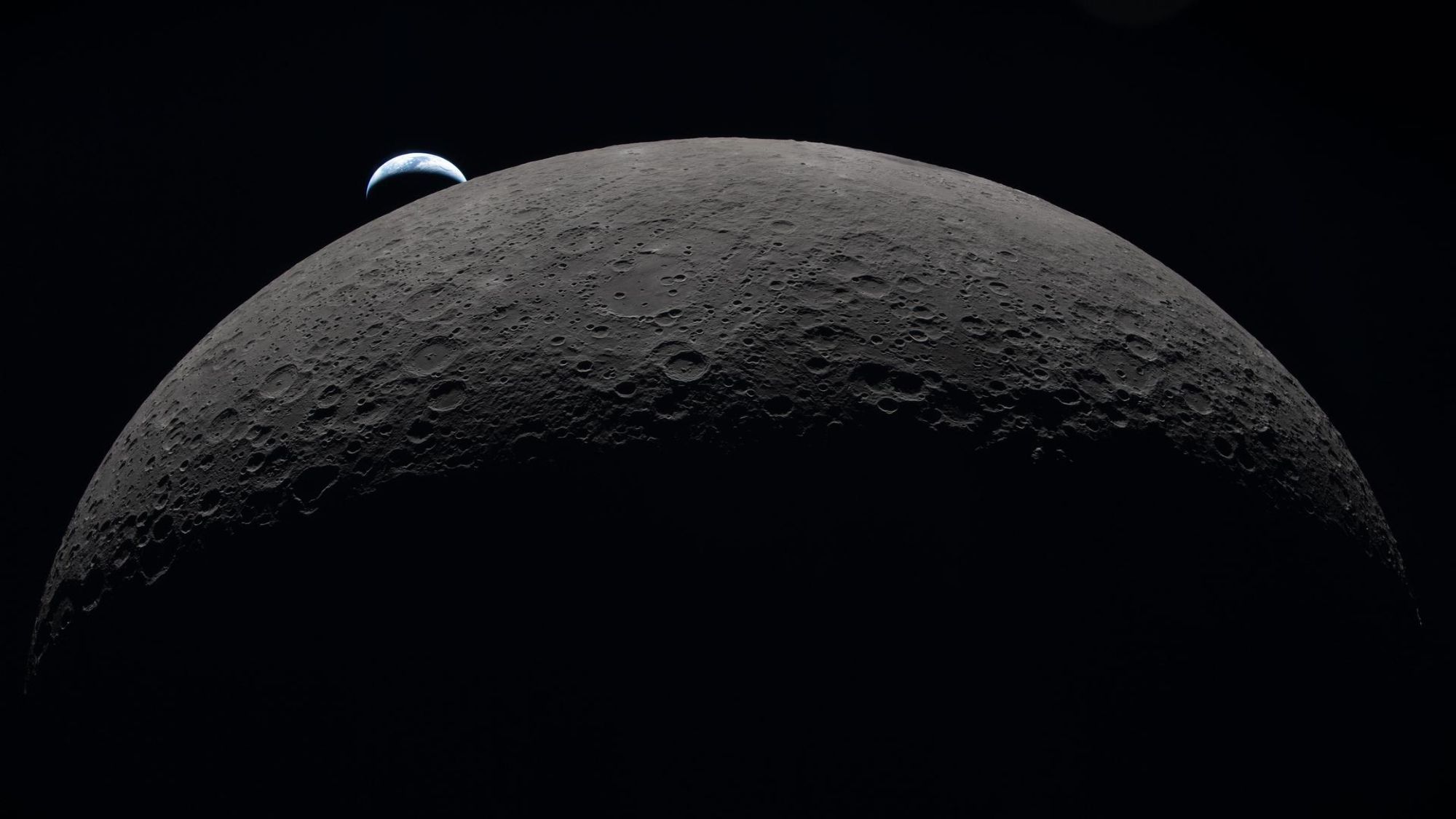
The team discovered that the internal temperature of the proto-Earth and Theia at the time of impact played a critical role. In the immediate aftermath of solar system formation, planets were internally molten and extremely hot. Warmer planetary material is significantly more malleable—or "weaker"—than colder, solid rock. When the team adjusted their models to reflect the heat of a planet just 60 to 150 million years old, the physics of the collision changed dramatically.
A Chronology of Chaos
To understand the significance of these findings, one must view the event through the lens of timing:
- Pre-Impact (The Proto-Solar System): Earth and Theia are forming. Both are intensely hot, driven by radioactive decay and the heat of accretion.
- The Impact (0–1 Hours): Theia strikes Earth. Because both bodies are hot, their material deforms easily. Theia is effectively shredded; its iron core sinks into Earth, while its mantle material is flung into orbit.
- The Disk Formation (1–3 Hours): The debris creates a massive, swirling ring of vaporized rock and molten silicate around Earth.
- Accretion (3–5 Hours): Because the initial impact was so energetic and the material so volatile, the debris does not linger as a thin ring. Instead, the gravitational instability causes the material to clump together rapidly. Within five hours, a primitive, intact moon emerges from the chaos.
This "rapid formation" scenario, which was first hinted at by NASA-led simulations in 2022, is now strongly supported by the SwRI research. If the impact occurred early enough for the bodies to remain at peak thermal temperatures, the moon could have quite literally been forged in a single afternoon.
Supporting Data: Why Temperature Matters
The distinction between a "fast" moon and a "slow" moon lies in the "memory" of the materials. When Theia was modeled as a "colder" (more evolved) body, it exhibited greater structural integrity. In these scenarios, the impact was less destructive; Theia would often survive the initial collision, only to be absorbed into Earth later. The resulting debris ring would be smaller and less chaotic, leading to a much slower, gradual accretion process that could take thousands of years.
Conversely, a "warmer" Theia, typical of an earlier impact, is easily obliterated. The energy is efficiently transferred into the debris, creating a high-density disk that is ripe for rapid gravitational collapse. The simulations conducted by Denton suggest that the physical properties of the moon today—such as its volatile content—might be a direct "fossil" record of the thermal state of the Earth and Theia during that specific window of time.
Expert Perspectives and Implications
The scientific community has reacted with cautious excitement. Robin Canup, though not a direct participant in this specific study, noted the importance of the work: "These surprising and exciting new results imply a potential connection between the physical properties of the moon today… and the thermal state of the Earth and Theia at the time of the giant impact."
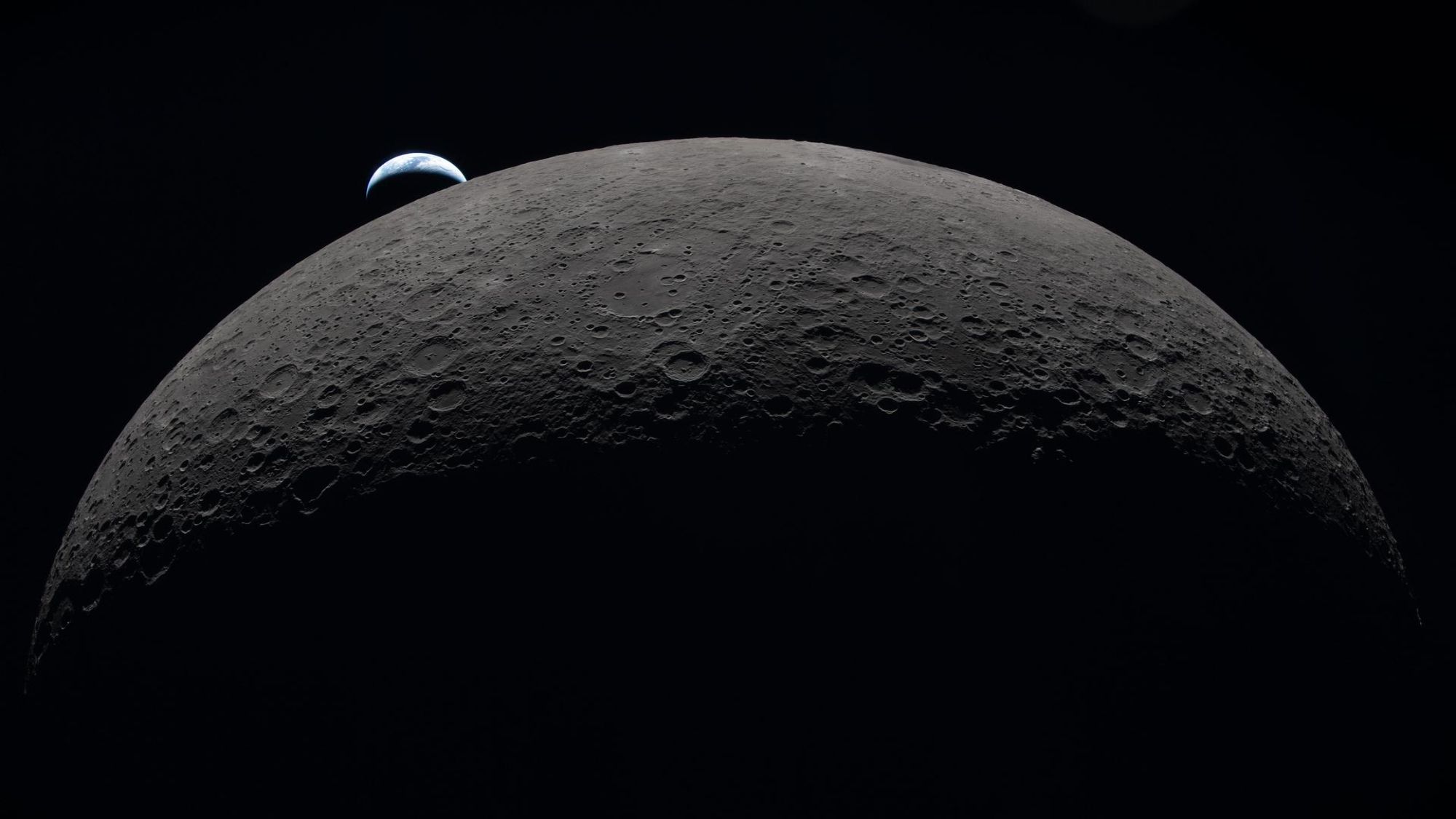
This connection provides a new path for planetary scientists to constrain the timeline of the early solar system. If we can determine the thermal history of the Earth, we can narrow down the window of the "Big Splat."
However, the study also highlights persistent mysteries. While the rapid formation model solves some physical problems, it still leaves the "isotopic puzzle" unresolved. The moon is chemically similar to Earth’s mantle, but there are subtle, unexplained differences in certain isotopes. While the current model explains the dynamics, the geochemical fingerprint suggests there is still a missing piece to the puzzle—perhaps involving complex mixing of vaporized material that our current simulations are only just beginning to capture.
The Search for Exomoons: A New Paradigm
The implications of this research extend far beyond our own neighborhood. Astronomers have long searched for "exomoons"—moons orbiting planets in other solar systems. If the moon formed in just a few hours, the "window of opportunity" for moon formation around terrestrial planets might be much narrower than previously thought.
If moon-forming disks are fleeting, transient events that dissipate or collapse within hours, the likelihood of detecting them around distant, rocky exoplanets becomes incredibly slim. It suggests that such disks are not the long-lived, stable structures we once imagined. However, this logic does not apply to gas giants. The moons of Jupiter and Saturn, for example, formed from the lingering gas and dust of the protoplanetary disk itself—a much slower, more sustainable process. Consequently, the search for exomoons will likely remain focused on these massive, gas-rich worlds, as the "impact-induced" moon formation seen on Earth may be a much rarer or harder-to-detect phenomenon in the broader galaxy.
Conclusion: A Violent Inheritance
The study, published on September 1 in The Astrophysical Journal Letters, serves as a reminder that our serene, moonlit nights are the result of a singular, violent day in the history of the cosmos. Forged in hours, the moon has been our constant companion for 4.5 billion years. By peering into the thermal mechanics of the early Earth, scientists are not just learning how the moon was made; they are learning how the volatility of our beginnings dictates the structure of our present world.
As modeling technology advances, we move closer to a definitive history of the Earth-Moon system. Whether formed in a chaotic rush or a slow, celestial dance, our moon remains the most profound testament to the high-stakes collisions that define the evolution of the solar system.