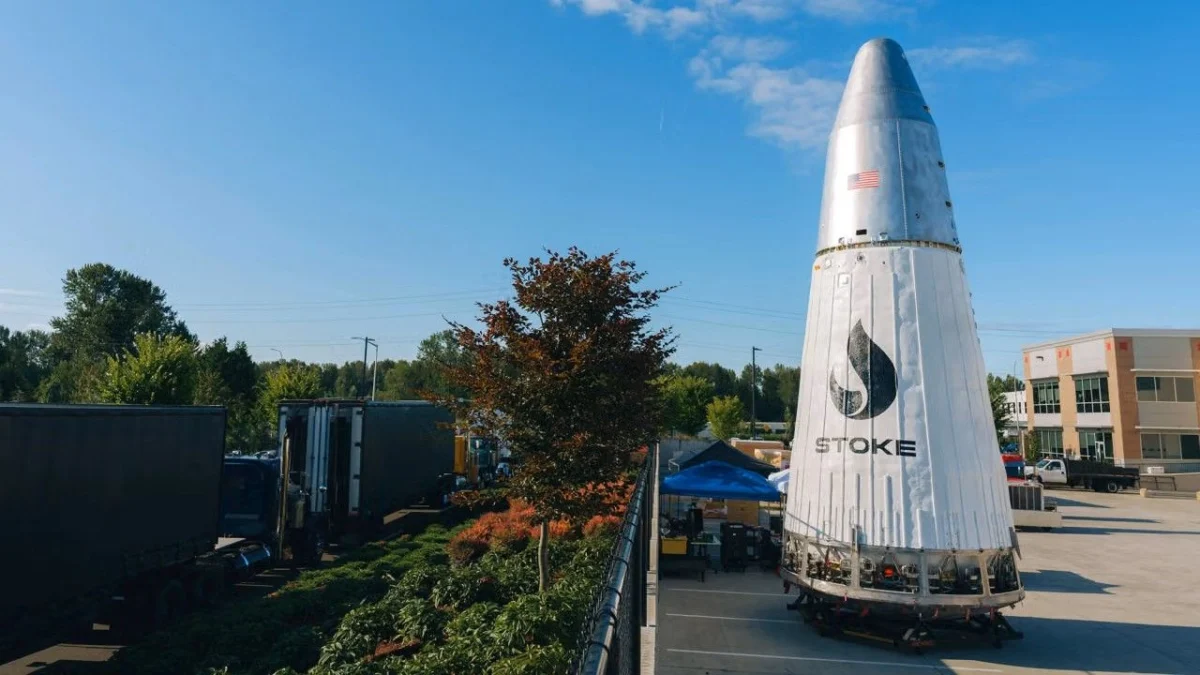
In a massive vote of confidence for the future of commercial spaceflight, Kent, Washington-based aerospace startup Stoke Space has successfully closed a $1 billion "Series E" funding round. This milestone brings the company’s total lifetime investment to an impressive $2.3 billion, positioning it as one of the most well-capitalized players in the competitive race to revolutionize orbital access.
With this infusion of capital, Stoke Space is moving aggressively to finalize the development of its "Nova" launch vehicle family—a dual-tiered strategy focused on rapid, full reusability. The funding announcement, made public on September 8, serves as a roadmap for the company’s next five years, bridging the gap between innovative prototype testing and the commercial launch market.
Main Facts: The Path to Nova
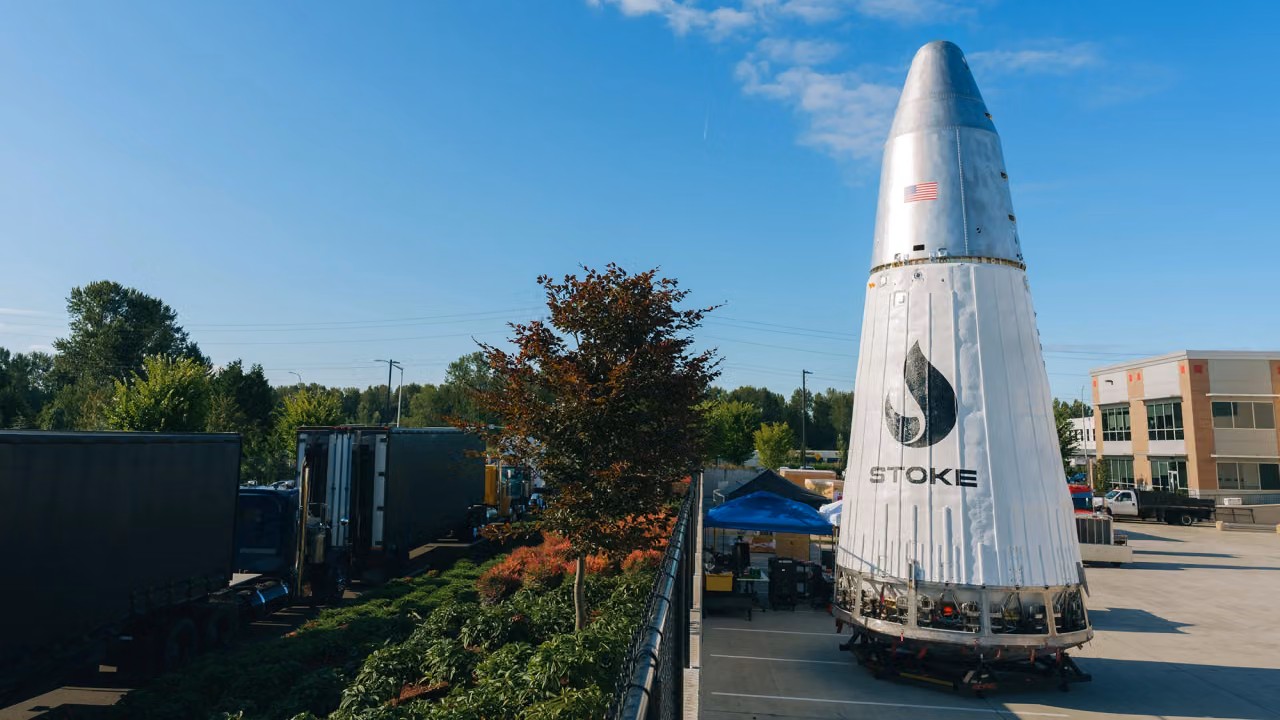
Stoke Space is not just another launch provider; it is an engineering house focused on solving the "reusability bottleneck." The company’s architecture centers on two primary vehicles: the Nova Pathfinder, a sub-orbital and early-orbital flight demonstrator, and the Nova Block 2, a more robust, heavy-lift system designed to deliver up to 15 tons into low Earth orbit (LEO).
The Technology Under the Hood
At the core of the Nova architecture is the Zenith engine, a marvel of modern propulsion engineering. These engines utilize a full-flow staged-combustion (FFSC) cycle—a design that, while notoriously difficult to master, offers unmatched efficiency and operational longevity. By utilizing liquid oxygen and liquefied natural gas (LNG), the engines generate significantly less soot and carbon buildup compared to traditional kerosene-based engines. This reduction in post-flight residue is critical for achieving the company’s goal of rapid, airline-style turnarounds.
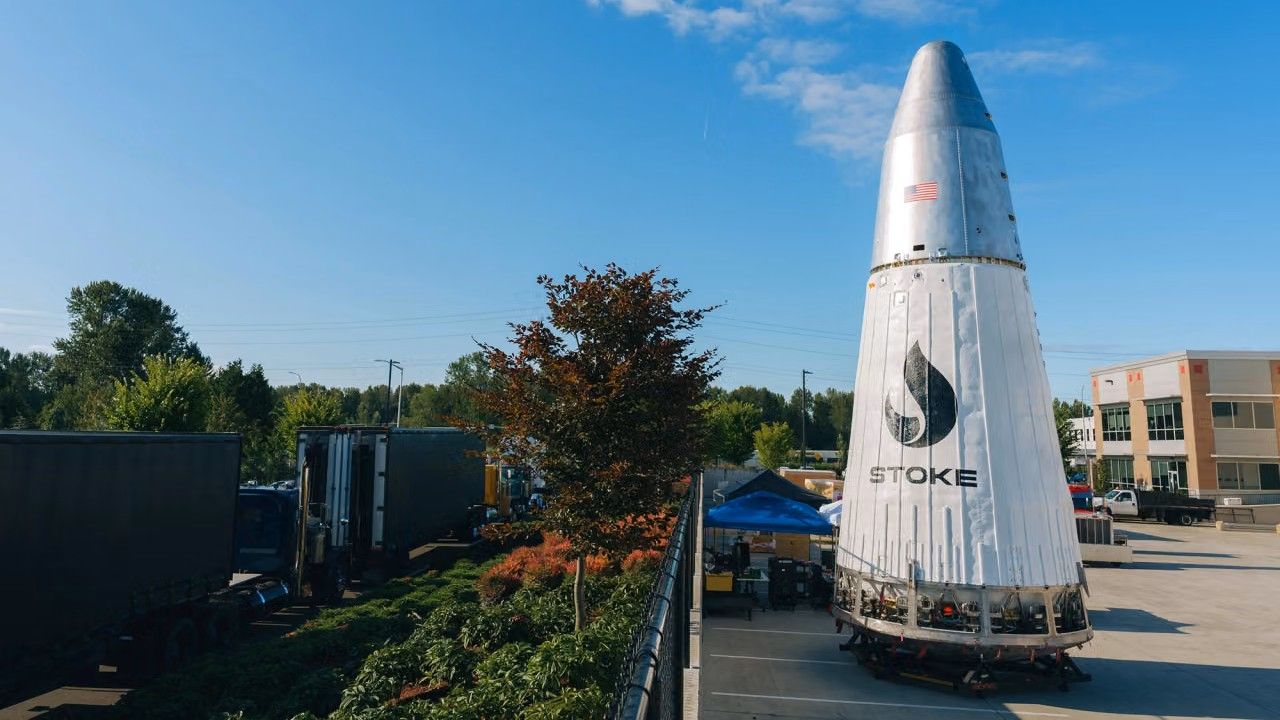
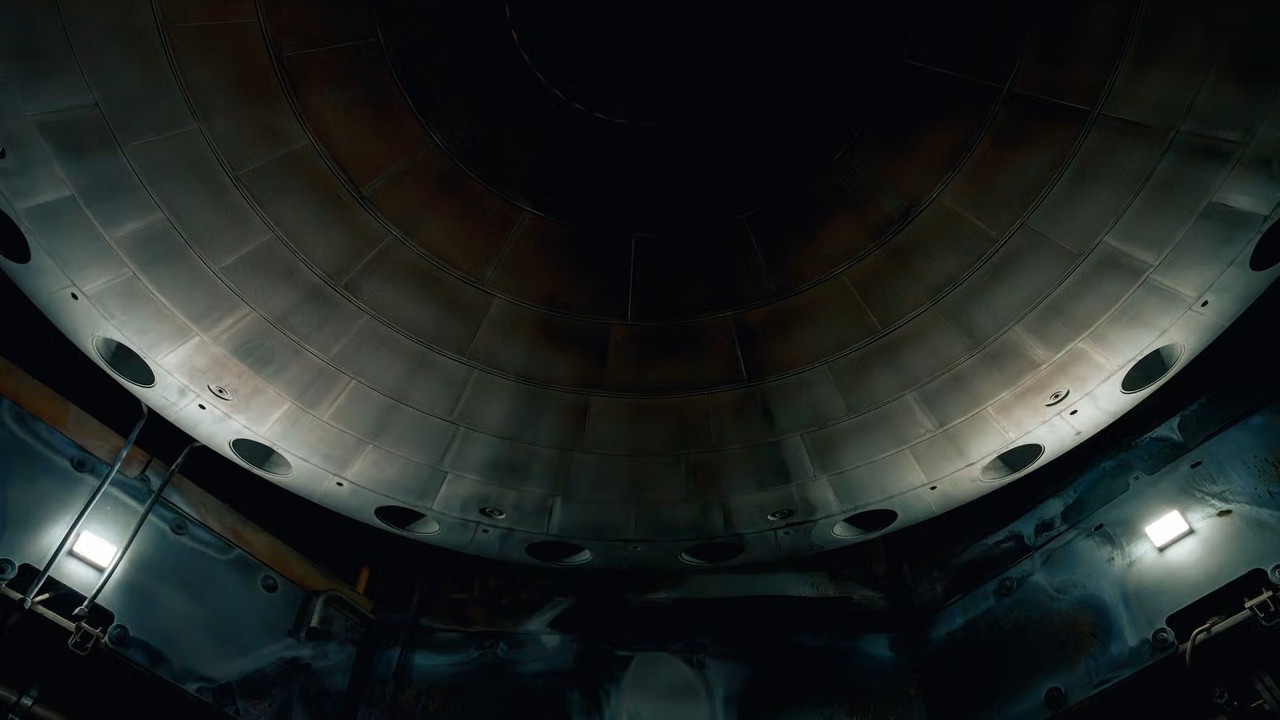
The upper stage, however, is where Stoke truly diverges from industry norms. Instead of relying on fragile ceramic tiles for reentry protection, the second stage features an integrated metal heat shield. This dome-like structure is actively cooled by the liquid hydrogen fuel powering the ship’s Andromeda propulsion system. By integrating 12 small dual-thrust chambers around the perimeter of the heat shield rather than using a single massive engine, Stoke creates a unique, highly maneuverable upper stage that can survive the harsh environment of atmospheric reentry.
Chronology: From Hopper Tests to Orbital Debut
Stoke’s trajectory has been defined by a "test-fast, learn-faster" philosophy.
- 2023: The company reached a major milestone with a successful "hopper" test flight of the Pathfinder upper stage. The vehicle lifted off, hovered at an altitude of approximately 30 feet (10 meters), and performed a controlled landing, proving the viability of its unconventional engine and heat shield integration.
- 2027: The current target for the debut orbital flight of the Nova Pathfinder. This mission will carry a customer payload, serving as the ultimate stress test for the company’s reusability claims.
- 2027–2028: Following a successful debut, Stoke plans to ramp up flight cadence, utilizing Pathfinder as a workhorse to gather flight data and prove reliability to prospective government and commercial clients.
- 2029: The scheduled target for the inaugural launch of the Nova Block 2. This larger, more powerful vehicle will replace the tapered design of the Pathfinder with cylindrical tanks, allowing for a 5-meter-wide fairing—standard for large-scale satellite constellation deployments.
Supporting Data: Why "Full Reusability" Matters
The aerospace industry is currently undergoing a paradigm shift. For decades, the cost of spaceflight was driven by the "throwaway" nature of rockets. While companies like SpaceX have pioneered the recovery of first stages, the goal of 100% reusability—where both the first and second stages are recovered, refurbished, and flown again—remains the "holy grail."
Stoke’s financial data reflects the high stakes of this transition. By securing $2.3 billion in total funding, the company is effectively building a vertically integrated infrastructure. This includes:
- Moses Lake Expansion: A massive 475-acre expansion of its existing 75-acre test site in Washington state. This facility will be dedicated to rigorous propulsion testing, ensuring that both the Zenith engines and the Andromeda upper-stage systems can withstand the stresses of multiple flights.
- Cape Canaveral Operations: Stoke has secured a foothold at the historic Space Launch Complex-14 (SLC-14) at Cape Canaveral Space Force Station. The construction of a new, state-of-the-art payload processing facility at this site is designed to handle the logistical requirements of both the Pathfinder and the larger Block 2 vehicles.
- Offshore Recovery: To support the return of its vehicles, the company is developing a specialized offshore recovery platform, mirroring the successful ship-based recovery techniques that have become a hallmark of modern orbital launch successes.
Official Responses and Strategic Vision
"We are humbled by the trust our investors and customers have placed in us in pursuit of this critical generational challenge," said Andy Lapsa, CEO and co-founder of Stoke Space. "This investment enables us to scale toward delivering the capability and cadence our customers require."
Lapsa’s sentiment underscores the pressure the company faces to deliver on its ambitious timeline. The "generational challenge" he refers to is the skyrocketing demand for launch capacity. With mega-constellations of satellites being planned by both private enterprises and national security agencies, the market for reliable, frequent access to LEO is expanding faster than current providers can meet.
Stoke’s strategy involves keeping the Pathfinder in service even after the Block 2 comes online. "We see value in having more than one way to serve the market," the company noted, emphasizing that the smaller, more agile Pathfinder will remain a vital asset for specific mission profiles that do not require the massive payload capacity of the Block 2.
Implications: The Shifting Competitive Landscape
The introduction of Nova Block 2 creates an interesting dynamic in the launch market. Currently, SpaceX’s Falcon 9 dominates the commercial landscape. However, as SpaceX shifts its focus toward the massive Starship vehicle and begins "sundowning" the Falcon 9, a gap will emerge in the mid-to-heavy lift sector.
Stoke Space is effectively positioning itself to occupy that space. While Rocket Lab’s Neutron rocket is another key competitor in this category, the market is large enough to accommodate multiple providers—provided they can achieve the promised cost savings of full reusability.
Geopolitical and Commercial Impact
The support from investors and the selection by the U.S. Space Force to manage Launch Complex-14 suggests that Stoke is viewed as a strategic asset. By building a launch system that is optimized for rapid turnaround, the company is not just chasing commercial contracts; it is aligning itself with the needs of the U.S. government for responsive space access. In a world where satellite assets are increasingly vulnerable or in need of rapid replacement, the ability to launch on short notice is a massive competitive advantage.
Conclusion
The $1 billion Series E funding is a clear signal that the private space sector has moved beyond the "initial discovery" phase and into the era of "scaling and operationalization." For Stoke Space, the path forward is fraught with the extreme engineering challenges inherent in rocketry. However, with the successful testing of its unique heat shield and engine cycles, the company has cleared the most significant technical hurdles.
As we look toward 2027 and the debut of the Nova Pathfinder, the eyes of the aerospace industry will be on Kent, Washington. If Stoke can prove that its design is as efficient and durable as its projections suggest, it will not only secure its place in the market but may well redefine what it means to be a "reusable" launch vehicle in the 21st century. The race to the stars is no longer just about getting there—it’s about how many times you can go back and forth, and for how little cost. On that front, Stoke Space is playing to win.