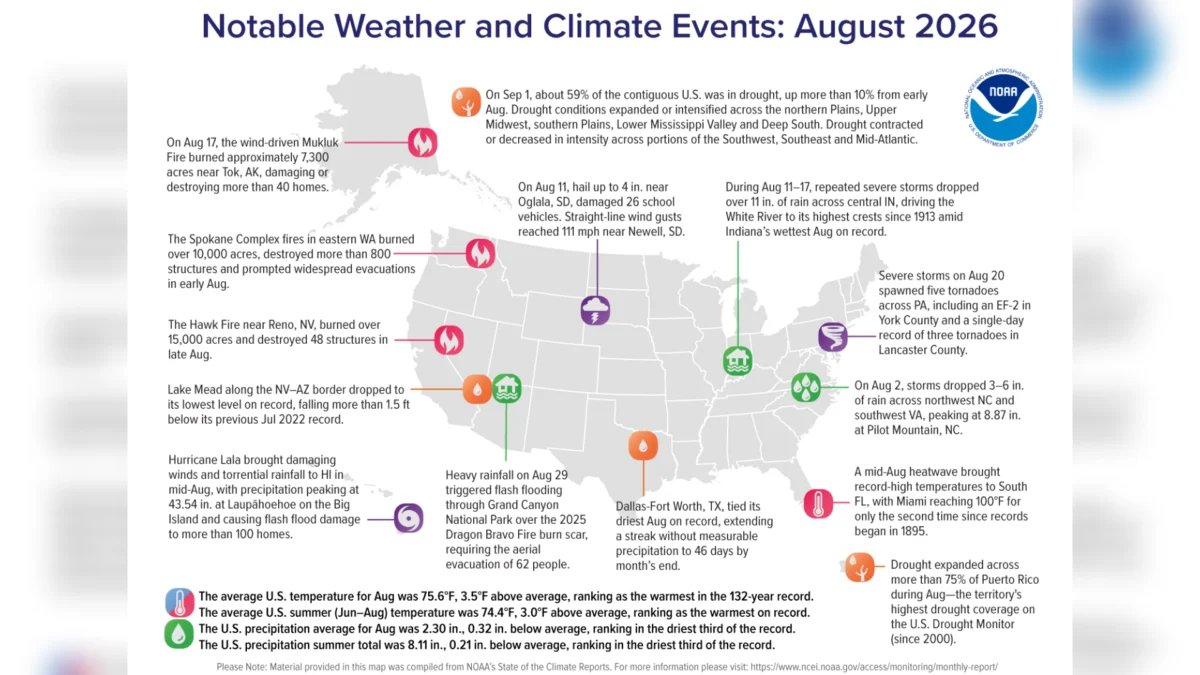
If this past summer felt relentless, stifling, and unusually persistent, you are not imagining it. Data released by the National Oceanic and Atmospheric Administration (NOAA) confirms that the summer of 2026 was, by every measurable metric, the hottest season in the United States since record-keeping began 132 years ago.
Across the contiguous United States, temperatures climbed to 3 degrees Fahrenheit (1.67 degrees Celsius) above the long-term average, shattering the previous record established in 2021 by a significant margin. This season was not merely a statistical anomaly; it was a visceral demonstration of a rapidly shifting climate, characterized by a trifecta of record heat, severe drought, and extreme, volatile weather events that stretched from the Pacific Northwest to the southern tip of Florida.
The Main Facts: A New Benchmark for Heat
The summer of 2026—spanning the months of June, July, and August—has officially become the new benchmark for heat in American history. While annual fluctuations are expected, the magnitude of this year’s temperature spike suggests an acceleration in warming patterns.
August alone served as the climax of this sweltering season, recording temperatures 3.5 degrees Fahrenheit (1.94 degrees Celsius) above the monthly average. To put this into perspective, the average summer temperature for the contiguous U.S. is 74.4 degrees Fahrenheit (23.5 degrees Celsius). This year, that average was completely eclipsed. The heat was particularly concentrated in the Southwest, the southern Rockies, the southwestern Plains, and southern Florida. States like Nevada, New Mexico, and California faced prolonged heatwaves that pushed power grids to their limits and forced local governments to implement emergency cooling protocols.
A Chronology of a Scorching Season
The intensity of the 2026 summer was not a single event but a cumulative, months-long degradation of atmospheric stability.
June: The Onset of the Unusual
As the season began, the contiguous U.S. began showing signs of early-onset drought. While temperatures were already trending above average, the lack of moisture became the primary narrative. Soil moisture levels across the Midwest and the Deep South began to deplete, setting the stage for a summer defined by "flash droughts"—periods where dry conditions intensify rapidly over a matter of weeks.
July: The Expansion of the Heat Dome
By mid-July, massive "heat domes"—high-pressure systems that trap hot air over a specific region—stagnated over the central and western United States. These systems prevented the usual movement of cooler air from the Pacific or the Gulf of Mexico, effectively baking the interior of the country. This was the period where the record-breaking nature of the summer began to become apparent to climatologists, as temperature anomalies began to consistently exceed the 2-degree mark.
August: The Month of Disasters
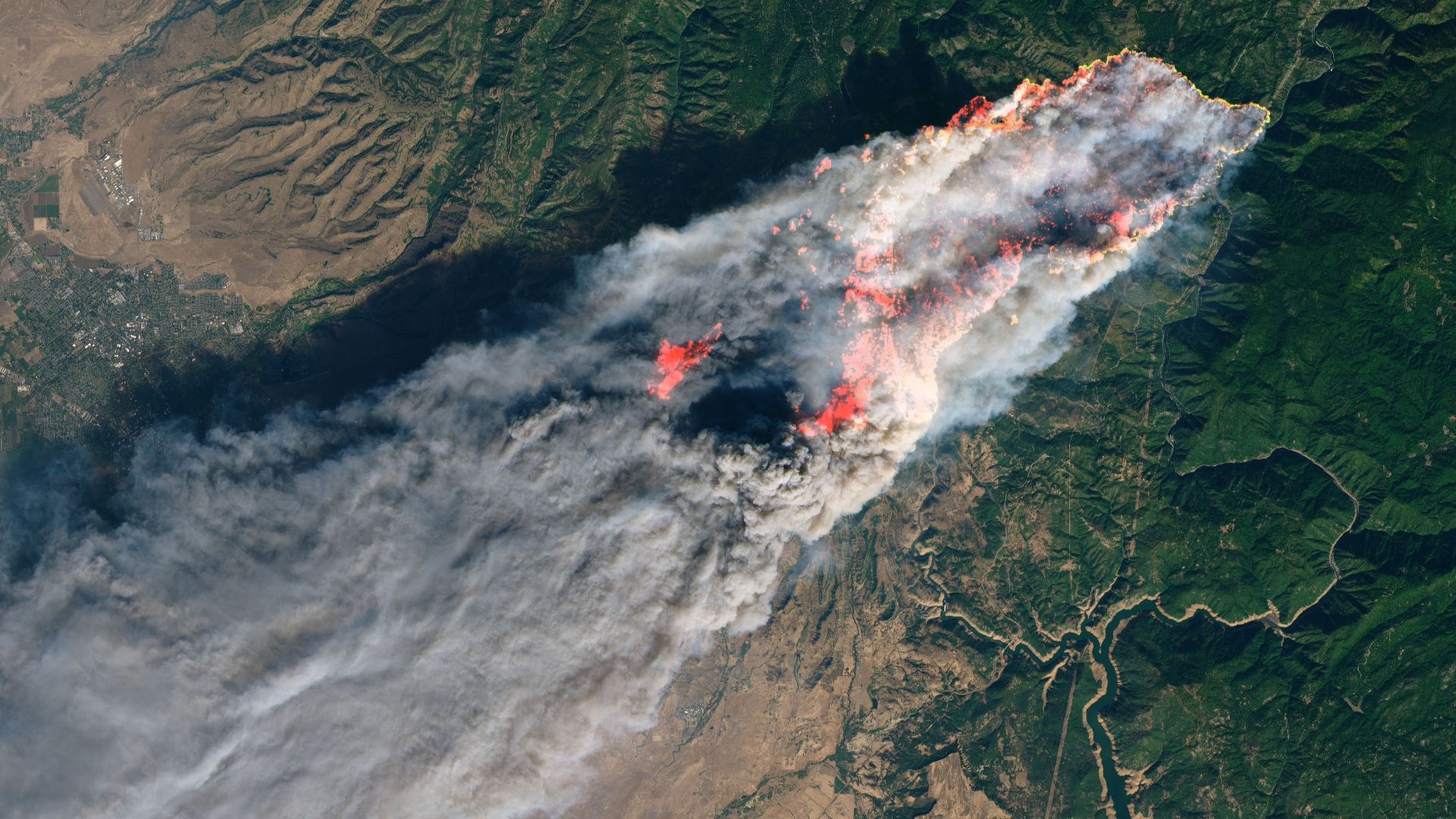
August saw the most extreme manifestation of these climatic conditions. As temperatures peaked, the environmental toll became impossible to ignore. Fires ignited across 10,000 acres in eastern Washington, jumping state lines into Oregon. Nevada and Alaska, typically seen as more resilient to extreme heat, saw widespread wildfire activity.
Toward the latter half of the month, the volatility of the atmosphere was underscored by Hurricane Lala. The storm brought not only high-velocity winds but also significant flooding to Hawaii, proving that extreme heat does not just manifest as dry, clear skies; it fuels the moisture-holding capacity of the atmosphere, leading to more violent, unpredictable precipitation events. In South Dakota, the sheer intensity of the atmospheric pressure shifts resulted in wind gusts reaching 111 mph (178.6 km/h), a reminder that the energy stored in our climate system eventually manifests as kinetic destruction.
Supporting Data and Drought Metrics
The narrative of the 2026 summer is incomplete without analyzing the precipitation data. Total precipitation across the contiguous U.S. was 0.32 inches (0.8 centimeters) below average. While that figure may seem minor to the casual observer, it was enough to make this the third-driest summer on record and the driest since the year 2000.
By September 1, a staggering 59.1% of the United States was officially classified as being in a state of drought. The impacts were not confined to the mainland; Puerto Rico faced a crisis of its own, with over 75% of the territory suffering from drought conditions, and 40% of the island categorized as experiencing "extreme drought."
The relationship between this dryness and the increased risk of wildfire cannot be overstated. When soil moisture is stripped away, vegetation becomes tinder-dry. Combined with the record-breaking heat, this created a "perfect storm" for fire outbreaks. NOAA’s projections suggest that for many of these regions, the relief provided by the transition to autumn will be insufficient to break the drought cycle, meaning the threat of wildfires will persist well into the later months of the year.
Official Responses and Scientific Perspective
The National Oceanic and Atmospheric Administration’s latest report serves as more than just a summary of weather events; it is a diagnostic tool for the health of the planet. Climatologists point to the interplay between human-induced greenhouse gas emissions and natural climate variability as the engine behind these records.
The consensus among scientific institutions—including NASA, the U.S. Geological Survey, and NOAA—is that the warming of the atmosphere is directly linked to the accumulation of carbon dioxide and other heat-trapping gases. These emissions, primarily from transportation, industrial manufacturing, and energy production, have raised the baseline temperature of the Earth, making extreme heat events more frequent and more intense.
"There was nothing average about the precipitation or temperatures seen across the U.S. this summer," noted one NOAA researcher in the report. The agency has emphasized that while natural cycles like El Niño or La Niña play a role, the overarching trend is undeniably dictated by human activity.
Implications: The New Normal
The implications of the 2026 summer extend far beyond the immediate discomfort of high temperatures. We are witnessing a fundamental shift in the frequency and intensity of natural disasters.
Infrastructure Strain
The extreme heat of 2026 highlighted the fragility of current infrastructure. From power grids struggling to manage air conditioning demands to transport networks affected by heat-buckled rails and tarmac, the "standard" operating conditions of the 20th century are no longer sufficient.
Agricultural Vulnerability
The drought conditions, particularly in the Midwest and the Southwest, have created significant concerns for food security. Crops that depend on consistent moisture and moderate temperatures were stunted, and the long-term impact on soil health remains a subject of ongoing concern for agricultural scientists.
The Climate Feedback Loop
Perhaps most concerning is the realization that these events contribute to a feedback loop. As ice sheets in places like Greenland continue to see record-breaking loss, the planet’s albedo (the ability to reflect sunlight) decreases. This causes the Earth to absorb even more heat, which in turn melts more ice and warms the oceans, further exacerbating the severity of hurricanes and wildfires.
Conclusion: A Call for Adaptation
The summer of 2026 will likely be remembered as a turning point in the public understanding of climate change. For many years, the debate was centered on whether the climate was changing; today, the focus has shifted entirely to how society must adapt to a world where these "extreme" summers are becoming the expected norm.
As the planet continues to warm, the consequences will only become more pronounced. Whether through the rise of sea levels, the acceleration of glacial melt, or the increasing frequency of destructive natural disasters, the signals are clear. The data from this past summer is not just a collection of numbers—it is a warning. Addressing the root causes of global warming through a transition to renewable energy and sustainable land-use practices is no longer just a policy recommendation; it is an existential imperative for a world that has just experienced its hottest season in over a century.