By Financial News Desk
October 21, 2026
In a significant move that underscores the escalating demand for network efficiency in the age of artificial intelligence, Atombeam, a pioneering AI networking technology startup, has successfully closed an $18.3 million funding round. This latest injection of capital brings the company’s total lifetime funding to $55 million, marking a pivotal chapter in its quest to redefine how data is compacted and transmitted across constrained environments, including satellite, defense, and commercial telecommunications links.
The funding round, announced on Tuesday, serves as a testament to the industry’s growing reliance on data optimization technologies. As global networks struggle to manage the deluge of information generated by connected machines and resource-intensive AI workloads, Atombeam’s proprietary software, Neurpac, has emerged as a critical solution for bandwidth management.
The Core Technology: Solving the "Bandwidth Crunch"
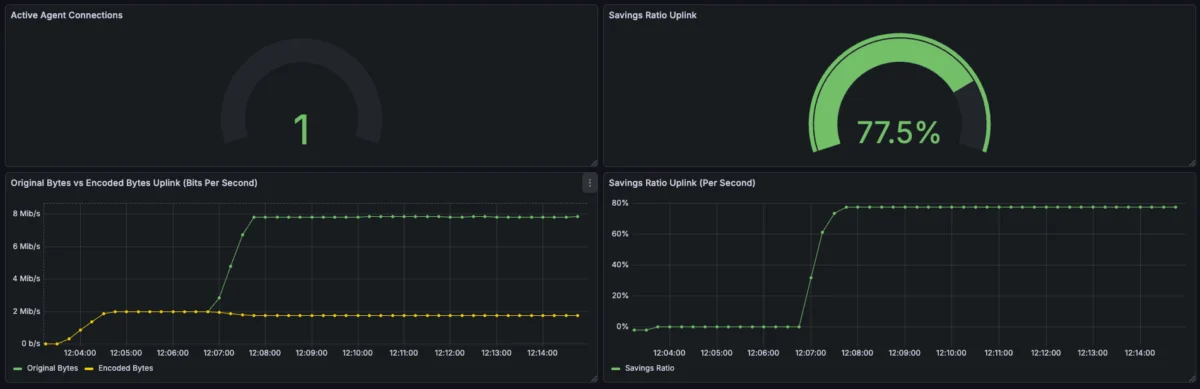
At the heart of Atombeam’s value proposition is Neurpac, a sophisticated software suite designed to compact data packets before they traverse a network. By restructuring the way data is transmitted, Neurpac reportedly multiplies effective bandwidth by a factor of four. This is not merely a theoretical claim; the company has successfully validated its performance using real-world traffic data from a major satellite operator, demonstrating that the technology can withstand the rigorous demands of high-latency, high-stakes environments.
Beyond data compaction, the startup is aggressively developing its Persistent Cognitive Machine (PCM) technology. This AI architecture is engineered to function with exponentially lower power and compute requirements than traditional Large Language Models (LLMs). As AI deployments move to the "edge"—far from the centralized power of hyperscale data centers—the ability to run intelligent models on minimal energy has become a strategic necessity for both commercial and military sectors.
Chronology: A Path of Strategic Growth
Atombeam’s journey to this $18.3 million milestone is characterized by consistent technological validation and high-profile government partnerships.
- Foundational Development: Atombeam was established with a focus on solving the fundamental physics of data transmission. Recognizing that the bottleneck in modern networks is often the transmission pipe itself, the founders focused on non-traditional compaction methods.
- Early Validation: Through successive rounds of testing, the company demonstrated that its software could drastically reduce data footprints without compromising packet integrity.
- February 2026 – SDA Expansion: The company hit a major operational milestone earlier this year when the Space Development Agency (SDA) expanded its contract with Atombeam. The goal: to utilize Neurpac to improve the data transmission capabilities of Link 16, the primary tactical data link network used by the U.S. military and NATO.
- October 2026 – The Inflection Point: With the announcement of the $18.3 million funding round, Atombeam transitions from a development-heavy startup to an enterprise-scale commercial provider, signaling its intent to move PCM technology into formal independent benchmarking and widespread customer pilot programs.
Supporting Data: The Efficiency Multiplier
The efficacy of Atombeam’s technology is perhaps best illustrated by its performance in defense applications. In official demonstrations conducted for the Space Development Agency, Neurpac was tasked with managing military data streams over satellite links—an environment notoriously sensitive to packet loss and congestion.
The results were transformative:
- Data Reduction: Neurpac successfully reduced Link 16 data streams by 86% to 89%.
- Bandwidth Expansion: The technology increased available bandwidth by a factor of seven to nine times.
These metrics are critical in the context of the SDA’s Proliferated Warfighter Space Architecture (PWSA). By effectively expanding the capacity of existing satellite links without requiring the launch of additional hardware, Atombeam provides a "force multiplier" effect. For defense agencies, this means higher-resolution situational awareness and more reliable command-and-control capabilities, all delivered through existing infrastructure.
Official Responses: A Vision for the Future
Charles Yeomans, Co-founder and CEO of Atombeam, characterizes this latest funding round as a "true inflection point" for the company. In his statement accompanying the announcement, Yeomans emphasized the systemic risks currently facing global network infrastructure.
"With Neurpac, we are solving the challenges that Large Language Models exacerbate," Yeomans stated. "Wired, cellular, and satellite networks, along with data centers, are being pushed to the brink by heavy AI workloads and the relentless barrage of data from connected machines. Our goal is to ensure that the infrastructure of the future remains performant and sustainable."
Industry analysts view Yeomans’ comments as an acknowledgment of the "AI-driven traffic jam." As enterprises and governments integrate AI into every facet of operations, the data volume is outpacing the rate of infrastructure build-outs. Atombeam’s technology offers a "software-defined" way to alleviate this pressure, avoiding the massive capital expenditure required to upgrade physical transmission hardware.
Implications for the Future of Connectivity
The successful funding of Atombeam carries profound implications for several critical sectors:
1. The Satellite Communications (SATCOM) Industry
Satellite operators are currently grappling with the transition to LEO (Low Earth Orbit) constellations. While LEO provides lower latency than traditional GEO satellites, the demand for data is higher than ever. By integrating Neurpac, satellite operators can effectively increase their total revenue-generating capacity without changing the satellite bus or the ground station hardware.
2. Defense and Tactical Communications
In a conflict scenario, the speed of data transmission is synonymous with survival. The reduction of data streams by nearly 90% via Neurpac allows for the transmission of critical information over narrow, congested, or jammed channels. The ability of the SDA to leverage this for Link 16 signals a shift toward software-optimized warfare.
3. Edge AI and IoT (Internet of Things)
The push for "Persistent Cognitive Machines" represents a departure from the "big data/big compute" trend. If Atombeam can successfully bring its PCM tech to market, it could enable sophisticated AI analytics on low-power devices, such as remote sensors, autonomous drones, and field-deployed medical devices, which have historically been limited by battery life and processing power.
4. The Sustainability of AI
The environmental and financial costs of running LLMs have become a point of contention. Data centers are consuming record amounts of electricity to support the cooling and compute needs of modern AI. By making the transmission and processing of data more efficient, Atombeam positions itself as a key player in the "Green AI" movement, potentially lowering the total cost of ownership for companies training and deploying large-scale models.
Conclusion: What Comes Next?
As Atombeam moves forward with this $18.3 million investment, the focus will undoubtedly shift toward commercial scaling. The company has moved beyond the proof-of-concept phase, and the upcoming months will be defined by the independent benchmarking of its PCM technology.
If the performance of the PCM architecture matches the success seen with Neurpac in the SDA demonstrations, Atombeam could become an indispensable layer in the modern networking stack. In an era where data is the most valuable commodity, the ability to compress, protect, and accelerate that data is not just a competitive advantage—it is a foundational necessity.
For investors and industry stakeholders, the message is clear: the future of AI is not just about smarter models, but about the efficiency of the networks that carry them. Atombeam is betting that the most successful companies in this space will be those that can make the current infrastructure work harder, smarter, and faster.