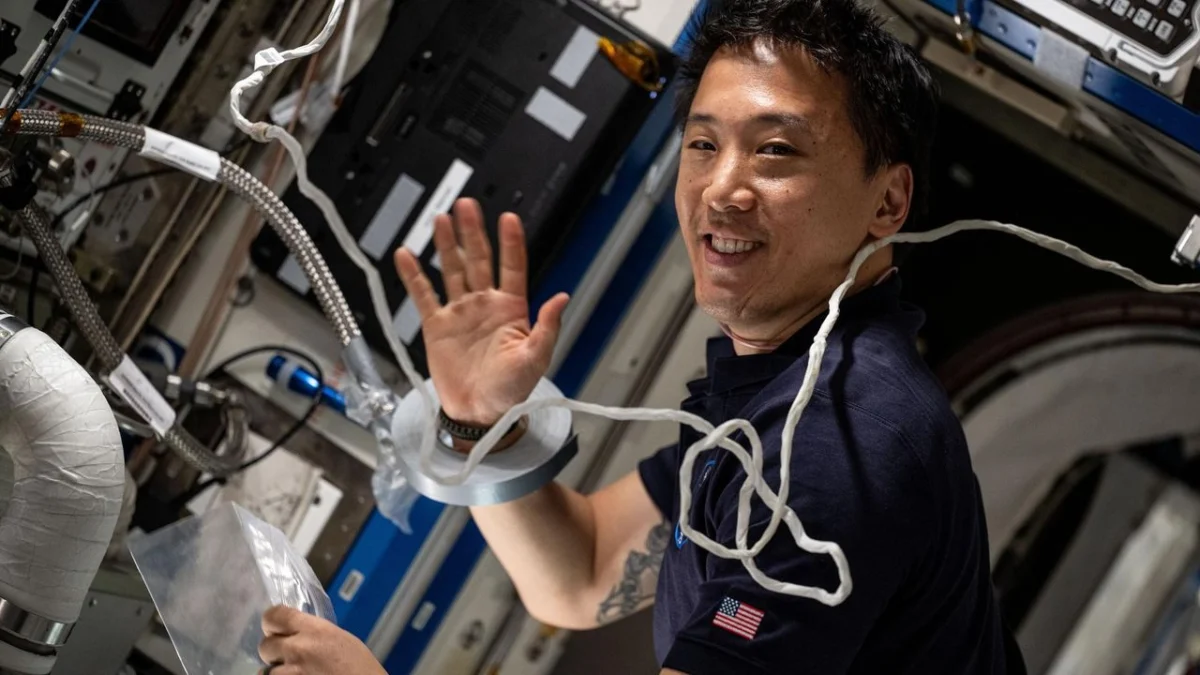
In a transition that marks the end of a storied chapter for both the agency and one of its most multifaceted explorers, Jonny Kim—the physician, Navy SEAL, and astronaut whose resume reads like a work of fiction—officially departed NASA on August 27, 2026. After nine years of service, the 42-year-old is shifting his focus back to the military, aiming to complete his career within the ranks of naval aviation.
His departure leaves behind a profound impact on the agency’s human spaceflight program, having transitioned from a trainee in the 2017 "Turtle" class to a veteran of long-duration orbital flight.
The Main Facts: A Career Pivot
Jonny Kim’s exit from NASA is not a retirement in the traditional sense, but a return to the roots of his professional identity. Having balanced a medical career, special operations, and space exploration, Kim has opted to dedicate the remainder of his active-duty service to naval aviation training.
Kim’s time at NASA was defined by a steady climb through the ranks. Selected from a pool of over 18,000 applicants in 2017, he was one of twelve candidates chosen for the 22nd astronaut class. His tenure included critical roles as a Capsule Communicator (CAPCOM) in Mission Control and extensive contributions to the development of the Artemis program, which aims to return humans to the lunar surface. His final and most visible contribution occurred in 2025, when he completed an eight-month mission aboard the International Space Station (ISS), cementing his status as one of the few individuals to experience the rigors of low-Earth orbit.
Chronology: A Life of Extraordinary Preparation
To understand the gravity of Kim’s departure, one must look at the path that led him to the hatch of a Russian Soyuz spacecraft. His journey is a testament to the pursuit of excellence across disparate and demanding fields.
The Military Foundation
Before the NASA patch was ever sewn onto his flight suit, Kim was already a decorated veteran. As a Navy SEAL, he participated in over 100 combat operations. His roles—medicated, sniper, navigator, and point man—earned him the Silver Star and the Bronze Star with "Combat V." These years in the field instilled the grit and composure that would later serve him in the pressurized, high-stakes environment of the ISS.
The Academic Pursuit
Parallel to his combat service, Kim pursued a medical degree at Harvard University. This transition from the battlefield to the operating room highlights his unique cognitive versatility. As a physician, he offered NASA a rare dual perspective: the technical skill of a pilot and the diagnostic capability of a doctor.
The NASA Era (2017–2026)
- 2017: Selected as part of the NASA Astronaut Candidate Class 22, affectionately known as "The Turtles."
- 2019: Completed basic training, qualifying for flight assignment.
- 2020–2024: Served in critical roles, including CAPCOM, where he acted as the primary voice between ground control and crews in space, and as the increment lead for Expedition 65.
- April 2025: Launched to the ISS aboard a Russian Soyuz alongside cosmonauts Sergey Ryzhikov and Alexey Zubritsky.
- December 2025: Returned to Earth after 245 days in space, having traveled nearly 104 million miles.
- August 27, 2026: Formally departs NASA to return to naval aviation duties.
Supporting Data: By the Numbers
The scientific output of Kim’s mission, while conducted as part of a larger crew, represents the high-water mark of his NASA career. During his 245-day tenure aboard the ISS, Kim and his crewmates:
- Circumnavigated the Earth: 3,920 times.
- Total Distance Traveled: Approximately 104 million miles (167 million kilometers).
- Operational Focus: Kim was instrumental in the maintenance and operation of experimental carbon dioxide removal devices, a critical technology for future long-duration missions to Mars.
- Research Output: His work focused on human physiological adaptation to microgravity and the testing of new hardware designed to sustain life in deep-space environments.
Official Responses and Reflections
The leadership at NASA has been vocal about the void Kim’s departure leaves within the astronaut corps. Vanessa Wyche, director of the Johnson Space Center, issued a formal statement underscoring his contribution.
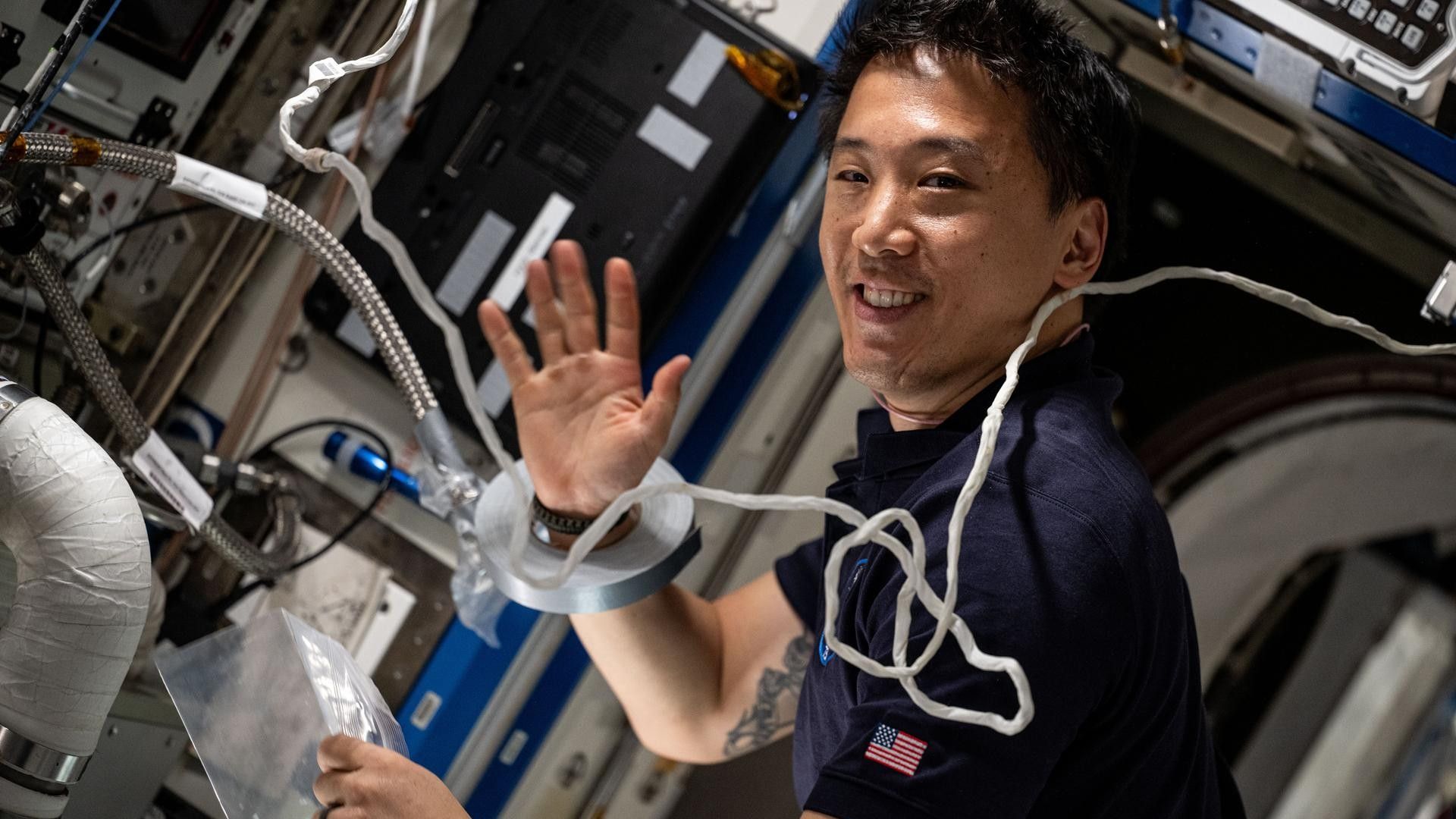
"Jonny has been an integral part of the agency, and his immeasurable impact will be felt for generations to come," Wyche stated. "From advancing groundbreaking science to inspiring the next generation, Jonny has been an incredible source of inspiration to our nation."
For his part, Kim expressed a deep sense of gratitude, emphasizing that the human element was the most significant part of his journey. "Throughout my career, I’ve learned that beyond the missions, the training, and the hardware, success always comes down to the people," Kim remarked. "They are our greatest asset, and leading with love and empathy is how we achieve the impossible."
Implications: The Evolving Astronaut Corps
The departure of an astronaut of Kim’s caliber—especially coming off a successful, long-duration mission—raises questions about the turnover rate within the modern astronaut corps. However, industry analysts suggest that this is part of a larger, systemic shift.
A Year of Transition
2026 has proven to be a watershed year for personnel changes at NASA. Kim’s exit follows the retirements of other high-profile figures, including Mike Fincke, who leaves after three decades of service, and Jeremy Hansen, the Canadian astronaut who served on the historic Artemis II crew.
These departures represent a "changing of the guard." As NASA pivots from the sustainment of the ISS to the active implementation of the Artemis lunar missions and eventual Mars exploration, the skill sets required of astronauts are shifting. While the veteran experience of individuals like Kim is invaluable, the agency is actively bringing in younger cohorts trained for the specific challenges of deep-space exploration and lunar landing operations.
The Influence of Military-Space Synergy
Kim’s return to active-duty military service serves as a reminder of the symbiotic relationship between national defense and space exploration. His background as a naval aviator and SEAL provided NASA with a candidate who was not only capable of flying complex spacecraft but also of managing the intense psychological and physical stressors inherent in deep-space environments. By returning to naval aviation, Kim continues a tradition of cross-pollination between the military and the civilian space sector—a pipeline that has produced many of history’s greatest explorers.
The "Humanity" Factor
Perhaps the most lasting legacy Kim leaves behind is his emphasis on "leading with love and empathy." In an industry often dominated by talk of propulsion systems, trajectory calculations, and thermal shields, Kim’s public philosophy on leadership marks a departure toward a more human-centric model of spaceflight. As the agency faces the daunting prospect of sending humans to Mars, this philosophy of team cohesion and empathy may prove to be just as important as any technological breakthrough.
As Jonny Kim steps back into the cockpit of a naval aircraft, he leaves NASA not as an individual who has finished his work, but as one who has successfully bridged the gap between the terrestrial defense of his country and the extraterrestrial future of humanity. His career remains a blueprint for those who seek to operate at the absolute limit of human potential.