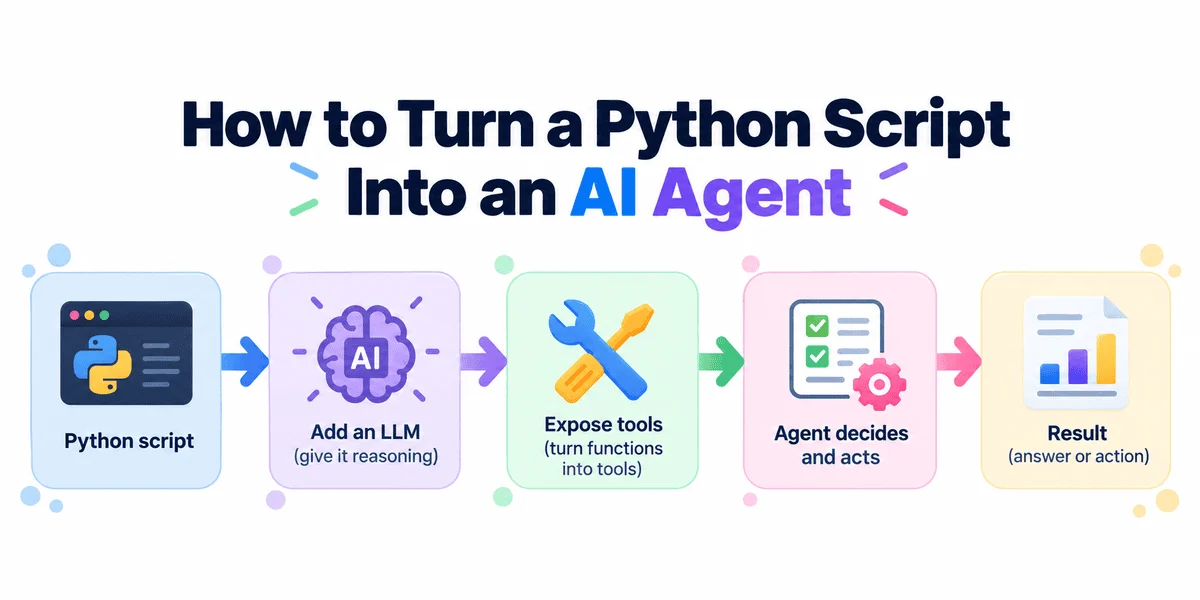
In the rapidly evolving landscape of software development, the traditional paradigm of "if-this-then-that" programming is undergoing a radical shift. For decades, developers have relied on rigid, linear scripts to automate tasks. However, the emergence of Large Language Model (LLM) agents is redefining how we build applications. Rather than rewriting entire codebases to incorporate Artificial Intelligence, developers can now breathe new life into their existing Python libraries by turning simple functions into autonomous "tools."
This article explores the transformative potential of the OpenAI Agents SDK, demonstrating how to transition from static automation to dynamic, agentic workflows.
Main Facts: The Paradigm Shift in Automation
The core premise of modern agentic AI is simple: you do not need to rewrite your Python applications to harness the power of LLMs.
Historically, when a developer wrote a script to perform a task—such as checking the health of a website—they had to hard-code every contingency. If the script needed to compare the latency of five different websites, the developer had to write loops, error handling, and comparison logic. If the requirements changed, the code had to be refactored.
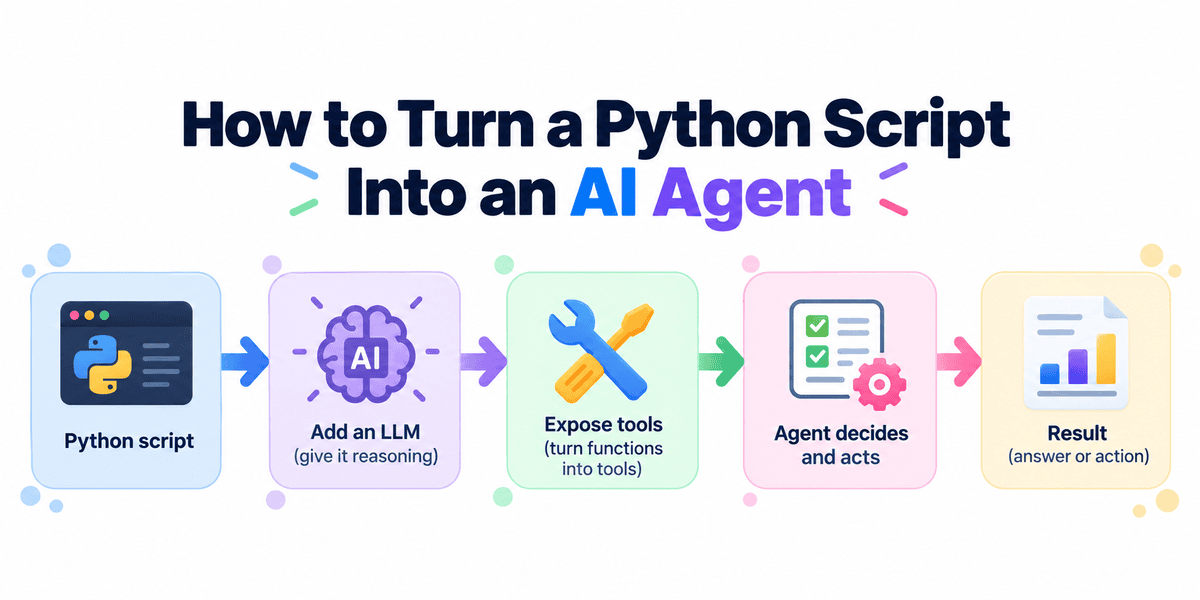
An AI agent fundamentally changes this relationship. By exposing existing Python functions as "tools," an agent can understand the intent behind a user’s request. It decides which functions to call, determines the necessary arguments, executes the logic, and interprets the output to provide a coherent answer. The developer provides the capabilities (the tools), and the agent provides the reasoning (the intelligence).
Chronology: From Static Script to Agentic Workflow
To understand this evolution, we must examine the lifecycle of a typical automation project.
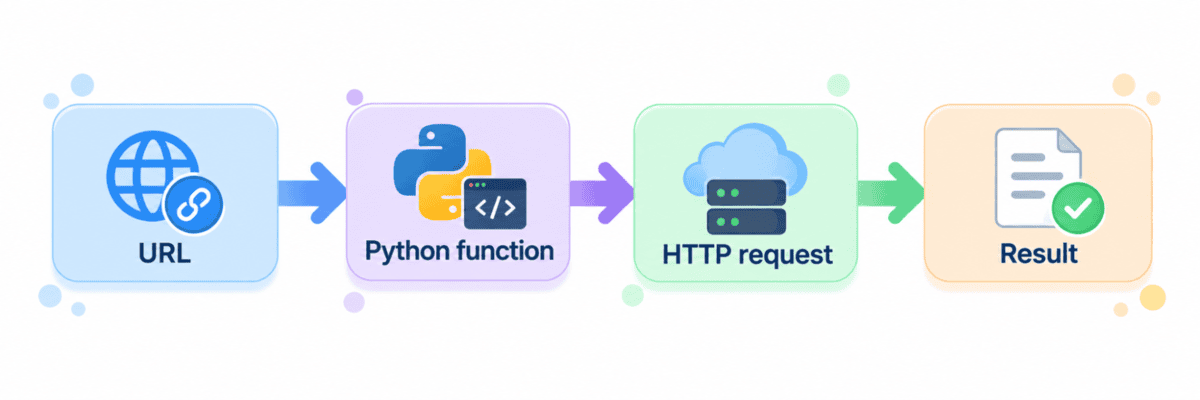
Phase 1: The Static Script (The "Legacy" Approach)
In our initial state, we have a functional Python script. Consider a basic website monitoring tool:
from time import perf_counter
import requests

def check_website(url: str) -> str:
    start = perf_counter()
    try:
        response = requests.get(url, timeout=10)
        latency = perf_counter() - start
        return f"url: Status response.status_code, Latency latency:.2fs"
    except requests.RequestException as error:
        return f"Error checking url: error"
This script is reliable and efficient, but it is "dumb." It executes exactly what it is told, once, and lacks the context to perform comparative analysis unless explicitly coded to do so.
Phase 2: Introducing the OpenAI Agents SDK
The transition to an agentic model begins with the installation of the necessary SDKs. By utilizing openai-agents, developers can abstract away the complex orchestration of API calls and state management.
- Environment Setup: Initializing a project with
uvorpipensures that the environment is lean and dependency-managed. - Tool Decoration: The critical juncture occurs when we add the
@function_tooldecorator to our function. This tells the SDK to parse the function’s signature and docstring into a JSON schema that the LLM can interpret. - Agent Initialization: We instantiate an
Agentobject, providing it with a persona and a specific set of tools. - The Runner Loop: Finally, we pass a natural language query to the
Runner. The agent breaks down the query into steps, executes the tools as needed, and synthesizes the results.
Supporting Data: Why Agentic Orchestration Matters
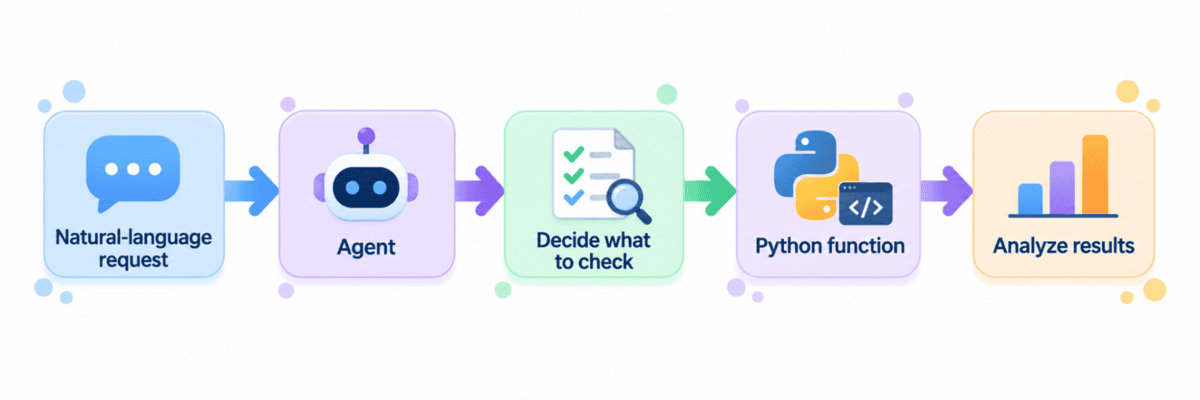
The efficiency gains of moving to agentic workflows are substantial. When an agent is tasked with comparing website performance, it doesn’t just run a loop; it performs a multi-step reasoning process:
- Decomposition: The agent recognizes that to compare three websites, it must call the
check_websitefunction three times. - Tool Invocation: It executes the Python function for
python.org,github.com, andopenai.comsequentially or in parallel, depending on the implementation. - Synthesis: It reviews the three disparate strings returned by the function and generates a summary, identifying the slowest performer and formatting the data into a human-readable report.
This process eliminates the need for "glue code"—the hundreds of lines of logic developers often write just to parse, format, and compare data. The LLM acts as the ultimate interface layer, handling the logic that was previously trapped in manual conditional statements.
Official Perspectives: The Role of the SDK
According to technical documentation and developer outreach from OpenAI, the OpenAI Agents SDK was designed specifically to lower the barrier for tool-calling. Its lightweight nature allows it to handle sessions, handoffs, and tracing without forcing the developer to adopt a rigid framework.
The SDK’s primary contribution is the "Runner." The Runner manages the "agentic loop." If the initial output from a tool is insufficient or if the agent requires further data to satisfy a user request, the Runner enables the agent to re-invoke the tool. This recursive capability is what distinguishes a simple API wrapper from a true autonomous agent.
Implications: The Future of Software Engineering
The shift toward agentic AI has profound implications for the software industry.
1. The Democratization of Complex Automation
Previously, building a system that could "reason" about data required advanced expertise in machine learning and natural language processing. Now, any developer with basic Python knowledge can leverage the reasoning capabilities of state-of-the-art models like GPT-5.6 Luna. By simply documenting their code (using clear docstrings), developers turn their functions into intelligent modules.
2. Reduced Technical Debt
Hard-coded logic is brittle. As business requirements change, legacy scripts often become "spaghetti code." Agentic applications, however, are modular. If the check_website logic needs to be updated to include SSL verification or DNS latency, the developer updates only the function. The agent, being model-driven, will automatically adjust its usage of that function to accommodate the new information.
3. Cost and Scalability
With the introduction of more efficient models, the cost-per-inference has plummeted. Running an agent to monitor five websites is now economically viable for small-scale projects, whereas previously, such orchestration would have required expensive custom-built cloud infrastructure.
4. New Frontiers for Python Scripts
This pattern is not limited to website monitoring. We are seeing a surge in "Agentic Python" across various domains:
- Database Management: Exposing SQL query functions as tools to allow natural language data exploration.
- Cloud Infrastructure: Using agents to manage AWS/Azure resources by exposing CLI commands as Python tools.
- Customer Support: Integrating CRM data retrieval functions into an agent that can handle complex user inquiries autonomously.
Conclusion: Empowering the Developer
The transition from writing fixed Python scripts to building AI agents is less of a revolution in what we build and more of a revolution in how we build it. By shifting the responsibility of orchestration from the programmer to the model, we free ourselves to focus on the high-level goals of our applications.
As we look to the future, the integration of these tools into standard development workflows will become the new baseline. Whether you are building a simple monitor or a complex multi-agent system, the core lesson remains: define the goal, expose the right tools, and let the agent navigate the complexity.
We are moving into an era where code is no longer just a series of instructions to be followed; it is a repository of capabilities to be harnessed by intelligent systems. The tools are ready—all that is required is for developers to embrace the agentic mindset.
Abid Ali Awan is a certified data scientist and technical writer specializing in machine learning and data science. His work focuses on making advanced AI technologies accessible to the broader developer community through practical, hands-on tutorials.