The landscape of public safety in the United Kingdom is undergoing a quiet, high-tech transformation. In a landmark collaboration, the British Transport Police (BTP) and BT have announced the routine deployment of Beyond Visual Line of Sight (BVLOS) drones across the UK’s sprawling rail network. By leveraging BT’s proprietary Drone SIM solution and the expansive coverage of the EE mobile network, the BTP has become the first police force in the country to integrate autonomous, remote-piloted aerial surveillance into its day-to-day operations.
This initiative marks a shift away from traditional, resource-heavy dispatch methods, signaling a new era where real-time aerial intelligence serves as the frontline response to the thousands of incidents that plague the British railway system every year.
The Core Innovation: Connecting the Rails to the Clouds
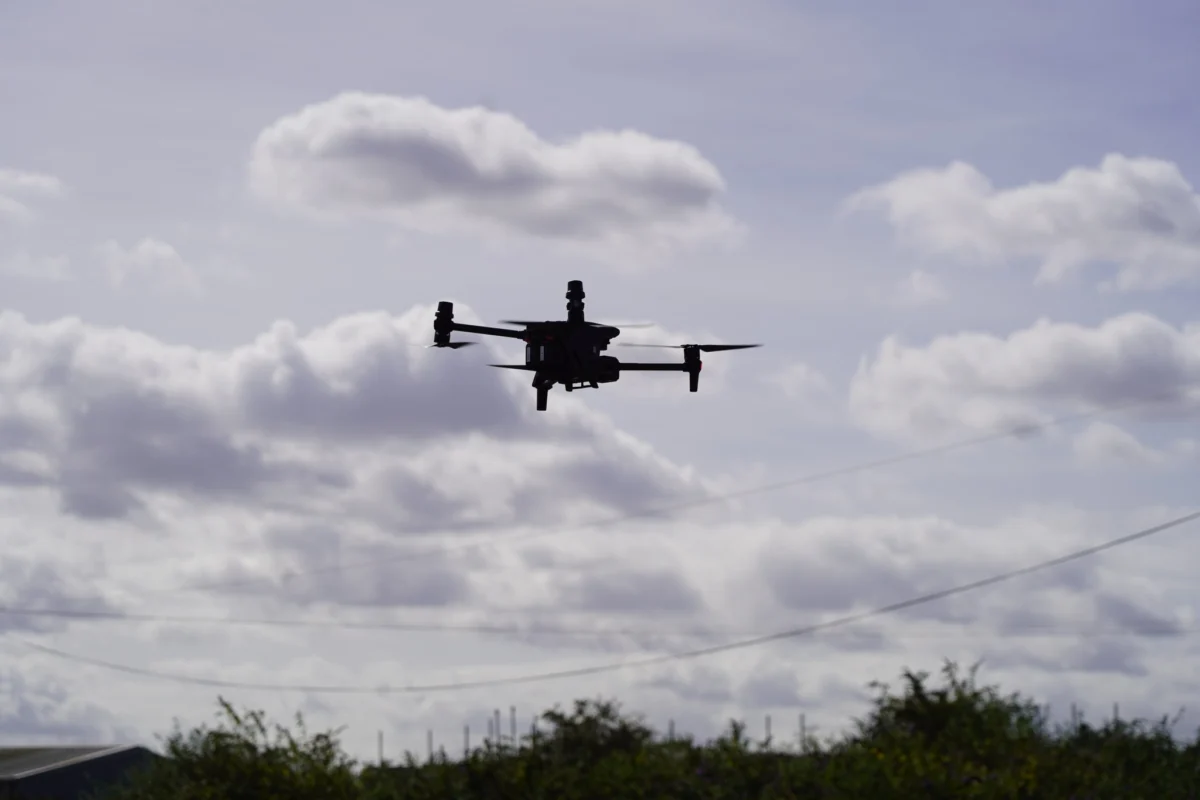
At the heart of this deployment is the "drone-in-a-box" concept. These autonomous stations, currently established at seven strategic locations across the country, allow drones to be housed, charged, and launched without the need for a pilot to be physically present at the launch site. Instead, BTP operators based at the organization’s London Bridge operations center remotely pilot the craft, receiving high-definition, real-time video feeds transmitted over the EE network.
The Role of BT’s Drone SIM
The technical backbone of this operation is BT’s Drone SIM solution. Unlike consumer-grade drones that rely on short-range radio signals, these police-grade UAVs utilize cellular connectivity to maintain a secure, low-latency link with their operators, regardless of the distance from the pilot. This allows the drones to fly Beyond Visual Line of Sight (BVLOS), a regulatory hurdle that has long prevented the widespread adoption of autonomous aerial surveillance.
By utilizing the EE network, the drones remain connected even as they traverse miles of track, ensuring that command centers in London can "see" incidents in remote locations as if they were standing directly above them.
A Chronology of Progress: From Pilot Projects to National Strategy
The leap toward routine BVLOS policing did not happen overnight. It is the culmination of years of rigorous testing, regulatory negotiation, and collaborative innovation.
- 2020–2022: The Foundation Phase: BT began aggressively exploring mobile-network-connected drones, focusing on the infrastructure required to manage unmanned traffic in complex airspace.
- 2022: Project Skyway: A pivotal moment occurred with the launch of Project Skyway, an ambitious drone "superhighway" designed to facilitate BVLOS flights across a 165-mile corridor between the Midlands and the Southeast. This project proved that drones could safely coexist with other airspace users.
- 2023: Testing Real-World Utility: BT expanded its scope, successfully trialing drone delivery for medical supplies. This marked a major milestone: the first successful overland BVLOS flight for logistics in the UK, proving that the technology was stable enough for sensitive, time-critical missions.
- 2024: The BTP Integration: Following successful internal trials, the BTP moved to integrate the drone-in-a-box technology into their daily rail policing workflow, marking the first time a UK police force has adopted this as a standard operational procedure rather than an experimental pilot.
The Crisis on the Rails: Why Drones are Essential
The motivation for this technological shift is rooted in hard statistics. The UK rail network covers over 20,000 miles of track, much of which is isolated and difficult to access by road.
Data at a Glance (2023/2024)
- Total Trespass Incidents: More than 19,300.
- Frequency: One incident roughly every 30 minutes.
- Operational Cost: Traditional response requires dispatching officers by road to rural or hard-to-reach tracks, causing significant delays to rail traffic and putting officer safety at risk in high-speed or electrified environments.
By deploying a drone, the BTP can arrive on the scene in a fraction of the time it takes for a patrol car. The aerial vantage point allows officers to determine if an incident is a genuine emergency—such as an active trespasser—or a false alarm. This triage capability prevents the unnecessary halting of trains, saving millions of pounds in economic disruption and reducing the frustration of thousands of daily commuters.
Official Perspectives: The Vision for Modern Policing
The transition to drone-led response has been met with enthusiasm from the top tiers of the British Transport Police.
Simon Bachelor, Head of the Drones Programme at BTP, underscored the strategic importance of the move: "As the first UK police force to routinely operate BVLOS drones as part of day-to-day policing, we are transforming the way we respond to incidents across the rail network. Real-time aerial intelligence enables our teams to assess situations faster, deploy resources more effectively and improve safety for both officers and the public."
Bachelor also emphasized that this is not just about technology; it is about efficiency. "This collaboration with BT demonstrates how innovation can support more efficient policing while helping to minimise disruption for passengers and rail operators."
From BT’s perspective, this project serves as a "proof of concept" for the wider telecommunications industry. By proving that cellular networks can reliably support mission-critical, beyond-line-of-sight flight, BT is positioning itself as a primary architect of the UK’s future drone economy.
Implications and the Regulatory Horizon
While the collaboration between BT and BTP is a major success, the broader adoption of BVLOS drones in the UK faces significant challenges, primarily in the form of a complex and slow-moving regulatory environment.
Overcoming the "Regulatory Wall"
For years, the UK Civil Aviation Authority (CAA) maintained stringent rules on BVLOS flights, citing safety concerns regarding collisions with manned aircraft. However, the publication of the "Future of Flight: BVLOS Roadmap" last year signaled a change in direction. The regulator is now actively working to create a framework that allows for routine autonomous operations by 2027.
The BTP/BT initiative acts as a "live laboratory" for the CAA. The data gathered from these daily operations—regarding flight paths, battery efficiency, and network hand-offs—will likely inform the safety standards that will eventually govern all commercial drone traffic in the UK.
The Path Forward: Scaling Up
The BTP has already laid out a clear roadmap for the next two years. The current fleet of seven drone-in-a-box stations is set to double to 14 by 2026. This expansion will significantly tighten the "coverage net," ensuring that the vast majority of the rail network is within reach of an aerial responder.
Broader Context: The Digital Infrastructure Race
This initiative is part of a larger push by UK telecommunications giants to maximize the utility of 4G and 5G networks beyond consumer smartphones. As companies like BT, Vodafone, and Virgin Media O2 compete to bridge the UK’s digital divide, the "utility" of these networks is becoming a key differentiator.
- Connectivity in Remote Areas: The rollout of the Shared Rural Network, which has brought 4G connectivity to previously underserved National Parks, is inadvertently supporting the drone infrastructure.
- Sustainability Goals: By reducing the need for vehicles to travel to remote trespass incidents, the BTP is also contributing to the rail industry’s broader decarbonization efforts.
- Economic Impact: Faster incident resolution means fewer rail cancellations and delays, providing a tangible economic benefit to the UK’s workforce and logistics sector.
Conclusion: The Future of the Skies
The integration of BVLOS drones into the British Transport Police’s toolkit is a bellwether for the future of public services. It represents the point where high-speed mobile connectivity, autonomous robotics, and forward-thinking regulation converge to solve age-old logistical problems.
As the BTP prepares to scale its operations to 14 locations, the rest of the world will be watching. If the experiment continues to yield the safety and efficiency improvements projected, it is highly probable that we will see similar drone-led approaches in other sectors, from search and rescue to critical infrastructure inspection.
For now, the railway lines of the UK are being watched from above by silent, connected sentinels—a testament to the fact that the next big revolution in policing won’t be on the ground, but in the air.