By Nitin Dahad | November 11, 2026
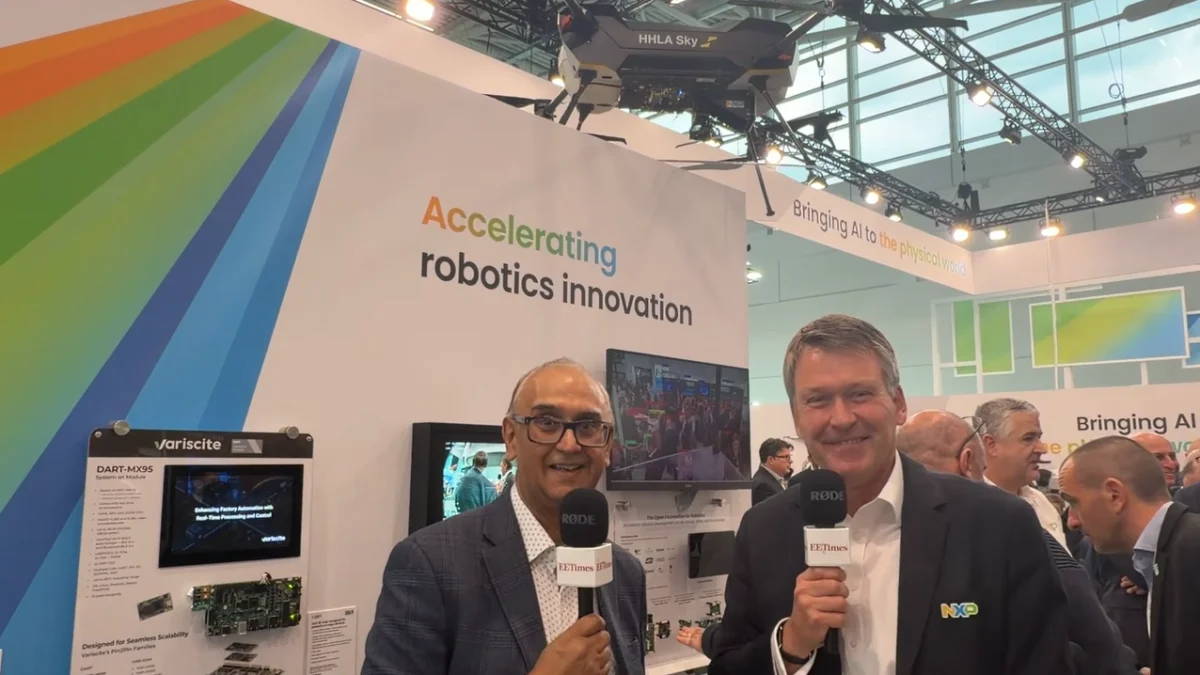
At electronica 2026 in Munich, the discourse surrounding artificial intelligence has shifted from the ethereal confines of Large Language Models (LLMs) to the tangible reality of the physical world. While much of the global tech industry remains fixated on generative text and image models, Lars Reger, Chief Technology Officer of NXP Semiconductors, is steering the conversation toward what he calls the "Physical AI Era."
In an exclusive interview, Reger articulated a vision for the future where intelligence is deeply embedded into the fabric of our physical environment. This evolution, he argues, is not about the creation of human-shaped automatons, but about the proliferation of specialized, intelligent, and secure machines that will fundamentally change how we interact with the world.

The Core Thesis: Intelligence in the Edge
The prevailing public perception of AI is currently dominated by humanoids—robots designed to mimic human gait, speech, and interaction. Reger, however, offers a pragmatic counterpoint. "I won’t buy a humanoid to push my lawnmower," he remarked during our session, emphasizing that efficiency and purpose-built design will always outperform general-purpose humanoids in practical applications.
Reger projects that by 2040, the world will be home to over 50 billion smart, connected devices. The vast majority of these will not be human-like robots, but rather autonomous machines tailored for specific tasks—drones, industrial automated guided vehicles (AGVs), smart grid controllers, and precision agriculture equipment. This shift toward "Physical AI" necessitates a departure from cloud-centric AI architectures toward edge-based processing, where security, latency, and reliability become the primary pillars of innovation.
Chronology: The Evolution of NXP’s Edge Strategy
To understand the significance of NXP’s current direction, one must look at the progression of their hardware roadmap over the last several years:

- 2024–2025: The Foundation of Edge Intelligence: NXP began focusing heavily on the integration of neural processing units (NPUs) into their i.MX series, signaling an intent to push AI inference closer to the sensor.
- Early 2026: CES and the "Cooling" of Cloud Hype: At CES 2026, Reger famously predicted that the excessive reliance on the cloud for AI would diminish as the technical limitations of latency and data privacy became apparent. This set the stage for a shift toward "real" edge performance.
- November 2026: Electronica Munich: The launch of the NavQ95 platform marks the formal transition from theoretical edge computing to actionable, "out-of-the-box" robotic development.
- Looking Toward 2030 and Beyond: NXP’s internal roadmap focuses on the convergence of functional safety, cybersecurity, and advanced silicon, aiming to provide a secure "trust anchor" for the autonomous devices that will form the backbone of the next decade’s infrastructure.
Supporting Data: Why Purpose-Built AI Matters
The shift toward Physical AI is supported by several macroeconomic and technical drivers that Reger and his team have identified:
- Latency Constraints: In physical environments—such as a drone navigating a complex industrial facility—milliseconds matter. Relying on the cloud for decision-making introduces risks that are unacceptable in safety-critical applications.
- Energy Efficiency: A purpose-built machine optimized for a specific set of tasks can operate with a fraction of the power required by a general-purpose processor running complex AI models in the cloud.
- Data Sovereignty and Security: As devices become more autonomous, the security of the data they generate and process becomes a geopolitical issue. By keeping the AI local, the attack surface for data breaches is significantly reduced.
The NavQ95 platform, built on the robust i.MX 95 processor, is the tangible answer to these requirements. By bundling reference designs, robotics SDKs, and comprehensive documentation, NXP is effectively lowering the barrier to entry. Startups that previously spent months on system integration can now move from unboxing to a functional, AI-enabled robotic prototype in roughly 30 minutes.
Official Perspective: The "Trust" Pillar
A recurring theme in Reger’s discourse is the concept of "Edge Trust." In a world where machines are increasingly autonomous, the silicon itself must act as a guardian of integrity.

"We are moving into an era where hardware must be inherently secure," Reger noted. As NXP designs its next-generation chips, they are embedding cryptographic accelerators and hardware-based secure enclaves directly into the architecture. This is not merely a feature for enterprise customers; it is a fundamental requirement for the mass deployment of robotics. If a drone or an industrial robot is compromised, the implications are not just financial—they are physical.
Furthermore, Reger touches on the geopolitical dimension of semiconductors. As trade tensions influence the global supply chain, NXP’s strategy emphasizes resilience. By maintaining a deep commitment to high-performance, edge-centric silicon, NXP positions itself as an essential partner for global industries that need to balance innovation with local regulatory and security compliance.
Implications: The World in 2040
The implications of this shift are profound for both the semiconductor industry and the broader economy:

1. The Death of the "Generalist" Robot Myth
While the media remains obsessed with humanoids, the economic engine of the next 15 years will be the "unseen" robots. From automated logistics in warehouses to autonomous inspection systems in power plants, these machines will be invisible, efficient, and deeply specialized. The NXP model suggests that the next "AI unicorn" will likely be a company that masters the deployment of these specific, task-oriented devices.
2. The Decentralization of AI
The move toward edge processing implies a redistribution of computing power. Cloud service providers will likely evolve to become repositories for long-term learning and model training, while the "inference"—the act of doing—will remain entirely on the device. This creates a massive market for high-performance, low-power NPU silicon, which is precisely the market NXP is targeting with the i.MX 95.
3. Safety and Ethics in Physical Space
Physical AI introduces new ethical dilemmas. When an AI writes a bad email, it is a nuisance. When an AI-controlled vehicle makes a wrong decision, it is a liability. By focusing on "Edge Trust," NXP is acknowledging that the future of robotics requires a new level of engineering rigor. The industry is moving from "move fast and break things" to "build securely and maintain reliability."

Conclusion: A Call to Curiosity
During our conversation, Reger reiterated a philosophy he has often shared with the engineering community: "Be curious, don’t wait, and don’t overplan."
The current landscape of technology is moving so rapidly that those who wait for perfect standardization or the emergence of a "universal AI standard" will be left behind. NXP’s approach with the NavQ95 and their focus on the physical edge is an invitation to developers, startups, and industrial giants alike to start building now.
As we look toward the horizon, the Physical AI era promises to be less about creating machines that look like us, and more about creating machines that work for us—securely, efficiently, and with the intelligence required to navigate the complex, unpredictable reality of our world. The era of the "smart" machine is here; it just doesn’t look like a science fiction movie. It looks like a well-engineered, secure, and incredibly fast-to-deploy piece of silicon.