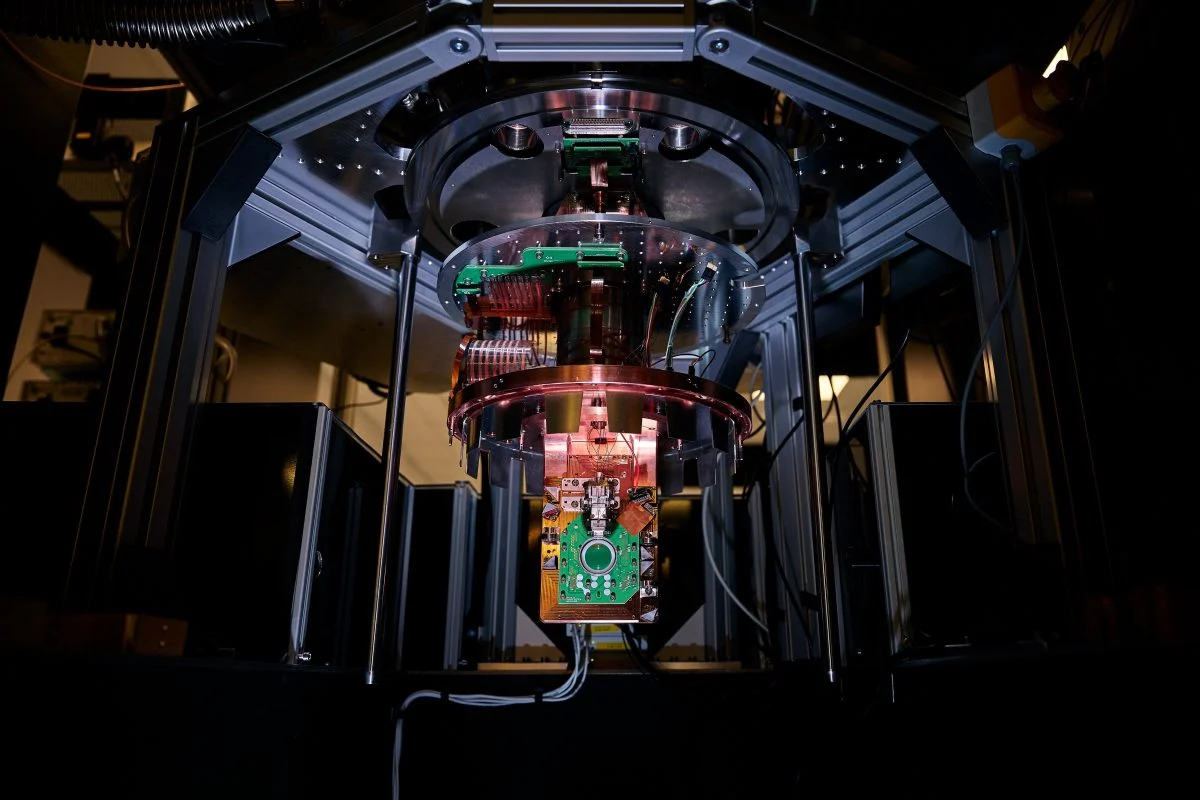
The cryptographic foundations of the modern digital economy—from Bitcoin wallets and Ethereum smart contracts to government communications and global banking infrastructure—are facing a profound, high-stakes countdown. Recent breakthroughs in quantum computing have significantly compressed the estimated timeframe for achieving "Q-Day," the theoretical moment when quantum computers become powerful enough to break the encryption standards that currently secure the internet.
A series of technical papers published in late 2024 and throughout 2025 by industry leaders such as IonQ, Google Quantum AI, and various research startups have fundamentally altered the landscape. What was once dismissed as a science-fiction scenario requiring millions of qubits is now being reframed as an engineering challenge that may be solved with fewer than 20,000 physical qubits within the next few years.
The Shrinking Horizon: Breaking the Unbreakable
For decades, the standard assumption among cryptographers was that breaking 256-bit elliptic-curve cryptography (ECC)—the bedrock of modern blockchain security—would require a gargantuan, fault-tolerant quantum machine with upwards of one million physical qubits. However, in September 2025, IonQ released a definitive blueprint detailing a route to compromise these keys using just 20,000 physical qubits.
Utilizing Shor’s algorithm—a 1994 mathematical breakthrough capable of solving the factoring problems that underpin public-key encryption—IonQ researchers demonstrated that such a machine could recover a 256-bit key in less than 26 days. This is a staggering shift from classical computing, where the same operation would take traditional silicon-based supercomputers billions of years.

"The important point is not to come across as threatening; we are not trying to attack cryptography," says Chris Ballance, President of IonQ. "Cryptography is black and white—you can either solve or not solve the problem—and we are using this as a benchmark metric for our quantum computers. It is very rare to have a benchmark that is so clear in a new compute field."
A Chronology of Acceleration
The path to this realization has been marked by a rapid succession of technical milestones that have forced both government bodies and private enterprises to accelerate their post-quantum migration plans.
- 1994: Mathematician Peter Shor publishes the foundational algorithm for quantum factoring, setting the theoretical stage for the eventual collapse of public-key encryption.
- 2024–Early 2025: Theoretical models begin to show that optimized algorithms and error-correction techniques can significantly lower the qubit count required for cryptanalysis.
- March 2025: A research group including Caltech, Harvard, and Google publishes findings suggesting neutral-atom quantum systems could crack encryption with as few as 10,000 qubits in a matter of days.
- September 2025: IonQ acquires Oxford Ionics, bringing "Electronic Qubit Control" (EQC) into its portfolio, allowing for unprecedented gate fidelities exceeding 99.99%.
- September 2025 (Concurrent): IonQ publishes its 70-page blueprint for breaking
secp256k1(the elliptic curve used by Bitcoin and Ethereum) and launches its "Superion 256" platform. - Late 2025: Iceberg Quantum updates its estimates for breaking RSA-2048, suggesting that requirements have dropped to just 72,000 physical qubits with a runtime of under four days.
Supporting Data: The Convergence of Hardware and Software
The shift toward a shorter Q-Day timeline is not merely a result of more powerful hardware; it is the product of an end-to-end optimization of the quantum stack. IonQ’s "Walking Cat" architecture, which shuttles ions across a grid and utilizes sophisticated error-correction "cat states," has been instrumental. By recycling temporary helper qubits and reusing entangled resources, the firm has slashed the resource requirements for Shor’s algorithm.
This hardware evolution is bolstered by the adoption of integrated electronics. Historically, trapped-ion computing was tethered to bulky, free-space laser systems. By shifting to silicon-based EQC, IonQ has achieved gate fidelities that rival or exceed those of superconducting systems.

"We haven’t just done mathematical proofs," notes Ballance. "We have put everything together all the way down to the individual instructions you can run on a quantum computer. We are now on a clear path to millions of qubits while unlocking powerful new commercial applications sooner."
Industry and Official Responses
The publication of these results has sent shockwaves through the cybersecurity industry. Organizations that were previously planning for a 2035 migration are now finding themselves scrambling to meet deadlines closer to 2029 or 2030.
Thomas Prest, a senior cryptographic researcher at PQShield, emphasizes that the threat extends far beyond cryptocurrency. "Quantum computers represent a threat to not only cryptocurrencies but entire industries that rely on cryptography," Prest warns. "We are in discussions with the defense sector and large companies that work with routers and encryption at scale. These organizations are deeply concerned."
Government bodies are responding with a mixture of caution and urgency. The U.S. National Institute of Standards and Technology (NIST) recently updated its guidance, recommending that high-impact federal systems adopt post-quantum cryptography (PQC) by 2030, with a broader transition targeted for 2035. However, private sector entities like Cloudflare and Google have set more aggressive 2029 deadlines, reflecting a more pessimistic view of the quantum timeline.

Professor Jungsang Kim, a co-founder of IonQ and former CTO, offers a measured perspective. While he believes the "science experiment" phase is behind us, he notes that massive engineering hurdles remain. "I’m not sure if there’s any fundamental physics left unresolved," Kim says. "I think this is now all about execution. You don’t want to have the slightest chance of taking that risk, so we must proceed to PQC as quickly as possible."
The Implications: Why 2028 Matters
The implications of a cryptographically relevant quantum computer (CRQC) arriving by 2028 are catastrophic for unprepared systems. If a bad actor gains access to a CRQC, they could intercept encrypted traffic, forge digital signatures, and drain funds from vulnerable blockchain wallets.
The "harvest now, decrypt later" threat is perhaps the most pressing concern. Adversaries are already intercepting and storing encrypted data today, waiting for the day when they have the quantum capability to read it. This means that data with long-term sensitivity—such as intelligence, medical records, and legal contracts—is effectively already compromised if it is not protected by quantum-resistant standards today.
The transition to PQC is not a "flip of a switch." It involves years of updating protocols, software libraries, and hardware implementations. As IonQ’s Niccolo de Masi famously noted, the time horizon has shifted from the "distant 2030s" to the "imminent 2020s."

Conclusion: A Race Against Time
The race to build a 20,000-qubit fault-tolerant machine has become the "Space Race" of the 21st century. While companies like IonQ view these benchmarks as a testament to their technical prowess, the broader global community views them as a siren call.
The industry consensus is clear: the window for a graceful migration to quantum-safe standards is closing. With hardware scalability reaching new heights and the optimization of Shor’s algorithm outperforming previous projections, the world must treat Q-Day not as a hypothetical future event, but as a looming operational reality. For the developers of blockchain protocols and the architects of national security infrastructure, the mandate is simple: innovate, migrate, and secure, before the quantum gate swings open.