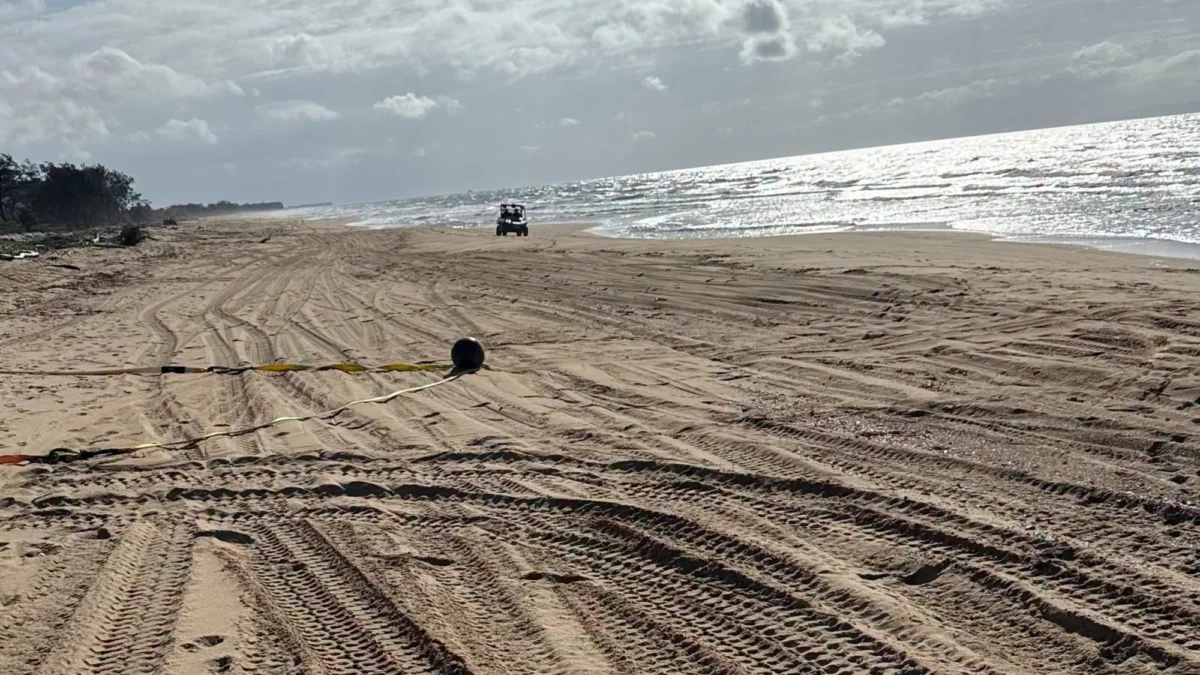
The pristine shores of Forrest Beach, a quiet community near Ingham, Australia, have become an unlikely stage for an unfolding cosmic drama. In early July 2026, residents were startled to discover six metallic, spherical objects scattered across the sand. These "space balls," as they have been dubbed, are not relics of a science fiction film, but rather tangible reminders of the increasingly crowded reality of Earth’s orbit. As the Australian Space Agency and local authorities move to secure these mysterious objects, the incident serves as a jarring wake-up call regarding the persistent, and often unpredictable, hazards of reentering space debris.
The Forrest Beach Discovery: A New Chapter in Orbital Fallout
The discovery in July 2026 was swift and systematic. Upon the identification of the six spheres, the Queensland Fire Department mobilized, coordinating with national space authorities to manage what was treated as a potentially hazardous situation. To ensure public safety, an exclusion zone—spanning a 165-foot (50-meter) radius—was established around the debris.
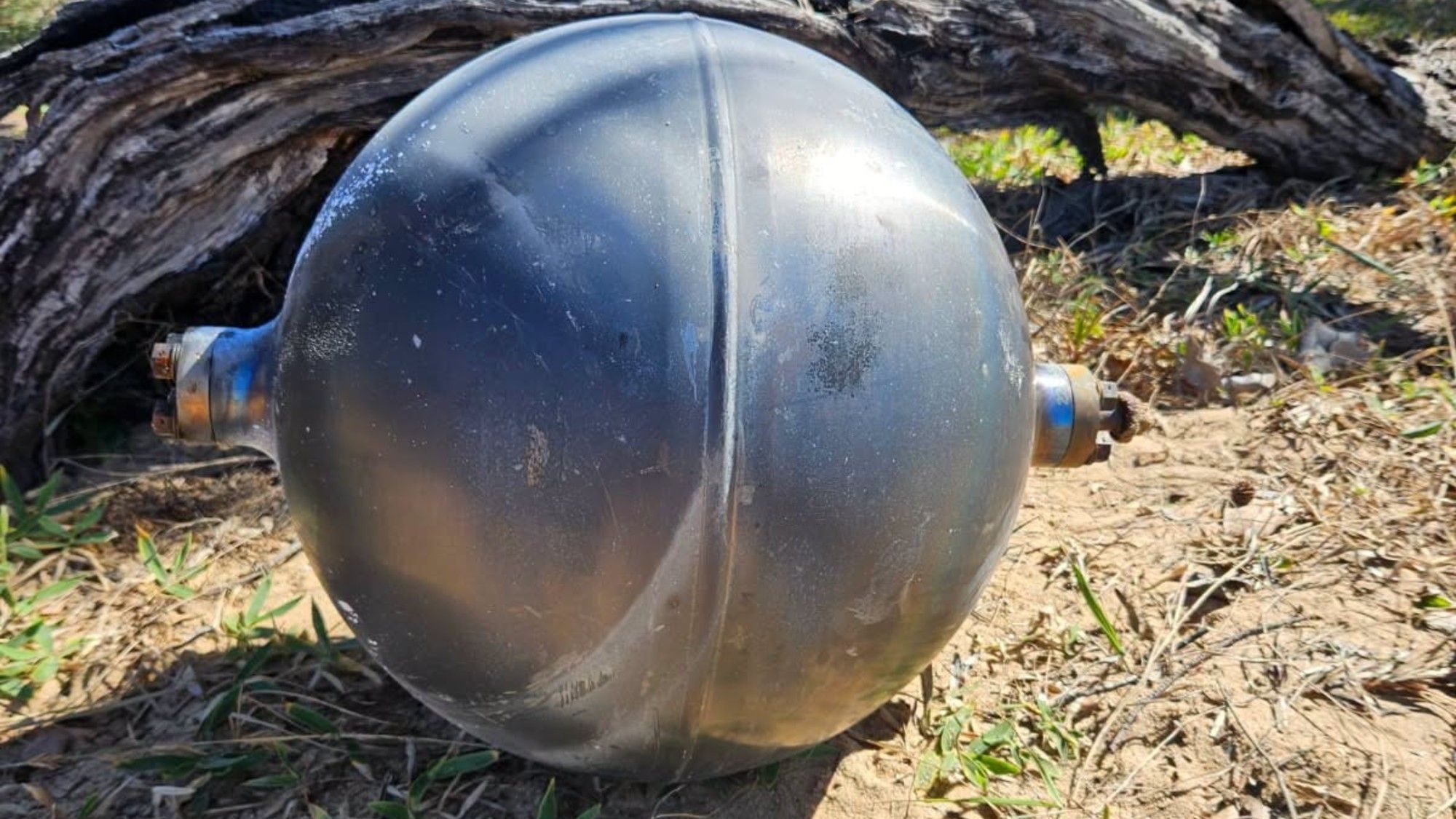
These objects are widely believed to be pressure vessels—components typically used in launch vehicles to store high-pressure gases. Their structural integrity, which allowed them to survive the fiery, high-velocity descent through the Earth’s atmosphere, is exactly what makes them a danger to the public. As investigations continue, experts are examining these spheres to determine their precise origin, though the Australian Space Agency has confirmed that they are almost certainly remnants of a foreign rocket body.
A Legacy of Descent: Australia’s Unwanted History
Australia has, by geographic happenstance, become a frequent landing site for the world’s discarded space hardware. The 2026 incident is merely the latest in a long, troubling chronology of aerial debris impacting the continent:
- 1979: The Skylab Era: Perhaps the most famous incident in Australian space history, the U.S. Skylab space station made a dramatic, uncontrolled reentry, scattering debris across the Western Australian outback.
- 2022: The SpaceX Dragon Trunk: Residents in New South Wales were stunned when a large piece of charred composite material, later identified as part of a SpaceX Dragon capsule’s "trunk" section, was found in a remote paddock.
- 2023: The Indian Booster: A mysterious pressure vessel, later traced to an Indian space launch vehicle, washed up on the shores of Western Australia near Perth.
- 2025: The Jielong-3 Wreckage: A section of a Chinese Jielong-3 rocket was discovered in the Australian outback, marked by evidence of intense heat and structural failure, underscoring the dangers of uncontrolled reentry.
These incidents highlight a recurring pattern: as the global space industry accelerates, the "fallout" of human exploration is becoming a more common, and more tangible, reality for those living under the flight paths of aging or discarded orbital hardware.
The Mechanics of Survival: Why These Objects Persist
Why do these particular objects survive the intense heat of reentry when most other satellite components disintegrate? Marlon Sorge, executive director of the Aerospace Corporation’s Center for Orbital and Reentry Debris Studies (CORDS), notes that the answer lies in both material science and physics.
"Very often, they are made of materials like titanium, which is incredibly resilient to heat," Sorge explains. "In spite of being metal, they tend to decelerate more effectively than, say, a solid, jagged hunk of metal. They can ‘float down’ a little bit more gently, allowing them to remain intact."
Sorge points out that these spheres, or Composite Overwrapped Pressure Vessels (COPVs), are designed to withstand immense internal pressure, a trait that ironically makes them the most likely candidates to endure the external pressures and temperatures of atmospheric reentry. "Even if they heat up, they don’t care," Sorge adds, noting that once they land, their recognizable, symmetrical shape makes them far more likely to be reported by the public than standard, fragmented shrapnel.
The Bigger Picture: A Failure of Policy or Physics?
The primary concern among space experts is not just the existence of these objects, but the policy framework—or lack thereof—governing their disposal. According to Sorge, the current prevalence of debris incidents could be significantly mitigated through more responsible "end-of-life" management by space agencies and commercial launch providers.
"In the bigger picture with rocket upper stages, we should simply not let them randomly reenter," Sorge argues. "We should be bringing them down via controlled reentry. If we know an object is likely to survive the atmosphere, we should dump it in a location where there are no people—the middle of the ocean."
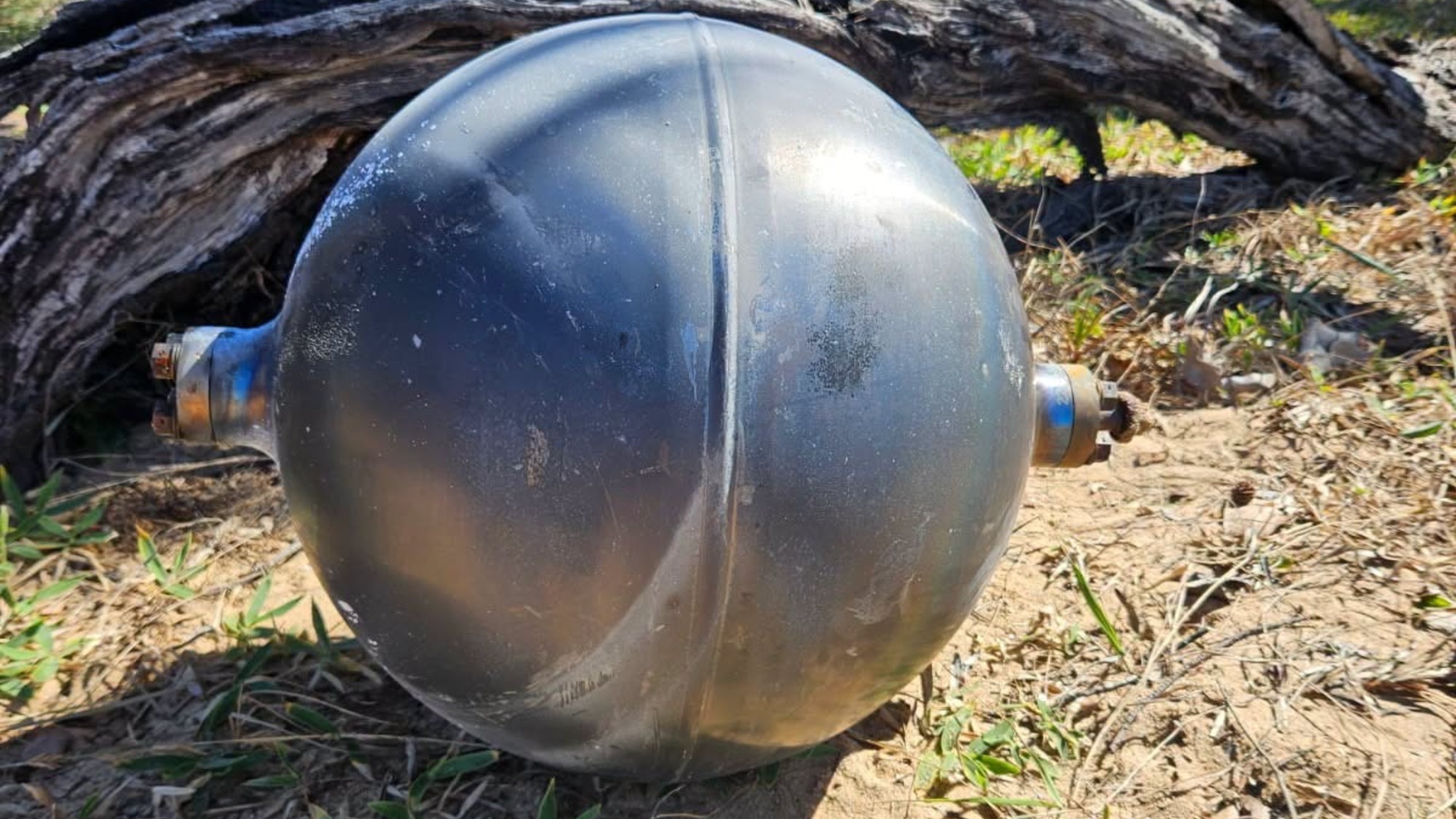
The Australian-found debris, however, is a classic example of an uncontrolled reentry event. Without a trajectory that targets an uninhabited "spacecraft graveyard," these objects effectively become unguided missiles. The Aerospace Corporation, which frequently assists in the analysis of recovered hardware, advocates for a more collaborative approach where countries on the receiving end of space debris share data. Analyzing the thermal damage and structural deformation of these vessels provides vital clues about the reentry process, helping scientists better model future risks.
Atmospheric Drag and the Geometry of Chance
Michelle Hanlon, executive director of the Center for Air and Space Law at the University of Mississippi, emphasizes that the seemingly random nature of these impacts is actually a predictable result of orbital mechanics.
"It may seem surprising that pieces of the same rocket can show up in Australia, Canada, or on a farm in Africa, but that is exactly what we expect," Hanlon explains. "Objects in low Earth orbit pass over almost the entire planet as the Earth rotates beneath them. If a reentry is uncontrolled, the exact point of impact can shift by thousands of kilometers, depending on exactly when atmospheric drag finally wins the battle against the object’s momentum."
While the vast majority of the Earth is covered by water—ensuring most debris ends up in the ocean—the increasing density of traffic in low Earth orbit means that the mathematical probability of a landing in a populated area is rising. "We are seeing more of these simply because we are launching a lot more things into space," Hanlon notes. "It is a sign of how active the space sector has become, not necessarily that it is becoming less safe. But it means that end-of-life disposal must now be as prioritized as the launch itself."
The Legal and Ethical Obligation
International law does not explicitly demand that every piece of space hardware be "stamped" with a country of origin, nor would such a stamp necessarily survive the heat of reentry. Instead, the focus is shifting toward traceability and international cooperation. Under current space treaties, a nation that launches an object into space remains responsible for it, even after it returns to Earth.
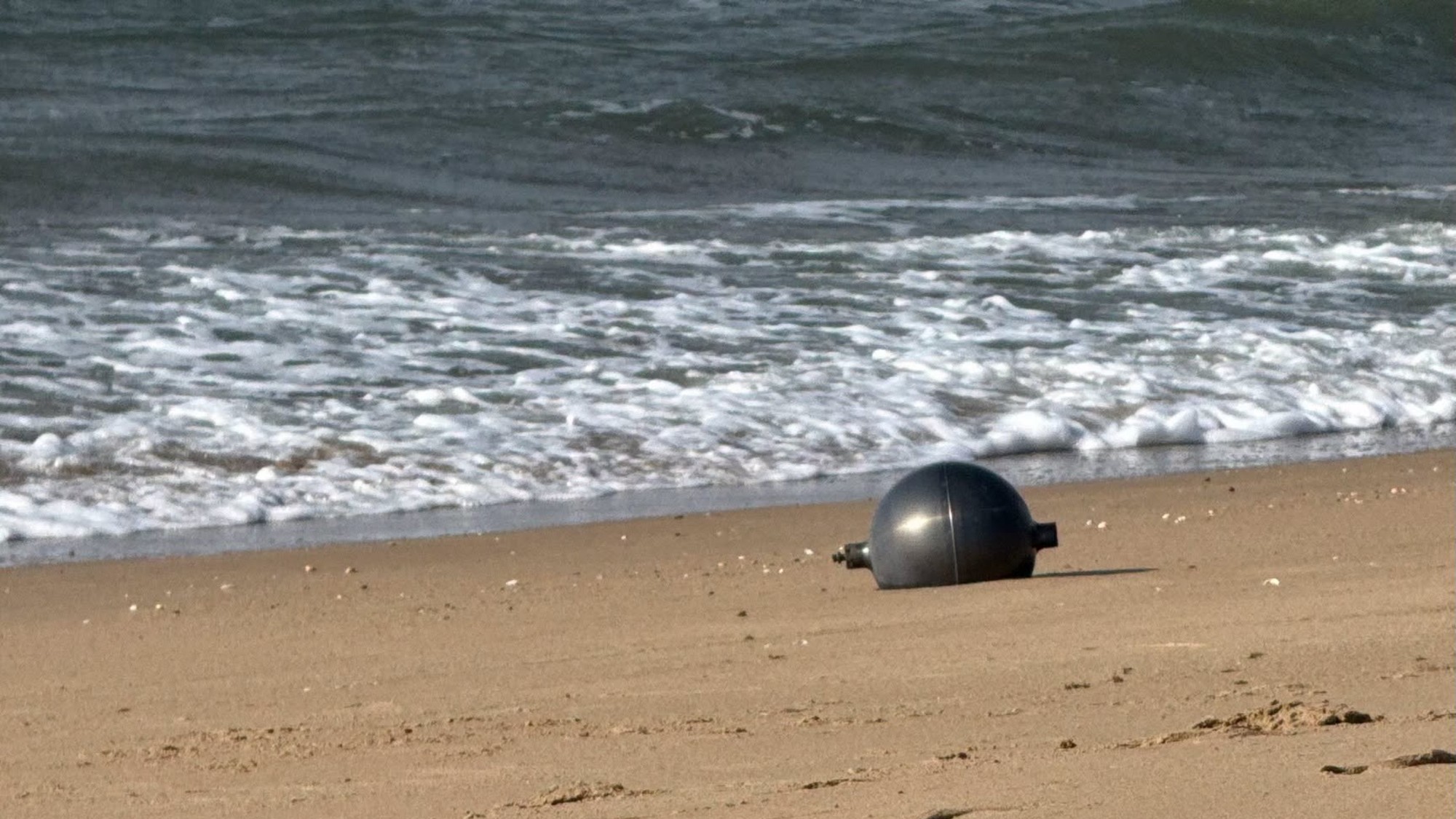
The Australian Government, in response to these recurring events, has formal protocols in place to notify the launching state and, when requested, return the recovered property. However, both Hanlon and Sorge agree that the focus should be on proactive transparency. Better tracking of space objects and more open information-sharing between spacefaring nations would be far more effective than labeling systems.
Conclusion: A New Reality for Space Exploration
The "space balls" of Forrest Beach are a sobering reminder that the era of "out of sight, out of mind" regarding space exploration is over. As the industry enters a period of unprecedented activity, the debris left in our wake has become a matter of public safety and international concern.
Whether it is a cosmic coincidence that these objects were discovered just as a new Spaceballs film is being shot in Australia or merely a statistical inevitability, the lesson remains clear: the heavens are becoming crowded, and what goes up must eventually come down. For the citizens of the world, and specifically those in Australia who find themselves on the front lines of this celestial recycling, the future of spaceflight will be defined not just by how we reach the stars, but by how we take responsibility for what we leave behind. The challenge of the coming decade will be to transition from a reactive, cleanup-based model to a proactive, sustainable strategy for orbital hygiene. As Sorge concluded, "The real challenge is that this is still an area we don’t completely understand. We get surprises now and again, but there is certainly more awareness now than in earlier years to be proactive."