By Satellite Today Editorial Staff
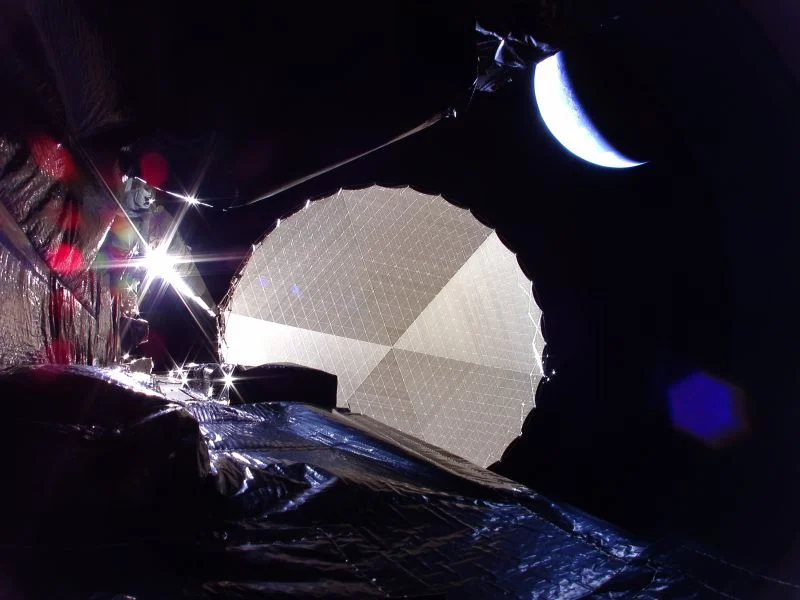
The landscape of global satellite communications has undergone a significant technical evolution this week. L3Harris Technologies, a global leader in aerospace and defense, has officially confirmed the successful in-orbit deployment of its cutting-edge perimeter truss reflector aboard the ViaSat-3 Flight 3 (F3) satellite. This milestone not only marks a triumph for L3Harris’s engineering team but also signals a transformative leap in capacity and precision for Viasat’s high-speed broadband network, particularly across the Asia-Pacific region.
The Mission: Connectivity at Scale
The ViaSat-3 F3 satellite, which launched aboard a SpaceX Falcon Heavy vehicle in late April, represents the final piece of Viasat’s ambitious trio of high-capacity Geostationary Orbit (GEO) satellites. Designed to provide massive data throughput to underserved and remote regions, the ViaSat-3 constellation is a cornerstone of modern satellite internet infrastructure.
The successful deployment of the L3Harris reflector—an intricate mechanical ballet performed thousands of miles above the Earth—ensures that the satellite can fulfill its mission of delivering high-speed, reliable broadband to the Asia-Pacific market. As the demand for bandwidth continues to surge due to the proliferation of 5G, cloud computing, and real-time data analytics, the ability to focus signals with extreme precision has become the defining characteristic of a successful satellite mission.
Chronology of the Deployment
The journey to this success began years ago in the laboratories of L3Harris, where engineers sought to reconcile the conflicting demands of large-aperture performance and launch-vehicle volume constraints.
- Design and Development Phase: Throughout the development cycle, L3Harris focused on optimizing its proprietary perimeter truss architecture. The goal was to build an aperture that offered the gain of a much larger antenna while folding into a footprint small enough to maximize payload efficiency during launch.
- The Launch Event: In late April, the ViaSat-3 F3 satellite took flight, propelled by a SpaceX Falcon Heavy. The launch was the culmination of months of integration testing between Viasat and its hardware partners.
- Orbital Insertion and Commissioning: Following a series of maneuvers to reach its designated geostationary slot, the satellite entered its commissioning phase.
- Deployment Confirmation: L3Harris announced the successful deployment of the reflector following a series of ground-commanded sequences. The reflector unfurled in the vacuum of space, reaching its fully expanded state and locking into position to begin operations.
Technical Superiority: Breaking the Size-Performance Paradigm
The core of this achievement lies in the sophisticated design of the reflector itself. Traditionally, large-aperture antennas have been limited by the physical constraints of launch fairings. To achieve high gain, satellites require large reflectors; however, large reflectors occupy significant space and add substantial mass, both of which increase launch costs.
L3Harris’s solution was to develop a perimeter truss reflector that is approximately 30% more compact than industry-standard designs. By utilizing advanced materials and a high-tension mesh surface, the team achieved an unprecedented level of surface precision.
The Role of Mesh Technology
The reflective mesh surface is a masterpiece of material science. It is designed to maintain its shape under extreme thermal fluctuations—the brutal reality of switching between the direct sunlight of space and the freezing shadow of the Earth. If the mesh warps or loses its parabolic curvature, signal gain drops significantly. The L3Harris reflector, however, maintains its surface accuracy with near-perfect reliability, allowing the satellite to "focus" Ka-Band signals with a granularity that maximizes data throughput.
Official Perspectives: Pushing the Envelope
Industry leaders have hailed this deployment as a benchmark for future GEO satellite missions. Nate Krejca, general manager of Mission Critical RF at L3Harris, emphasized the significance of the hardware’s performance in a recent statement.
"This reflector is 30% more compact than the industry standard perimeter truss reflectors while maintaining exceptional surface precision," Krejca noted. "By focusing signals with near-perfect accuracy, we are enabling the satellite to maximize its data capacity and deliver superior broadband performance to users who previously faced significant connectivity hurdles."
Viasat, for its part, views this successful deployment as the final hurdle in ensuring that the Asia-Pacific region receives the same level of service quality as its North American and European counterparts. The integration of L3Harris’s hardware into the Viasat ecosystem is a testament to the collaborative nature of modern aerospace engineering, where mission success depends on the seamless interface between satellite bus manufacturers, payload providers, and launch vehicle operators.
Implications for the Satellite Communications Industry
The success of the ViaSat-3 F3 reflector deployment carries broad implications for the satellite industry, particularly as it pivots toward high-throughput satellites (HTS) and Very High Throughput Satellites (VHTS).
1. Cost Efficiency in Launch and Deployment
By reducing the stowed volume of the reflector by 30%, L3Harris has essentially provided operators with a "free" gain in launch efficiency. In an era where launch costs remain a primary barrier to entry, the ability to pack more performance into a smaller volume allows operators to choose smaller, less expensive launch vehicles or to add secondary payloads to the same mission, thereby improving the overall return on investment (ROI).
2. Enhanced Broadband Access
The Asia-Pacific region is characterized by diverse geography, including vast oceans, archipelagos, and mountainous terrains where terrestrial fiber-optic infrastructure is often economically or physically unfeasible. The enhanced gain provided by the L3Harris reflector translates directly into higher data speeds and lower latency for end-users, including commercial aviation, maritime vessels, and remote community governments.
3. Resilience and Signal Integrity
As the electromagnetic spectrum becomes increasingly crowded, the ability of a satellite to focus its beam narrowly is essential for avoiding interference. The precision of the L3Harris reflector ensures that Viasat can operate within its allocated Ka-Band frequencies with minimal spillover, increasing the spectral efficiency of the entire network. This is critical for meeting regulatory requirements and ensuring the longevity of the constellation.
Looking Ahead: The Future of Space-Based Connectivity
The deployment of the ViaSat-3 F3 reflector is not just a one-off success; it represents a scalable technology roadmap for L3Harris. As the company continues to refine its deployable mesh systems, the industry can expect to see even larger apertures—potentially reaching double the size of current models—capable of folding into even smaller launch envelopes.
This evolution is happening in tandem with the rise of Low Earth Orbit (LEO) constellations. While LEO satellites are currently dominating the headlines for their low latency, the continued success of GEO missions like ViaSat-3 demonstrates that the geostationary orbit remains the most efficient way to provide massive, concentrated capacity over specific geographic regions.
The successful unfurling of this reflector serves as a reminder of the engineering rigor required to operate in space. It is a sector where there are no "second chances," and where the success of a multibillion-dollar mission often hinges on the mechanical reliability of a single, complex component. With the ViaSat-3 F3 now fully operational, L3Harris has cemented its role as an indispensable partner in the global effort to bridge the digital divide.
As Viasat begins to bring the Asia-Pacific satellite online for commercial service, the impact of this high-precision reflector will be felt by millions of users, proving that the most profound advancements in communication often happen in the quiet, precise movements of technology thousands of miles above our heads.