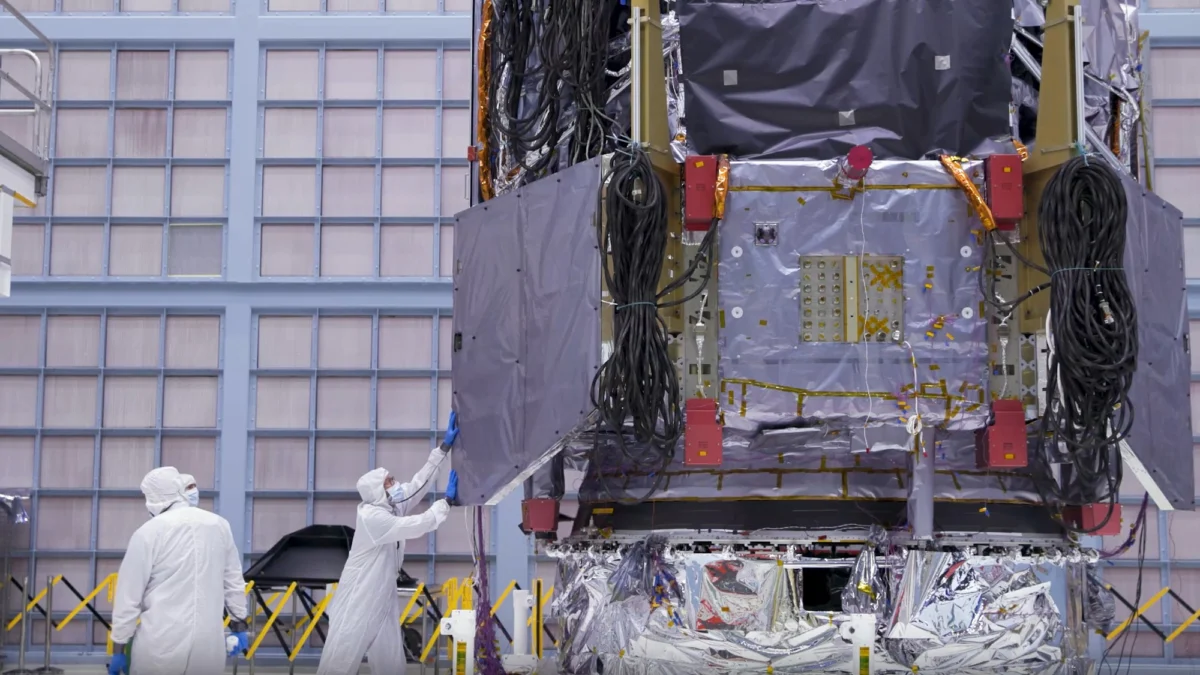
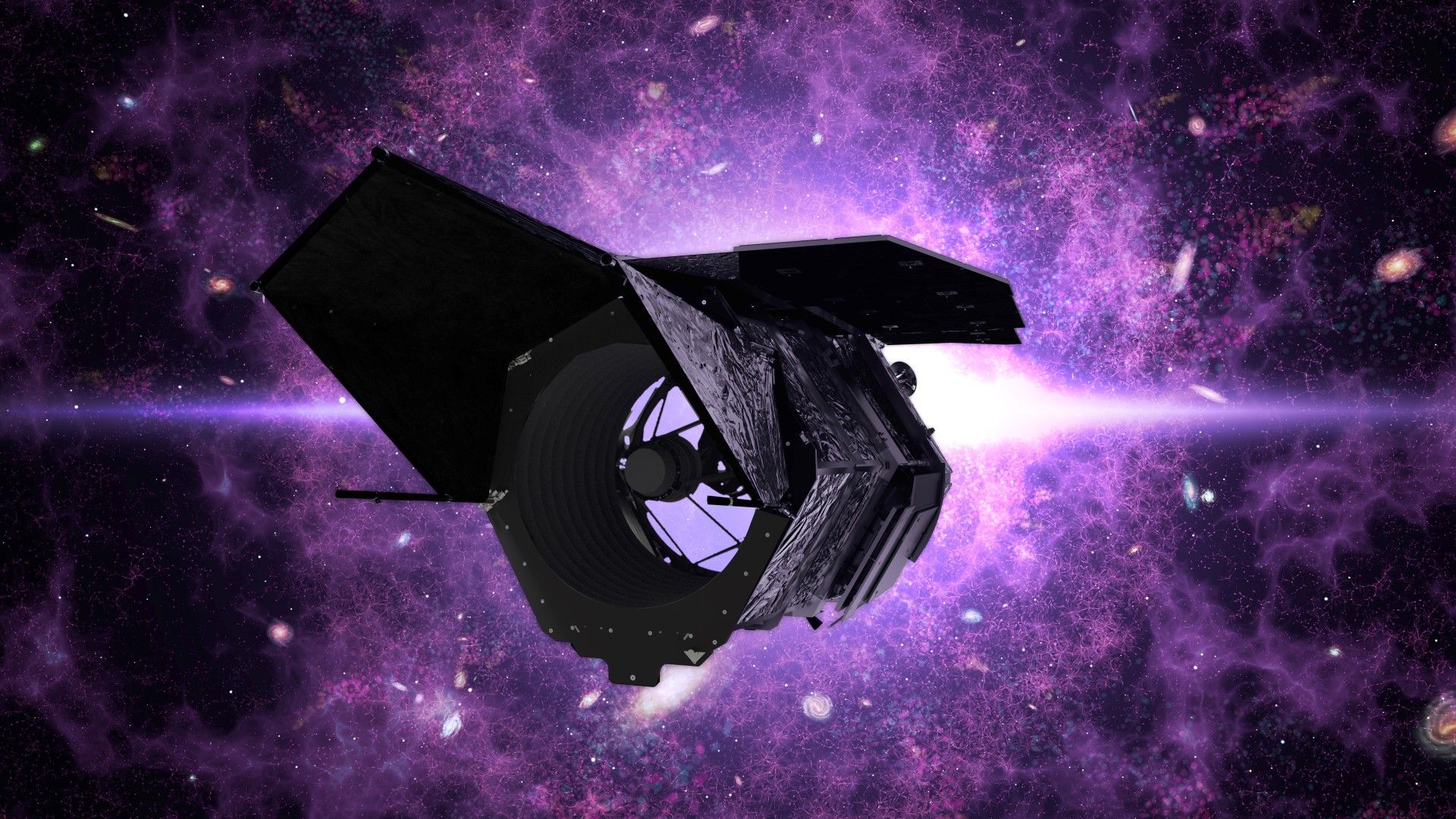
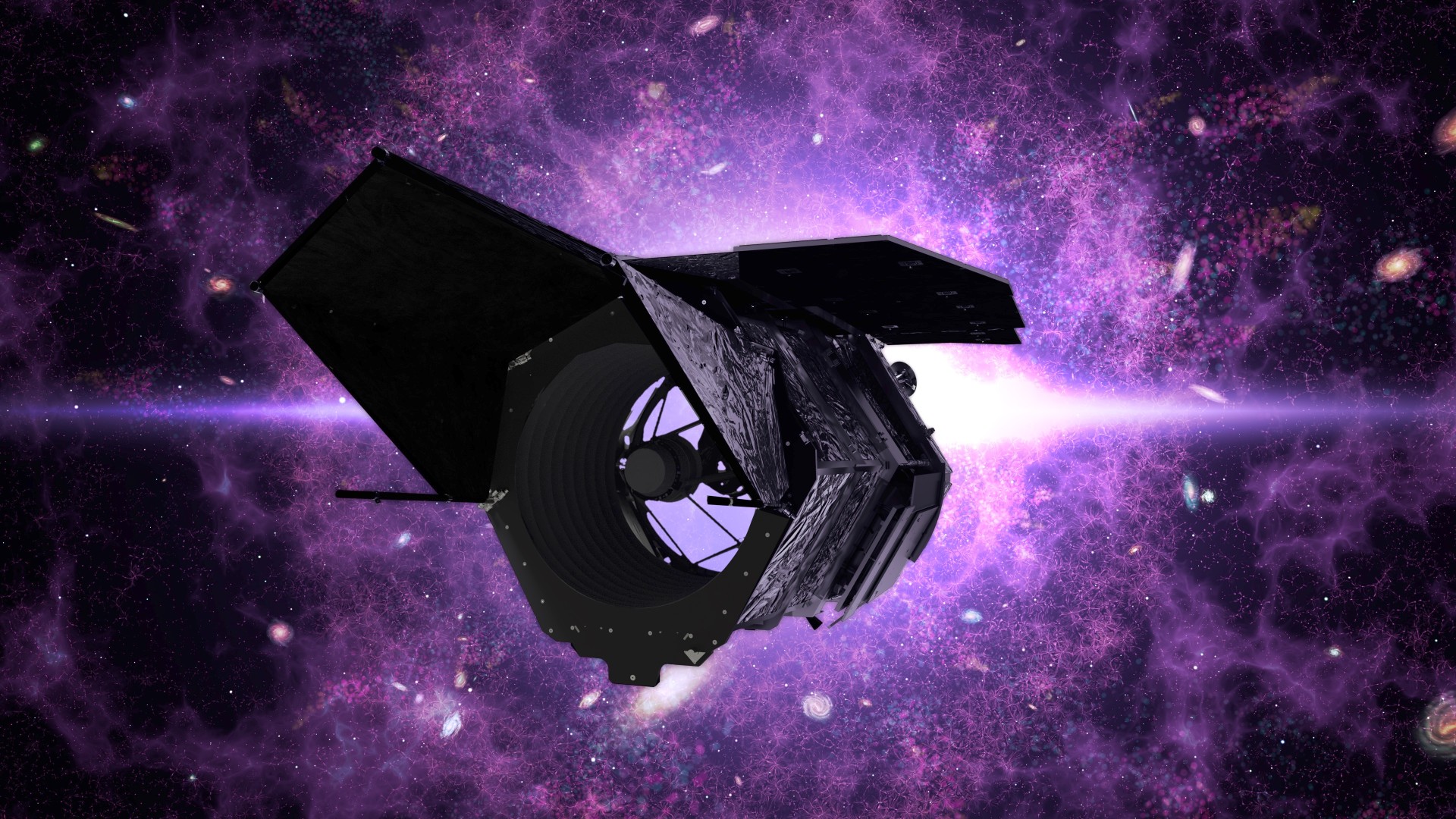
In the quiet, sterile cleanrooms where NASA prepares its most ambitious observatories, a unique piece of hardware sits at the heart of the Nancy Grace Roman Space Telescope. It is a masterpiece of precision engineering, designed to peer into the darkest corners of the cosmos to decode the mysteries of dark energy and distant exoplanets. Yet, its provenance is far from traditional. The primary structure—the Optical Telescope Assembly—was not built from the ground up for civilian science; it was an inheritance from the clandestine world of Cold War-era intelligence gathering, gifted to NASA by the National Reconnaissance Office (NRO).
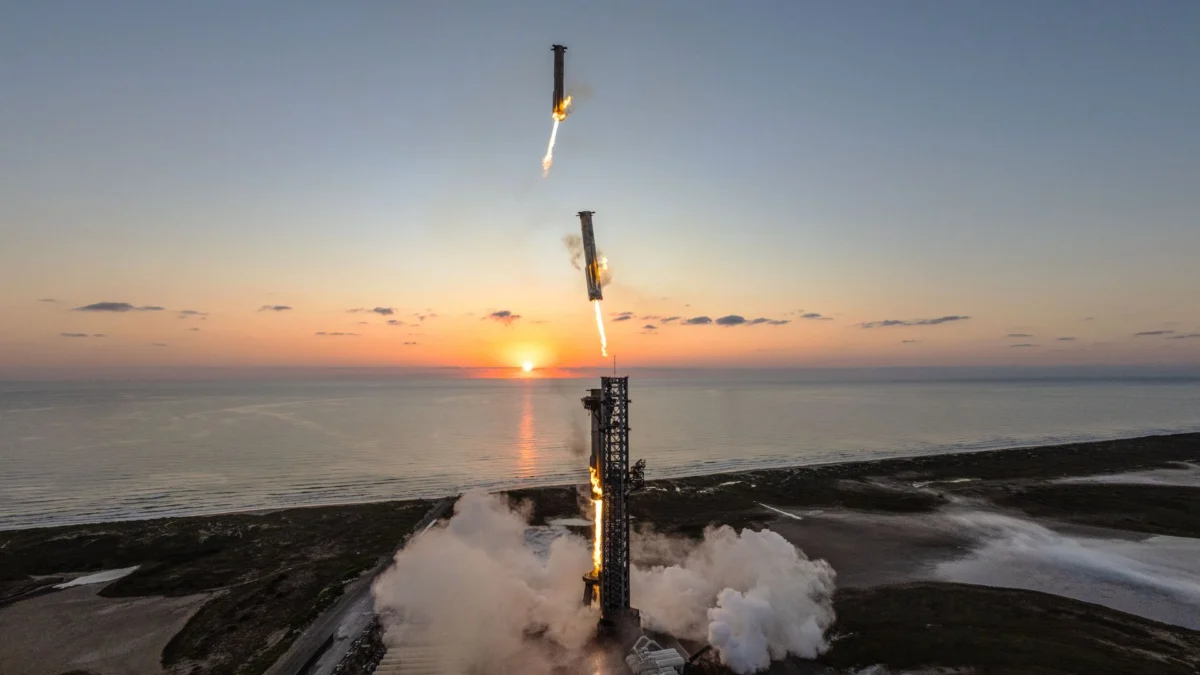
As the scientific community prepares for the upcoming launch aboard a SpaceX Falcon Heavy rocket, the story of the Roman Space Telescope stands as a testament to the strange, serendipitous ways that national security priorities and astronomical ambition can collide.
The Birth of a "Spy" Telescope
To understand the Roman Space Telescope, one must look back to the early 2000s, an era defined by a rapid, post-9/11 acceleration in American defense spending. In 1999, the NRO—the agency responsible for designing, building, and operating the nation’s fleet of spy satellites—initiated the "Future Imagery Architecture" (FIA) program.
The goal was ambitious: to build a new generation of reconnaissance satellites capable of unprecedented optical and radar resolution. Boeing was contracted to lead this massive project, which promised to revolutionize the U.S. government’s ability to monitor global threats. However, the program quickly spiraled into what the New York Times would later label one of the most expensive and "spectacular failures" in the history of American aerospace. Budget overruns mounted into the billions, and technical hurdles proved insurmountable for the original scope of the project. By 2005, the NRO pulled the plug, leaving behind a cache of highly sophisticated, unused hardware.
Among the remains of this "failed" program were two 2.4-meter wide-field space telescopes. These were not mere prototypes; they were high-end, space-qualified optical systems with mirrors comparable in size to the Hubble Space Telescope’s, but boasting a wider field of view and advanced, ultra-sensitive reconnaissance capabilities. For years, they sat in storage, effectively "orphaned" technology in a warehouse, waiting for a purpose that had long since evaporated.
A Second Life in the Cosmos: Chronology of a Gift
The transition of this technology from a military warehouse to a premier NASA observatory is a story of opportunistic planning and strategic foresight.
- 2005–2010: The FIA program is shuttered. The NRO telescopes are placed into long-term storage, their potential for scientific use largely unrecognized by the broader public.
- 2010: The National Academy of Sciences releases its Astronomy and Astrophysics Decadal Survey. The report names a wide-field survey telescope—the mission that would eventually become the Roman Space Telescope—as the top priority for the next decade of American space science.
- 2012: In a surprising turn of events, the NRO publicly announces the donation of the two unused 2.4-meter telescopes to NASA. The gesture is met with excitement, as the agency realizes it has been handed a significant head start on the hardware requirements for its newest flagship mission.
- 2012–2015: NASA begins the arduous process of "de-classifying" the hardware. This involved stripping out sensitive military-grade electronics—components designed for tracking targets on Earth rather than galaxies—and integrating modern, civilian-grade instruments capable of the long-exposure, high-precision work required for deep-space astronomy.
- 2016–2024: The mission is formally designated the Nancy Grace Roman Space Telescope in honor of the "Mother of Hubble." Engineers spend years refining the optical assembly, testing the structure under the extreme rigors of launch simulations, and ensuring the repurposed mirrors can meet the scientific requirements for mapping the expansion of the universe.
- August 2024: The telescope is finalized, integrated, and transported to the launch site, set to ride a SpaceX Falcon Heavy into the vacuum of space.
The Engineering Challenge: Reclaiming the Hardware
The donation was not as simple as taking a telescope off a shelf and pointing it at the stars. While the optics were, by all accounts, "top-tier," they were purpose-built for looking down at the Earth from low-Earth orbit. Reconfiguring them for deep space required a complete overhaul of the telescope’s "guts."
The Roman team had to address several technical hurdles. First, the original electronics suite had to be removed and replaced. These systems were designed for high-speed tracking of terrestrial objects, whereas the Roman mission required the extreme stability and long-duration exposure capabilities necessary to capture light from galaxies billions of light-years away.
Furthermore, the integration process was clouded by the remnants of the project’s classified past. During the initial handover, members of the NASA team were faced with documentation containing significant redactions. They were being given hardware of immense value, but they had to reverse-engineer parts of its functionality because the original blueprints remained partially shielded by national security protocols.
The Economic Implications: Savings or Sunk Costs?
The central debate surrounding the use of NRO hardware has always been: Did it actually save money?
At the time of the 2012 donation, the hardware was estimated to be worth at least $250 million. On paper, receiving a $250 million telescope for free sounds like an incredible deal. However, the cost of retrofitting, re-testing, and integrating the old hardware into a modern mission structure is substantial. Critics of the plan argued that building a bespoke telescope might have been less complex than modifying a piece of hardware that wasn’t designed for the mission’s specific infrared and wide-field requirements.
When compared to the James Webb Space Telescope (JWST), which suffered from massive delays and a $10 billion price tag, the Roman mission’s development has been remarkably stable. While the "free" hardware did not come without its own set of logistical costs, the program has largely avoided the massive budget bloat that plagued its predecessor. By leveraging the existing structural integrity of the NRO mirrors, NASA was able to bypass years of primary mirror fabrication and testing, potentially saving the project from the scheduling volatility that often defines flagship missions.
Why the Roman Mission Matters
The Roman Space Telescope is designed to do what Hubble and Webb cannot: survey the universe at an unprecedented scale. While Webb is a surgical tool, designed to peer deep into the origins of the first galaxies, Roman is a "wide-angle" camera. Its primary scientific objective is to map the distribution of dark matter and measure the influence of dark energy on the acceleration of the universe.
By observing millions of galaxies, the telescope will create a massive, high-resolution dataset that will allow scientists to see the "cosmic web" in a way that was previously impossible. Furthermore, it will employ advanced coronagraph technology to directly image exoplanets, potentially detecting worlds that were once hidden in the glare of their parent stars.
Conclusion: A Legacy of Transformation
The Nancy Grace Roman Space Telescope is a symbol of a rare success story in government inter-agency cooperation. What began as a multi-billion-dollar military failure, mired in the secrecy of the intelligence community and the inefficiencies of a post-9/11 rush, has been transformed into an instrument of pure discovery.
As the rocket ascends on Sunday, it carries more than just mirrors and sensors; it carries the legacy of two disparate worlds. The technology that was once meant to keep a watchful eye on terrestrial adversaries will now serve a higher purpose: providing humanity with a clearer, broader, and more profound understanding of our place in the vast, expanding architecture of the universe. The second telescope remains in storage, a silent partner to the one about to launch—a reminder that in the realm of space exploration, even the most unexpected paths can lead to the stars.