By Satellite Today Staff
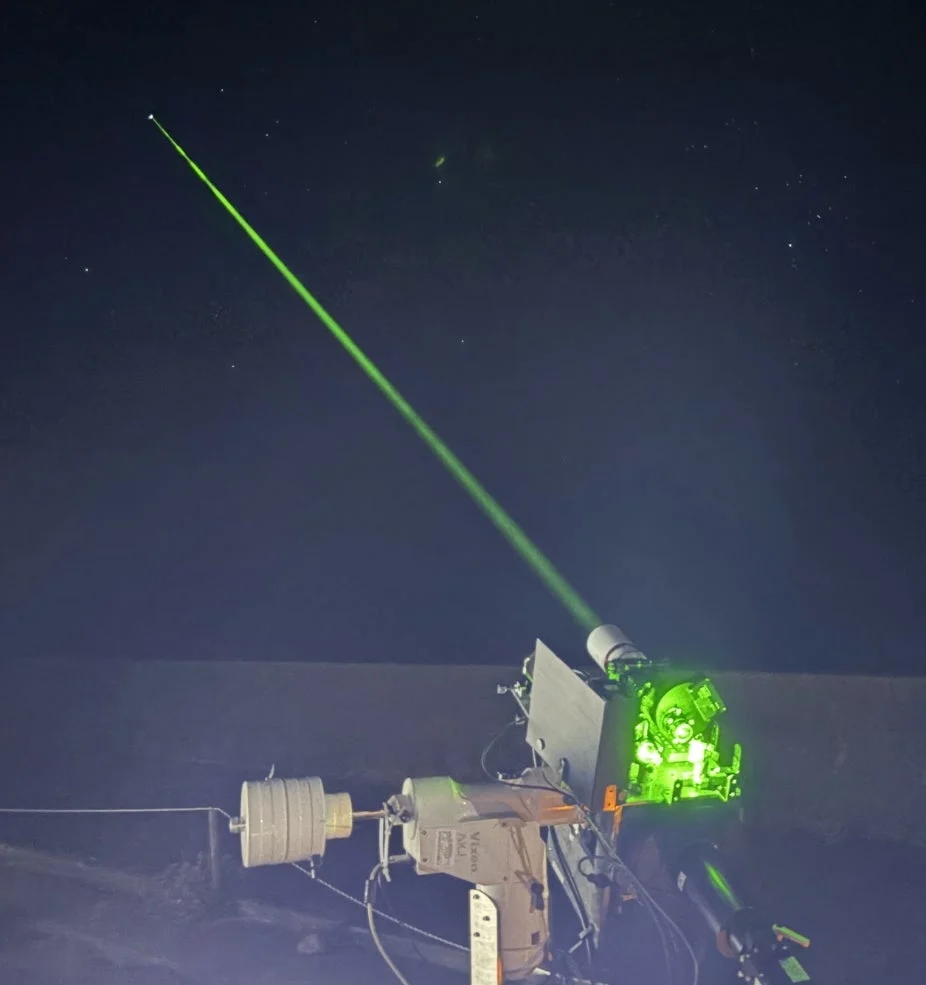
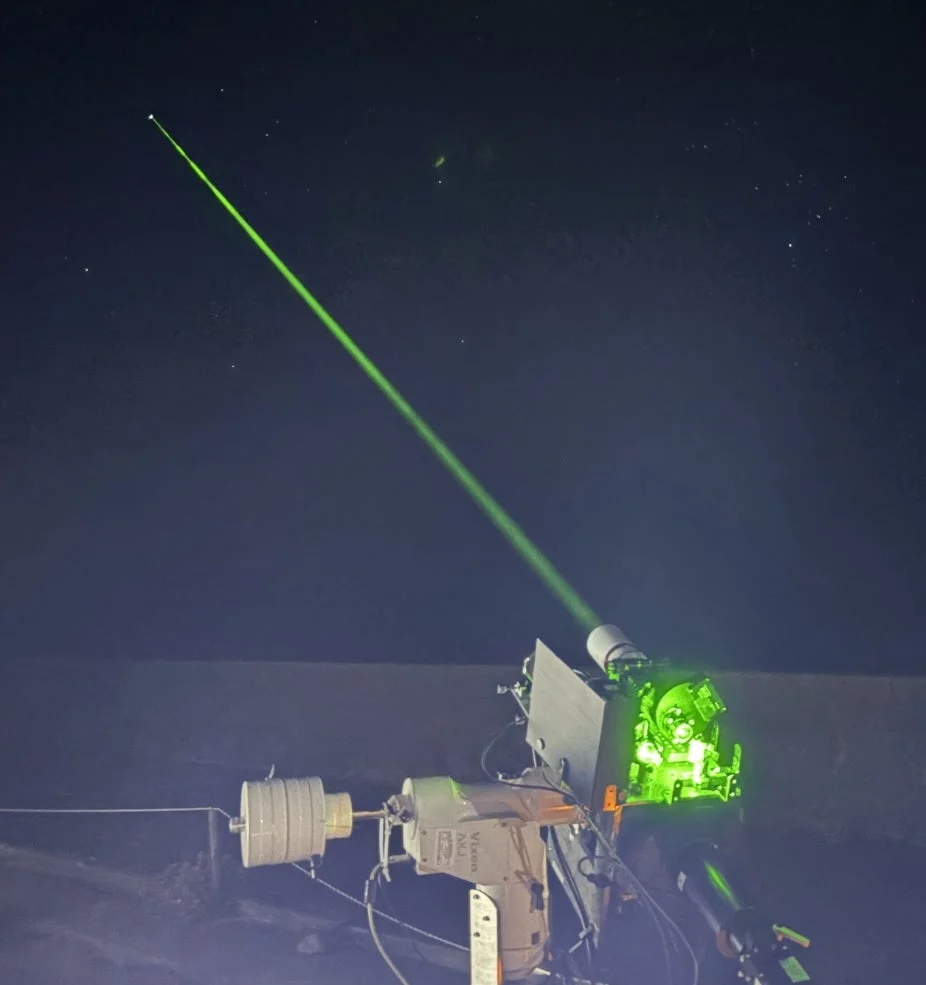
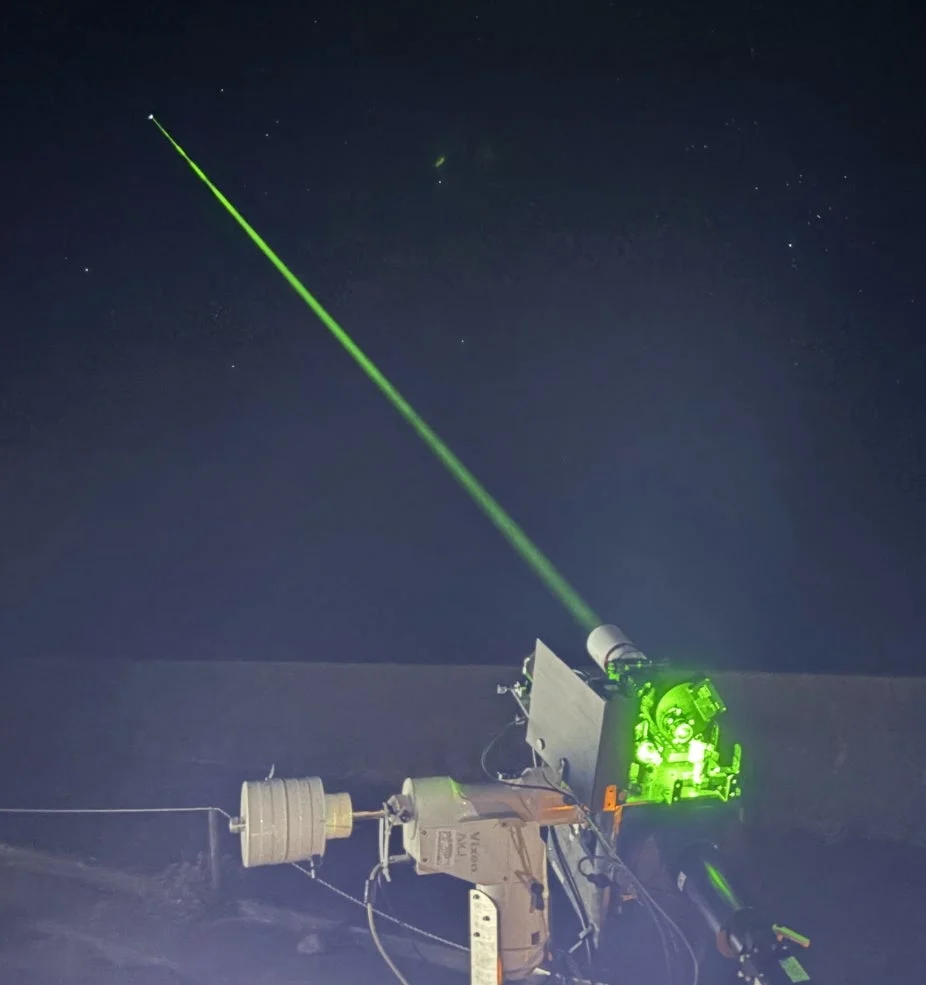
In a significant leap for deep-space connectivity, NASA has announced a strategic partnership with SpaceX to integrate advanced Starlink mini laser terminals into the Orion spacecraft for the upcoming Artemis III mission. This collaboration, formalized on Thursday, marks a pivotal shift in how the agency manages data transmission from the lunar vicinity, promising to bring high-definition, 4K imagery and video back to Earth with unprecedented clarity and speed.
As NASA prepares to return humans to the lunar surface in 2027, the ability to relay real-time mission data, environmental observations, and astronaut telemetry has become a critical technical requirement. By leveraging the flight-proven laser communication technology developed for the Starlink constellation, NASA aims to bridge the 240,000-mile gap between the Moon and Houston with a robust, high-bandwidth optical link.
The Core Objective: Revolutionizing Lunar Data Transmission
The integration of Starlink mini laser terminals onto the Orion capsule is not merely an operational upgrade; it is a fundamental shift in space communication infrastructure. Historically, deep-space missions have relied on Radio Frequency (RF) systems, which, while reliable, face significant bandwidth limitations. As the complexity of missions increases—and as the public’s appetite for high-fidelity space imagery grows—the shift toward optical (laser) communications has become an inevitability.
The primary function of these terminals will be to facilitate the downlink of 4K video feeds during the complex docking and rendezvous operations that define the Artemis III mission profile. The mission, slated for 2027, will involve critical maneuvers between the Orion spacecraft and commercial human landing systems (HLS). Having high-definition, low-latency visual confirmation of these docking procedures provides mission control with superior situational awareness, significantly enhancing safety margins.
Chronology of Progress: From Polaris Dawn to the Moon
The path to integrating SpaceX’s laser technology into the Artemis program has been a calculated, multi-year progression of testing and validation.
The Foundation: Polaris Dawn (2024)
The journey began in earnest with the private Polaris Dawn mission in September 2024. During this flight, SpaceX tested the efficacy of laser communications on its Dragon spacecraft, proving that high-speed data could be maintained even while orbiting at varying altitudes. This success provided the critical proof-of-concept necessary to transition laser technology from a commercial novelty to a mission-critical utility for human spaceflight.
The Validation: Fram2 Mission (2025)
Building on the success of Polaris Dawn, the Fram2 human spaceflight mission in 2025 served as a direct demonstration to NASA. During this mission, SpaceX demonstrated the robustness of its laser terminals in an operational environment, confirming that the hardware could handle the thermal and radiation stresses associated with space travel while maintaining a stable lock on ground stations.
The Precursor: Artemis II (2025-2026)
While the Artemis III mission will use SpaceX technology, it follows in the footsteps of the Artemis II mission, which utilized the Optical Communications System (O2O) developed by the Massachusetts Institute of Technology (MIT) Lincoln Laboratory. During the Artemis II mission, O2O successfully transmitted approximately 484 GB of data between the Orion capsule and Earth. This milestone proved that optical communications were viable for lunar distances, providing the agency with the confidence to transition to the commercialized services offered by SpaceX.
Supporting Data and Technical Implications
The move to commercialize satellite relay for Low-Earth Orbit (LEO) and beyond is part of NASA’s broader Communications Services Project (CSP). Initiated in 2022, the CSP aims to move NASA away from being the primary operator of its own communication networks toward a model where it acts as a primary customer for commercial providers.
The Capacity Gap
To understand the significance of this move, one must look at the data throughput requirements. RF communication is constrained by spectrum availability and the inverse-square law, which dictates that signal strength diminishes rapidly over distance. Laser communications, however, utilize light waves at much higher frequencies, allowing for data transmission rates that are orders of magnitude faster than traditional radio systems.
For the Artemis III mission, this means:
- Real-time 4K Streaming: Enabling ground crews to monitor docking operations in high resolution.
- Reduced Data Bottlenecks: Allowing the Orion capsule to downlink massive telemetry datasets without delaying mission operations.
- Enhanced Public Engagement: Providing the public with high-quality, near-instantaneous imagery of lunar operations, mirroring the excitement of the Apollo era with the technical standards of the 21st century.
The CSP Ecosystem
SpaceX is one of six companies selected by NASA in 2022 to participate in the CSP. By outsourcing the communication architecture, NASA is able to dedicate more of its internal budget toward deep-space exploration and hardware development, while the private sector focuses on the efficiency and scalability of network infrastructure.
Official Responses and Strategic Rationale
NASA’s Space Communications and Navigation (SCaN) office has been the primary driver behind this integration. Officials within the agency emphasize that this partnership is a win-win: NASA gains access to a cutting-edge communication relay that has already been tested in the harsh vacuum of space, while SpaceX gains a high-profile validation of its hardware’s capability to support deep-space exploration.
“The goal of the Communications Services Project is to foster a vibrant marketplace for space-based communication services,” said a NASA representative during the announcement. “By integrating these terminals onto Orion, we aren’t just upgrading a radio; we are building a foundation for a future where high-speed connectivity is a standard, rather than a luxury, for any vessel operating in the lunar regime.”
SpaceX, for its part, views this as an extension of the Starlink vision. While Starlink was originally conceived to provide global internet access on Earth, the adaptation of its laser-interlink technology for space-to-space and space-to-ground relay has proven to be a secondary, yet equally transformative, application of the constellation.
Implications: The Future of the Lunar Economy
The successful integration of Starlink laser terminals on Artemis III carries profound implications for the future of the lunar economy.
1. Standardization of Lunar Infrastructure
If the Artemis III integration proves successful, it will likely establish a de facto standard for future lunar missions. Other commercial entities, including those developing lunar landers and habitat modules, may look to the same or similar laser terminal technology to ensure their hardware can communicate with the Orion capsule and, by extension, ground stations on Earth.
2. A Robust "Lunar Internet"
The long-term vision is the creation of a "Lunar Internet." As more missions arrive at the Moon, the need for a persistent, high-bandwidth relay network becomes essential. By proving that Starlink terminals can function in deep space, SpaceX is positioning itself as a primary service provider for future lunar infrastructure, potentially laying the groundwork for a constellation of satellites in lunar orbit that would mirror the connectivity benefits of the LEO Starlink network.
3. Shift in Public-Private Relations
The Artemis III mission marks a maturation of the public-private partnership model. Initially, companies like SpaceX were viewed primarily as launch providers. Now, they are becoming integral technology partners for the spacecraft themselves. This indicates a deepening of trust between NASA and private industry, where the agency is increasingly comfortable relying on commercial off-the-shelf (COTS) technology for mission-critical operations.
4. Technical Challenges Ahead
Despite the optimism, significant challenges remain. The Artemis III mission profile involves complex orbital mechanics, and maintaining a laser lock between a moving spacecraft and a ground station—while dealing with the extreme radiation environment of the lunar transit—remains a daunting engineering task. SpaceX and NASA engineers must ensure that the pointing, acquisition, and tracking (PAT) systems are resilient enough to handle the micro-vibrations of the spacecraft and the precision required for long-distance optical links.
Conclusion: A New Era of Visibility
As we approach the 2027 launch window for Artemis III, the eyes of the world will be on the Orion spacecraft. The inclusion of Starlink mini laser terminals ensures that when those critical moments occur—when the docking latches engage and the crew begins their historic descent—the world will be watching in 4K.
This partnership is a testament to the accelerating pace of aerospace innovation. By combining the heritage of NASA’s deep-space exploration goals with the rapid iteration and commercial viability of SpaceX’s satellite technology, the Artemis III mission is setting the stage for a new era of lunar exploration. Connectivity is no longer a bottleneck; it is the enabler that will bring the Moon closer to Earth than ever before.
As the project moves from the agreement phase into the integration phase, the success of these terminals will be a defining metric for the mission. If the data transmission proves as seamless as the Polaris Dawn tests suggested, the implications will ripple throughout the entire space industry, solidifying the role of optical communications as the backbone of future human spaceflight.