By Space.com Editorial Staff
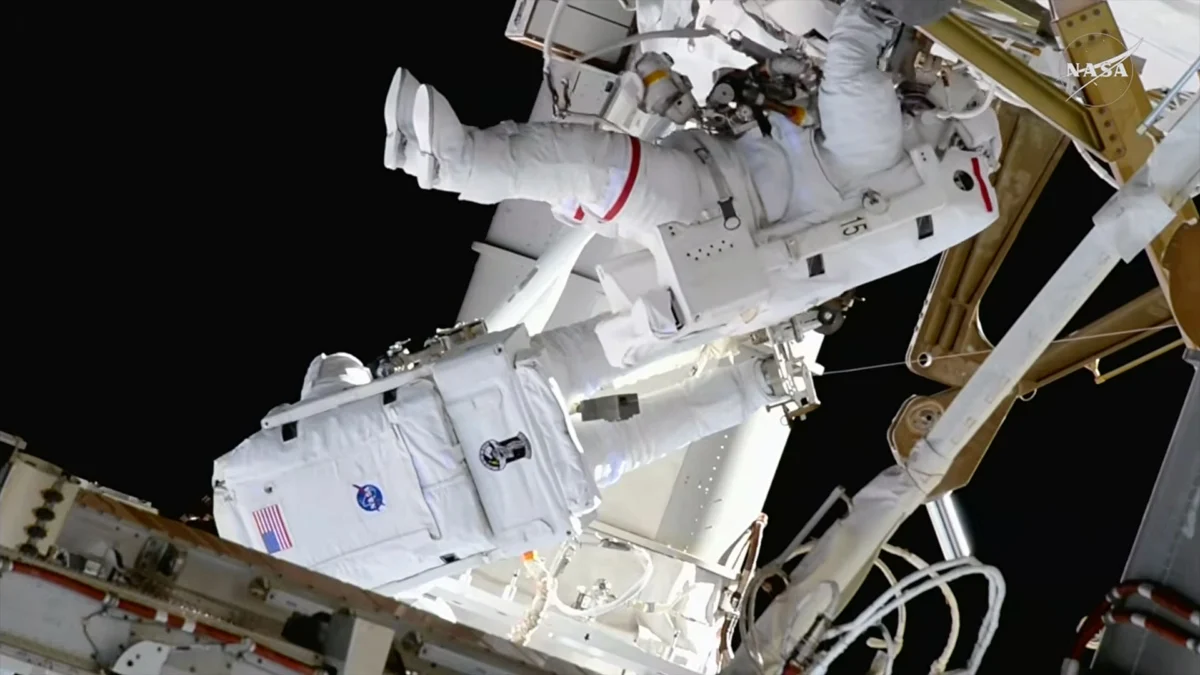
In the unforgiving vacuum of low Earth orbit, the International Space Station (ISS) stands as a marvel of engineering—a sprawling, pressurized laboratory that requires constant maintenance to remain operational. Today, August 25, that maintenance takes center stage as NASA astronaut Anil Menon and European Space Agency (ESA) astronaut Sophie Adenot venture outside the station’s airlock to complete a high-priority repair mission.
The primary objective of this Extravehicular Activity (EVA) is to finalize the installation of a new space-to-ground antenna, a component vital for maintaining the robust, high-speed data link between the orbital outpost and Mission Control at the Johnson Space Center in Houston. For the orbiting crew, this is not merely a routine hardware swap; it is a critical step in ensuring the station’s long-term communication integrity.
The Mission: A Race Against Time and Physics
The spacewalk is scheduled to commence at approximately 8:35 a.m. EDT (1235 GMT). Menon, serving as "crewmember 1," and Adenot, as "crewmember 2," will spend an estimated six and a half hours working in the harsh, radiation-exposed environment of space.
This mission serves as a direct follow-up to the duo’s previous excursion on August 18. During that initial outing, the pair successfully removed a failed antenna that had been causing intermittent signal degradation. However, the complexity of the task, combined with the stringent time constraints required to ensure astronaut safety, meant they were unable to complete the installation of the new hardware before their oxygen and battery reserves mandated a return to the airlock.
Today’s objective is focused: secure the new antenna, verify its connection to the station’s internal networks, and ensure that Mission Control regains full, uninterrupted telemetry and command capability. If the primary task concludes ahead of schedule, the pair has been cleared to perform a "get-ahead" task—a secondary objective designed to maximize the utility of their time outside. They will attempt to replace a retroreflector located on the forward port of the station’s Harmony module. This small but significant upgrade will improve navigation data for incoming commercial and cargo spacecraft, effectively smoothing the docking process for future resupply missions.
Chronology of the Spacewalk and Preparations
The logistics of an EVA are staggering. Months of preparation go into a single day of work. The process begins hours before the hatch even opens, with the astronauts undergoing a "pre-breathe" protocol to purge nitrogen from their bloodstreams, preventing decompression sickness once they transition into the lower-pressure environment of the spacesuits.
- 7:00 a.m. EDT (11:00 GMT): Live coverage begins. NASA’s broadcast will provide viewers with real-time audio from the astronauts and commentary from flight controllers in Houston.
- 8:35 a.m. EDT (12:35 GMT): The official start time. The astronauts will transition their spacesuits to battery power and begin the egress process from the Quest Airlock.
- Late Morning/Early Afternoon: The core of the operation. The duo will navigate the exterior of the ISS using specialized handrails and foot restraints, moving the heavy antenna assembly into position.
- Afternoon: If time permits, the transition to the Harmony module for the retroreflector installation.
- 3:05 p.m. EDT (19:05 GMT): Expected completion time, followed by the slow, deliberate process of repressurizing the airlock.
The Astronauts: A Profile of Expertise
This mission represents a milestone for both participants. For Anil Menon, this will be his third career spacewalk, cementing his status as a veteran of orbital maintenance. Menon, who arrived at the ISS on July 14 aboard a Russian Soyuz spacecraft alongside cosmonauts Pyotr Dubrov and Anna Kikina, has quickly become an integral part of the Expedition crew. His first-ever spacewalk occurred on August 6, where he worked with NASA astronaut Jessica Meir to prepare the station for future solar array upgrades.
Sophie Adenot brings a historic element to the mission. As the first French woman to ever conduct an EVA, her participation in these missions has garnered international attention. Arriving at the ISS in February as part of the SpaceX Crew-12 mission—which includes fellow NASA astronauts Jack Hathaway and Jessica Meir, as well as cosmonaut Andrey Fedyaev—Adenot has demonstrated a remarkable aptitude for the complex mechanics required for station upkeep.
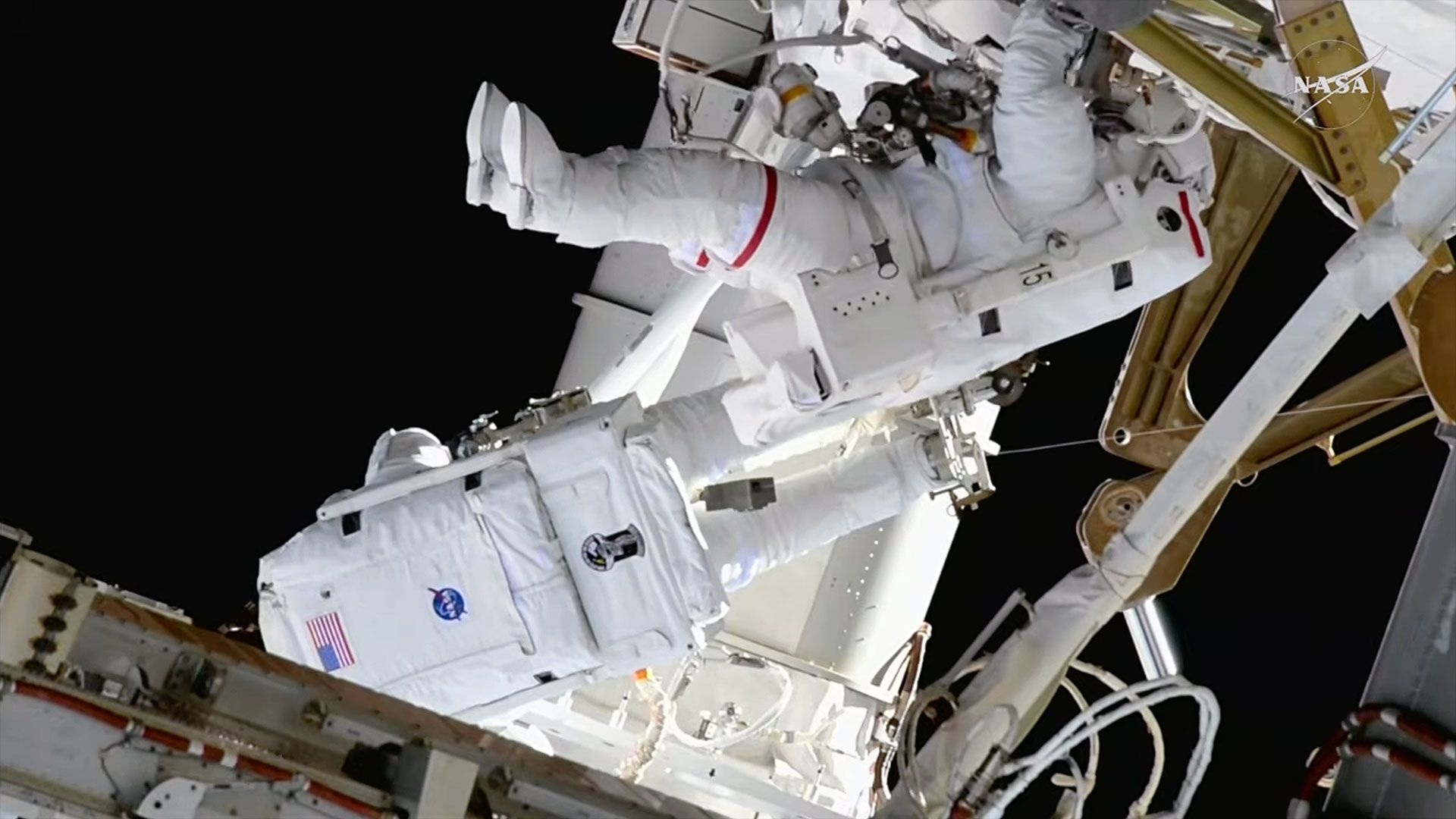
The synergy between Menon and Adenot is critical. Outside the station, communication is limited to the constraints of the suit’s radio and the guidance provided by the EVA flight controllers. The ability to work in tandem, anticipating each other’s movements while tethered to the side of a massive, moving structure at 17,500 miles per hour, is the hallmark of professional training.
Supporting Data: Why the Antenna Matters
The ISS relies on the Tracking and Data Relay Satellite (TDRS) system to maintain contact with the ground. Because the station orbits the Earth every 90 minutes, it is constantly moving in and out of view of ground-based antennas. To maintain 24/7 connectivity for data, voice, and video, the station uses a sophisticated array of external antennas that track TDRS satellites in geosynchronous orbit.
When an antenna fails, the station does not go "dark," but it loses redundancy. The current failure, while managed by existing secondary systems, places a strain on the remaining infrastructure. Replacing the failed unit restores the station to its full operational baseline, ensuring that scientific data—often measured in terabytes—can be downlinked to researchers on Earth without delays.
The 283rd spacewalk in the history of the ISS, today’s mission underscores the station’s ongoing relevance. Having been continuously occupied since November 2000, the station is a testament to the fact that space infrastructure requires "preventative maintenance" just as much as terrestrial infrastructure.
Official Responses and Strategic Implications
NASA has emphasized that the health of the crew remains the primary priority. "We don’t rush these tasks," noted a NASA spokesperson during the pre-mission briefing. "The safety of our astronauts is the absolute baseline. If they don’t have enough time to finish the job safely, they come back inside. That is exactly why we have planned this as a follow-up—to ensure they have the time they need to do it right."
The implications of this mission extend beyond just one piece of hardware. As NASA and its international partners, including the ESA, look toward the Artemis program and future missions to the Moon and Mars, the ISS serves as the ultimate testbed for deep-space maintenance. The techniques developed today—the way astronauts handle large components in microgravity, the way they manage their energy, and the way they communicate across language and agency barriers—will be the foundation for the next generation of lunar and planetary explorers.
How to Watch Live
For those interested in witnessing history, the broadcast will be accessible through multiple channels. NASA will provide full coverage starting at 7:00 a.m. EDT, available via the agency’s website, the NASA app, and their official YouTube channel. Space.com will also be streaming the event, providing live updates and expert commentary throughout the duration of the EVA.
As the world watches, Menon and Adenot will once again demonstrate the resilience and capability of the human spirit in the most extreme of environments. Their work today is a reminder that while space is vast and often hostile, the persistence of human ingenuity continues to bridge the gap between Earth and the stars. Whether the mission concludes with a simple signal check or extends into the additional tasks at the Harmony module, the effort expended today will ensure that the ISS remains the premier laboratory for discovery for years to come.