
By Technology Desk
Tuesday, September 1, 2026
In a significant expansion of its defense sector footprint, Kymeta Corporation announced on Tuesday that it has secured a $20 million contract to provide 100 of its signature Osprey u8 multi-orbit satellite communication (satcom) terminals to an undisclosed branch of the U.S. Department of Defense (DoD). This latest procurement represents a major milestone for the Redmond, Washington-based antenna technology leader, pushing its total delivery value to the specific military branch to over $30 million for the 2026 calendar year alone.
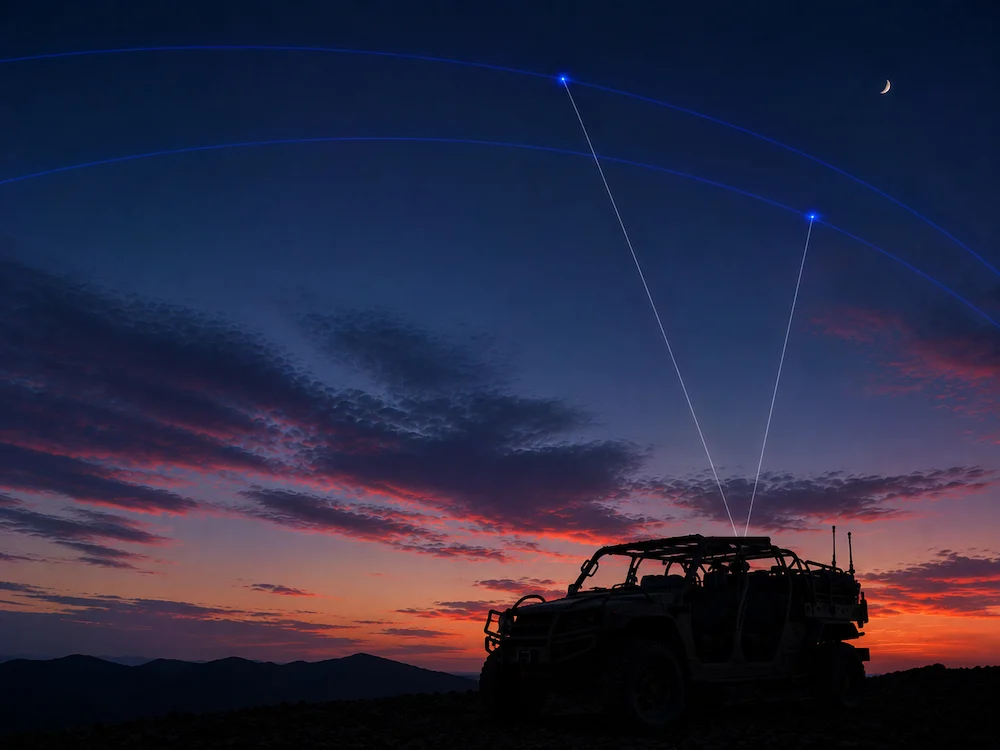
The deal underscores the Pentagon’s accelerating shift toward hybrid, multi-orbit architectures, which are designed to ensure resilient, uninterrupted connectivity in contested environments. By integrating Geostationary Orbit (GEO) and Low-Earth Orbit (LEO) capabilities, Kymeta’s solutions provide a critical fail-safe for mobile military assets.
The Core Agreement: Capabilities and Strategic Reach
The $20 million award encompasses more than just hardware. The contract includes a comprehensive suite of multi-orbit connectivity services delivered via the Kymeta Broadband (KBB) network. This network acts as the connective tissue for the Osprey u8 terminals, enabling them to transition seamlessly between satellite constellations.
Key Technical Specifications of the Osprey u8:
- Multi-Orbit Flexibility: The terminals are engineered to handle the distinct latency and throughput profiles of both GEO and LEO satellites.
- Operational Versatility: The units are capable of switching between transmission security (TRANSEC) and non-TRANSEC networks, a vital feature for military operations that require varying levels of data encryption and signal obfuscation depending on the mission profile.
- Ruggedized Form Factor: Designed for mobility, the Osprey u8 is built for deployment on tactical vehicles, ensuring that command-and-control teams maintain high-bandwidth data links while on the move.
For the U.S. military, the ability to switch between orbital tiers is no longer a luxury; it is a tactical necessity. Should a LEO constellation face interference or jamming, the terminal can immediately shift to a GEO backbone, ensuring that critical data packets—ranging from drone telemetry to high-definition situational awareness feeds—reach their destination without delay.
Chronology of Kymeta’s Defense Integration
Kymeta’s ascent as a primary DoD vendor did not happen overnight. The company has spent the better part of the last decade pivoting from commercial maritime and land-mobile sectors toward the specialized demands of defense contractors and government agencies.
- Early 2024: Kymeta intensified its focus on the "u8" platform, refining the electronically steered antenna (ESA) technology to meet strict military-grade SWaP-C (Size, Weight, Power, and Cost) requirements.
- Late 2025: The company began high-volume deliveries of the Osprey u8 to various defense testbeds, demonstrating the terminal’s ability to maintain a "lock" on satellites while undergoing high-speed off-road vehicle maneuvers.
- Q1–Q2 2026: Kymeta achieved initial deployment milestones, proving that its terminals could survive the harsh conditions of field training exercises. This period saw the first $10 million in revenue recognized from the now-partnered DoD branch.
- September 2026: The announcement of the $20 million follow-on order signifies that the technology has passed the rigorous "operational requirements" phase, moving from testing into full-scale, active-duty service.
Supporting Data: The Multi-Orbit Imperative
The DoD’s reliance on Kymeta is a microcosm of a larger trend within the U.S. military’s Joint All-Domain Command and Control (JADC2) initiative. As the battlefield becomes increasingly digitized, the demand for "always-on" connectivity has skyrocketed.
Why Multi-Orbit Matters
- Resilience through Diversity: By utilizing multiple orbital regimes, the military mitigates the risk of a "single point of failure." If an adversary targets a specific constellation, the Kymeta system provides an automatic path to an alternative network.
- Throughput Requirements: LEO constellations offer low latency—essential for real-time video and remote command—while GEO satellites provide the wide-area coverage and high capacity needed for bulk data transfers.
- Security at the Edge: The integration of TRANSEC protocols allows the terminals to operate in hostile electronic warfare (EW) environments. By masking the signal’s signature, the Osprey u8 reduces the probability of interception or location-tracking by enemy forces.
The $30 million total spend for 2026 represents a vote of confidence in Kymeta’s proprietary "flat-panel" antenna technology, which eliminates the need for bulky, motorized gimbals that are prone to mechanical failure in rugged field conditions.
Official Responses and Corporate Outlook
In a statement released shortly after the contract announcement, Kymeta CEO Manny Mora expressed pride in the company’s ability to meet the stringent demands of the national security community.
"This order is an affirmation from the military community that Kymeta can deliver on its promise to provide dependable connectivity for mission-critical operations," Mora said. "With our partners across national security, we are continuing to build steady and solid momentum as a trusted and valued partner."
While Kymeta has remained tight-lipped regarding the specific branch of the DoD involved—citing the sensitive nature of the technology and the classification levels of the operations it supports—industry analysts suggest that the deployment is likely concentrated within land-based tactical units and mobile command centers. The company’s emphasis on "mission-critical" applications implies that these terminals are likely being integrated into high-stakes environments where communication downtime is not an option.
Implications: The Future of Tactical Communications
The success of this contract holds significant implications for the broader aerospace and defense industry.
A New Standard for Procurement
The $30 million figure is indicative of a broader shift in how the DoD procures technology. Rather than purchasing bespoke, "clean-sheet" designs that take years to develop, the military is increasingly adopting "commercial-off-the-shelf" (COTS) technology that has been hardened for military use. Kymeta’s success proves that the private sector’s rapid iteration cycle—which produces new software and hardware updates every few months—is compatible with the military’s requirement for long-term reliability.
The Competitive Landscape
This deal places Kymeta in a strong competitive position against traditional satellite antenna manufacturers who rely on older, mechanical-tracking technologies. As the DoD continues to prioritize mobility, the demand for electronically steered, low-profile antennas is expected to grow. Competitors will likely be forced to accelerate their own research into ESA technology to keep pace with the benchmarks set by the Osprey u8.
Strategic Autonomy
By utilizing the Kymeta Broadband network, the military gains a degree of strategic autonomy. The ability to switch between service providers and orbital planes means that the U.S. military is no longer beholden to a single satellite operator. This flexibility is vital in an era of geopolitical volatility, where access to specific orbital slots or provider-specific networks might be denied or restricted.
Conclusion
As of September 2026, Kymeta stands as a cornerstone of the U.S. military’s modern communication strategy. The $20 million contract is not merely a financial win; it is a validation of the company’s vision for a multi-orbit, resilient, and mobile future.
As the Osprey u8 terminals continue to be deployed across the force, the data gathered from these real-world operations will undoubtedly inform the next generation of Kymeta’s hardware. For the soldiers in the field, this means that even in the most remote or contested environments, the link back to command remains as steady as it would be in a home base. Kymeta has successfully translated the complexities of orbital physics into a reliable, "plug-and-play" solution, ensuring that the U.S. military remains connected in an increasingly disconnected and chaotic global landscape.